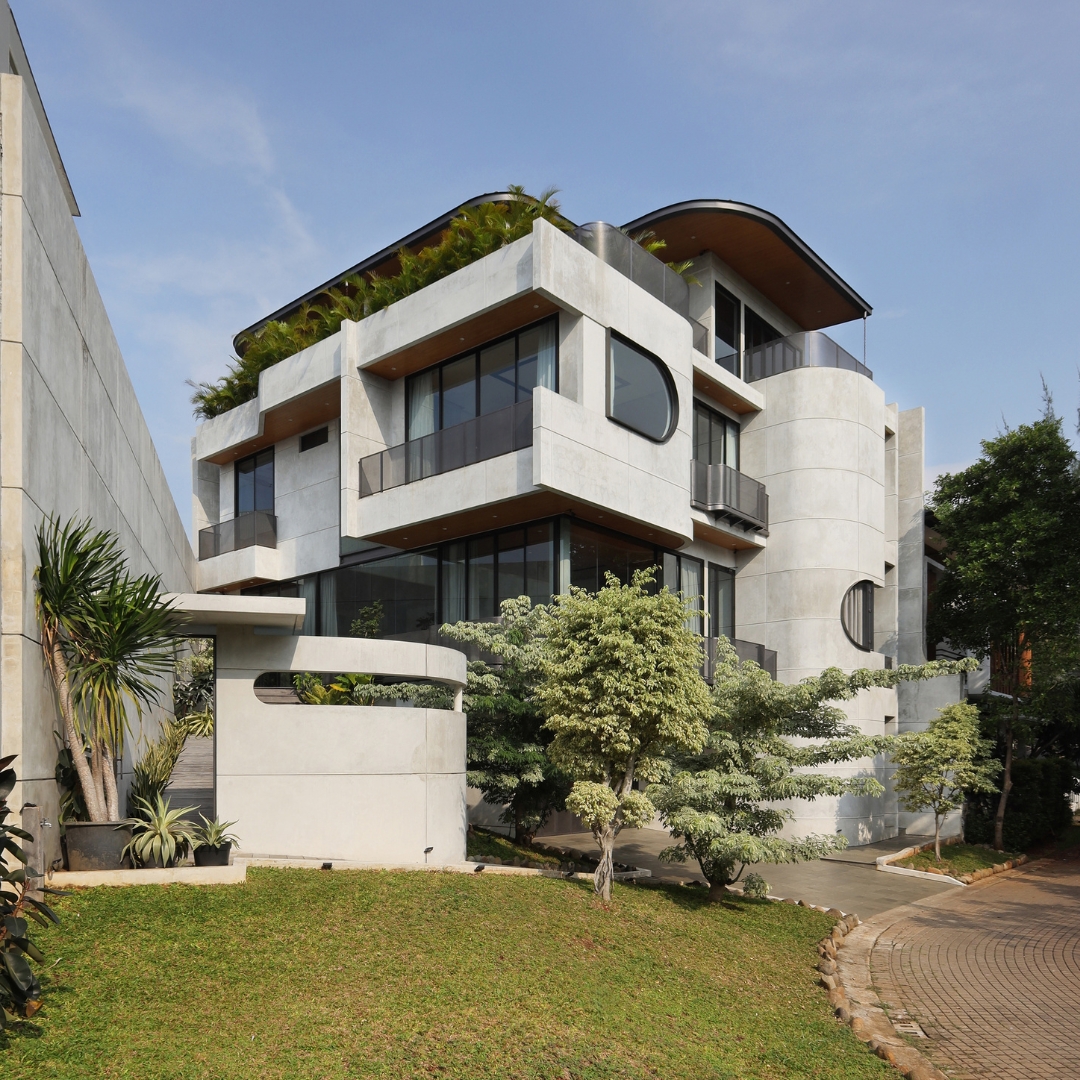
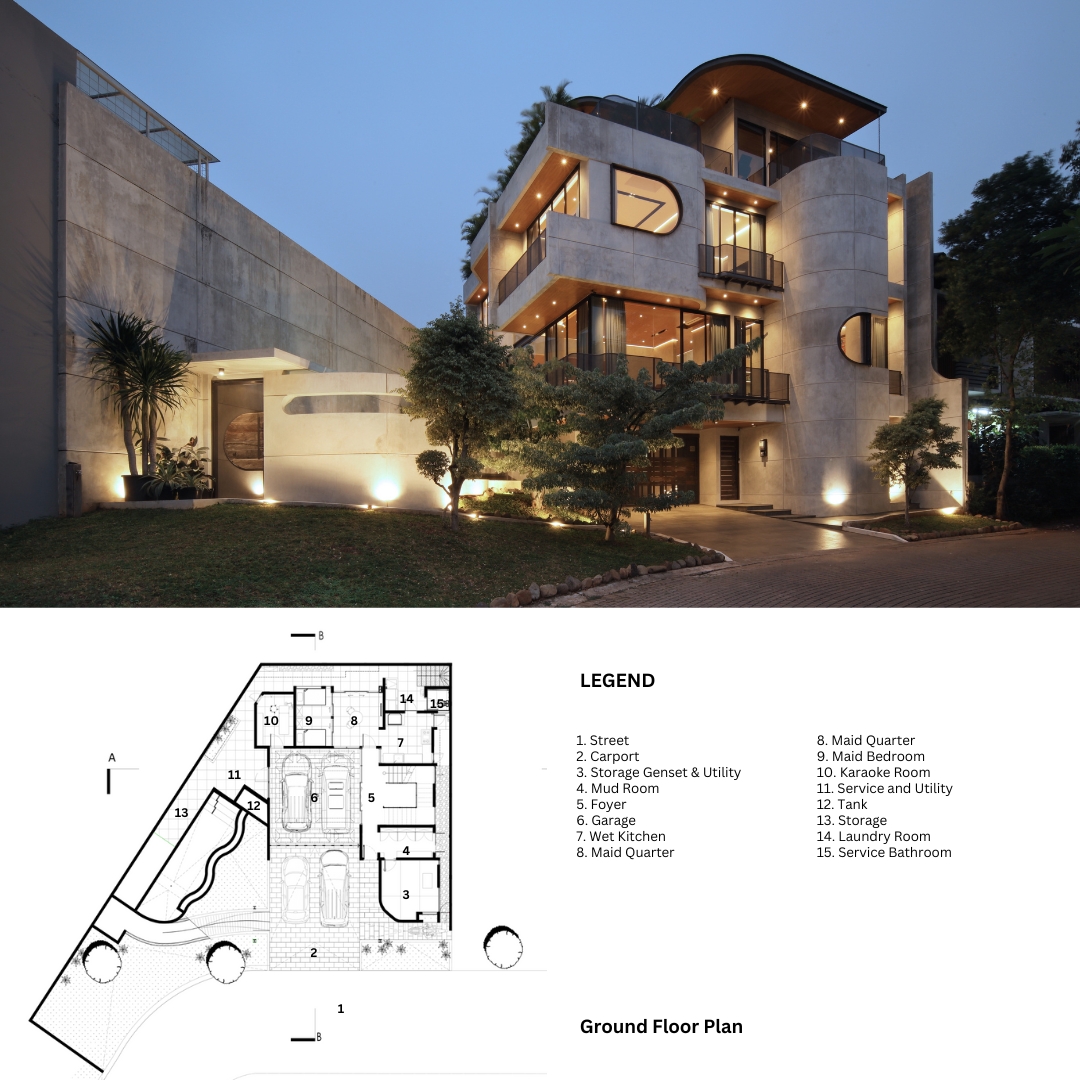
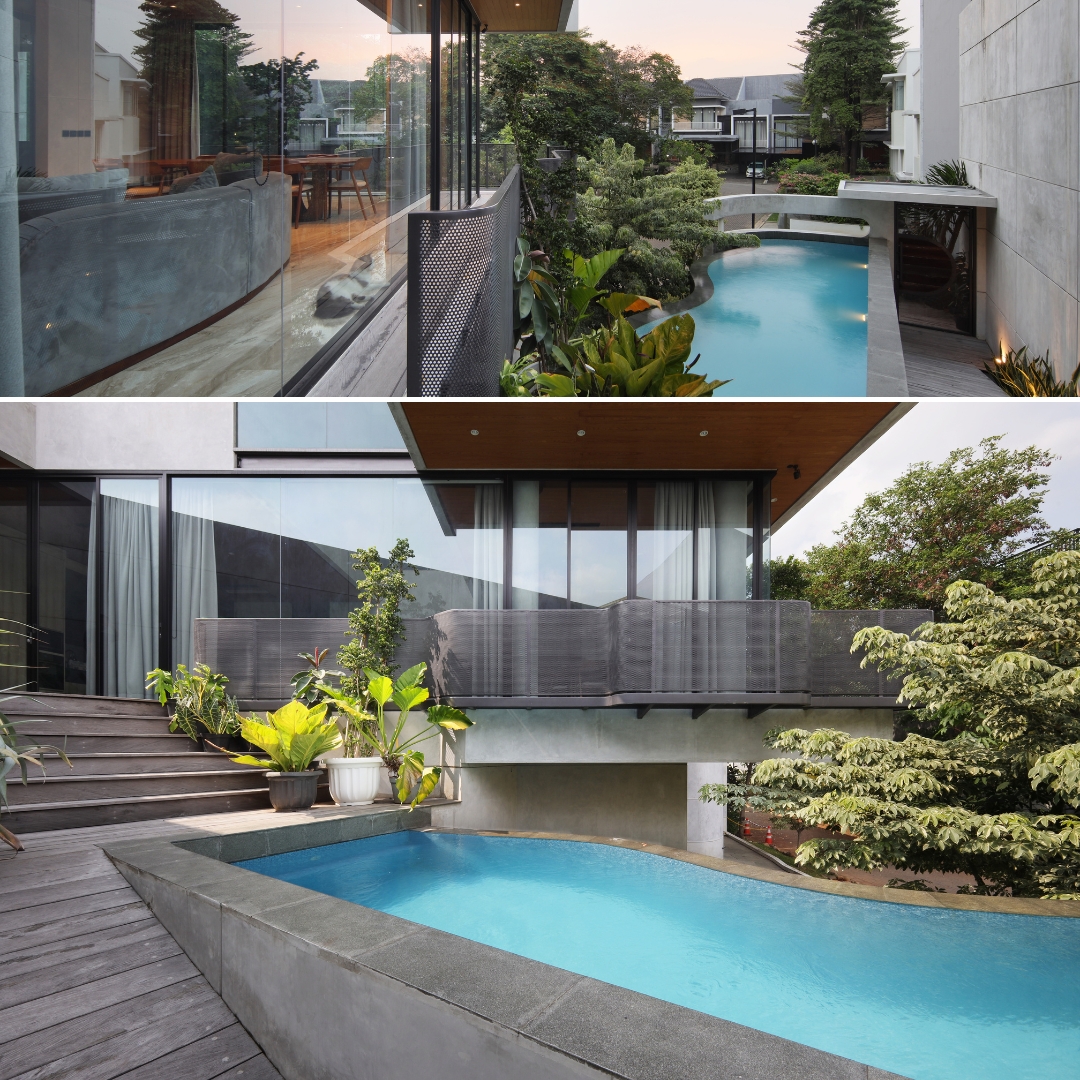
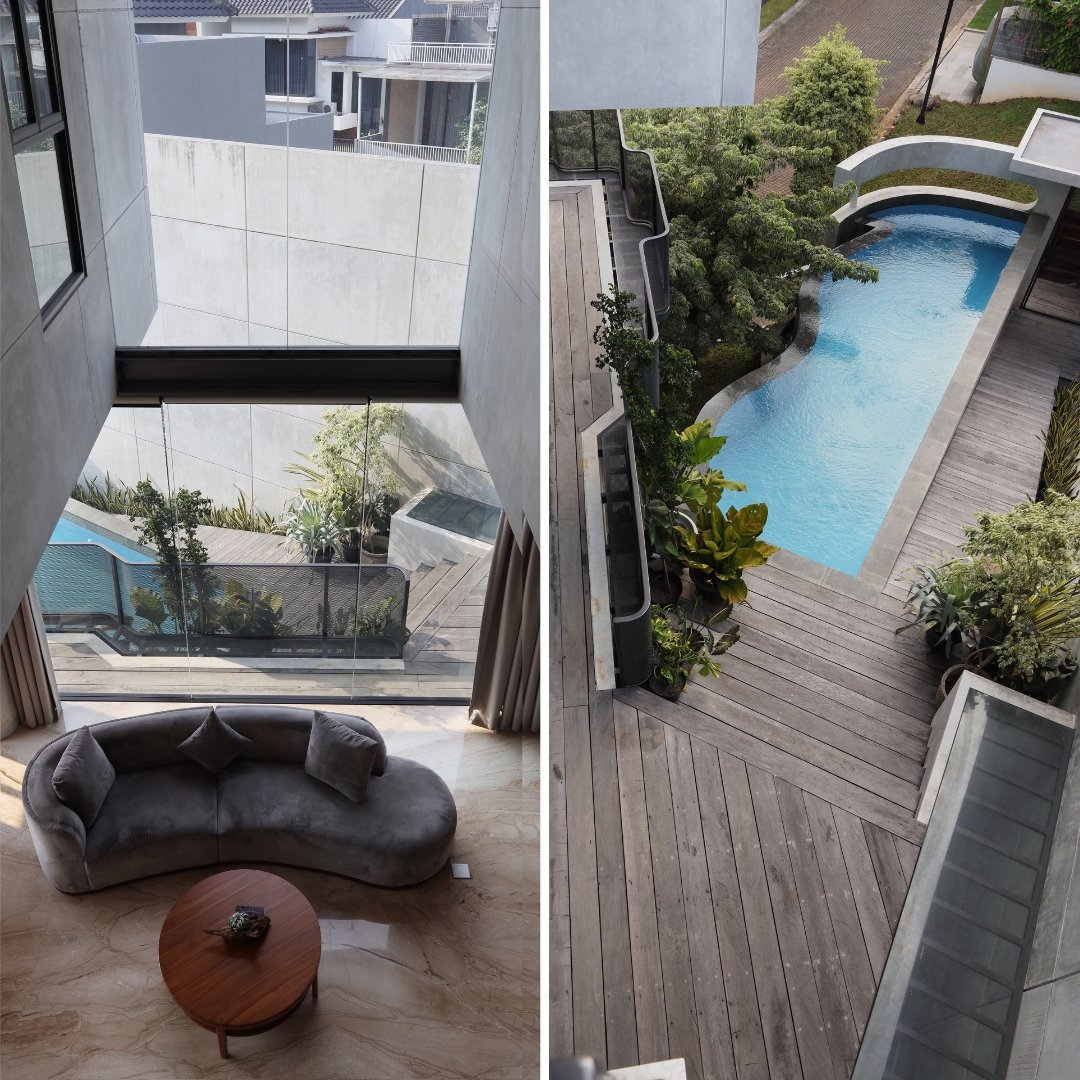
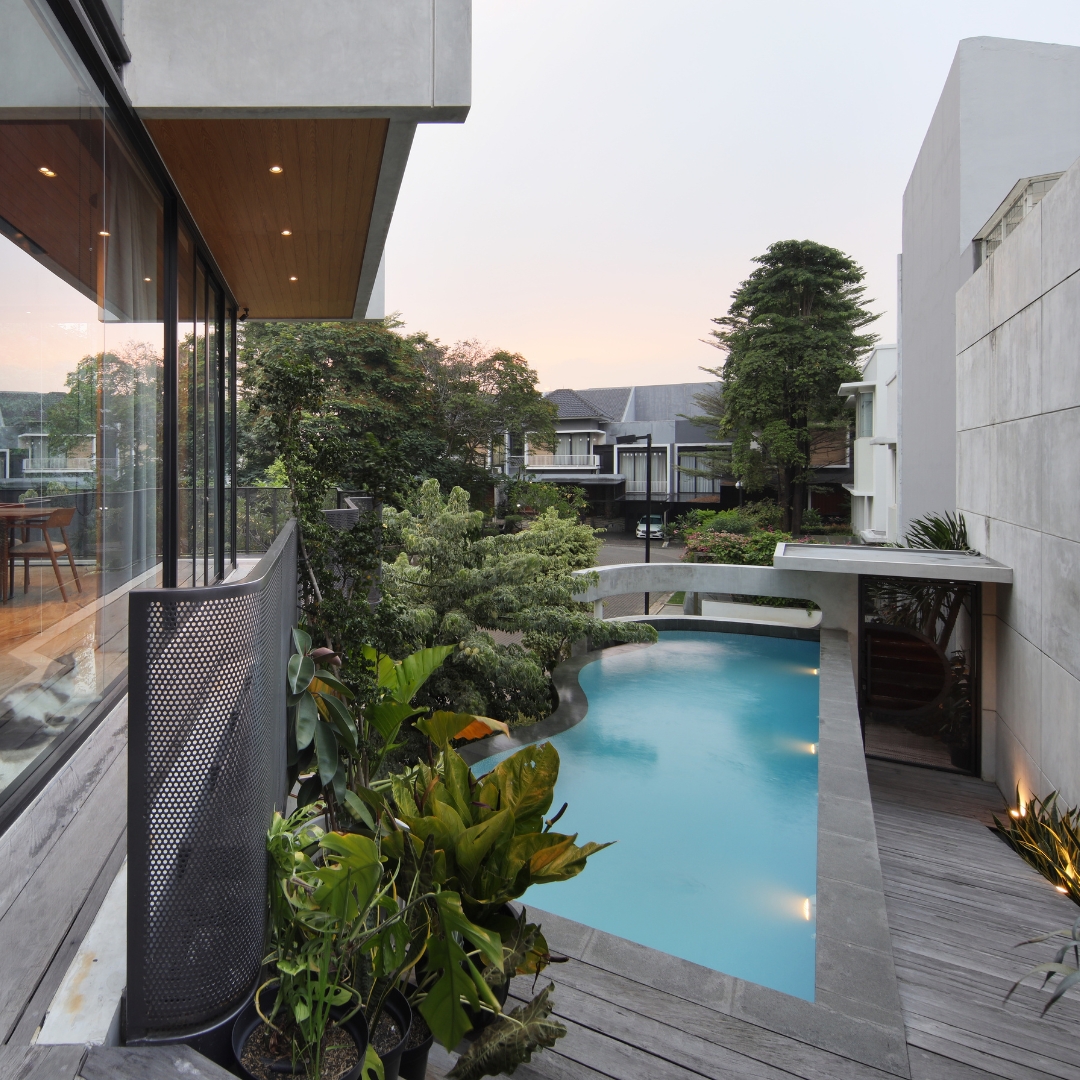
Ngumpar Bioclimatic house is located at the end of the street, with a land area of approximately 300 sqm. The 12 x 17 m layout was designed to create thermal performance and foster a natural atmosphere, creating a comfortable microclimate. Upon entering the building, the entrance access is set back through a foyer ramp, which is covered by a tropical garden, endemic trees, and bushes that serve as a way to provide thermal comfort. This setback strategy covers access to the building from the west side sun. It leads to a swimming pool that also cools the microclimate. The circulation then ended in a wooden deck through the main entrance of the living area on the 1st floor.
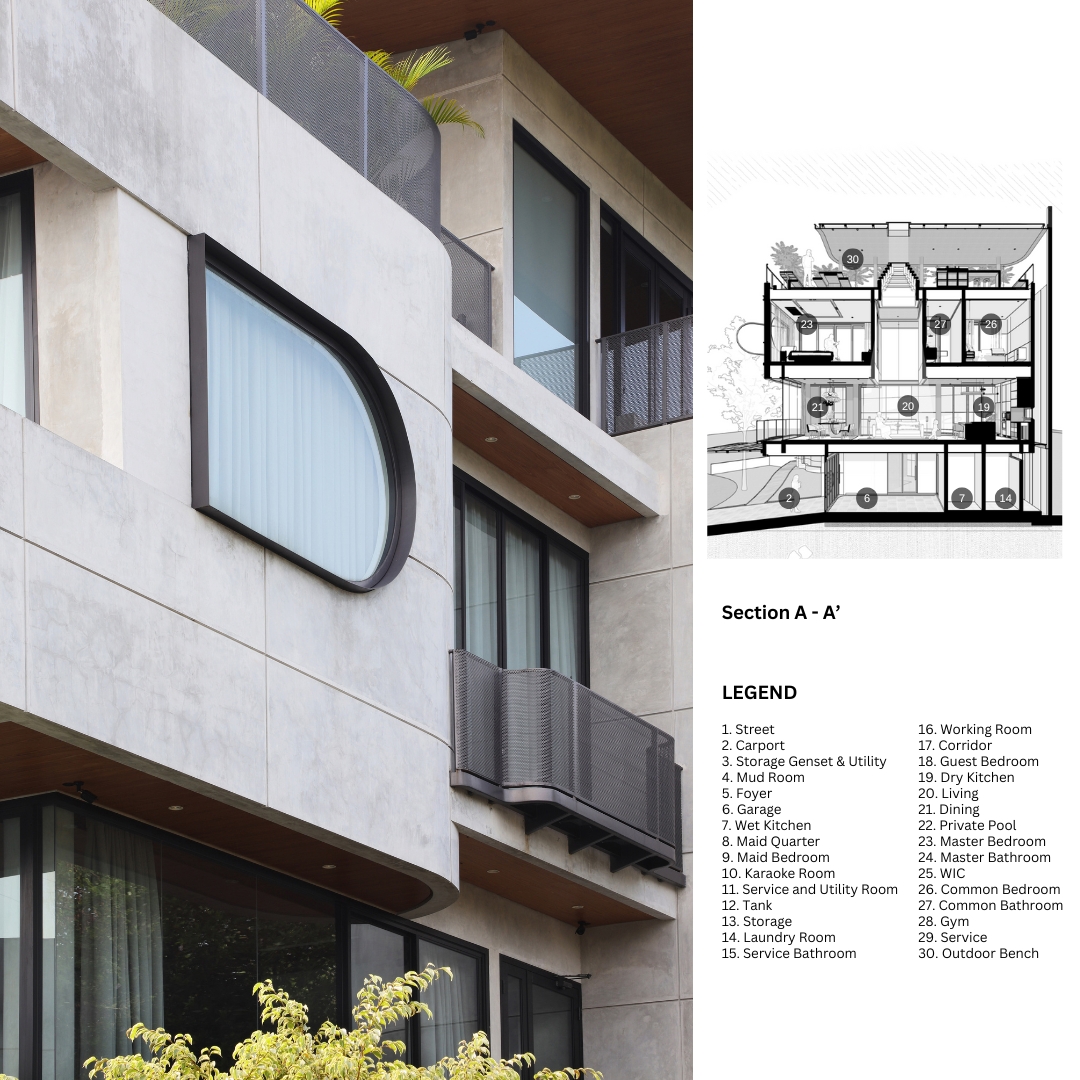
The first floor is a spacious main living area with a large void and skylights in the form of a ‘tumpang sari ‘, a traditional Javanese architectural element that allows for natural light penetration, inspired by a traditional joglo house, allowing sunlight to flood by side gaps. On this level, we can see a visual connection to the master bedroom in the void. This level also includes a shared workspace, private areas, and an atrium as a long foyer, linking the more prominent spaces with utility areas.
The second floor features a void that connects the master bedroom with the children’s rooms, while the upper level includes a gym and social spaces. The roof is designed to provide thermal insulation and air flow by tumpang sari skylight, wooden deck, and canopy, and is enhanced with greenery, providing insulation for the bedrooms below. This approach effectively lowers ambient temperatures by 3-5 degrees.
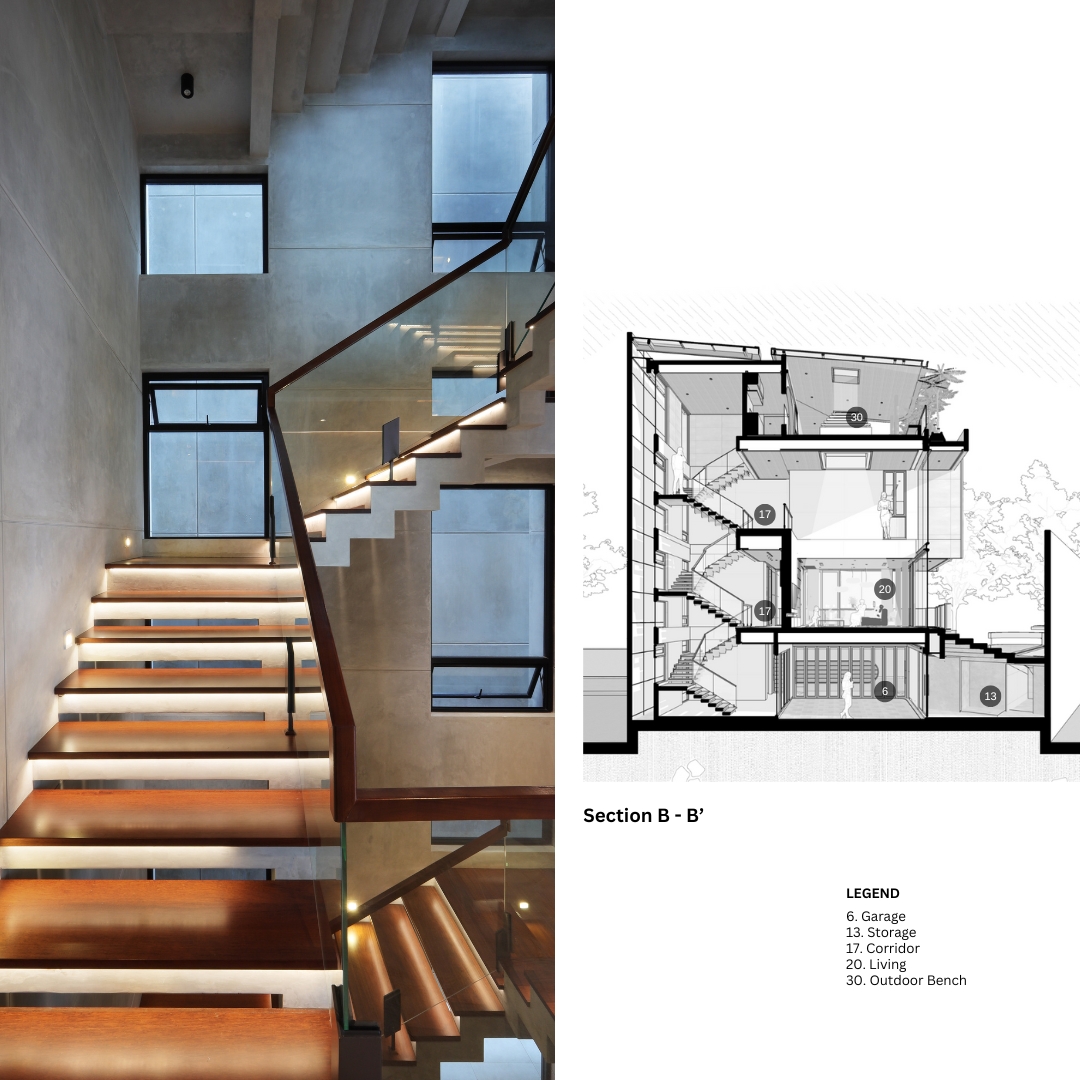
While on the ground floor, the service area and living area encircle a 2 central staircase, which acts as the house’s spine, featuring openings on its sides for natural light and airflow. The gap between the building and the neighbor’s house facilitates airflow and enhances natural light.
The house has an exploration of forms of opposing curves, creating an expansive feel despite the site’s limited size. This design also offers a flowing aesthetic. The recurring curves extend to the finer details of the home, including the curved railings made from a blend of iron and local ulin wood, as well as arched doorways made by local craftsmen.
design by #realricharchitectureworkshop
photograph by @sonnysandjaya


 My Mayonnaise Jar