Kategori
Projects Collective Cave

Collective Cave 01 – School of Alfa Omega

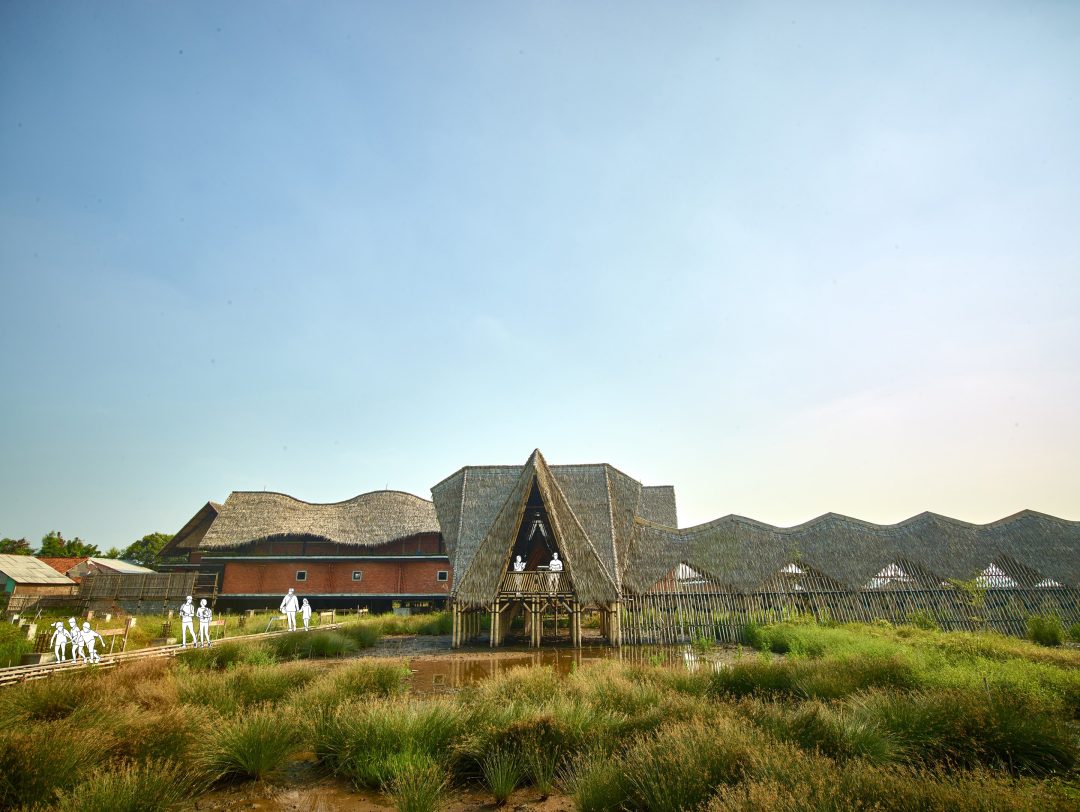
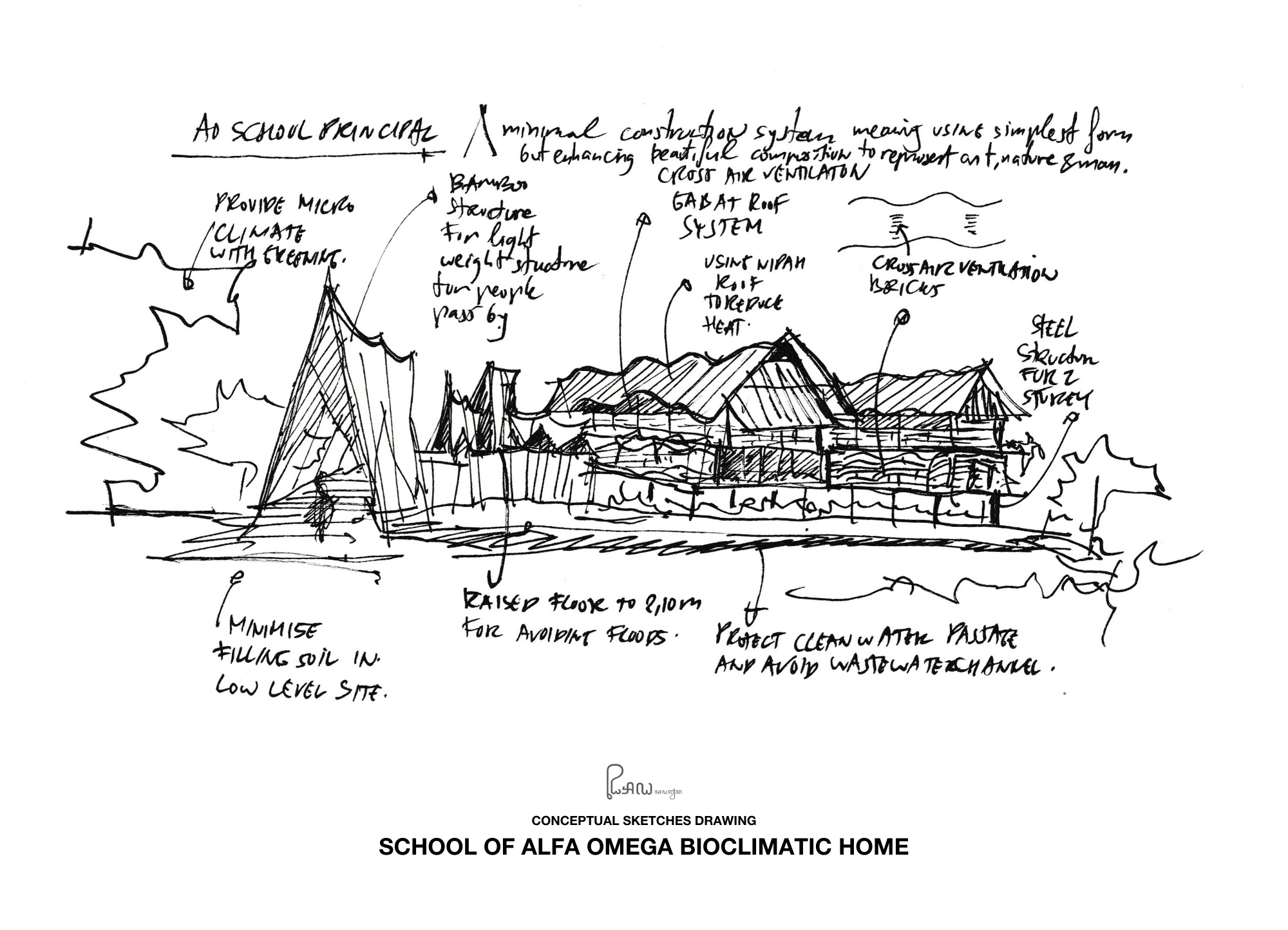
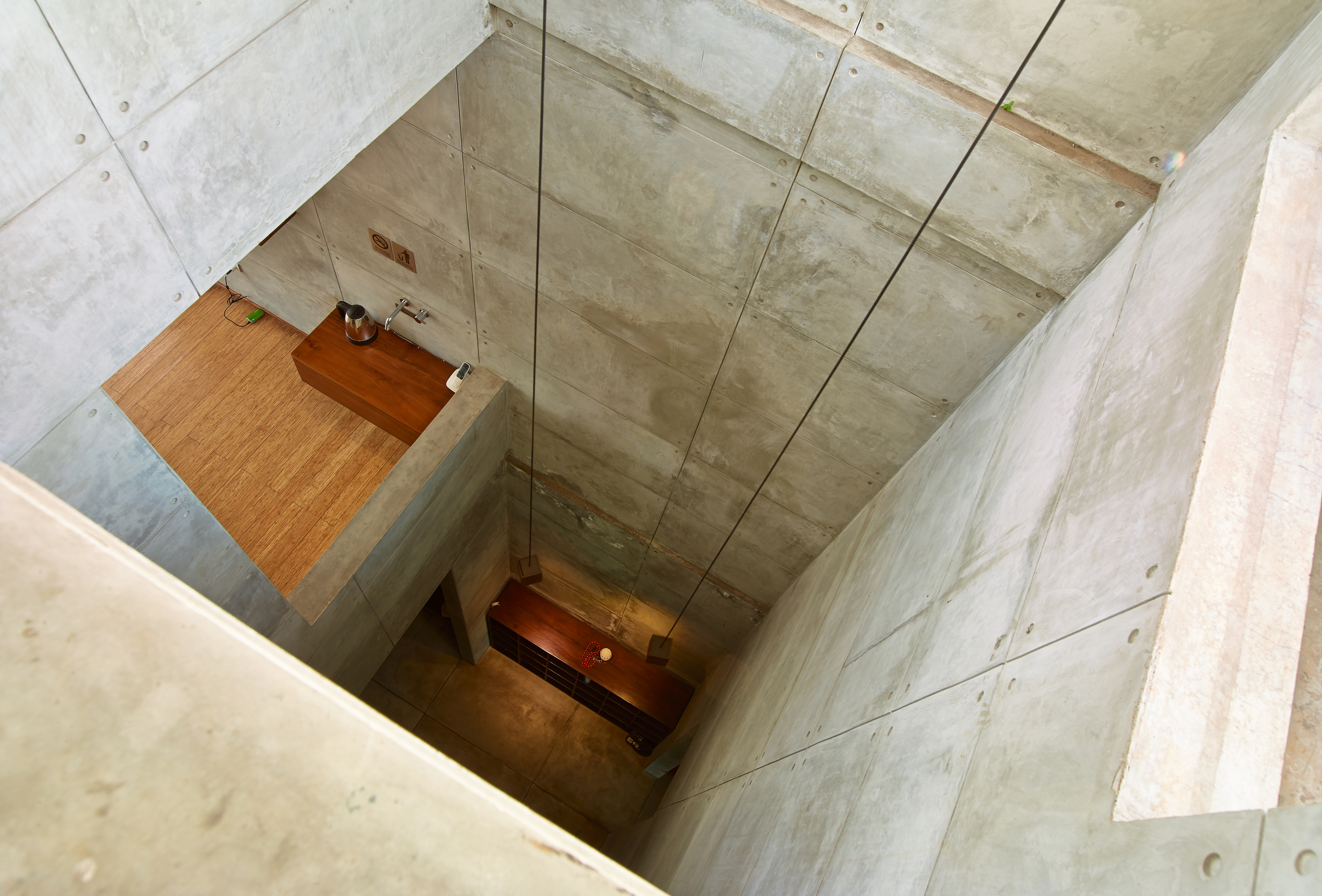
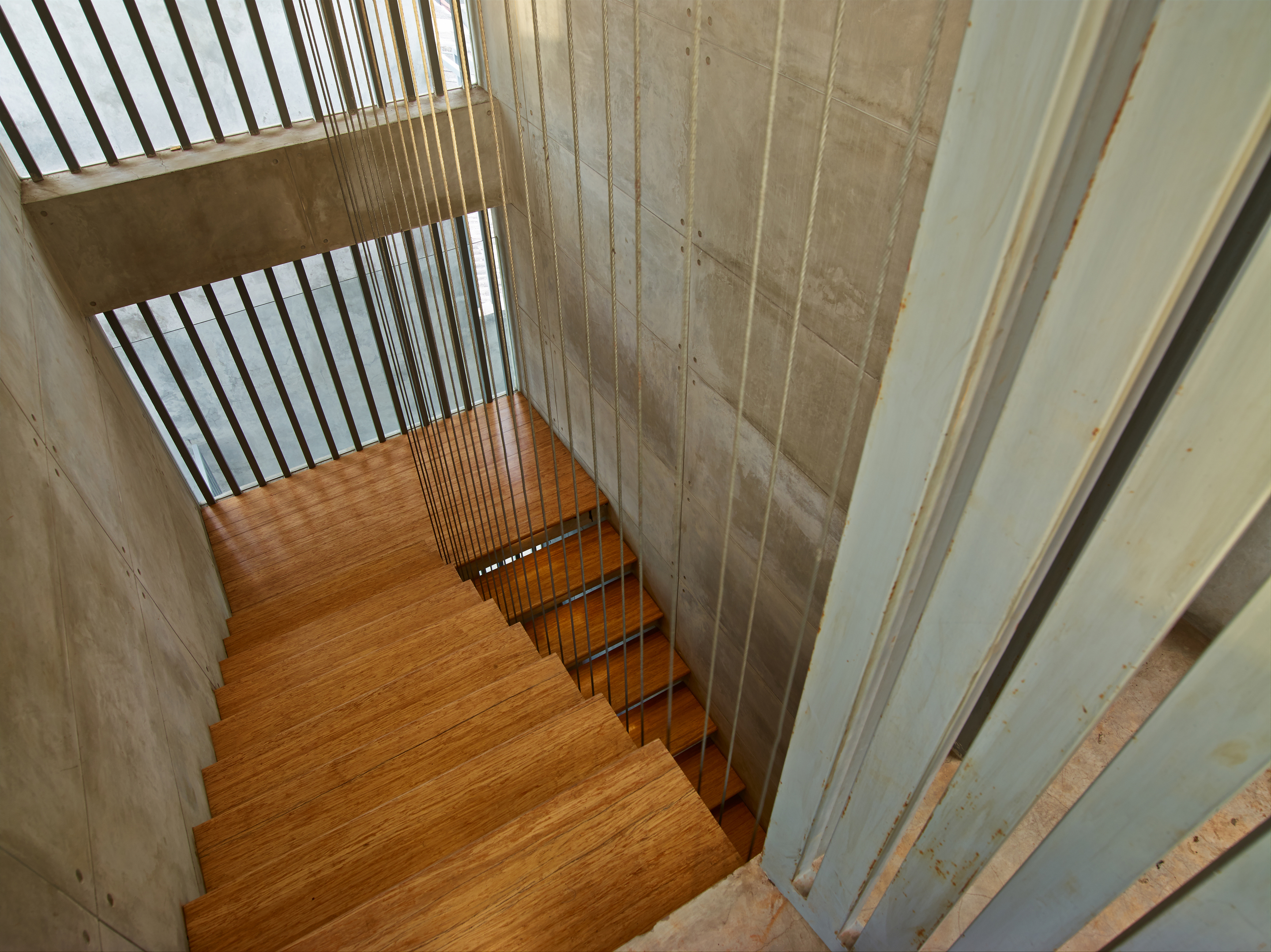
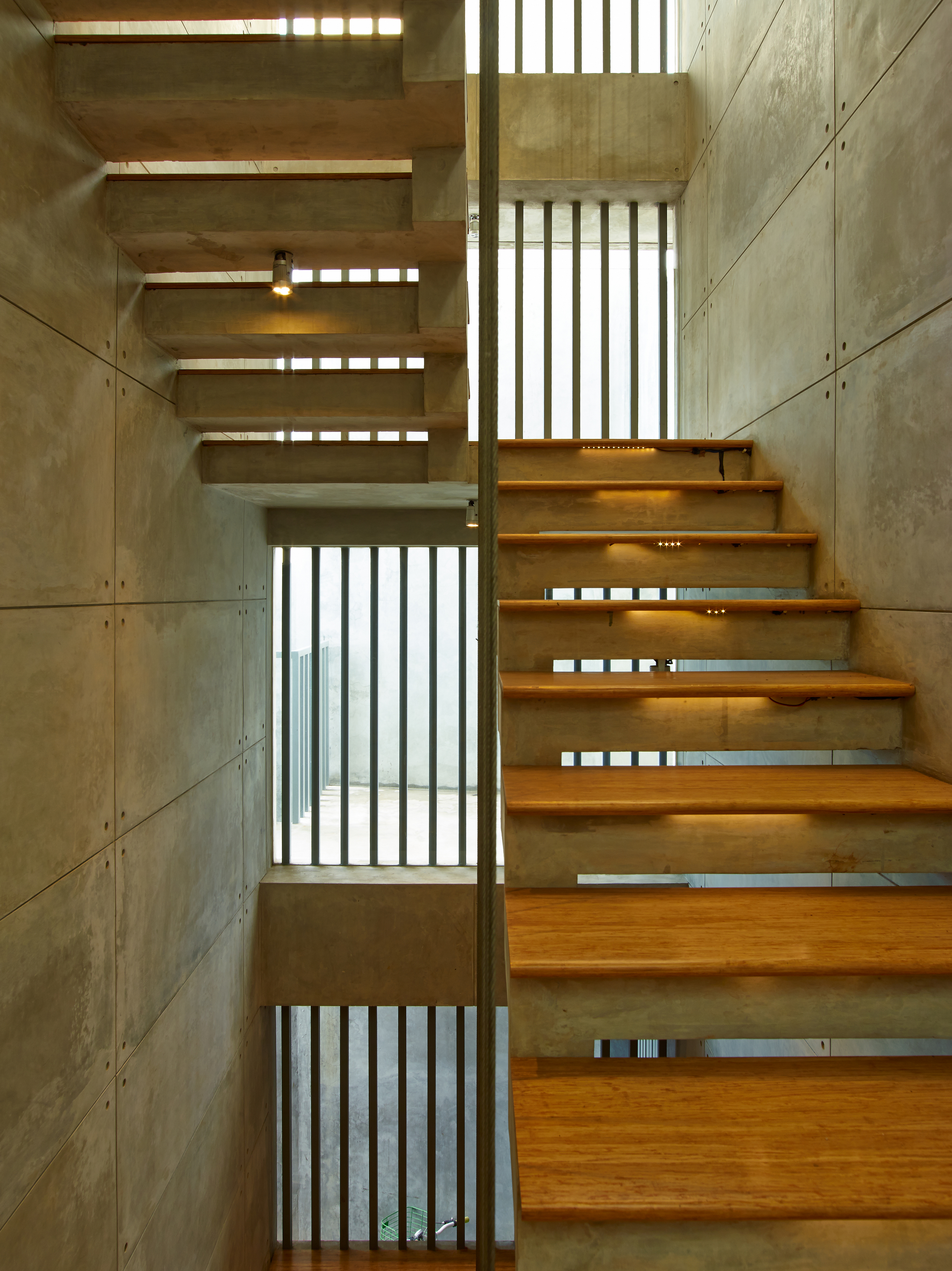
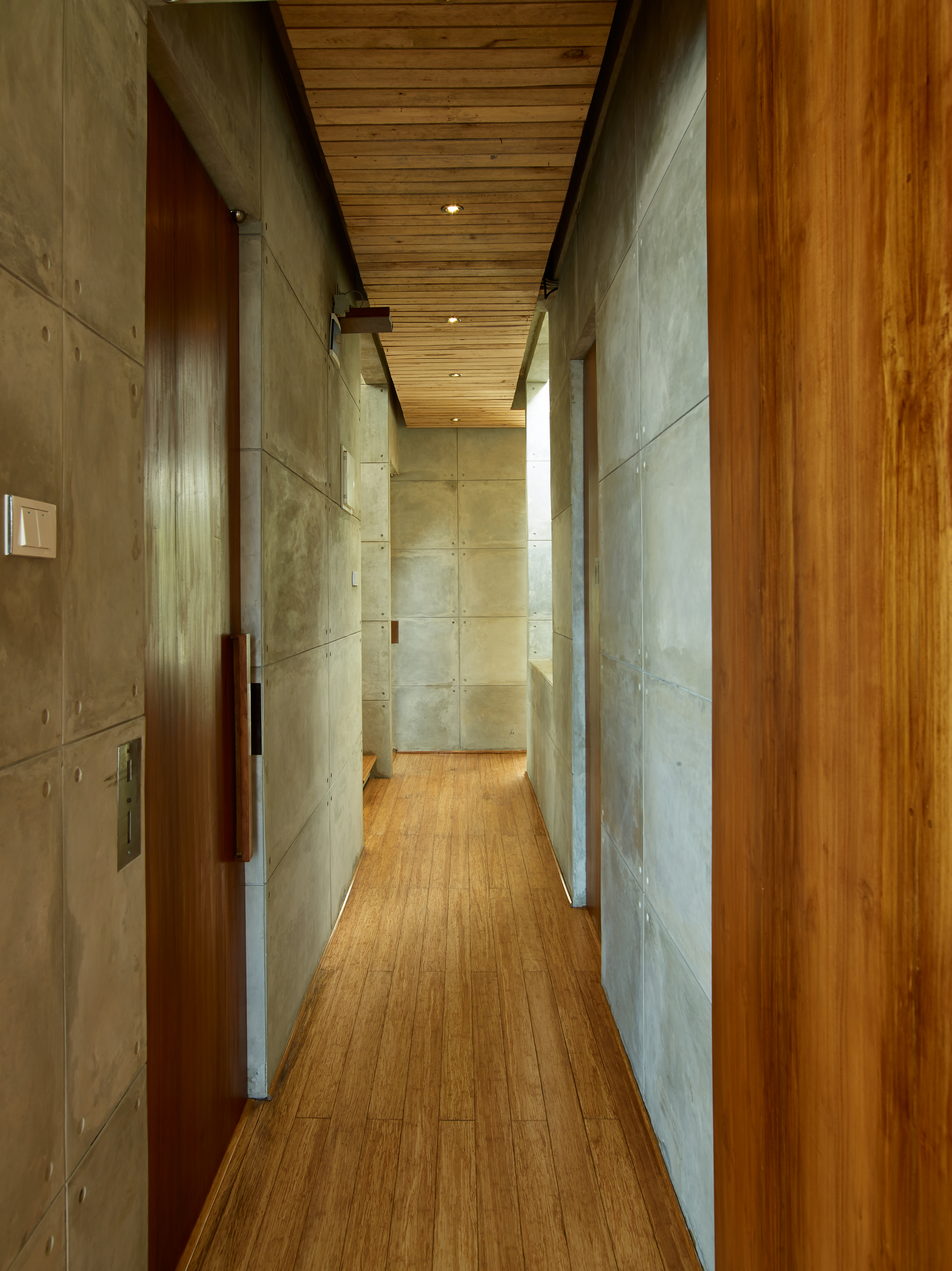
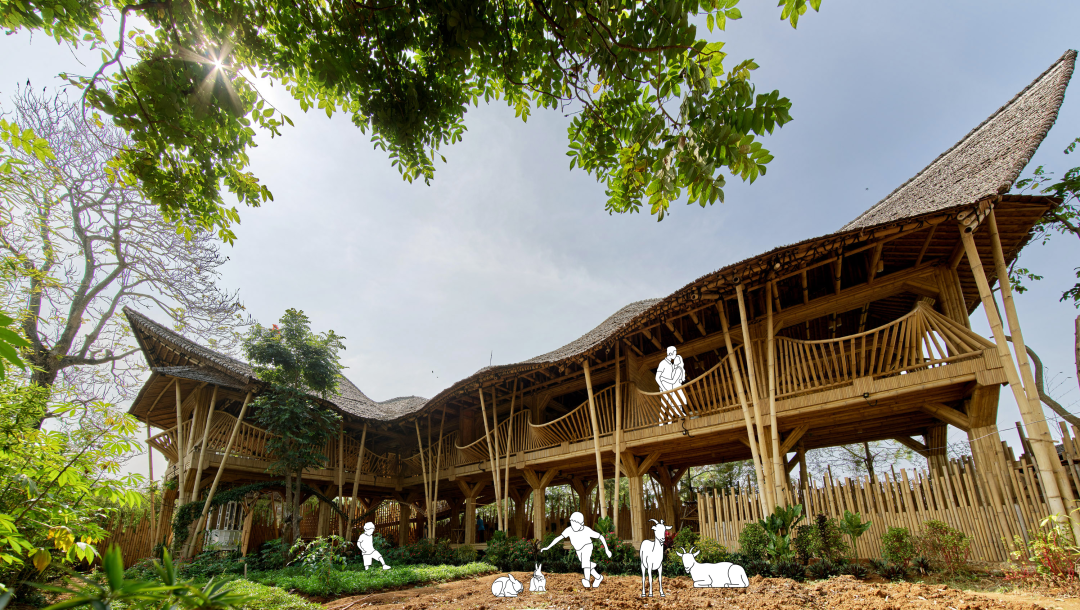
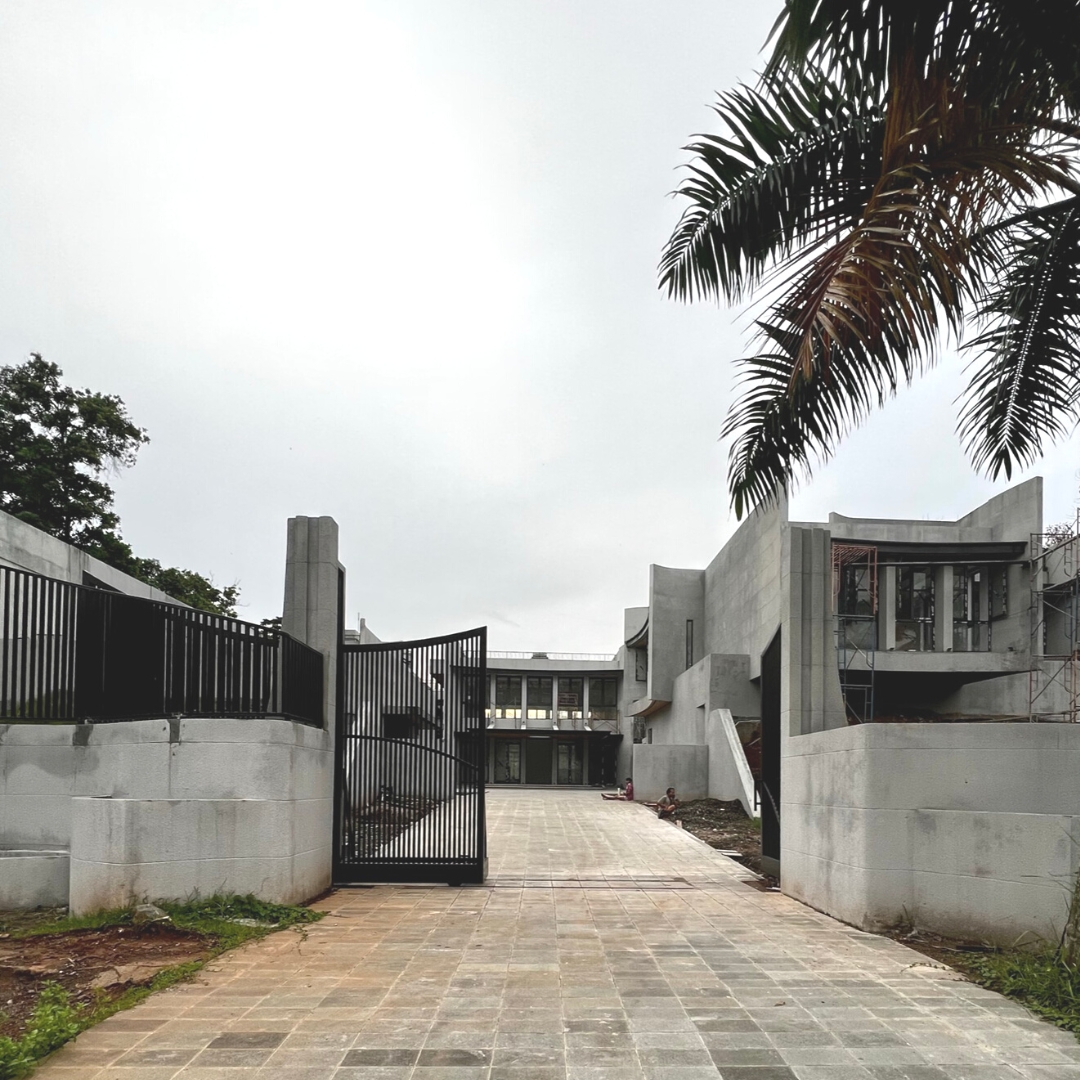
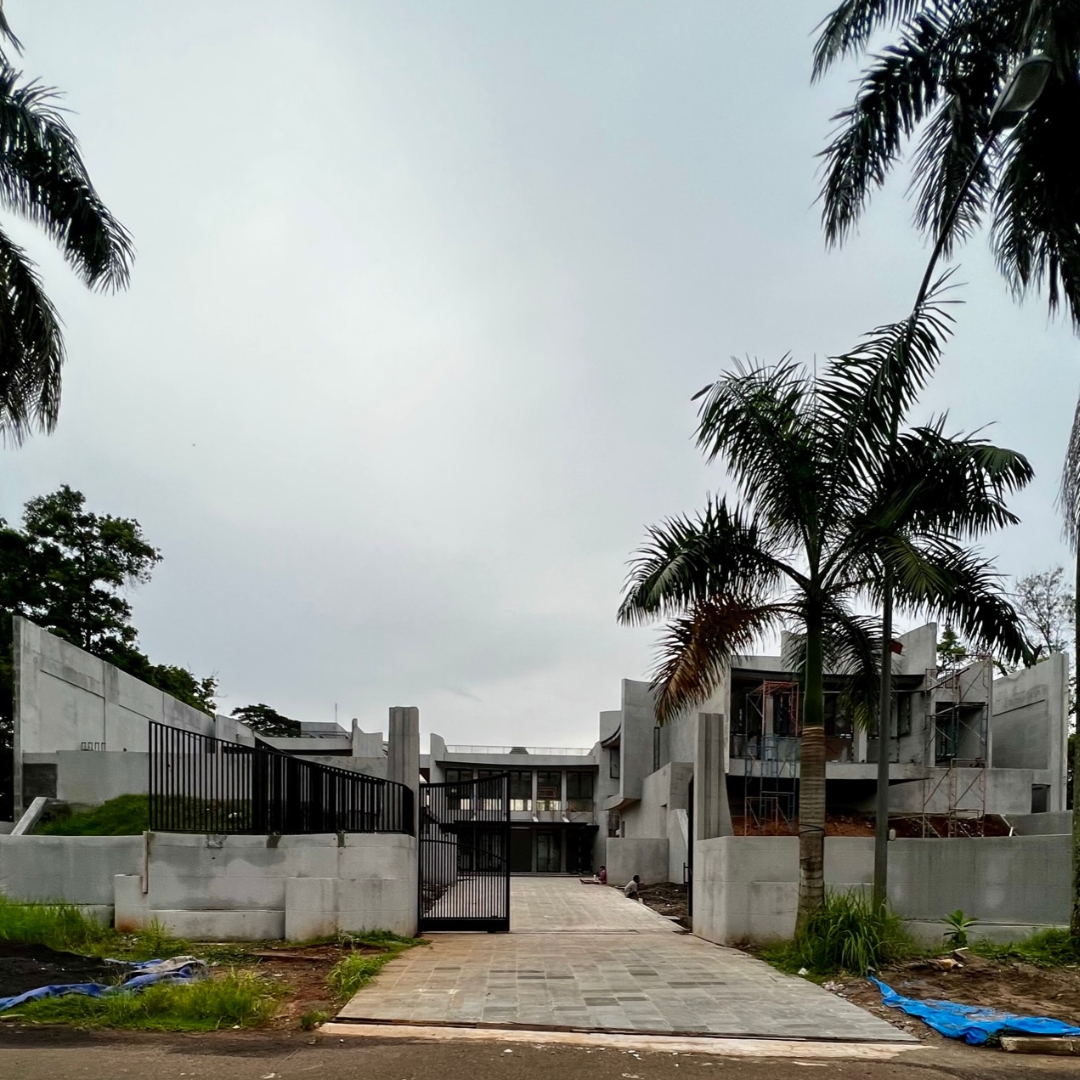
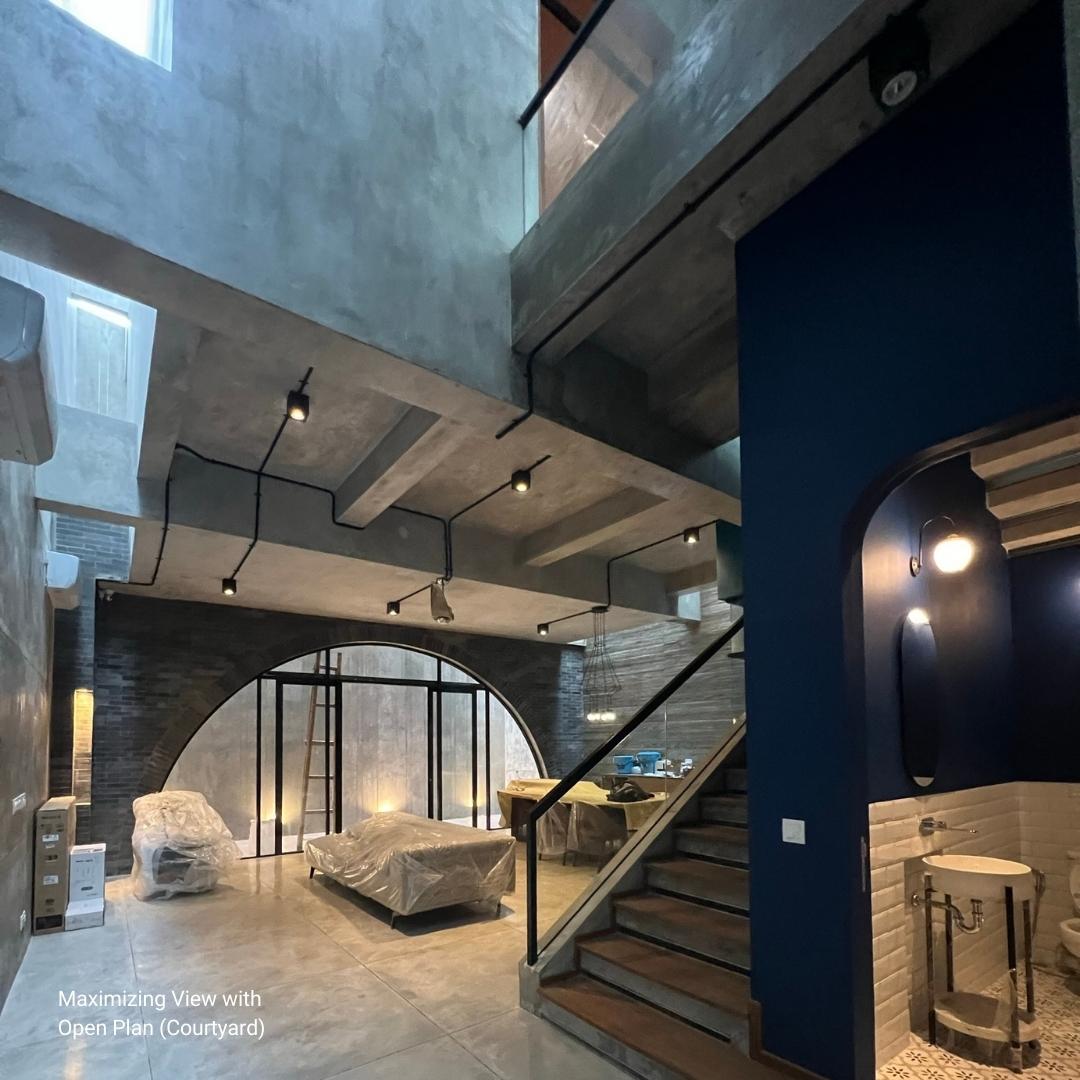
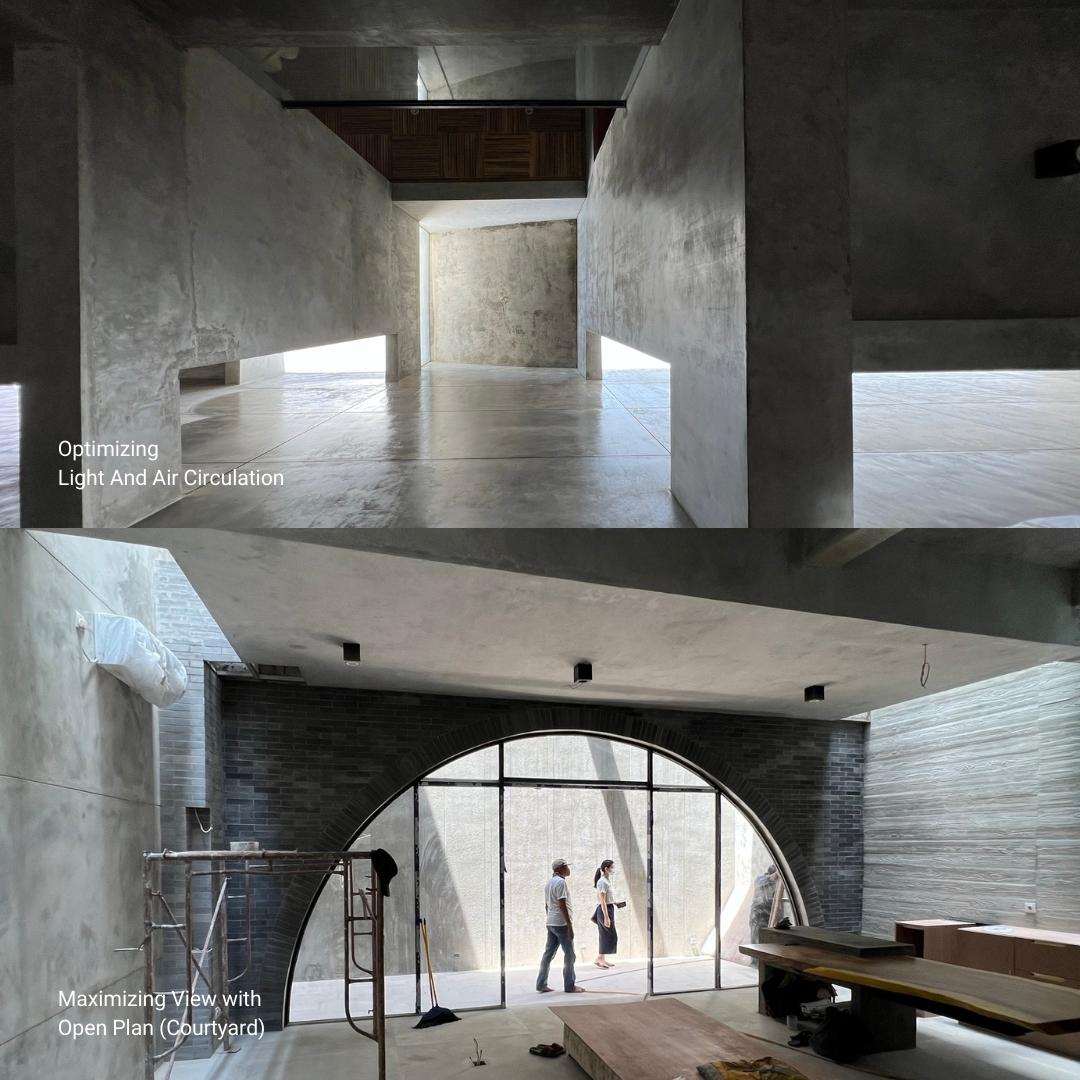
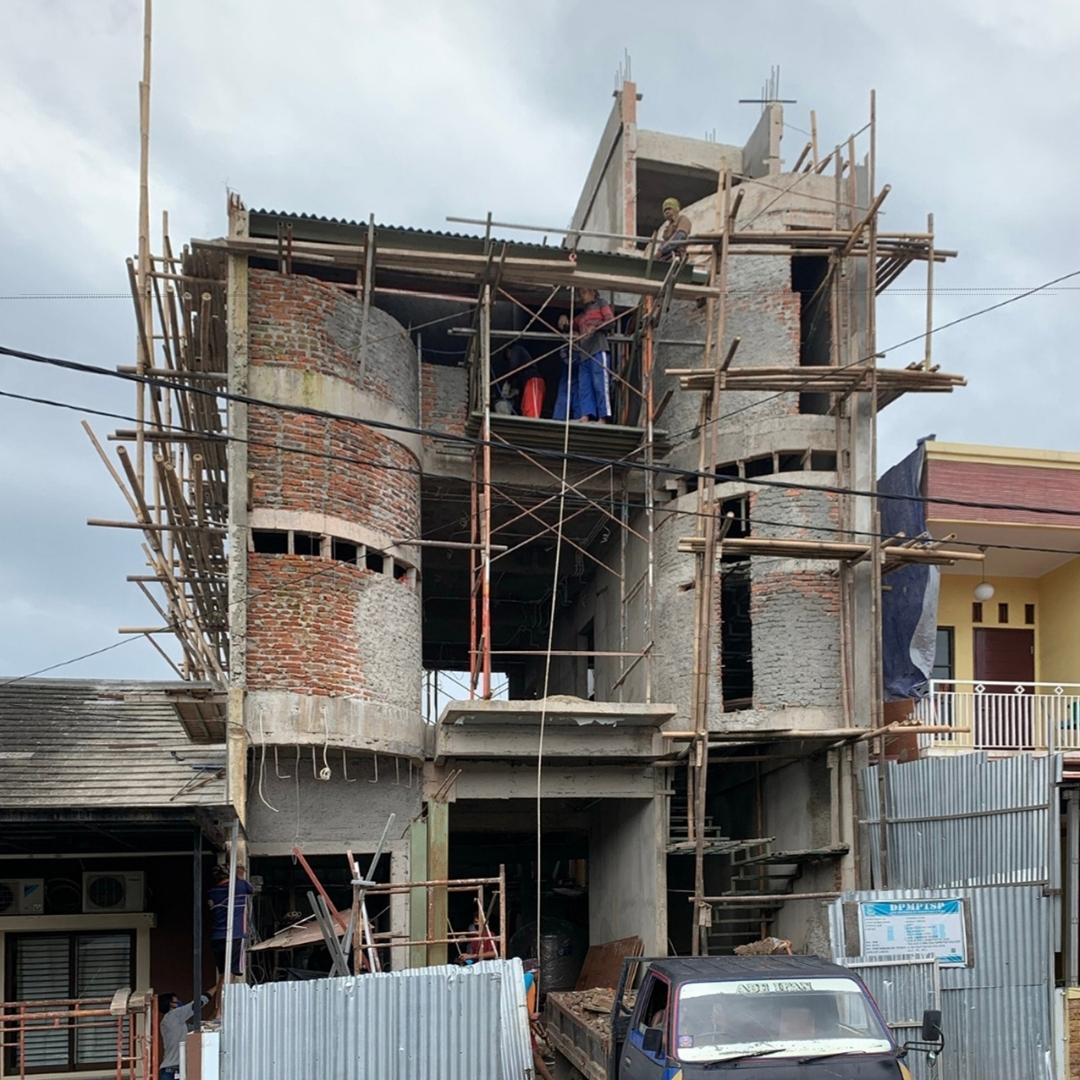
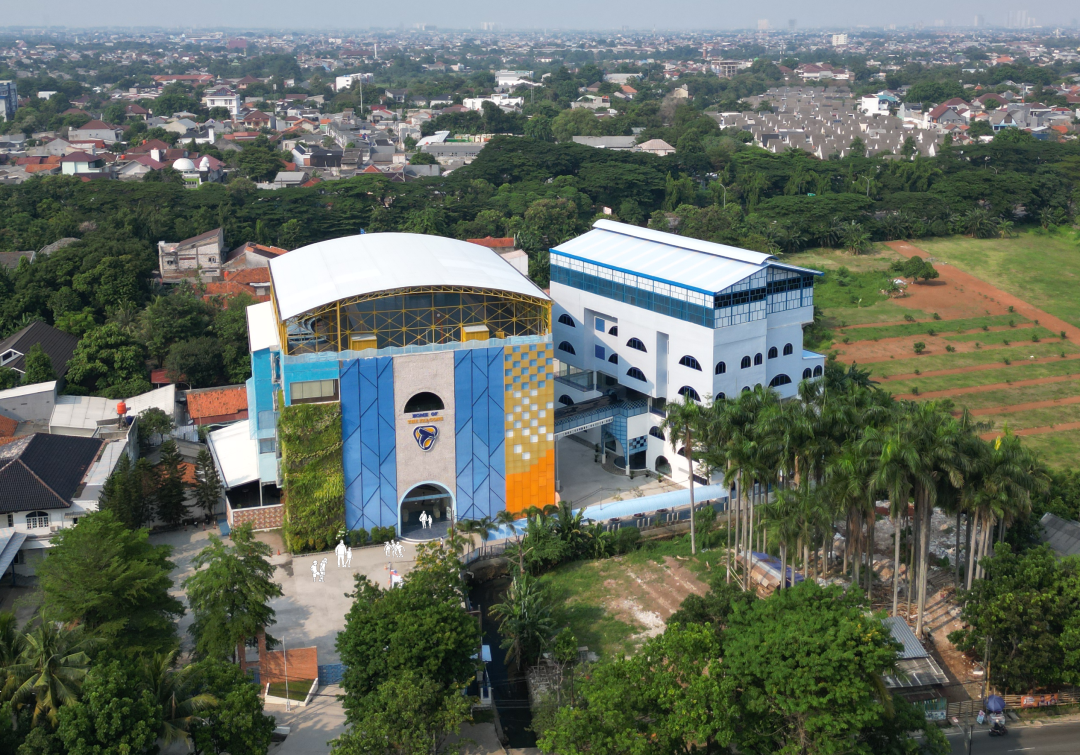
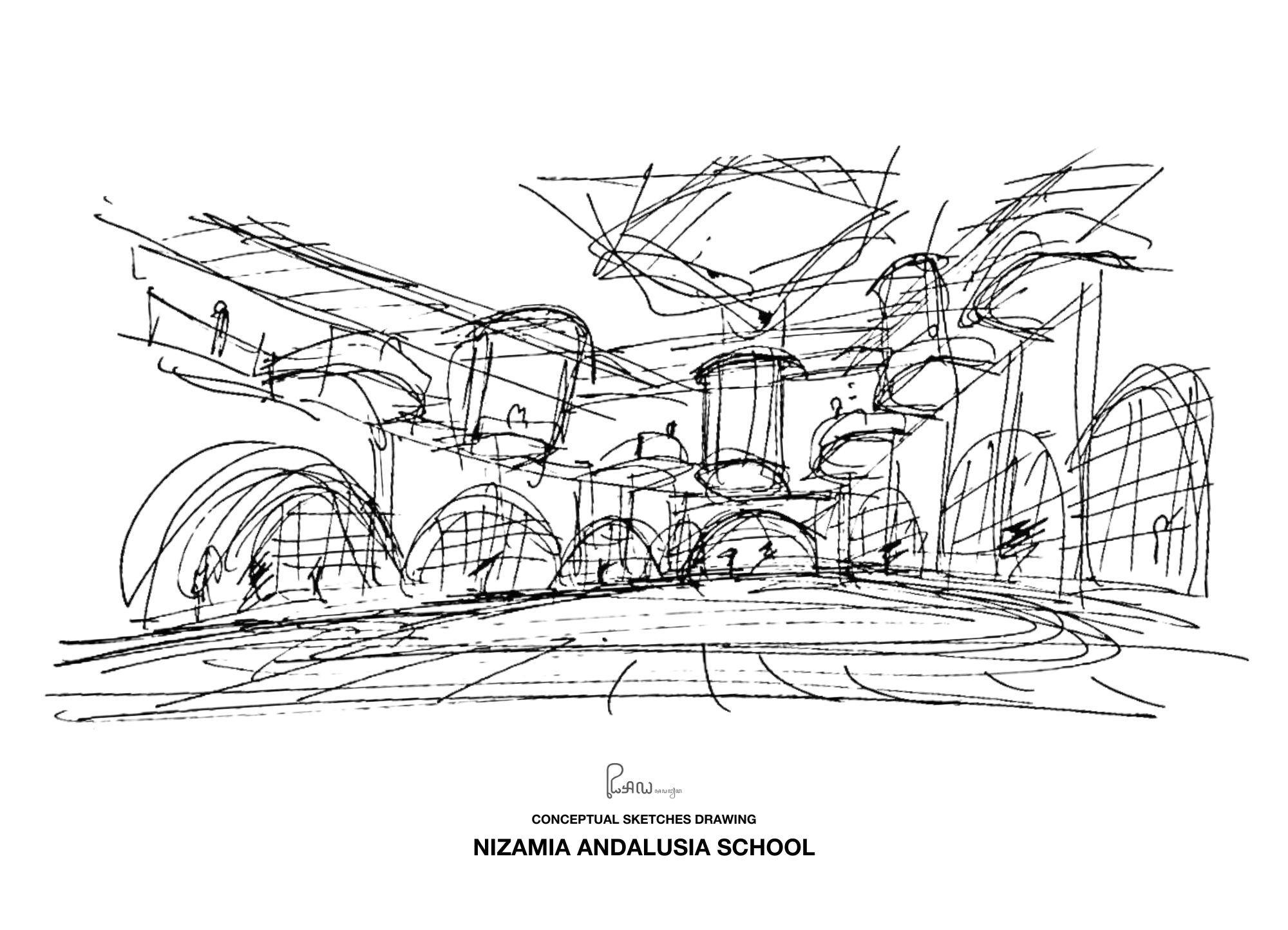
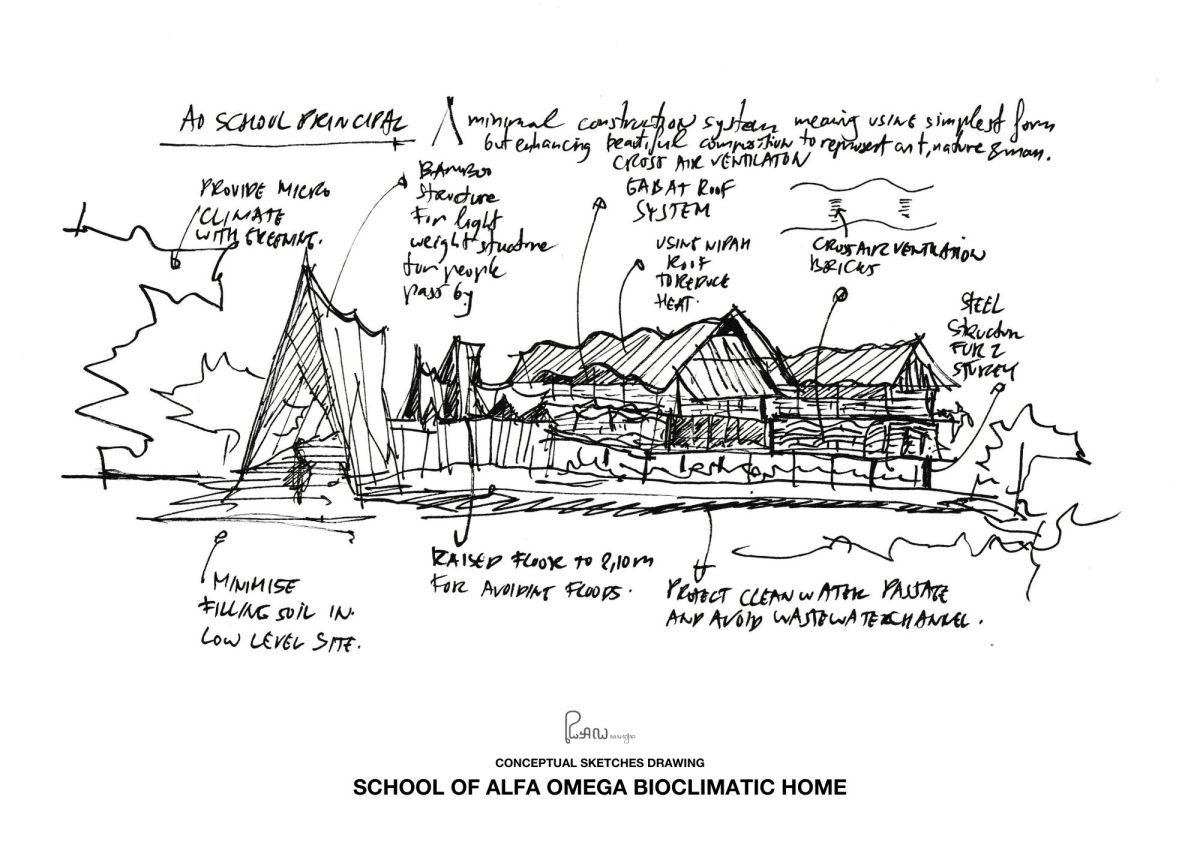
Alpha Omega school is an educational building with the spirit of locality. Located on Tangerang city, it sat on 11700 sqm area with the prior condition of the swamp and paddy field. The design responded to this unstable soil condition by raising structure to 2.1 m high above the ground. The site itself was chosen as part of the design scheme, —corresponding to its natural surroundings, in order to give children a sense of closeness to nature, thus invoking outdoor-learning experience.
(The building integrates 4 modular buildings, with an efficient access point in one central courtyard, due to limitation of local land zoning of what can be built and what can not be built.)

The solution to answer the brief of the project is to create an optimum collaboration, or bridge relationship in the economic and creative process of construction in two important levels of masonry steel and bamboo construction which can enrich the economic impact of the surrounding.
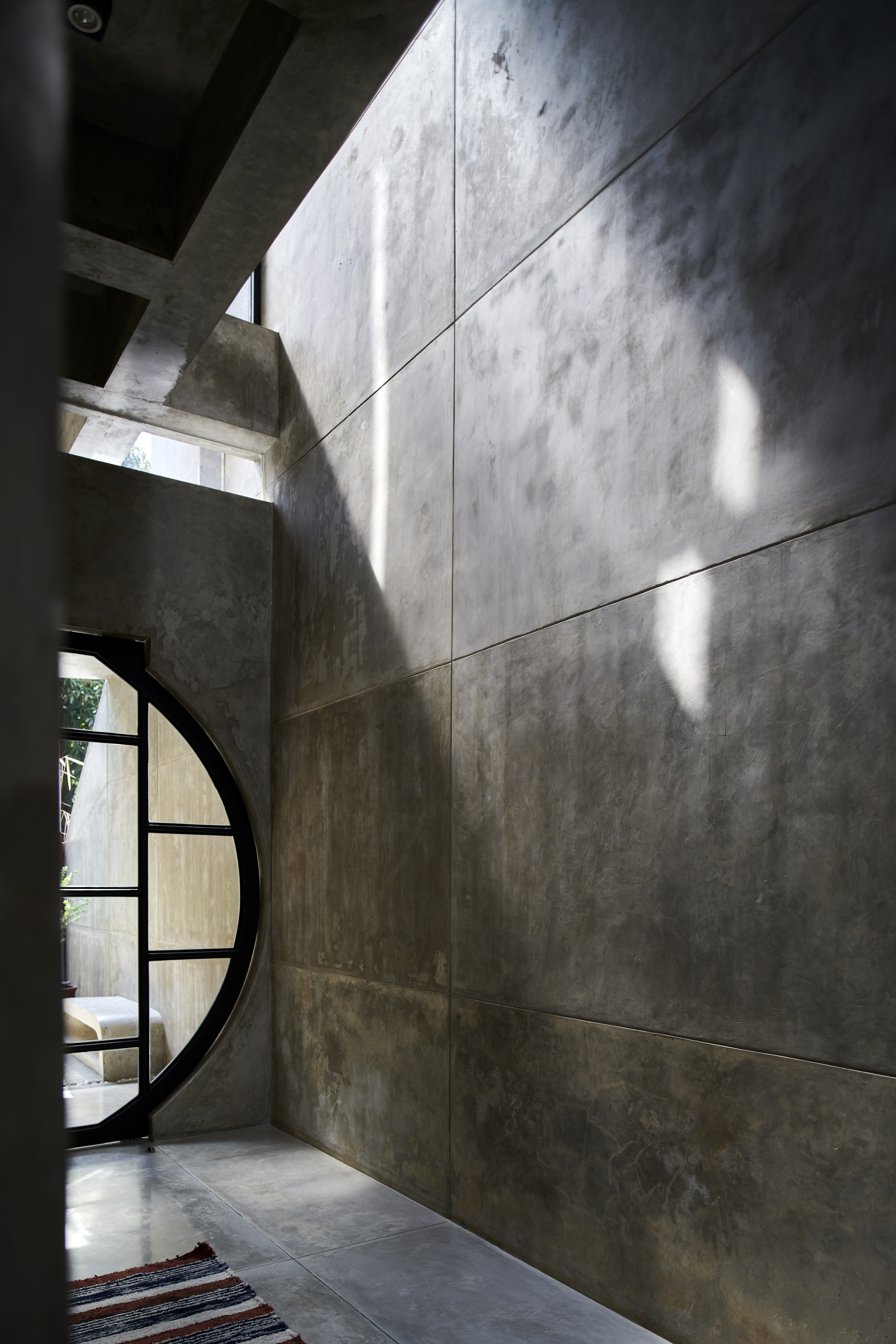
Steel structure, not only for its ability to hold structural load effectively but is also chosen for its construction speed and vigorous durability. The whole building based on this framework, from foundation to roof component. Steel in its variation from thickness to treatments, opening chances in versatile details of the design. While bamboo, on the other hand, is a flexible matter that requires little maintenance in long-range which always available in that area. This availability also related to brick and concretes in that area. The structure is combined with bamboo for the roof to create a parabolic shape which enhances the character of Nipah which can be tilted or bent while keeping the cost constraint on budget. The brick is stacked in solid void pattern to allow cross air circulation in the facade. Meanwhile the polished bare concrete is used as floor finishes as its durability for a daily school activity.

Another target of the project is to create a collaborative bonding within people and its buildings. Initiating a healthy social cycle with local involvement has proven to unlocked the collective creative process of the construction. This achieved by hiring diverse local craftsmen, rather than employing prime developers. This project completed by local stone masonry, to steel welder from the Salembaran area, and bamboo craftsmen from the Sumedang area. Each has its originality, without losing its ubiquitous understanding of school design.

The local craftsmanship is the answer of 3 problem, which is: 1. Optimum resource, 2. Time constraint, 3. Manpower. The material resources can be found within 5 km from the site to accelerate development while reducing the carbon footprint at the same time.

In 4 months range, the craftsman is categorized into two types:

(1) Light structure, which is concentrated on the roof. Constructed by a triangular light steel frame per 600 mm, man-powered by 40 Sumedang craftsman. Its low-cost material had reduced 30 % initial budget, using bamboo and Nipah entirely.


(2) The heavy structure is built for modular classrooms by Salembaran craftsman constructing masonry and steel framework. By the first 2 months, light structure craftsmen had constructed dock, followed by roof and ceiling details. In followed 4 months they joined in heavy structure part. The school is built in 4 months’ time.

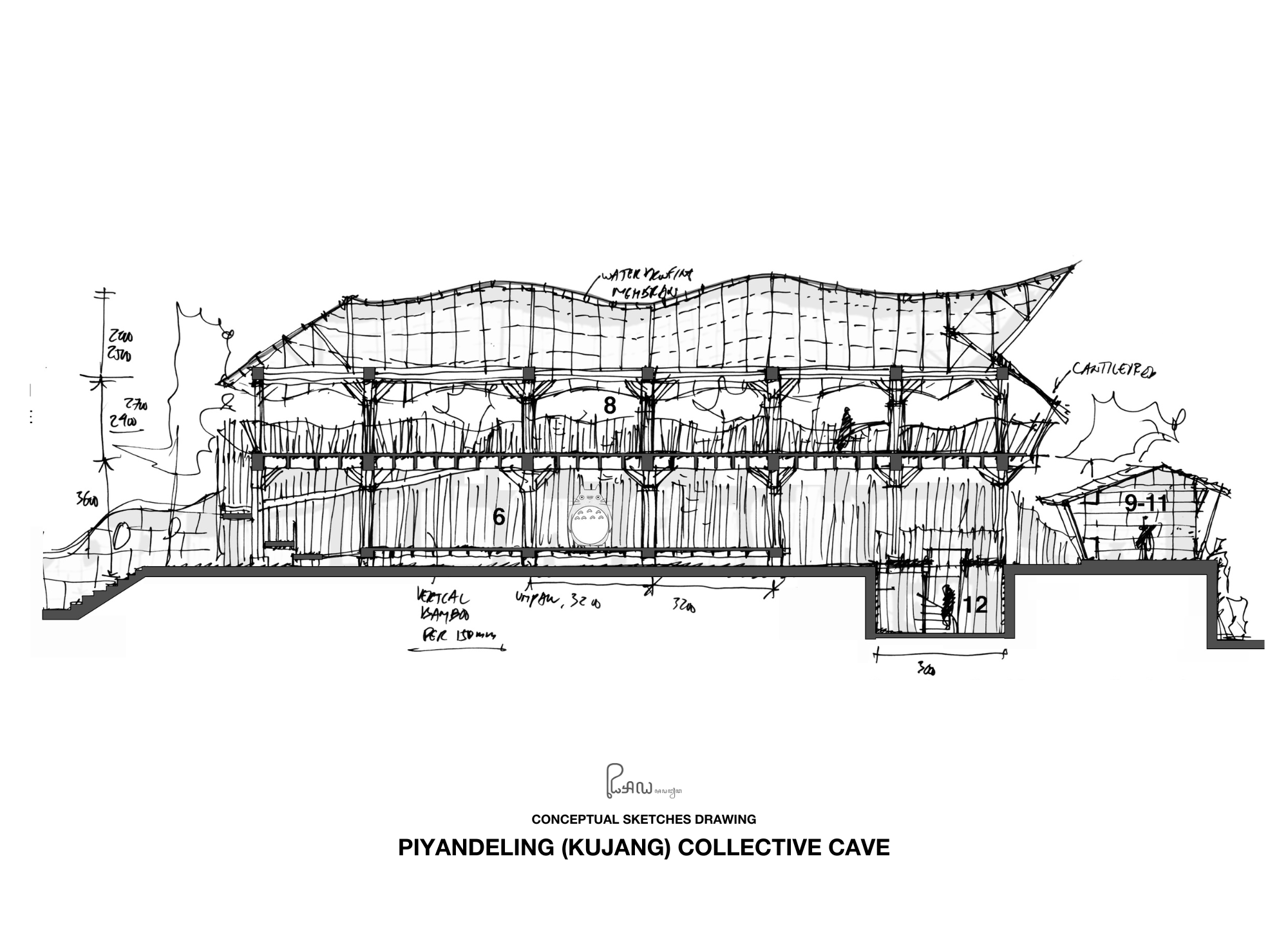
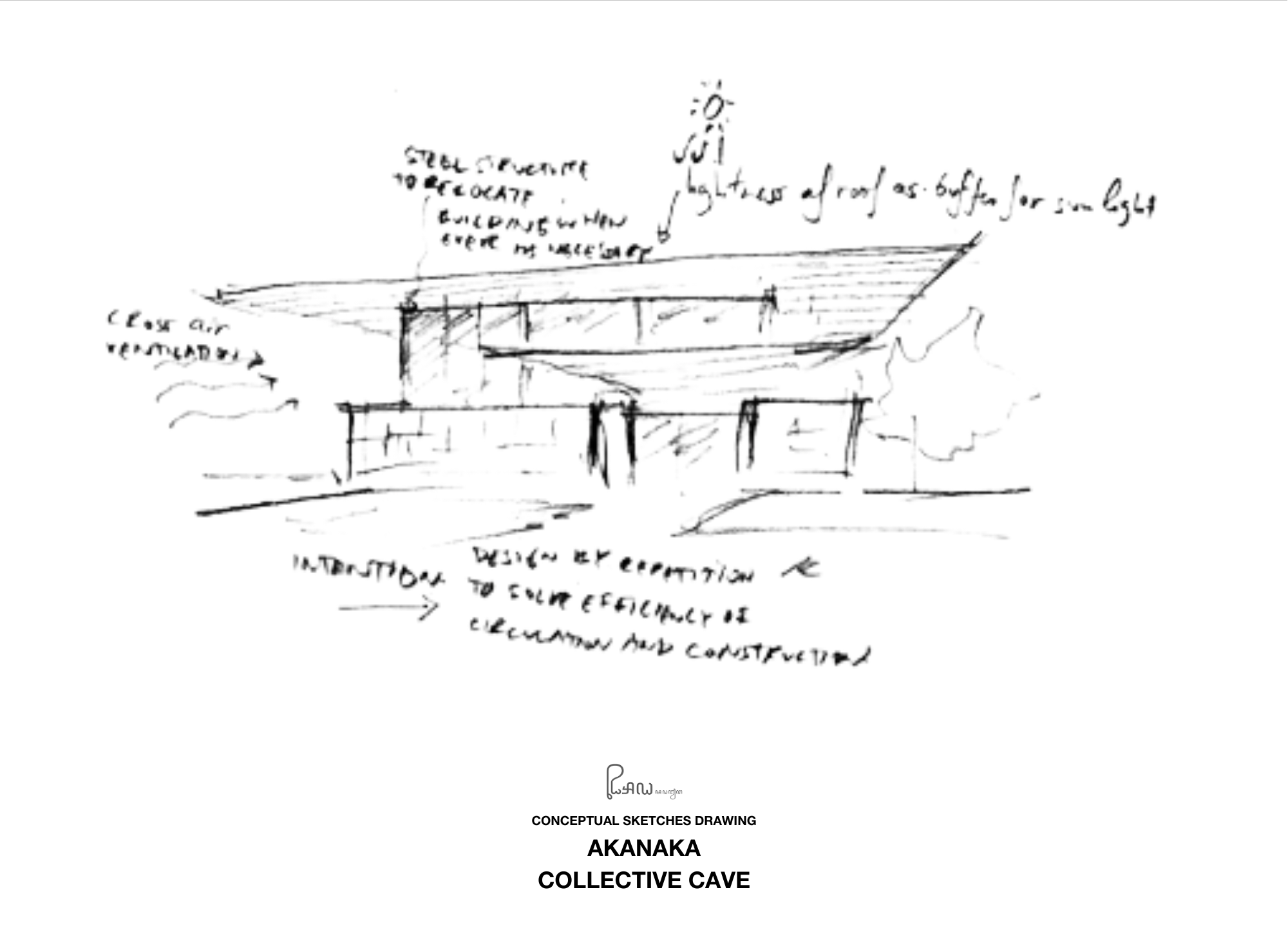
The school designed as a passive cooling building, which relied heavily on natural cross air ventilation in its construction. The open-high ceiling designed as an airing pathway, followed by porous solid-void brick on each side of the classroom’s wall. This way, interior airflow is circulated optimally without the necessity to use the air conditioner. For heat problem, the structure on top of the corridor is cantilevered by 2000 mm to create natural sunshade while providing protection from heavy rainfall. Nipah’s roof, brick’s solid void facade, bamboo’s ceiling, and concrete’s floor finishes provide low thermal conductivity materials that allow the building to cool down in an average whole year, interior temperature to 27-celsius degree. it the opening in the building designed for 100 percent daylight until afternoon, and 100 percent LED in the night time.

Kategori
About Us

Dream Team

Dream Team | The way we think and put people as a framework

  • Nous Team
  • Sophia Team
  • Episteme Team
  • Techne Team
  • Phronesis Team

Dream Team | Kolaborasi Impian

The way we think and put people as a framework?

I’ve been looking for ways to understand systematic thinking in our architectural practice for a long time. And we found the systematics from Indah Widiastuti, who became my supervisor at ITB. Those moments were actually sparked during a discussion at the OMAH Library, even 21 years later. There we discussed ideas about the wisdom of sorting out how to think creatively and systematically. The systematics is Nous which is taken from 10 chapters of the book “Nichomachean Ethic Book IV” by Aristotle (300SM). This process is like a process that tries to go backward to look back.

The book contains advice like a father to his son about being a good person. This book describes the balance of the universe, which is described as a cosmic intelligence (such as the balance of the orbits of the moon, earth, and planets) which Aristotle then established for the human mind. In the discussion of Chapter 6 specifically discussed virtues and capacities to build insight, intelligence, and the ability to acquire intellectual and practical wisdom: Nous, Techne, Episteme, Phronesis, and Sophia.

Then this is what we made into the framework in Team Universe. This concept of virtue exists in our daily lives. The first, Sophia, is a more personal domain that forms courage and love for work. Luckily in the world of education, there is a second thing, Techne, which is simulated into a design studio reinforced by practical and professional lectures even though this learning is considered optional. In other words, the policies or learning styles of each university can be different. The third, Phronesis, is tactical intelligence in action. However, in the world of education, which is dominated by the listening learning style, there is very little room for practicing tactical intelligence. This creates a gap between lessons at university and the world of practice. The fourth, Episteme or science, has the largest portion because in education, we learn more by listening. And the four form a Nous, a capacity for building insight, intelligence, and acquiring intellectual wisdom.

How is our system formed?

Associate designers can be called architecture designers or designers or architecture assistants in several regions, in the US, UK, or any part of the world. The role is designed for a person in transition to knowing the practice of the profession. Here in RAW Architecture, they’re expected to obtain the license or understand the complexity of the design ecosystem, also to be fully adaptive, humble, critical, and creative on the problem seeking and the problem-solving.

Intermediate Associate Designer is a person who has the ability to bridge the integration between disciplines, architecture, other design specialties, mechanical, electrical, plumbing, and structures. Hence comprehensive details, including the cost estimations, analysis, and breaking down the S curve to carry out the project toward reality, will be fundamental for this role. “Intermediate”, they become the bridge between the internal ecosystem of RAW Architecture.

A Senior Associate Designer has a purpose of getting the project done and knowing the logic of the client’s purpose, and maintaining the service toward the project finalization. Senior Associate is expected to be able to control the quality of the project in terms of the implementation, method, and service, as well as to provide suggestions to achieve the most optimal use of time and resources.

An Associate Partner Designer has a role in sustaining the vision and mission in integration with the business proposal, the business itself, the internal ecosystem, and the social impact of the studio. The objective is to maintain and spark the legacy and improve Indonesia’s architectural ecosystem. The partnerships come with adapting to the ecosystem potential and fulfill the goal of providing sustainable practice and sustainable architecture that can be a benchmark in the architecture profession around the world.

Greetings,

Realrich Sjarief

Founder

Founder I (Realrich) act as the principal, guiding the vision of RAW Architecture, DOT Workshop, and OMAH Library, which express a deep love for architecture. In the studio, the principal ensures that this vision is carried out in every detail. Our design approach is rooted in four key principles: bioclimatic design, riparian design, unity in cultural diversity, and cognitive-based design. These principles define an architecture that listens to diverse contexts, stakeholders, and actors, while integrating networks and substantial theories. Ultimately, our architecture embodies the spirit of togetherness, laying a solid foundation for humanity in every project, at every scale, and with every participant involved.

Nous Admin

Administration focuses on the standardization of contracts, technology, and protocols. The team ensures that the studio and its ecosystem have the necessary resources to implement a smooth workflow. This division serves three main purposes: supporting employee health and well-being, providing effective reskilling and upskilling opportunities, and improving talent progression and promotion processes. The team fosters a strong mentorship system, aligning mentors with mentees to create a thriving ecosystem for everyone.

Nurul Septiawati

Senior Associate Administration and Finance

Affiliation Universitas Esa Unggul

Annisa Aprilita

Associate Administration and Finance

Affiliation SMAN 1 Kikim Timur

OMAH Library Administration

Aldian Dwi Putra

Associate Administration and Finance

Affiliation SMK Muhammadiyah 2 Wates

Devy Annisa

Associate Administration and Finance

Affiliation Universitas Budi Luhur

Phronesis Engineer

In our architecture studio, craftsmen are not merely workers, but part of an extended family formed through long standing, intergenerational bonds. Some have been with us since the previous generation in the 1980s, while others joined over time, bringing a spirit of compassion and innovation shaped by the present era. Their diverse backgrounds, nomadic field experiences, and shared principles of discipline and courage in facing challenges create a process that is deeply humane, one that values ideas while balancing positive encouragement and firm guidance. Values of discipline, camaraderie, creative iteration, and total commitment form a lasting foundation, allowing the team to grow through a natural process of development, therefore enabling our studio to evolve as a warm yet professional community dedicated to realizing architectural work.

Structural, MEP, and Architectural Detailing

Bayu

Supervisor on Site

Nuri

Supervisor on Site

Blue Team

Nous

Nous is the mandala of architecture and is the total manifestation of love to architecture. This concept was discussed with Indah Widiastuti, my beloved teacher in ITB. We discussed the beautiful thought of organizing the elements of the process with nous that is divided by 4 category, Sophia, Techne, Phronesis, and Episteme.When love is positioned at the head and the episteme is hard, our architecture should be the home for many people. Techne is the left and right hands, and then phronesis is the food when you had barefoot architecture, and we have the system of the phronesis already in the world.

When we have the thinking hand-driven by Juhani Pallasmaa, when we try to sharpen our thinking and work, there are the drawing and implementation. And toward the nous, we see the manifestation of the man of architecture. Some people call it Vitruvius Man, some people said this was the best Gestalt principle or golden section, and some people said that it’s Kawruh Jiwa from Ki Angeng Suryomentaram. It’s the way that when the soul unifies with the body and mind, it becomes the total of architecture.

So, Nous is the way of channeling architecture to touch human, the heart of the civilization. Architecture can touch the heart of a beautiful civilization. Our -insertanion said “Manunggaling Kawula Gusti” (the union of mind with God). It’s a spell that we need to beautify the world.

Strategic GUHA

Arlyn Keizia

Senior Researcher, Curator, and General Manager

Affiliation Master: Universitas Bina Nusantara, Bachelor: Universitas Agung Podomoro

Strategic RAW

Agustin (Meimei)

Associate Partner Designer

Affiliation Universitas Katolik Musi Charitas Palembang

Analytic

Aditya Kosman

Associate Designer

Affiliation California College of the Art

Sophia

I imagine the beautiful architecture ecosystem, which starts from the Sophia, meaning love and kind of wisdom.

Sophia means love, and its vision and mission start with love. Sophia is the start of everything. It’s a Genesis of architecture. In this part, we discuss how to make the world beautiful with architecture.

The team that work within the Sophia boundaries has a deep love for arts, buildings and life, which are beyond architecture. The people here try to glue numerous intangible entities within architecture, and we discuss deeply through a lot of paradises. The book references Pilgrimage meeting new masters and discussing history, trying to open up new barriers to architecture. It is a journey about an un-ended love of architecture. It’s the way we can see that the horizon is always needed between the heaven which is the vision, the sky which is the goodness, and the earth which is the mission. It tells us to grow and to protect our beautiful roots. That’s what Sophia is meant to be.

Episteme

Episteme is a total reflection of the previous three continuums. Episteme is the relation that occurs when the three of the universes are combined. Is total wisdom something that we can learn from the process? It’s a total systematic knowledge, the type of “know”, what is the “know-how”, and the relation between each of the universes within one project and another, bringing another part of the groundwork theory, one of the obligations of what architects or creative people can do. In this epistemic world, the focus is to nurture the young minds and to open some barriers in learning.

The keyword of the epistemic world is long-life learning. The activity of learning includes reading situations, reading books, reading a lot of complexities, analyzing, discussing it, and then writing it into various reflections. Reflections can also be done by asking the intellectuals to join our discussion because we’re never perfect. Epistemic world is never-never perfect. It’s an imperfect beauty. That’s the beauty of knowledge. It’s always fragile. Being knowledgeable means that humans are able to stay fragile all of the time, eager to learn and open up many-many barriers for others and for yourself.

The epistemic world makes us reflect that there are many ways to explore. It’s a world of old minds. We discuss problems, ecosystem, nature, resources, art, philosophy, identity, nation building or home for people who love architectufe, to the unknown territory. Epistemic is the world of others in architecture. The epistemic world is the home, meaning OMAH. Architecture should be home to many people.

Designer

Chairunnisa

Intermediate Associate Designer

Affiliation Universitas Islam Indonesia

Nielson Huang

Associate Designer

Affiliation Universitas Bina Nusantara

Writing

Branding

Fransisca Matanari

Associate Administration and Finance

Affiliation STMIK Triguna Dharma Medan

Photography

Aryo Phramudhito

Part Time – Photographer

Affiliation Institut Seni Indonesia Denpasar

Back-end Kitchen

Techne

In this team, I believe that architecture is a continuous training, a way of sharpening the thinking in producing shop drawing from the stage of conceptualization until the implementation. Toward the end-to-end of the extremes is a never-ending relationship with the people involved: the clients, the builders to the other calling a crisis a lot of people will see, and the architecture workshop we feel. The sharpening process includes the various methods that we always deepen and invent through multiple inspirations in our practice.

We believe that each project contributes to one another’s transformation. One project inspires another. They are like brothers and sisters, and making it a family. That’s a beautiful architecture if we can drive it to the taxonomy of architecture. Which means in whatever we’re doing, we have sparks of shyness characteristic that started from the seeds of our goodness from the relations between our clients, our team, and our friends, as well as my deep reflection.

In this team, we believe architecture is like the blacksmith’s process. A bar of steel needs to undergo multiple process to forge it into a beautiful sword. So at the end of the day, we’re trained to perfect our method until the last drop of our blood ends our totality.

Techne Normative

Muhammad Yusrul

Intermediate Associate Designer

Affiliation Universitas Diponegoro

Techne Substantive

Phronesis

Phronesis is a very unique way to understand the context of architecture, especially in Indonesia. The layers of the culture and craftsmanship, as well as our way of doing things is very different from the other areas of the world. In the countryside or the city, there are always collisions between industrialization and rationalization, and the maturity between both.

We believe that both of the extremes can be harmonies with the total adaptation. It’s a very difficult journey because to achieve it, we need full sensitivity on the site. The drawing may be changed, and the understanding may be varied, but the goal is to have the most optimal way of using the resources in the field. The discussion about building cost, the time schedule, the relations with the client, happy and positive insight, the relation between the team and the client, and every hellish will be more important to tech. The fabric of architecture is the relation itself. And the working (time) on architecture should not be too short. It should be long relations.

In this team, we have a long marathon attitude. The method is for sure a bloody battle, but for sure, we’re gonna win the battle as long as we have a spirit of totality.

Muhammad Zyadi

Intermediate Associate Designer

Affiliation Universitas Sriwijaya

Kategori
projects

Project 01 – Alfa Omega

Alpha Omega school is an educational building with the spirit of locality. Located on Tangerang city, it sat on 11700 sqm area with the prior condition of the swamp and paddy field. The design responded to this unstable soil condition by raising structure to 2.1 m high above the ground. The site itself was chosen as part of the design scheme, —corresponding to its natural surroundings, in order to give children a sense of closeness to nature, thus invoking outdoor-learning experience.
(The building integrates 4 modular buildings, with an efficient access point in one central courtyard, due to limitation of local land zoning of what can be built and what can not be built.)

photography by Eric Dinardi

The solution to answer the brief of the project is to create an optimum collaboration, or bridge relationship in the economic and creative process of construction in two important levels of masonry steel and bamboo construction which can enrich the economic impact of the surrounding.
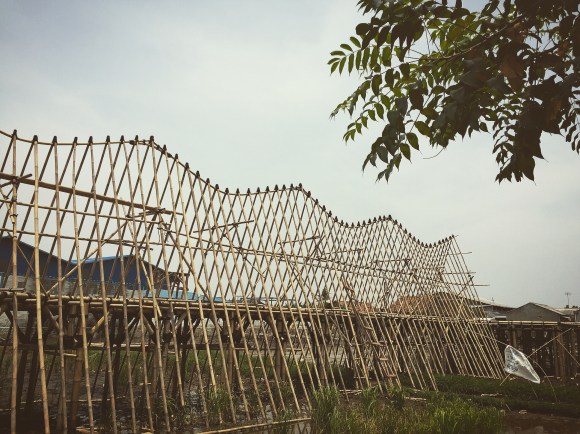
Steel structure, not only for its ability to hold structural load effectively but is also chosen for its construction speed and vigorous durability. The whole building based on this framework, from foundation to roof component. Steel in its variation from thickness to treatments, opening chances in versatile details of the design. While bamboo, on the other hand, is a flexible matter that requires little maintenance in long-range which always available in that area. This availability also related to brick and concretes in that area. The structure is combined with bamboo for the roof to create a parabolic shape which enhances the character of Nipah which can be tilted or bent while keeping the cost constraint on budget. The brick is stacked in solid void pattern to allow cross air circulation in the facade. Meanwhile the polished bare concrete is used as floor finishes as its durability for a daily school activity.

Another target of the project is to create a collaborative bonding within people and its buildings. Initiating a healthy social cycle with local involvement has proven to unlocked the collective creative process of the construction. This achieved by hiring diverse local craftsmen, rather than employing prime developers. This project completed by local stone masonry, to steel welder from the Salembaran area, and bamboo craftsmen from the Sumedang area. Each has its originality, without losing its ubiquitous understanding of school design.

The local craftsmanship is the answer of 3 problem, which is: 1. Optimum resource, 2. Time constraint, 3. Manpower. The material resources can be found within 5 km from the site to accelerate development while reducing the carbon footprint at the same time.

In 4 months range, the craftsman is categorized into two types:

(1) Light structure, which is concentrated on the roof. Constructed by a triangular light steel frame per 600 mm, man-powered by 40 Sumedang craftsman. Its low-cost material had reduced 30 % initial budget, using bamboo and Nipah entirely.


(2) The heavy structure is built for modular classrooms by Salembaran craftsman constructing masonry and steel framework. By the first 2 months, light structure craftsmen had constructed dock, followed by roof and ceiling details. In followed 4 months they joined in heavy structure part. The school is built in 4 months’ time.

atap sekolah alfa omega di Telok Naga, model pertama menggunakan struktur bambu. Model kedua menggunakan struktur besi. Kedua model tersebut menggunakan curva parabloid untuk konstruksi bubungan atap.

The school designed as a passive cooling building, which relied heavily on natural cross air ventilation in its construction. The open-high ceiling designed as an airing pathway, followed by porous solid-void brick on each side of the classroom’s wall. This way, interior airflow is circulated optimally without the necessity to use the air conditioner. For heat problem, the structure on top of the corridor is cantilevered by 2000 mm to create natural sunshade while providing protection from heavy rainfall. Nipah’s roof, brick’s solid void facade, bamboo’s ceiling, and concrete’s floor finishes provide low thermal conductivity materials that allow the building to cool down in an average whole year, interior temperature to 27-celsius degree. it the opening in the building designed for 100 percent daylight until afternoon, and 100 percent LED in the night time.

Kategori
Project Bioclimatic House

Bioclimatic Home 01 – Rumah Putih

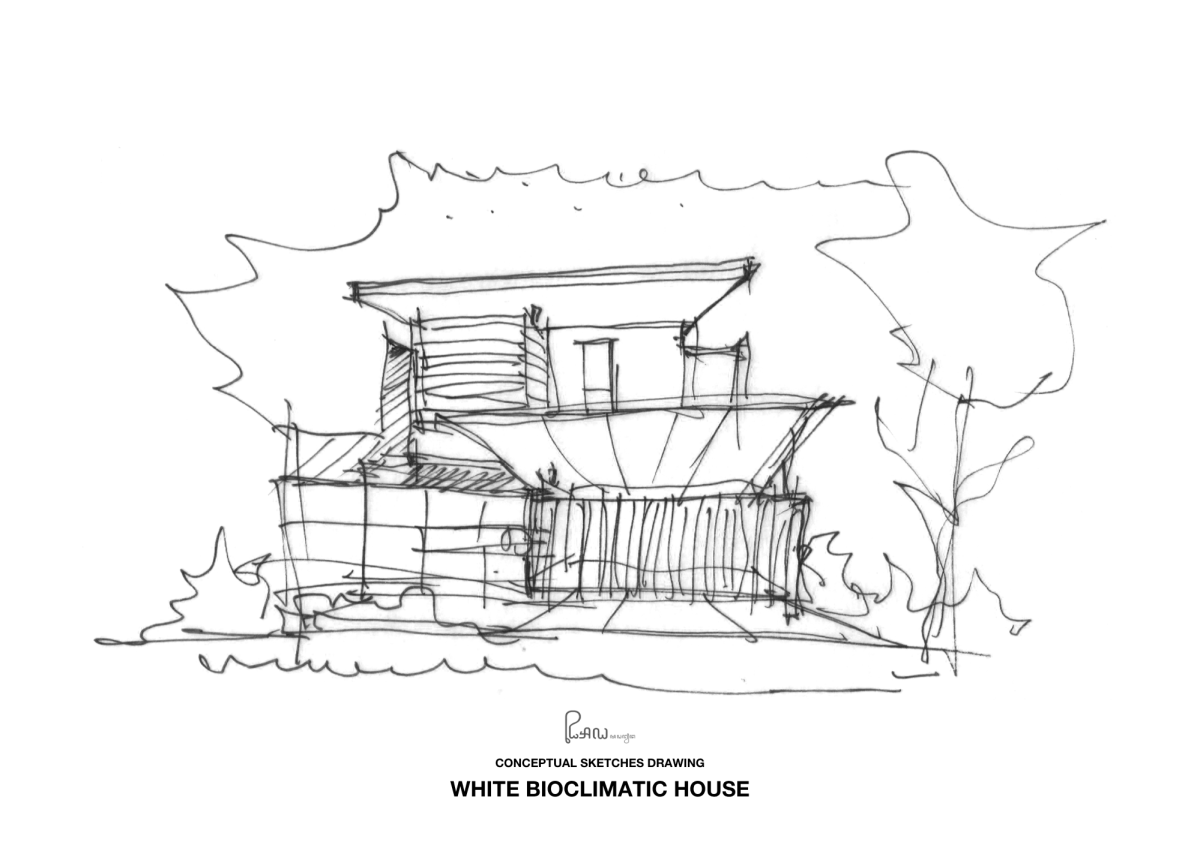
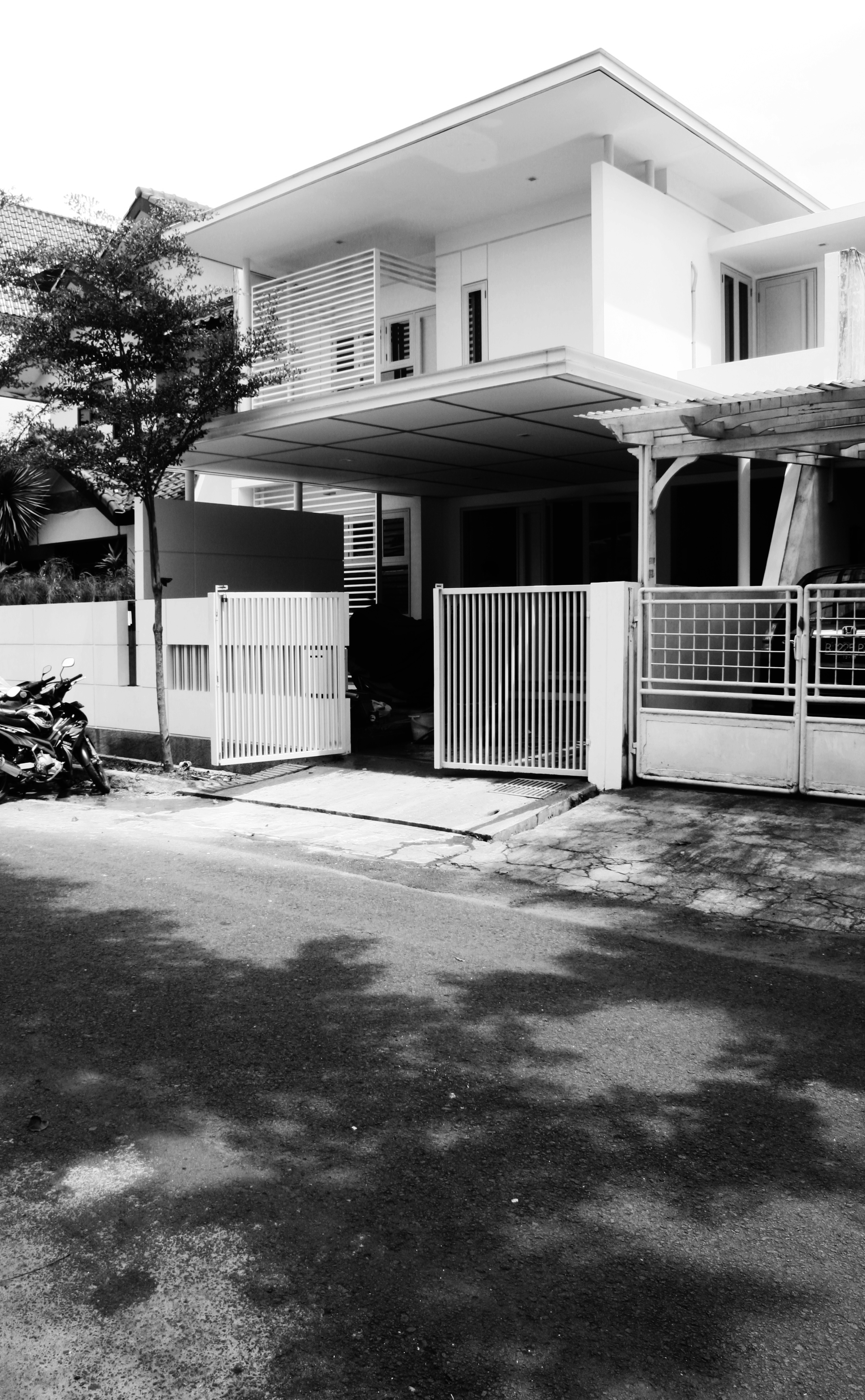
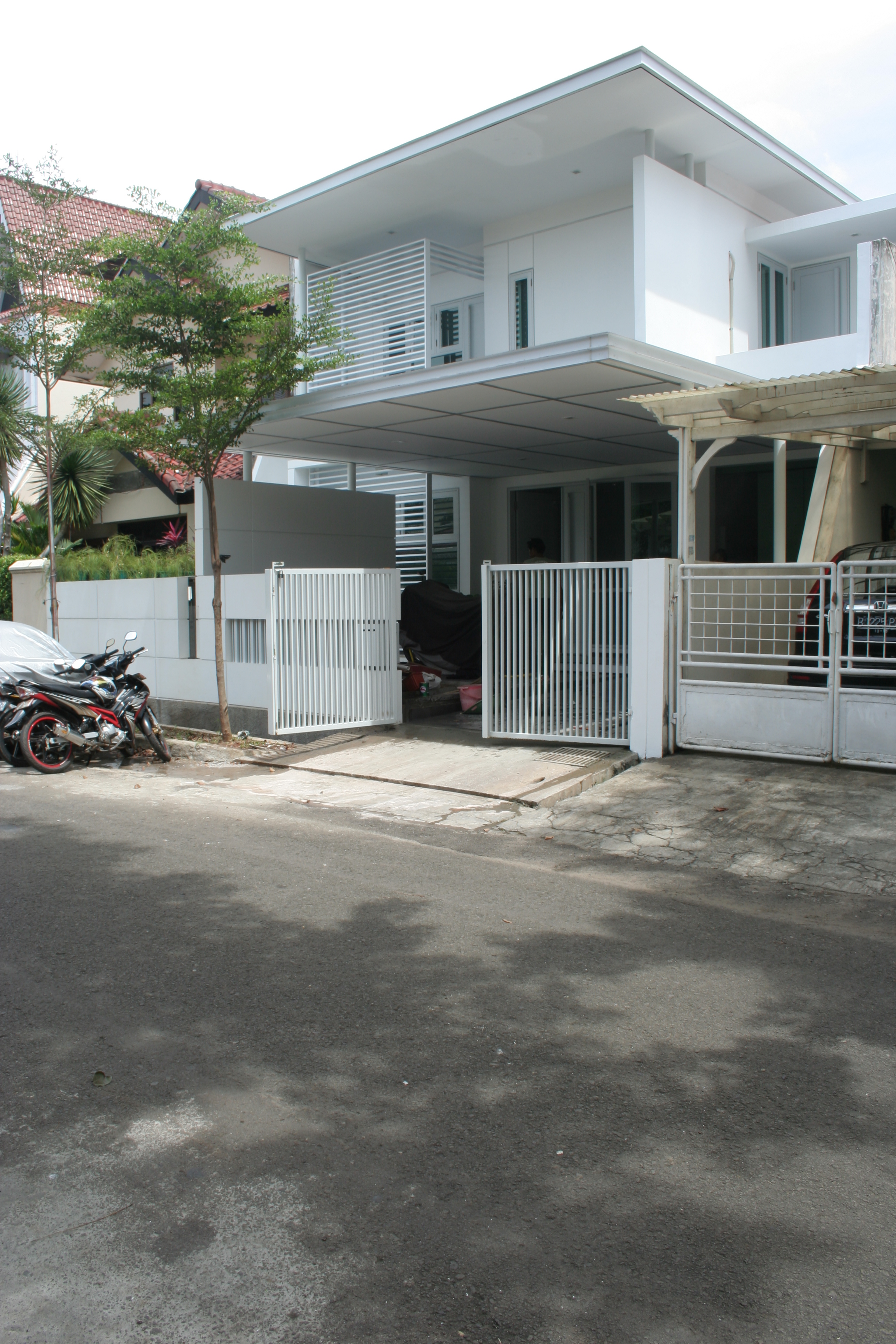
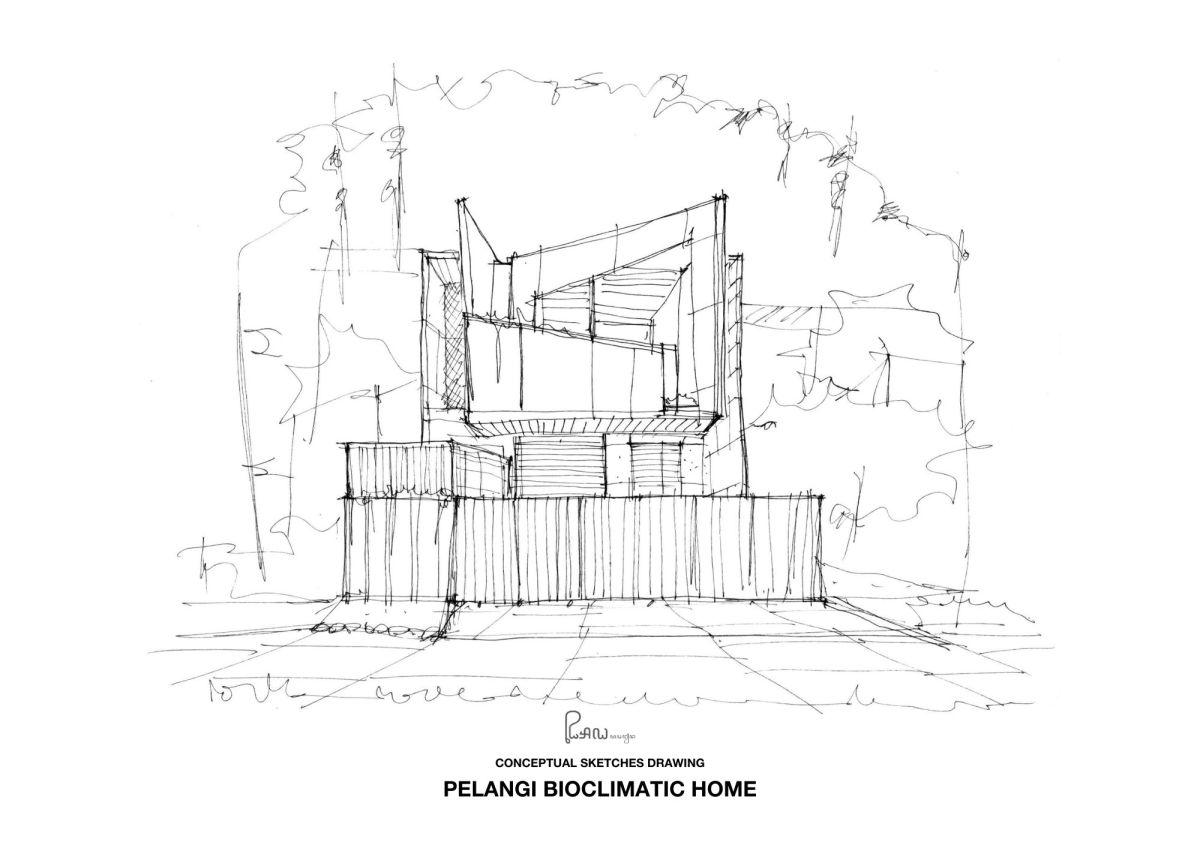
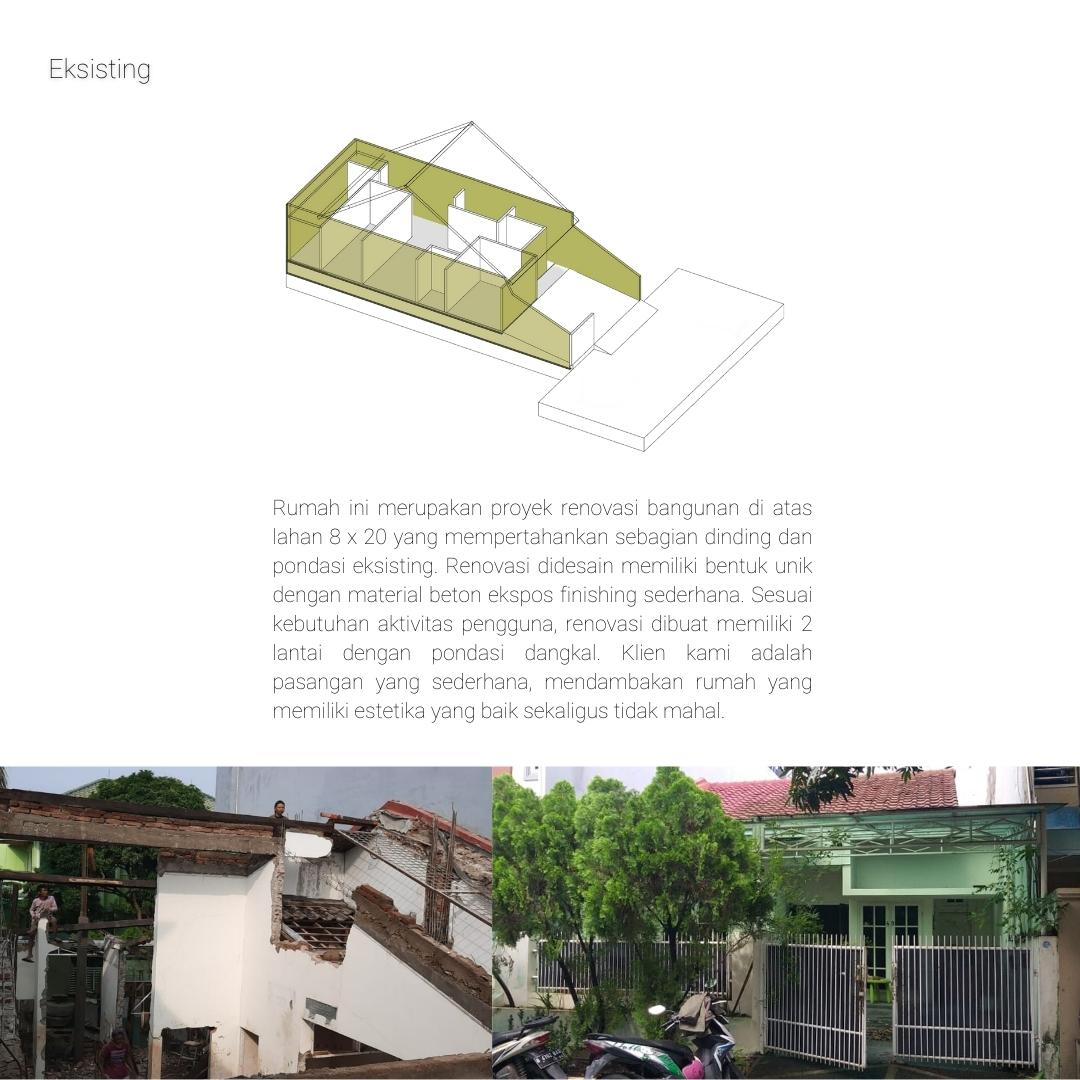
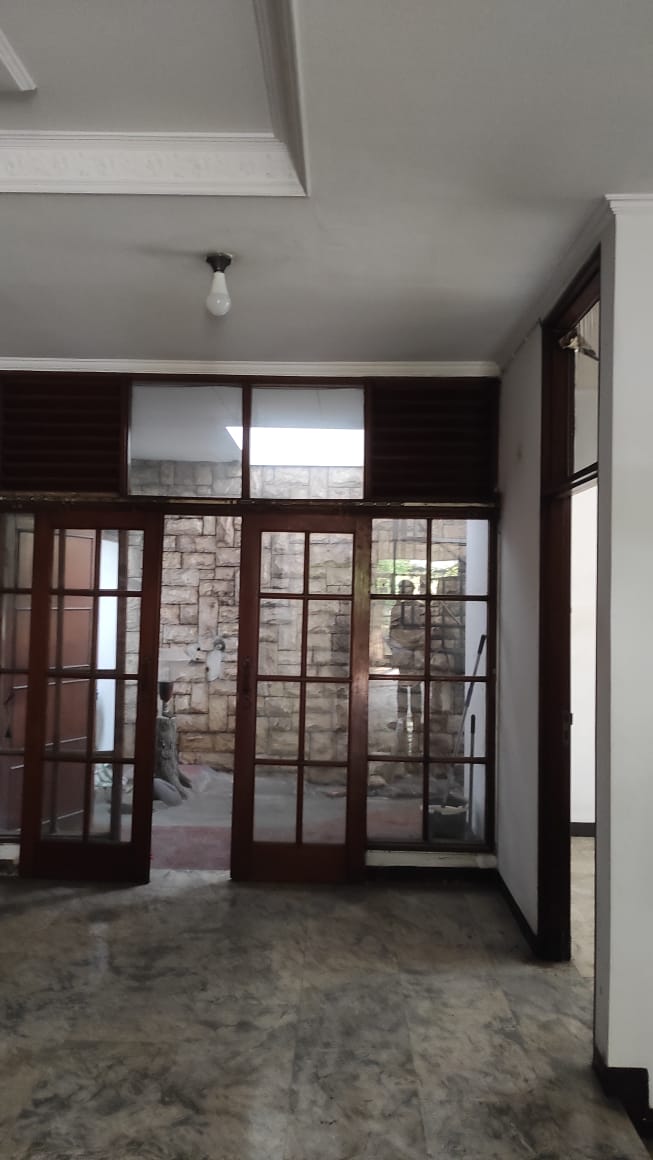
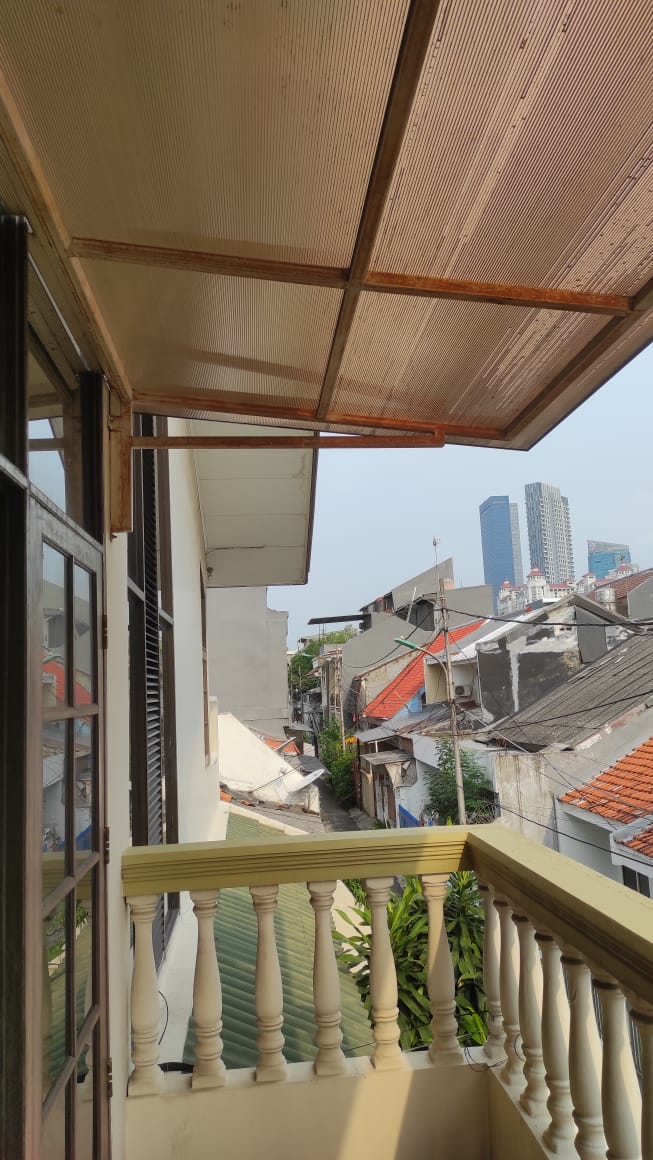
Ini adalah rumah yang kami desain sebelum Bare Minimalist di Jakarta berupa renovasi. Atapnya di perpanjang untuk mengantisipasi curah hujan dan diganti dari genteng ke penggunaan atap plastik. Sisi utara selatan dibuka, dan bangunan secara keseluruhan dicat warna putih. Struktur lama dipertahankan dengan optimalisasi 2 kamar tidur di lantai atas dan 1 kamar tidur di bawah. 

Kategori
Projects Collective Cave

Collective Cave 02 – Taman Mini Bird Park

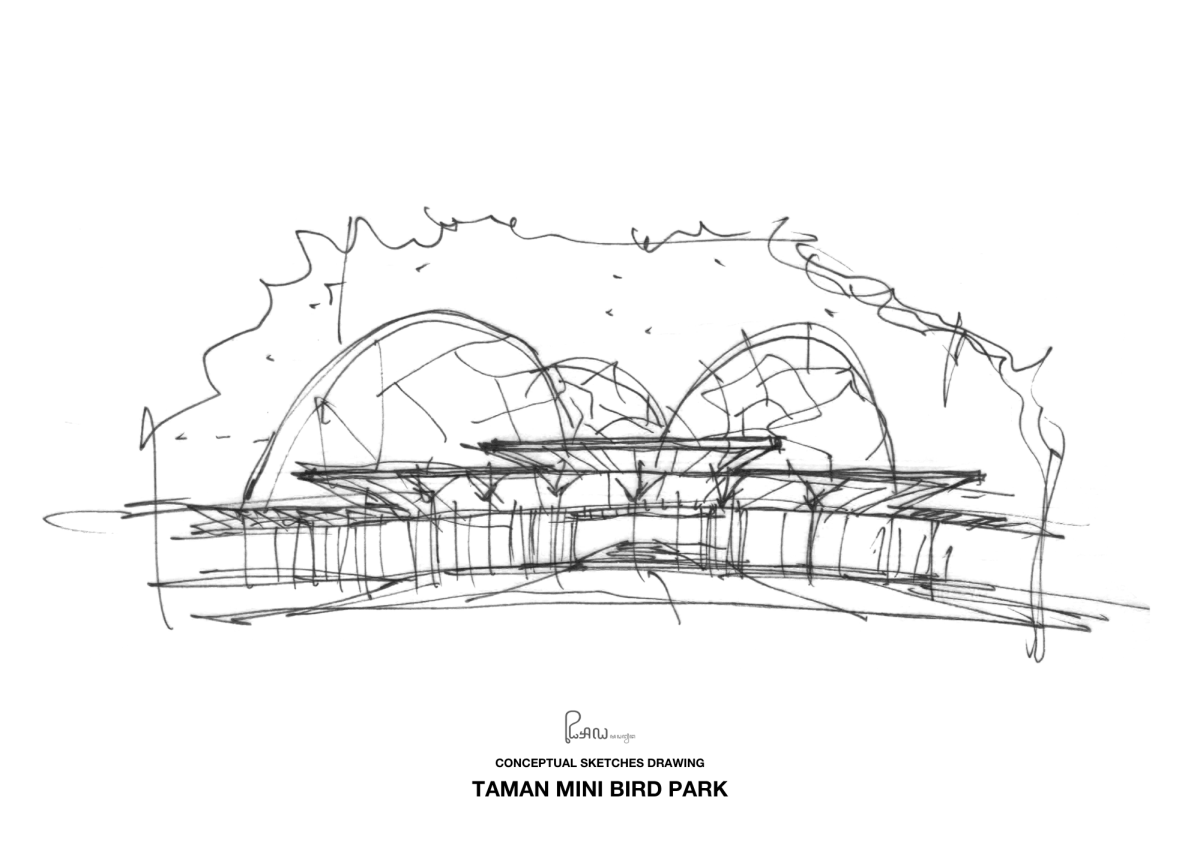
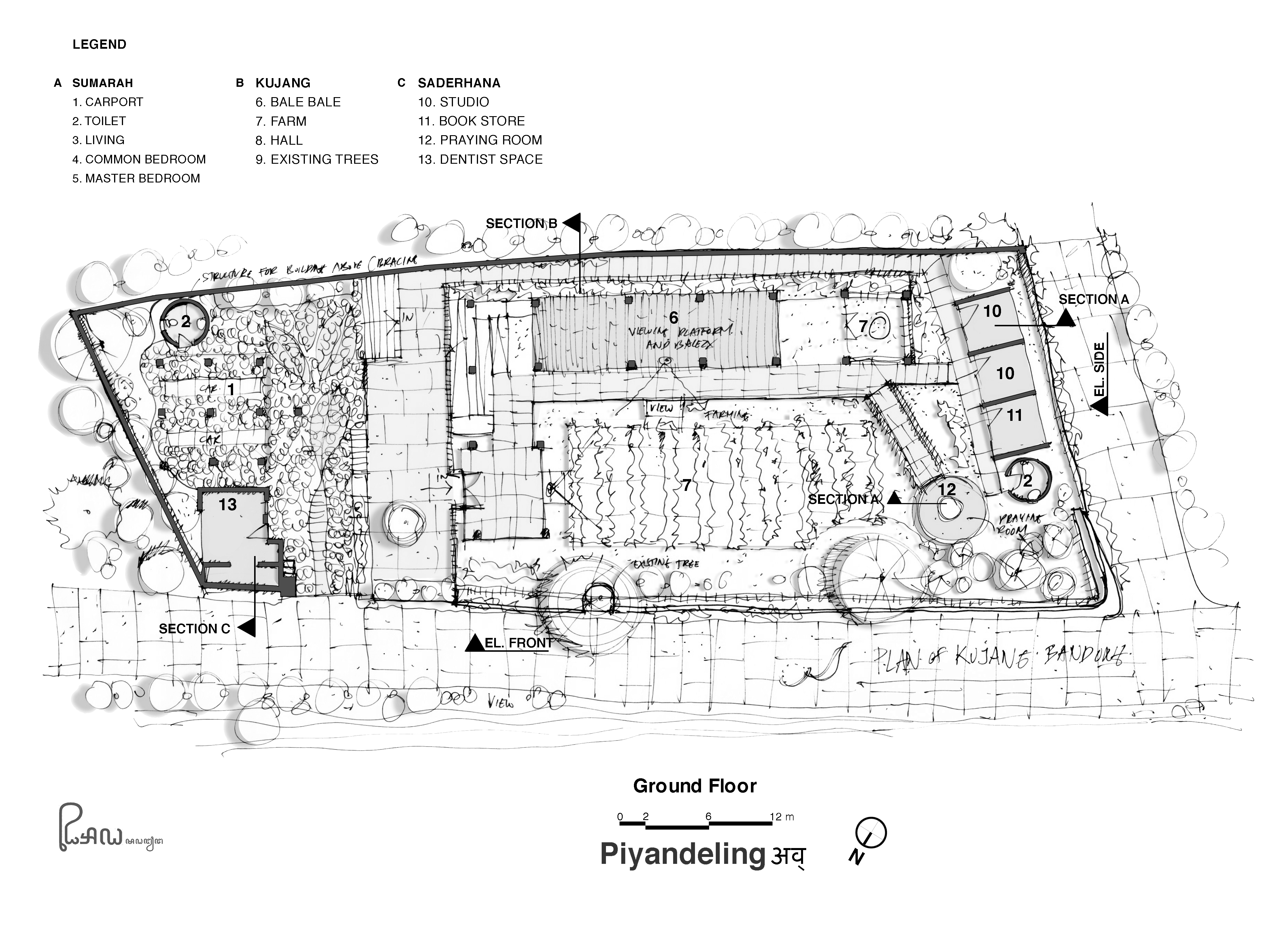
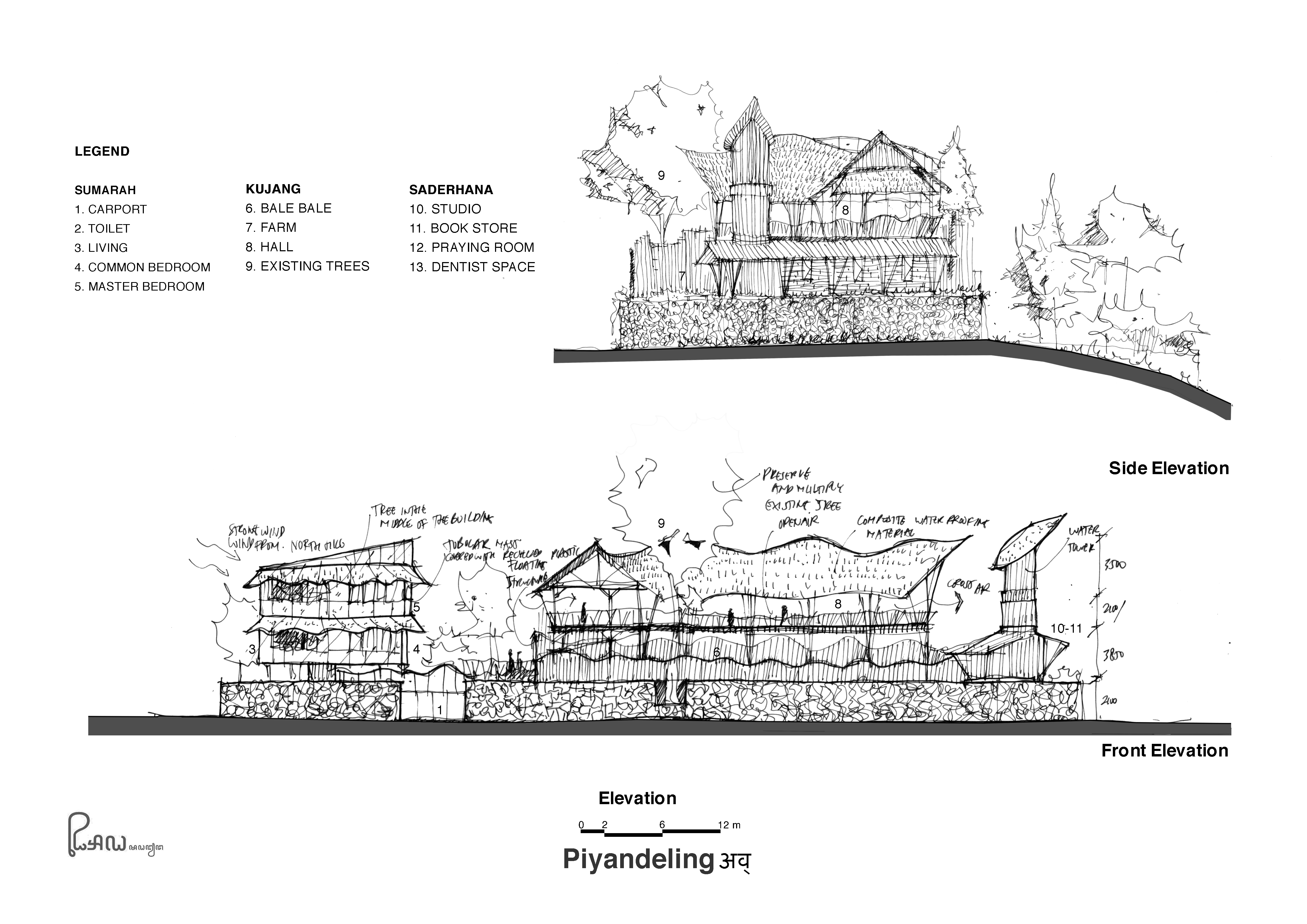
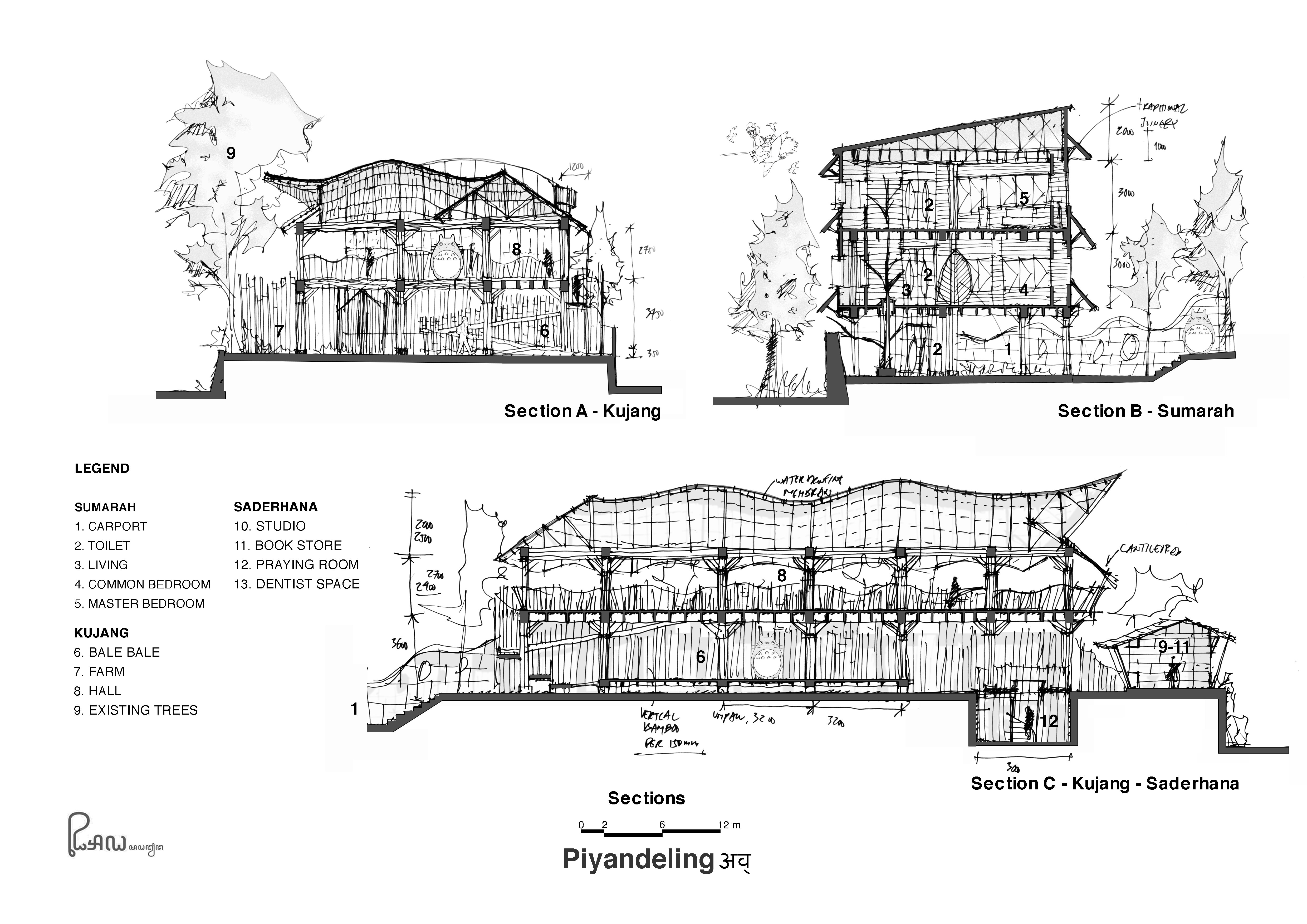
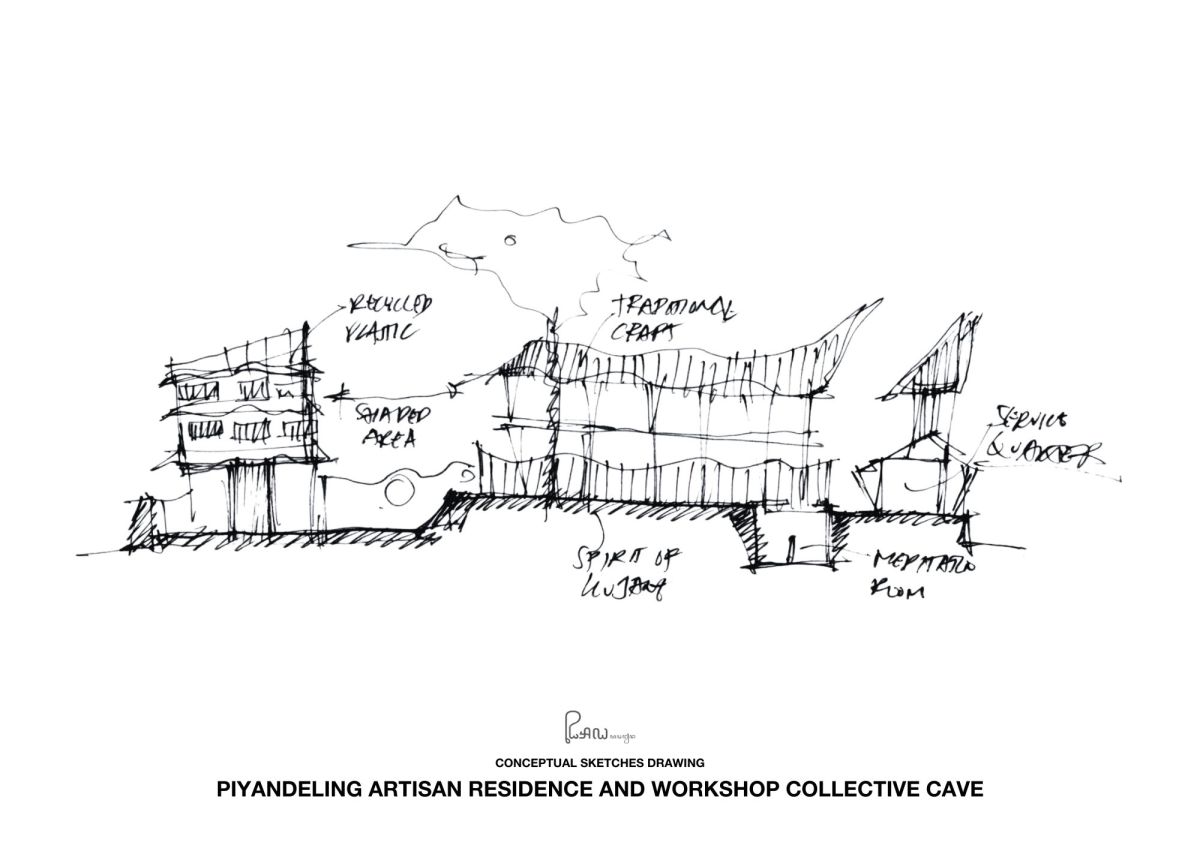
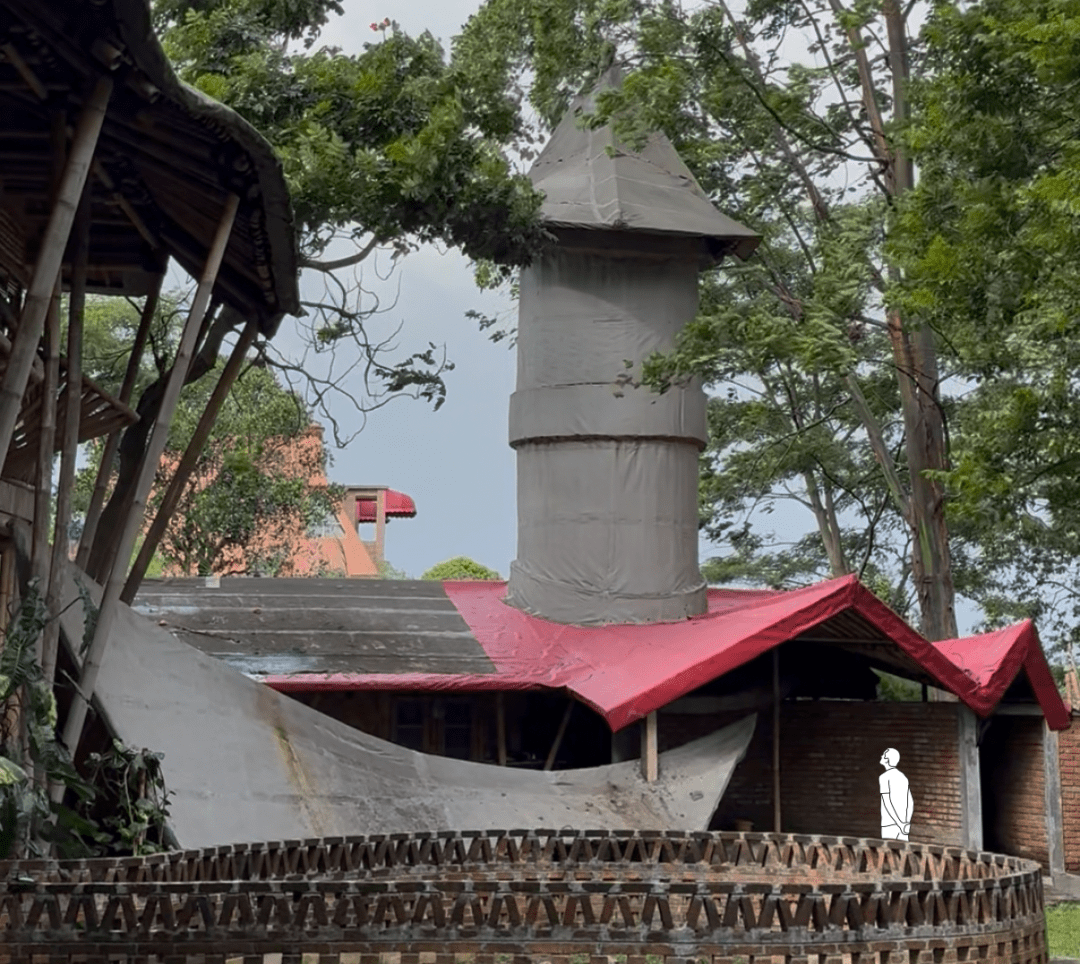
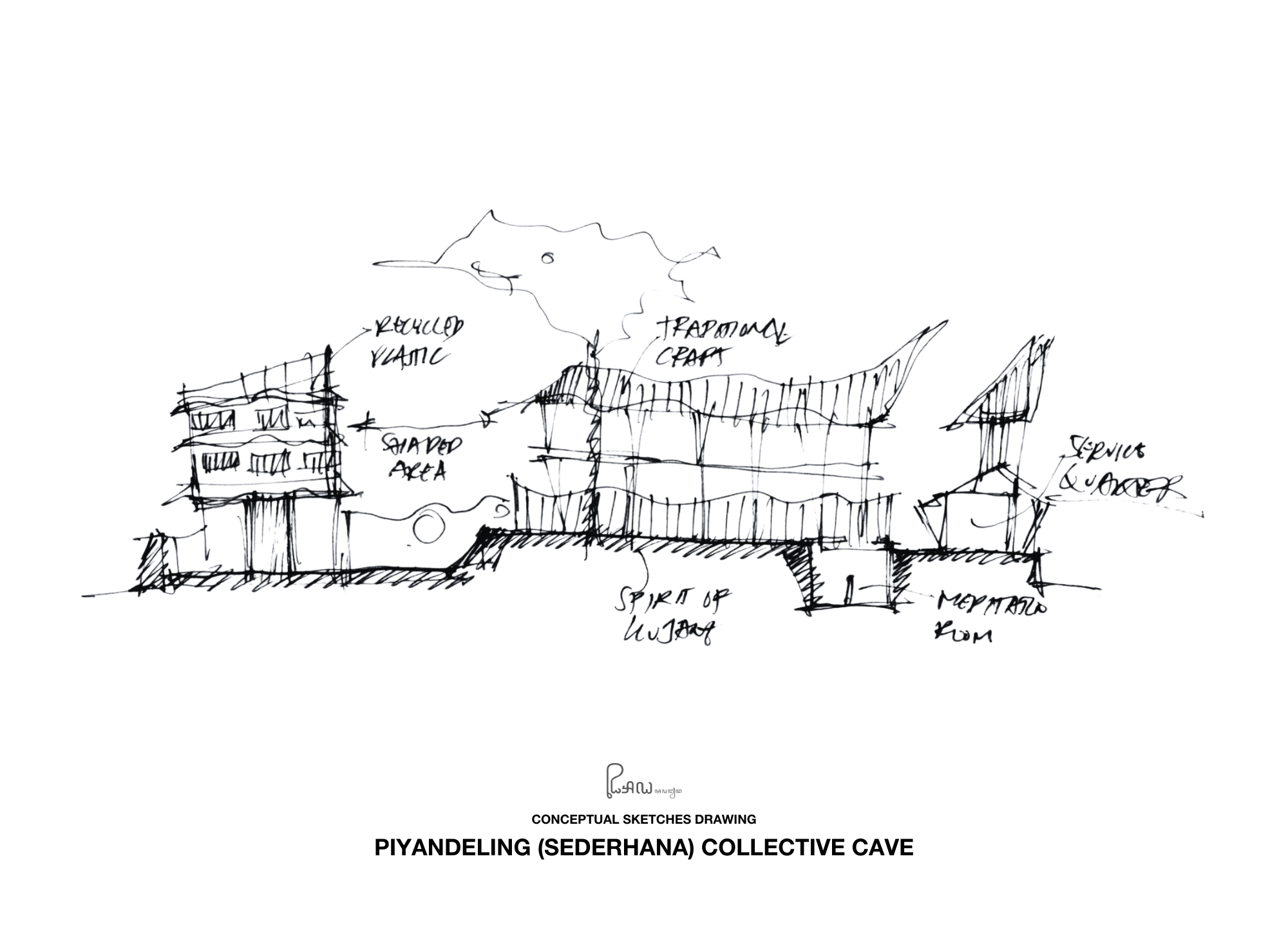
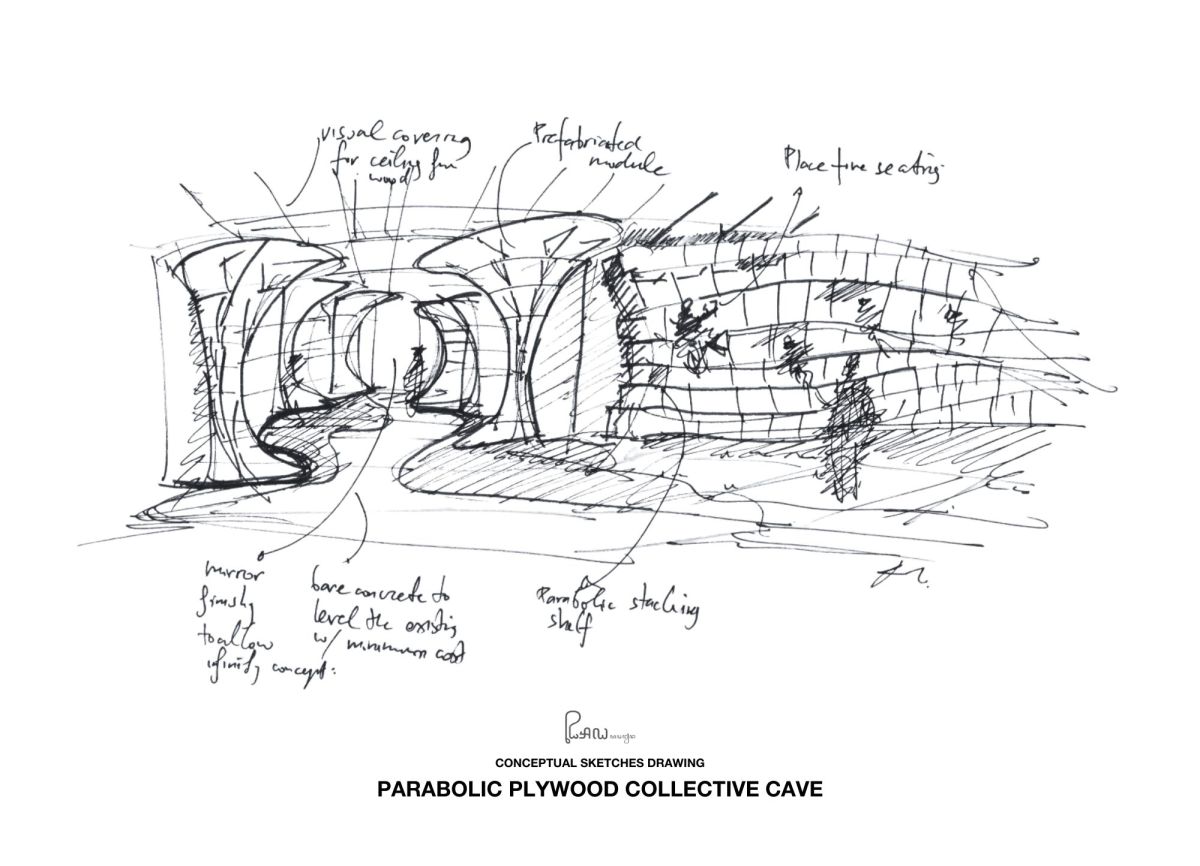
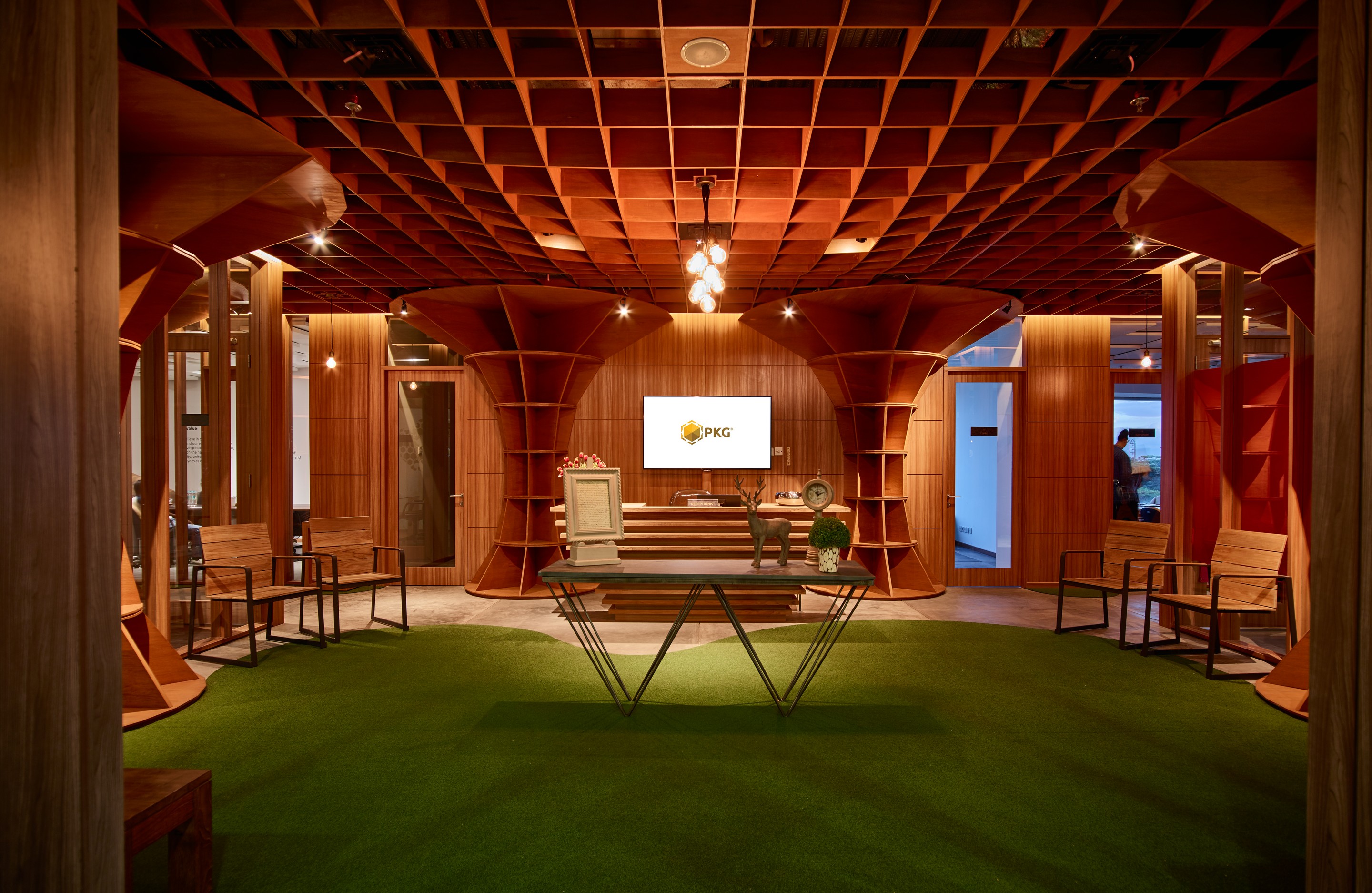
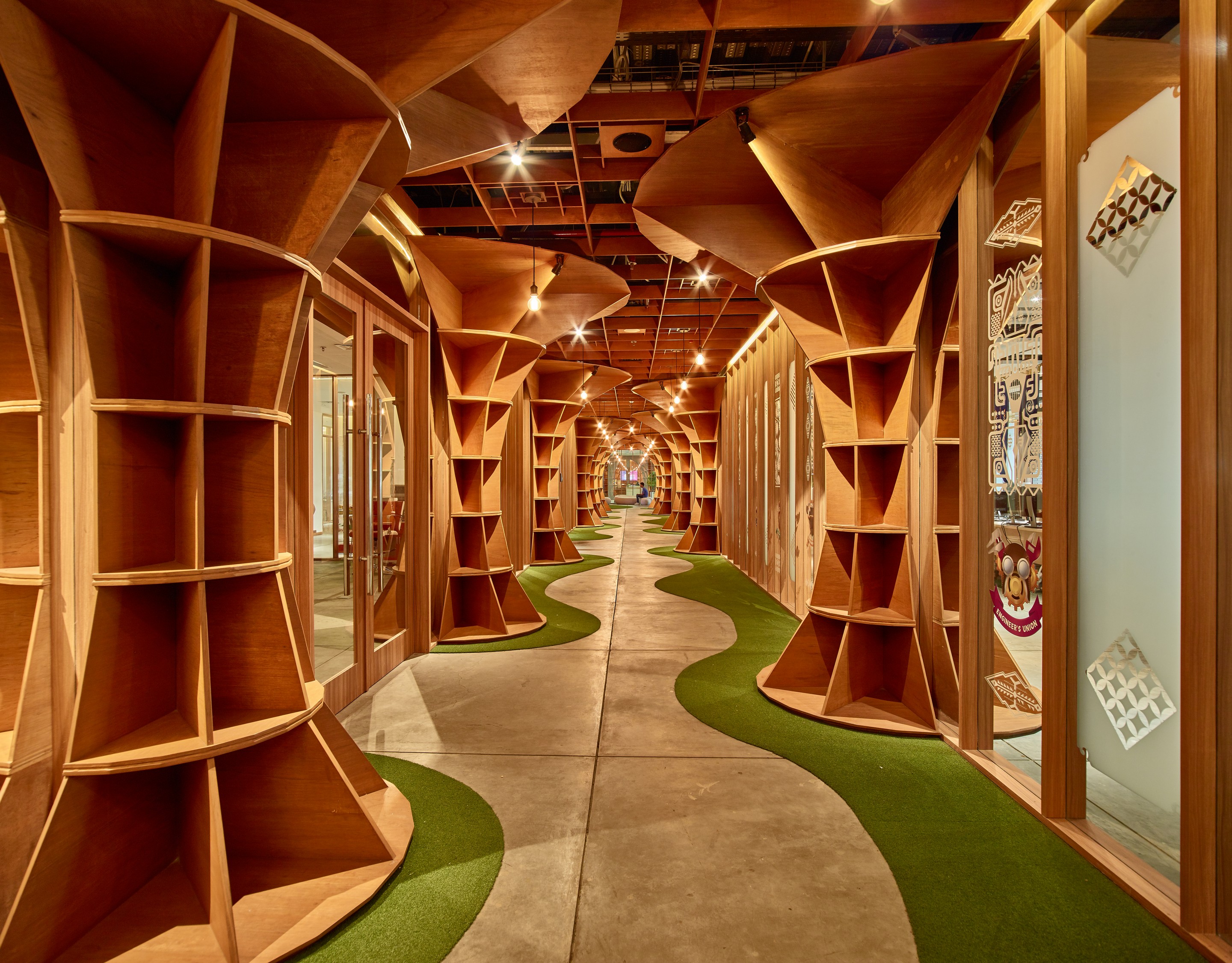
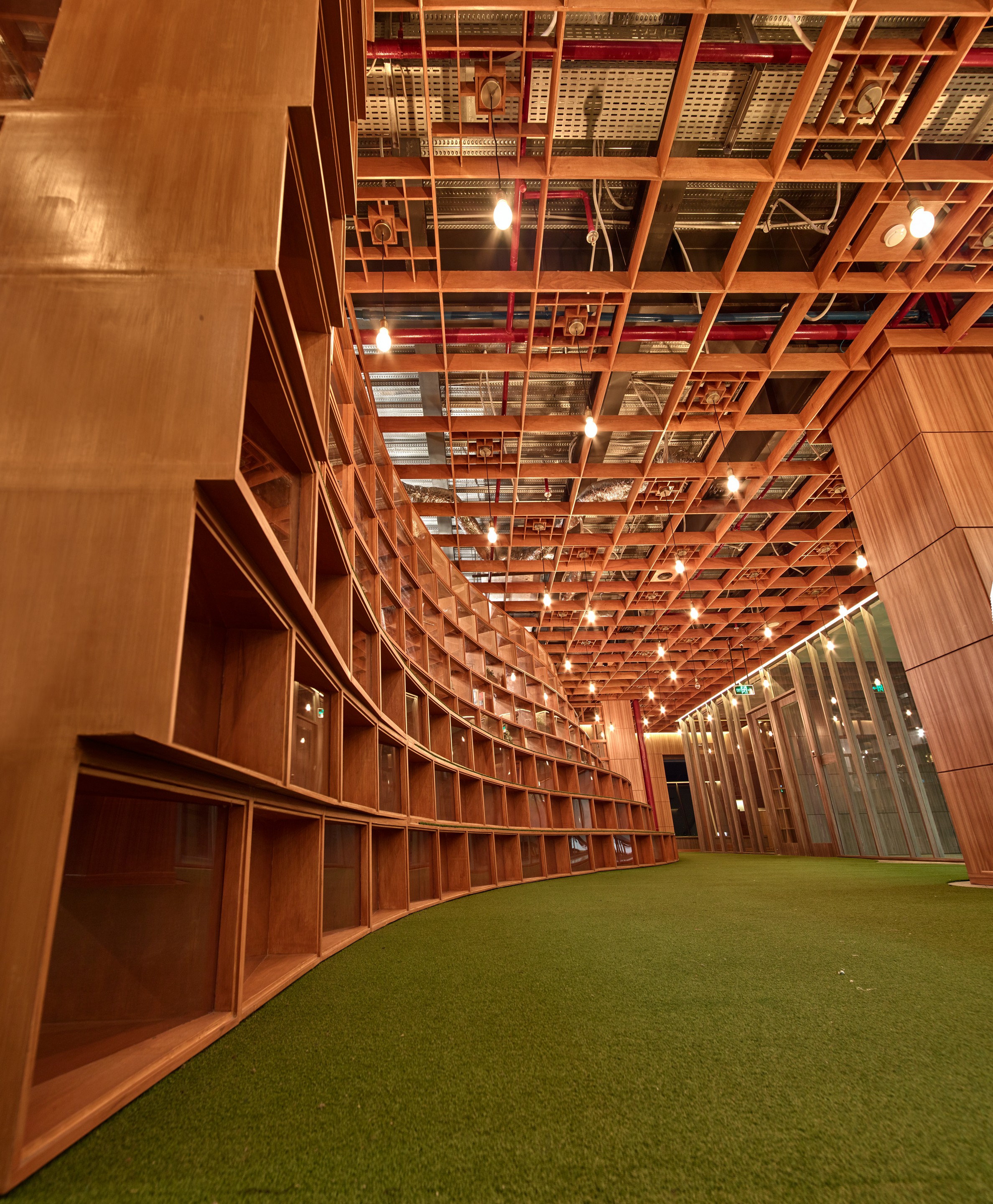
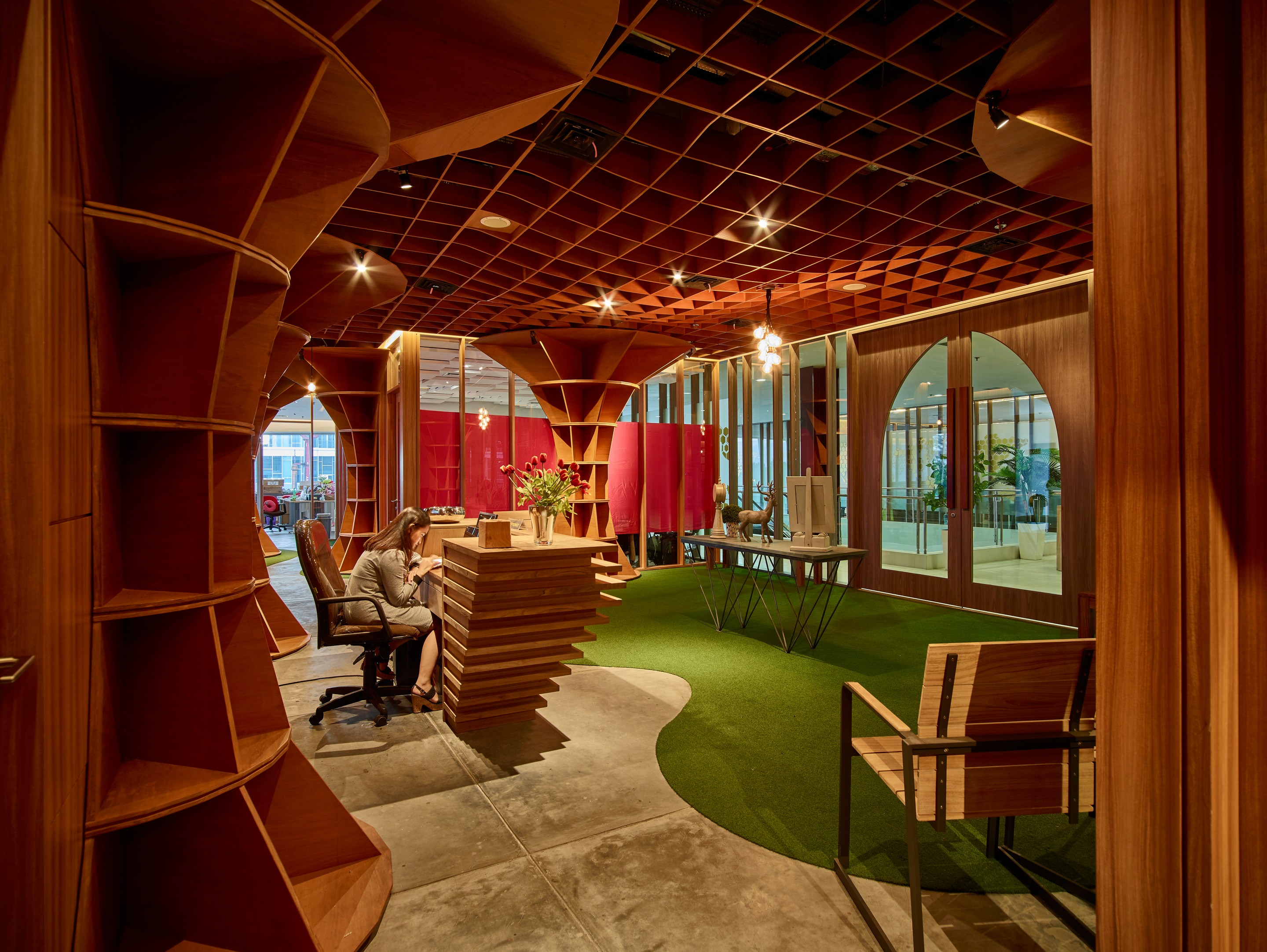
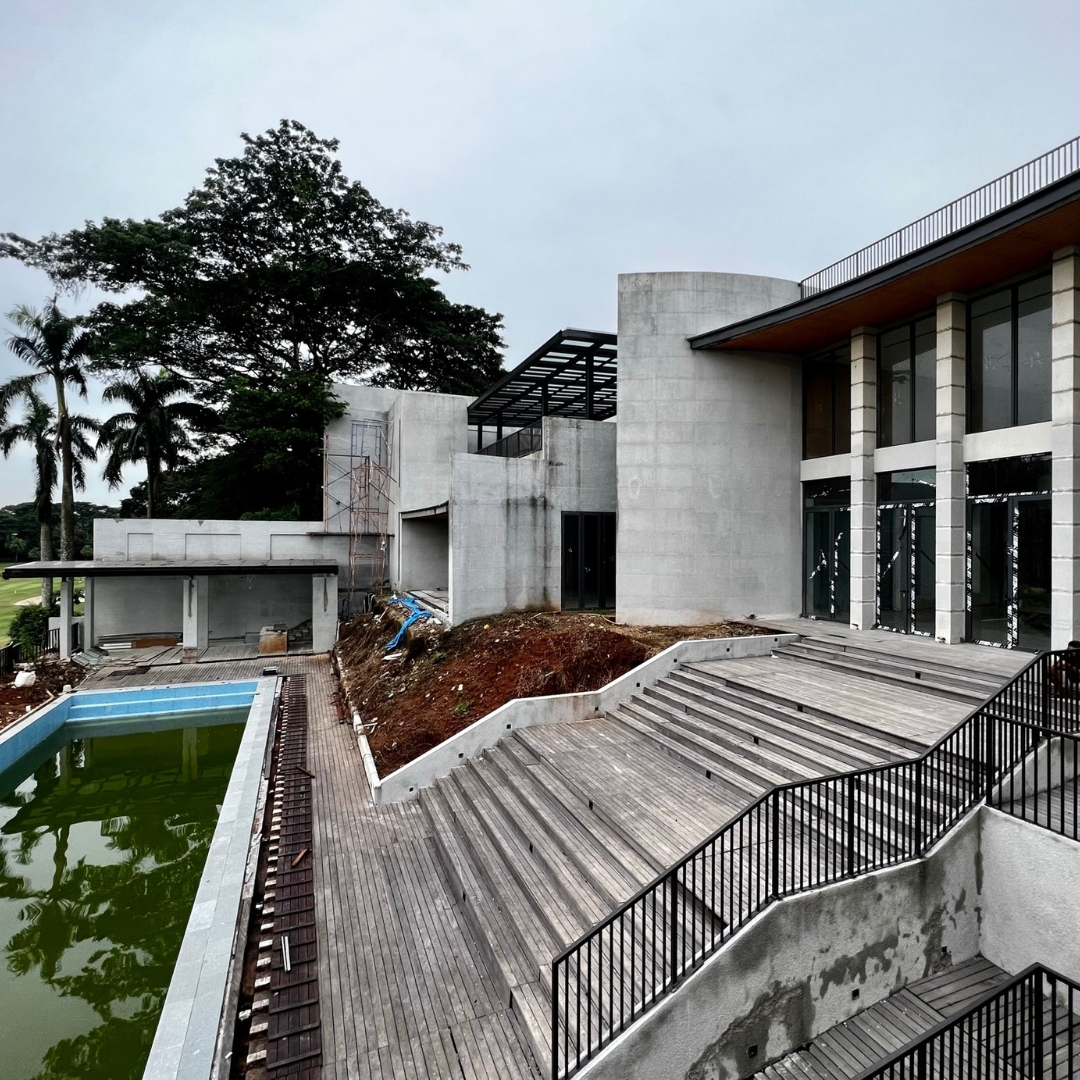
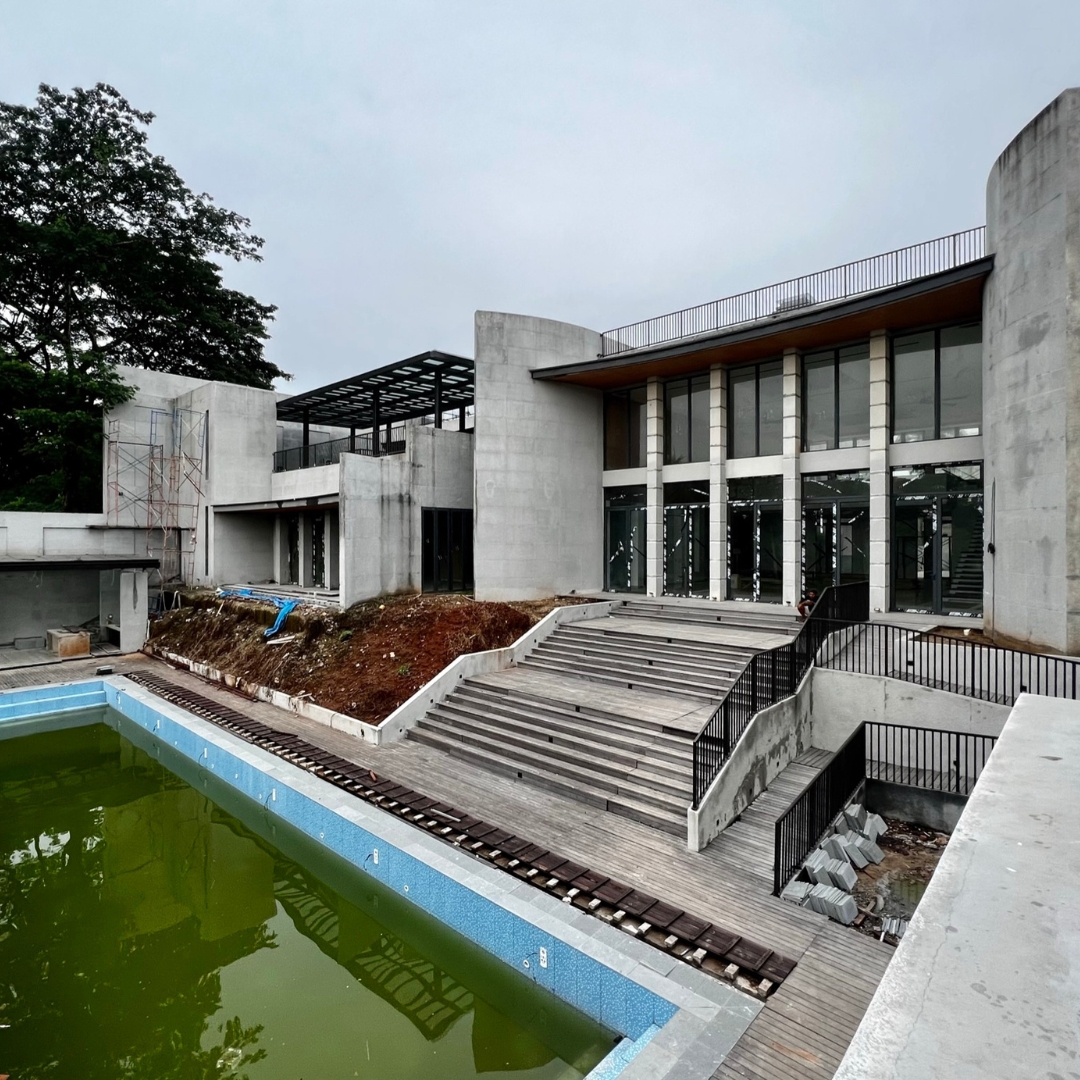
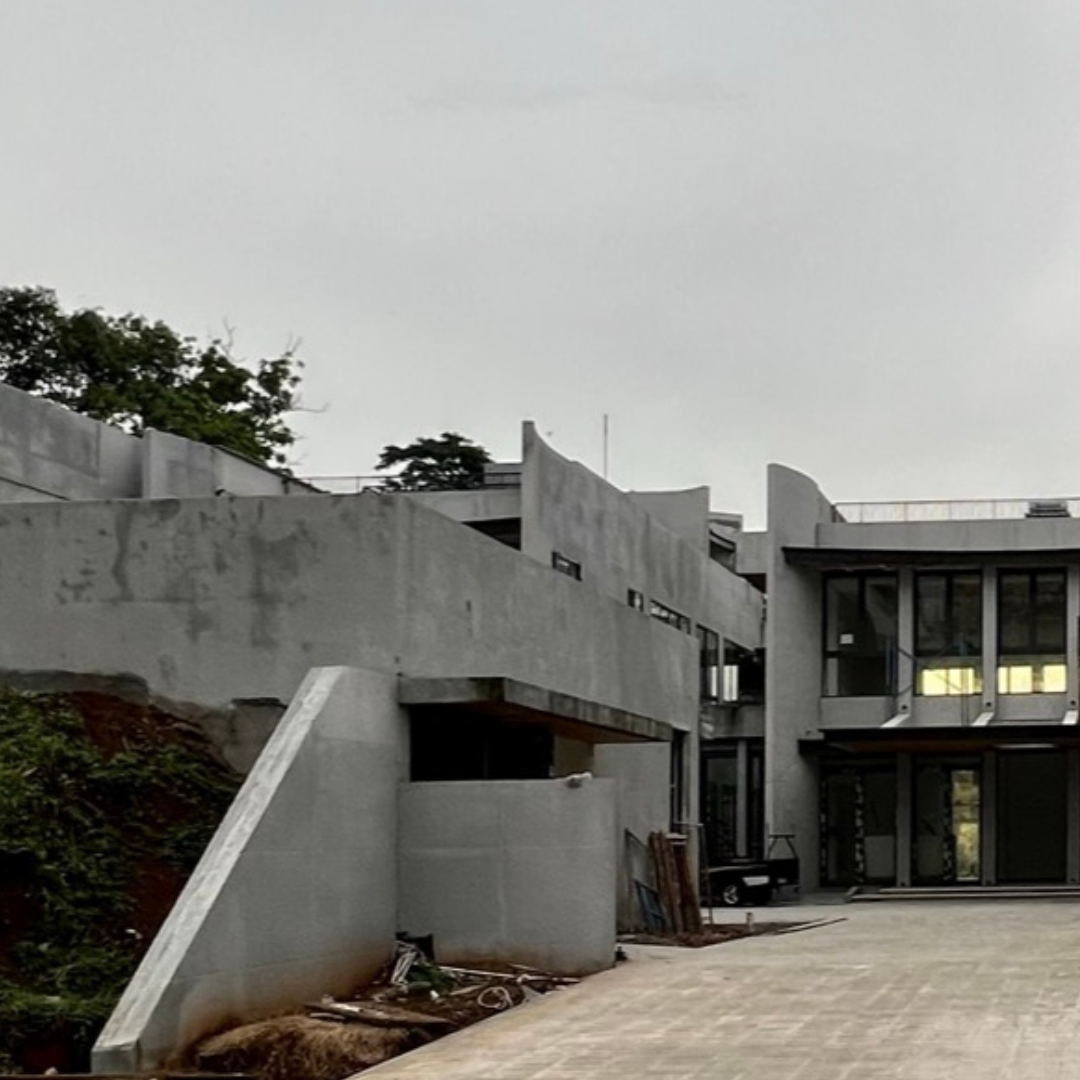
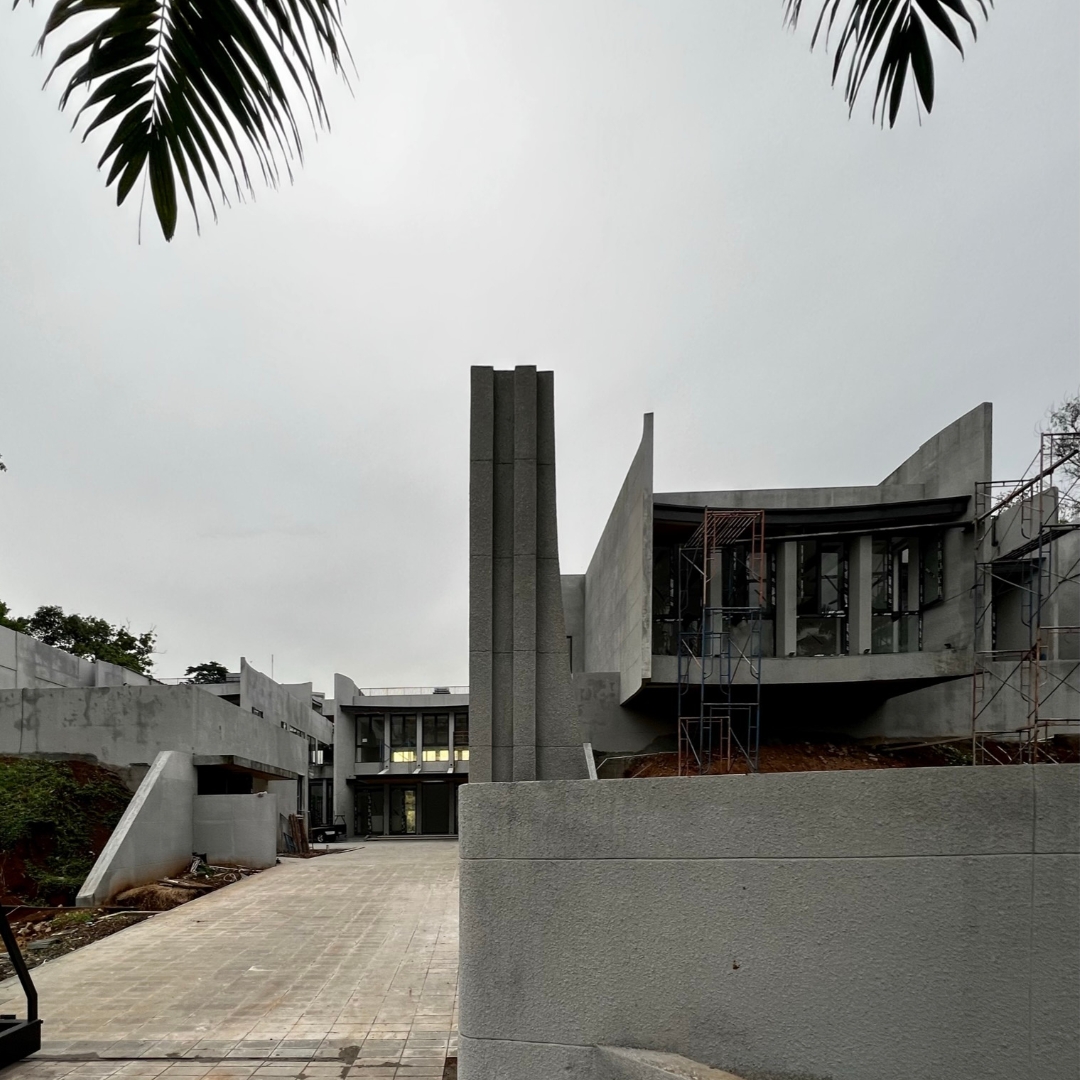
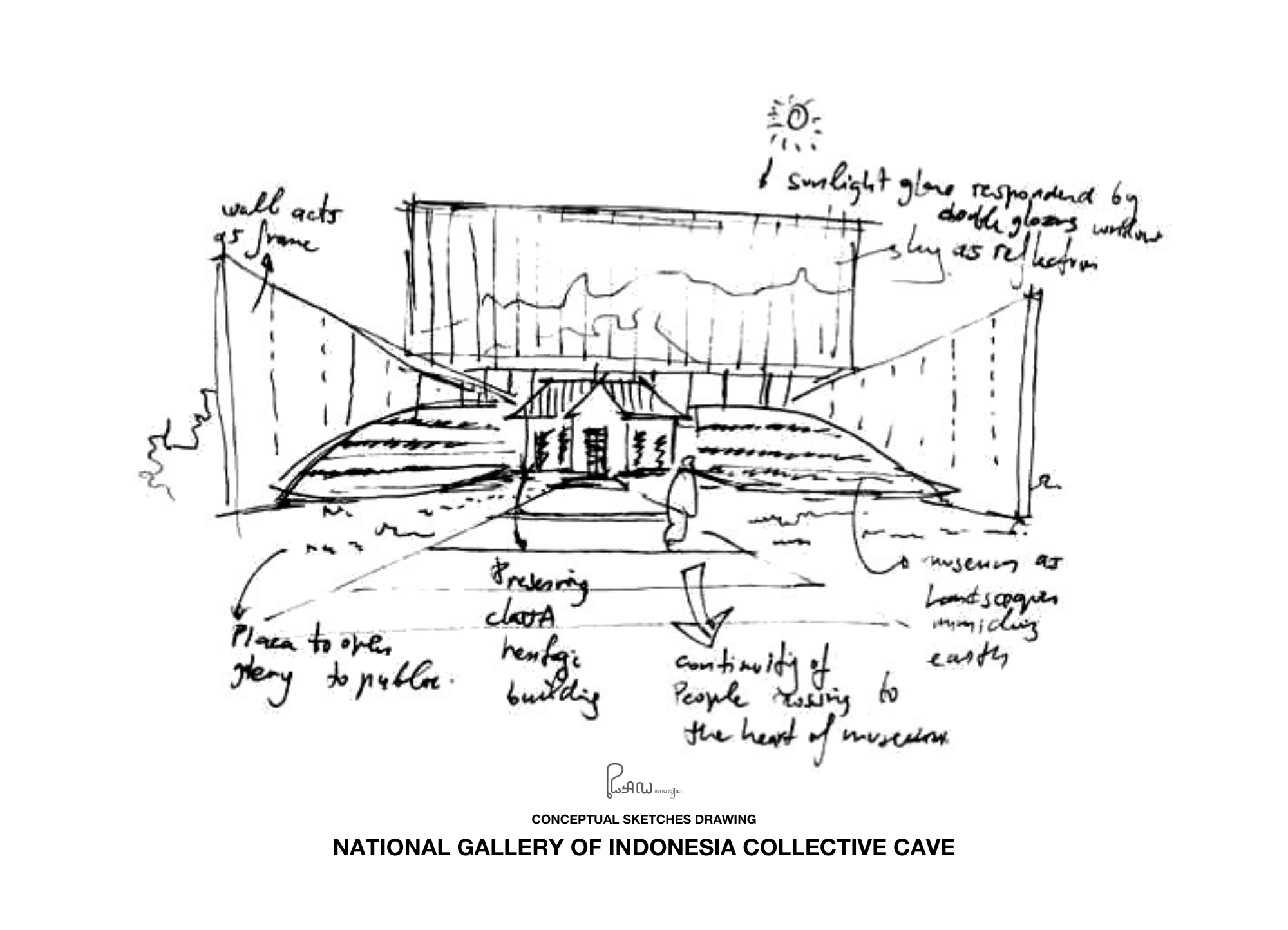
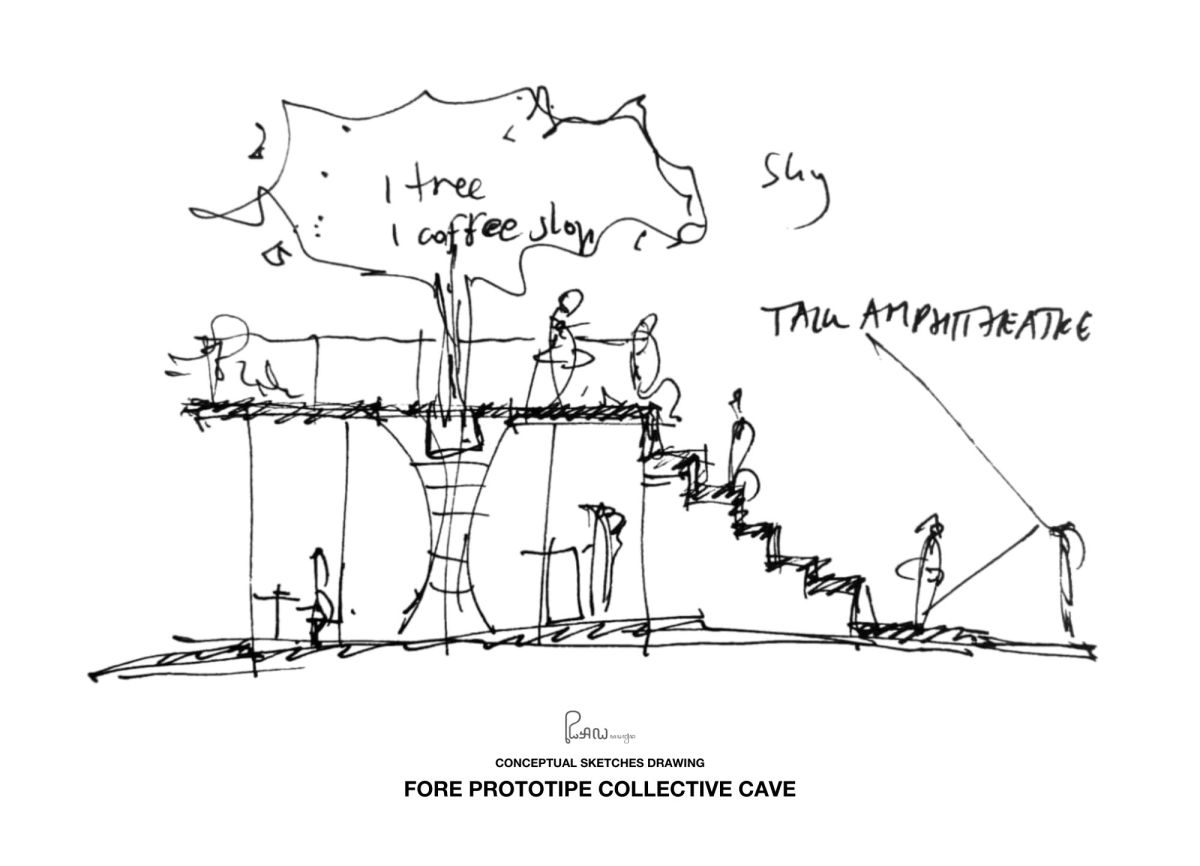
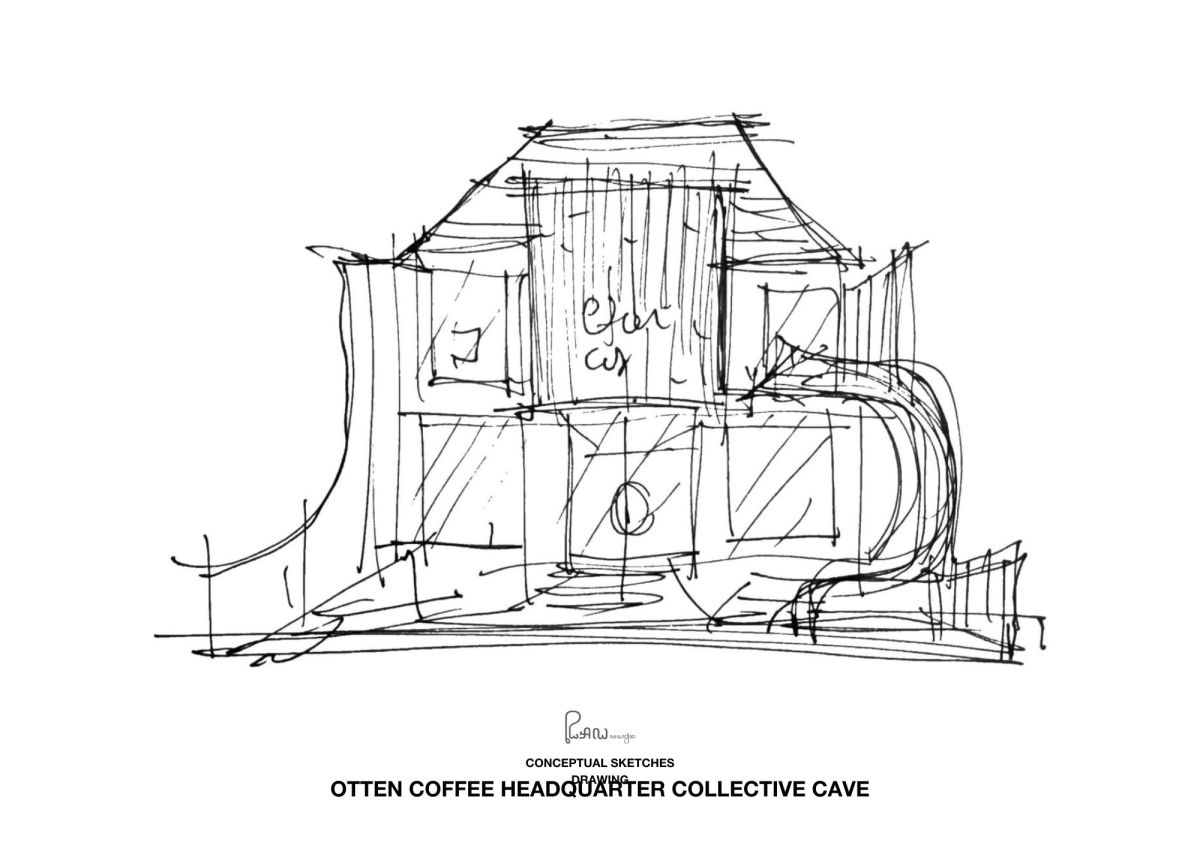
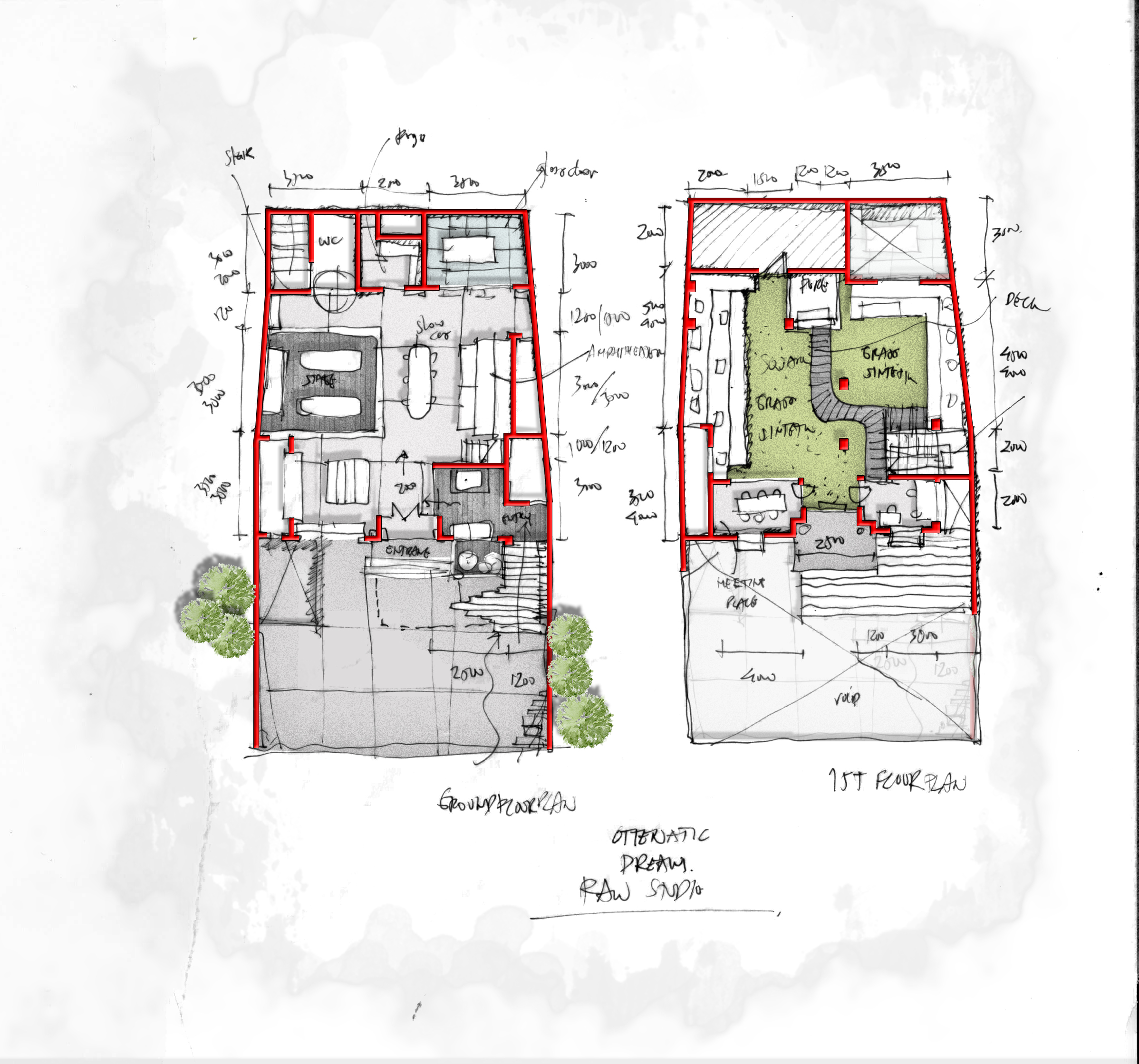
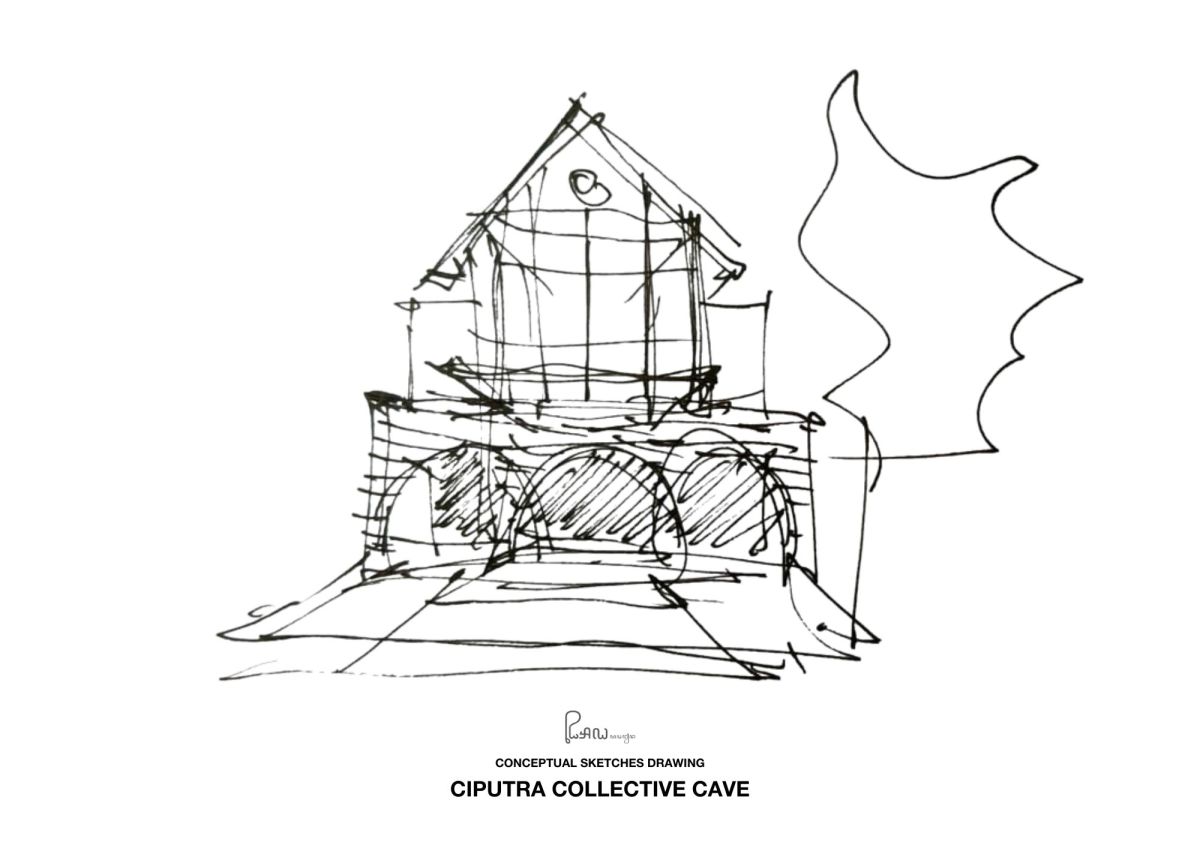
Kami ditugaskan untuk membuat pengembangan Taman Mini Indoensia Indah, sebenarnya disini ada 2 project, project pertama adalah project yang di Museum Lubang Kayu (Harusnya ada sketsanya juga), yang kedua Taman Mini Bird Park. Konsep yang kami bikin adalah untuk menghubungkan Bird Park pada waktu malam dan pagi, jadi ada 2 konsep bird park, night bird park dan daily bird park dihubungkan dengan fan yang di depan, seperti ada plat-plat kayu dan atap-atap, seperti masuk kedalam hutan kayu. F&B diposisikan di depan semua supaya pintu masuk atau ticketing. Dari Bird Park yang di renovasi terutama pada bagian depannya, dibuat seperti experience bukit, lembah, dan gunung supaya dia bisa menciptakan experience orang seperti berada di taman burung yang natural.

Ada jurang, masuk ada lembah dan ditambahkan amphyteater supaya orang nyaman didalamnya, dan bisa ada pertunjukan yang terbuka. Jadi semua lantai dinaikkan supaya journeynya seperti the jungle. Konsepnya seperti membuat arial work way supaya burung-burung kelihatan dan kita juga melayang seperti burung-burung tersebut.

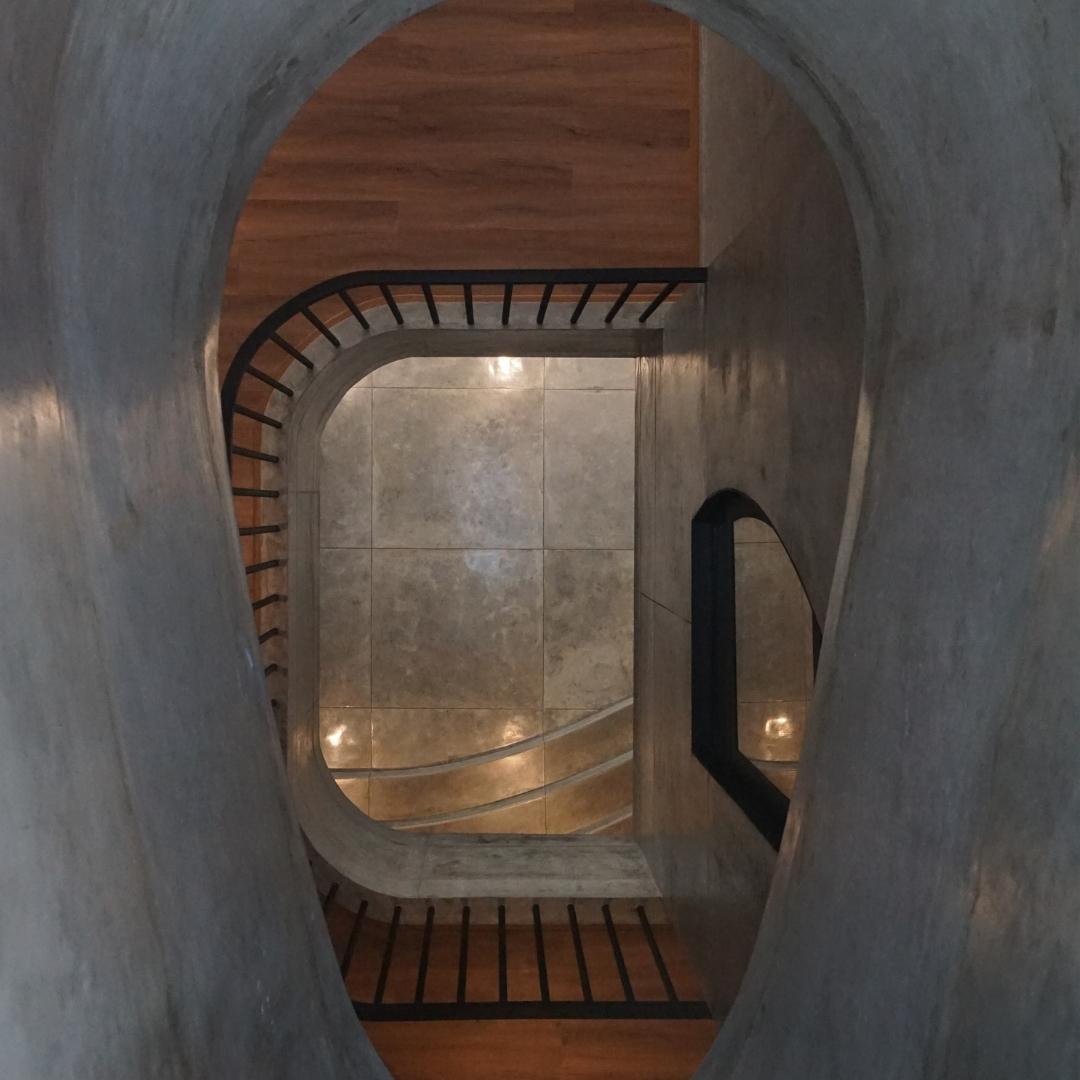
Ada lubang seperti gua, mirip seperti pendekatan Museum Ghibli yang didesain oleh Terunobu Fujimori, saya suka dengan pendekatan dia dan sesuatu yang seperti itu. Pendekatan yang absurd dan nature.

Kategori
About Us

Internship

Internship| Reflection Letter

Internship Reflection Letter

Restless spirits that has been trained, and bringing sweet memories

Letter from Internship Students

Imdi Hakeem Dinovhandaru – Universitas Gadjah Mada

Reflection Letter: Greetings! My name is Imdi Hakeem Dinovhandaru. I am currently a third-year architecture student at Universitas Gadjah Mada and I’m 20 years old at the time of writing this letter. I chose architecture because I have always been a curious person about art and buildings, and end up kind of living it.  After 2 years of studying, It was finally the time to apply for an internship. It was very hard to find a suitable architecture firm to apply to. Then, a flash of memory entered my mind.  It was April 12th, 2025, when I first visited a…

Haidar Hafizh Aulia – Universitas Gadjah Mada

Reflection Letter: Berada dalam zona nyaman memanglah menyenangkan. Selama 21 tahun hidup di Yogyakarta, saya tumbuh dan belajar di kawasan di mana sebuah citra artis lahir, tempat seniman seniman hebat dengan pemikiran dan goresan tangan yang ciamik menorehkan jejaknya. Dari ruang ruang itulah saya mengenal makna proses, hingga akhirnya saya menemukan sebuah biro arsitek yang mengangkat tektonika desa sebagai cara pandang dan identitas berkarya. Bagaimana material dimainkan menarik pandangan dan hati, memanggil untuk belajar lebih dalam dan melangkah lebih jauh. Perkenalkan nama saya Hafizh. Saat ini saya berada di semester ke 6 sarjana arsitektur di Universitas Gadjah Mada. Menggantungkan pengalaman…

Cua Zasta Sampoerna – Universitas Gadjah Mada

Reflection Letter: Salam kenal semuanya, Perkenalkan saya Cua Zasta, dari Universitas Gadjah Mada. Menjelang akhir tahun 2025 menuju awal 2026, saya diberikan kesempatan untuk belajar secara langsung bersama tim RAW Architecture. Sejak awal, nama RAW bukanlah nama yang asing bagi saya. Namun seiring berjalannya waktu, rasa kagum itu tumbuh dengan sendirinya. Saya belajar banyak, dimulai dari memahami sistem alur kerja, melihat bagaimana kerangka berpikir dibangun dengan jernih dan terstruktur, hingga menyaksikan bagaimana gagasan dieksekusi dengan penuh tanggung jawab dalam setiap proses desain di RAW. Di waktu internship yang singkat ini, saya merasakan energi dari kakak-kakak mentor saya. Etos kerja yang…

Rinanda Gantari – Universitas Diponegoro

Reflection Letter: Hello, my name is Rinanda Gantari, though most people call me Gantari. I am currently in my fifth semester at Diponegoro University. Through this reflection letter, I would like to share my thoughts on my two-month internship. It has been a phase in my life that truly shaped me and taught me many things I had never seen or understood before. I have been interested in architecture since I was in elementary school. For me, architecture is not only about the beauty of a building, but also about a kind of beauty that can be felt through the…

Fezka Bariq Alfatih – Universitas Diponegoro

Reflection Letter: Halo! Perkenalkan nama saya Fezka Bariq Alfatih. Saya adalah mahasiswa semester 6 di jurusan Arsitektur, Universitas Diponegoro. Pada kesempatan kali ini saya melaksanakan internship selama 2 Bulan di RAW, kesempatan ini merupakan pengalaman pertama saya terjun ke dunia profesional. Sebelum memasuki semester 5, saya mencari biro arsitek untuk program magang saya dan berakhir pada keputusan ingin magang di RAW. Keputusan ini diambil karena ketertarikan saya pada bangunan-bangunan yang di desain oleh RAW. Saya sangat bersyukur dan senang dapat diterima disini setelah melakukan proses seleksi yang tergolong panjang.  Setelah masuk RAW, saya cukup kaget dengan dunia profesional sehingga butuh…

Friendly Leonard Panjaitan – Universitas Diponegoro

Reflection Letter: Hello! My name is Friendly Leonard Panjaitan, an architecture enthusiast currently in my 6th semester of studying architecture at Diponegoro University. I was born and raised in Bekasi for 20 years. In the architecture program at Diponegoro University, we are required to complete an internship in the 5th semester. During the process of finding an internship, I experienced quite a lot of pressure. Out of around 30 architecture firms that I applied to, only 3 responded to my application. And from those, one of them was RAW Studio—and thankfully, I was given the opportunity to join the internship…

Alvita Aqilah – Institut Teknologi Sepuluh Nopember

Reflection Letter: Hi, I’m Vita, a recent architecture graduate from Institut Teknologi Sepuluh Nopember (ITS), and this is a short reflection on my three-month internship journey at Realrich Architecture Workshop. I decided to take this internship as a step to gain more experience in the architectural field and to better prepare myself for what lies ahead. At the time, I thought I would mainly learn about how projects are done, drawings, renderings, and all the technical aspects that come with it. But along the way, I realized it was much more than that. During my time here, I didn’t just…

Muhammad Faizal Shidqi – Universitas Diponegoro

Reflection Letter: Setelah lulus dari kuliah, kita semua pasti akan menghadapi ribuan pertanyaan: “what’s next?”,”Do you still wanna be an real ‘architect’?”,”How to make it possible then?”. Itu semua melayang di dalam kepalaku dan tak pernah berhenti. Ketika hal itu terjadi, aku perlu rehat sejenak dan mulai mencari titik awal itu untuk bermula. Yang ada di benakku waktu itu hanyalah satu hal: aku perlu belajar kembali dari awal. Aku harus memahami bagaimana bekerja secara profesional, sekaligus mulai merencanakan langkah besar untuk masa depanku, karena ilmu yang aku dapatkan selama kuliah terasa belum cukup untuk memenuhi ekspektasiku untuk menjadi seorang arsitek…

Raniya – Universitas Mercu Buana

Reflection Letter: Hai! Nama aku Raniya, atau bisa juga Raniya al–Aulagie. Saat ini aku berada di semester tujuh Jurusan Desain Interior di Universitas Mercu Buana. Ketertarikan aku terhadap dunia desain interior berawal dari hal yang sederhana, yaitu kegemaranku bermain The Sims dan berbagai gim dekorasi rumah. Dari aktivitas tersebut, aku mulai menyadari ketertarikan pada pengolahan ruang, penataan interior, dan bagaimana sebuah ruang dapat memberikan kenyamanan serta karakter tertentu. Ketertarikan inilah yang kemudian mendorong aku untuk memilih Desain Interior sebagai bidang studi. Di pertengahan masa SMA, aku sempat mempertimbangkan untuk mencoba masuk ke ranah arsitektur. Namun, pada saat itu aku masih…

Aisyah Nailah Humaira – Universitas Brawijaya

Reflection Letter: Halo semuanya, perkenalkan nama saya Aisyah Nailah Humaira, mahasiswi semester 7 arsitektur Universitas Brawijaya. Sebelumnya saya ingin mengucapkan terima kasih kepada Kak Rich dan Kak Yudith karena telah memberikan saya kesempatan untuk dapat mengikuti intership di RAW Architecture. Saat ingin mendaftarkan, ada beberapa kekhawatiran yang saya rasakan. Apakah saya bisa jika harus magang dan berkuliah diwaktu yang bersamaan? apalagi saat ini saya sudah masuk ke semester 7 dimana harus mengerjakan seminar dan bimbingan secara online. Tapi, setelah dipikir-pikir lebih baik menyesal karena mencoba daripada tidak sama sekali. Akhirnya saya putuskan untuk mencoba dan berharap bisa menjalankan keduanya dengan…

Alma Asyofi – Universitas Brawijaya

Reflection Letter: Hello everyone, my name is Alma from Brawijaya University, interning at RAW in my 7th semester. Initially, I took this internship not because I was fully confident in the field of architecture, but more as a way to survive in a major that often made me doubt myself and my abilities. The year 2025 was the hardest year of my life. I lost my grandmother, the person who raised me, shaped my perspective on life, and was my biggest reason to keep going. Her passing left me feeling lost, unmotivated, and even lacking the spirit to continue my…

Muhammad Nur Hasan Firdaus – Universitas Bina Nusantara

Reflection Letter: Halo teman-teman restless spirits! Nama saya Hasan, saya mahasiswa BINUS University jurusan Arsitektur. Alhamdulillah saya telah menyelesaikan internship saya selama 6 bulan di RAW Architecture sejak Agustus 2025 lalu. Saya bersyukur sekali kepada Sang Pencipta karena telah diberikan bimbingan dan ditakdirkan untuk mendapatkan pengalaman internship di RAW Architecture. Menurut saya, RAW Architecture memiliki program internship yang terbaik, karena saya mempelajari segala aspek dalam fase proyek arsitektur, mulai dari masuknya proyek baru dari klien, sampai pengembangan konsep, perancangan konsep struktur dan MEP, perencanaan detail interior dan eksterior, hingga pengecekan design melalui simulasi thermal, simulasi CFD, dan pemeriksaan realita design…

Novellia Shafa Nur Saputri – Universitas Diponegoro

Reflection Letter: Hallo! Namaku Novellia Shafa Nur Saputri, orang-orang biasa memanggilku Novel dan umurku 21 th baru-baru ini. Sebagai seorang pelajar arsitektur, saat ini aku berada di semester tujuh dan sedang menempuh pendidikan di Universitas Diponegoro. Di tahun terakhirku sebagai mahasiswi, aku memutuskan untuk keluar dari zona nyamanku dengan memilih mengeksplor dunia dari sudut pandang yang berbeda. Dalam hal ini aku mencobanya dengan magang di RAW Architecture untuk belajar dan eksplor lebih lanjut di dunia arsitektur. Aku bersyukur sekali dengan kesempatan ini.   Pada saat mendesain, aku selalu tertarik dan ingin tahu sudut pandang arsitektur lebih lanjut, terutama dalam hal konsep,…

Muhammad Farid Zia Pridjie – Universitas Bina Nusantara

Reflection Letter: Perkenalkan, nama saya Muhammad Farid Zia Pridjie, mahasiswa Arsitektur Universitas Bina Nusantara yang saat ini sedang menjalani tahun keempat perkuliahan. Selama empat bulan terakhir, saya telah menjalani program internship di RAW Architecture, sebuah pengalaman yang sangat saya syukuri dalam perjalanan hidup saya. Pada kesempatan ini, saya ingin mengucapkan terima kasih kepada Ka Rich dan Ka Yudith yang telah memberikan saya kesempatan berharga untuk belajar lebih dalam mengenai dunia arsitektur profesional. Perasaan saya saat mengakhiri masa internship ini terasa campur aduk, penuh canda, tawa, kebahagiaan, dan juga kesedihan karena harus berpisah dengan keluarga yang selama ini saya anggap sebagai…

Edelweiss Aydindra Sabariman – Universitas Bina Nusantara

Reflection Letter: Halo teman-teman semuanya,perkenalkan namaku Edelweiss Aydindra Sabariman, biasa dipanggil Edel. Aku adalah mahasiswa jurusan Arsitektur yang sedang menempuh pendidikan di Binus University. Saat pemilihan jurusan, I knew exactly that I wanted to study architecture. But I had zero expectations, I didn’t even know how to start. Di sinilah kebingungan itu terjadi. My days were filled with confusion. I went through six semesters with a very big question mark on my face. Sampai ada di titik aku bertanya ke diri sendiri, “Bagaimana sih cara mendesain dan make it happen?” Spoiler alert: I did not find my answer until the…

Nasywaa Najlaa Abiyyah – Universitas Bina Nusantara

Reflection Letter: Halo semua! kenalinn namaku Nasywaa Najlaa Abiyyah, Wawaa panggilan akrabnya. Mahasiswa semester 7 di BINUS University, yang sangat beruntung karena berkesempatan mengungkapkan perasaan Wawaa selama 5 bulan belajar di RAW Architecture. “What’s meant for you will always find its way to you” Perumpamaan itu sepertinya bisa menggambarkan bagaimana Wawaa bisa mengenal RAW. Nggak sengaja ikut Arch-firm visit dari kampus tapi cuma bisa daftar satu firma karena kuota penuh, lalu timbul rasa penasaran dan mau tau lebih banyaak. Pada saat experiencing GUHA, nggak berhenti merasa “WAAHHH KOK BISA GINI YAA??” di setiap ruang yang wawaa lewati. Saat tiba waktu…

Nafis Roziq Bagaskara – Universitas Muhammadiyah Surakarta

Reflection Letter: Hi everyone, glad to have crossed paths with you all, saya Nafis Roziq Bagaskara. Hampir enam bulan ini bukan sekadar tentang durasi, tapi tentang sebuah perjalanan internal yang saya sebut sebagai trilogi pertumbuhan. Semuanya berawal dari sebuah fase yang I’d like to call as being Slow. Di awal, saya sempat merasa kehilangan arah, berusaha menyerap DNA studio yang begitu dalam, memahami betapa beratnya makna di balik setiap garis yang ditarik, dan belajar menavigasi kompleksitas arsitektur yang selama ini hanya saya lihat di permukaan. Perlahan namun pasti, ritme itu mulai menemukan bentuknya and eventually I found my Flow. Saya…

Jonathan Juan Carlos Mulia – Universitas Pelita Harapan

Reflection Letter: Hallo,Nama saya Jonatan (Jo / Jomul). Saya menjalani internship di RAW Architecture selama tiga bulan. Awalnya saya hanya berencana menjalani internship selama dua bulan, namun seiring berjalannya waktu, saya merasa bahwa proses belajar saya di sini belum selesai. Bukan hanya tentang menggambar atau menghasilkan desain, tetapi tentang memahami proses berpikir, ritme kerja, dan bagaimana sebuah ide berkembang melalui diskusi, revisi, serta pengalaman langsung di lapangan. Hari-hari awal di RAW menjadi fase adaptasi yang cukup besar bagi saya. Saya belajar menghadapi jam kerja yang tidak selalu terikat waktu, revisi yang datang, serta momen di mana saya harus mencari tahu…

Dimas Dwi Cahyo – Institut Seni Indonesia Surakarta

Reflection Letter: Halo semua, perkenalkan namaku Dimas Dwi Cahyo, biasa dipanggil Dimas. Aku mahasiswa Desain Interior ISI Surakarta semester 7. Jujur, buatku tidak mudah untuk bisa ikut andil magang di RAW Architecture, studio yang basis utamanya arsitektur. Awal masuk cukup kaget karena harus menyesuaikan diri dengan dinamika studio yang lumayan berbeda dari dunia interior, arsitektur dan interior itu menurutku 2 prinsip ilmu yang saling berkesinambungan tapi harus ekstra buat memahami keduanya, untuk bisa memahami arsitektur sebagai desainer interior harus paham mengenai prinsip-prinsip dasar arsitektur. Selama magang di sini, hal utama yang ingin aku capai adalah memahami prinsip dasar arsitektur dan…

Felicia Roseanne Sandrea – Universitas Ciputra

Reflection Letter: Hello! My name is Felicia, an architecture student from Ciputra University, Surabaya. I was born in Yogyakarta, and moving cities has kind of been part of my life for a while now. Moving from Jogja to Surabaya for college felt… normal. But for some reason, moving to Jakarta this time felt different. Maybe because this time, I wasn’t just moving to study, but to work, to learn in a very real, very practical way. Internship hits differently, I guess. Almost five months ago, I started my internship journey at RAW. Looking back now, I realize how much has…

Bimasetya Mahardhika – Institut Teknologi Sepuluh Nopember

Reflection Letter: Hello to everyone, yang membaca dan singgah pada reflection letter ini. Perkenalkan, nama saya Bimasetya Mahardhika, dan tulisan ini adalah sebuah jejak refleksi dari perjalanan saya selama kurang lebih dua bulan belajar, bekerja, dan bertumbuh di Realrich Architecture Workshop (RAW) Selama kurang lebih dua bulan menjalani program magang di RAW, saya merasa berada di dalam sebuah proses yang sejak lama ingin saya masuki, bukan sekadar sebagai pengalaman kerja, tetapi sebagai ruang belajar dan pembentukan cara berpikir. Memasuki lingkungan RAW, saya menyadari bahwa budaya kerja di dalamnya sangat menekankan proses, kepekaan, dan kesadaran dalam setiap keputusan desain. Saya belajar…

Azzahra Shylla Halalita – Universitas Diponegoro

Reflection Letter: Dear RAW Team, I recall being both thrilled and intrigued as a recent graduate navigating the shift from course work to actual professional practice, wondering how the flow of actual practice would affect my perspective on architecture. I deeply value the chance to complete my internship at the studio. My respect for the field has grown as a result of working closely with designers who preceived each brief with accuracy and commitment.  The most notable thing about my stay here was how naturally learning took place. It was never forceful. I discovered that I was learning new things…

Hasna Ayudya Aulia – Universitas Diponegoro

Reflection Letter: Hi! Catch you up again with me, Hasna Ayudya, or I simply go by Hasna. It’s unusual for me to write something longer and precisely “sentimental”. Doing internship at OMAH Library, joining Guha The Guild and being part of RAW journey wasn’t my main plan before, yet it was decided that I will have gone through that “stop” to seek and reinvent my last pieces of puzzle inside my head before entering my career phase.  I don’t know how and what to say about the latest 3 months journey which turned out to be quite short but profound,…

Rizal Virgyanto – Universitas Katolik Parahyangan

Reflection Letter: Greetings everyone, I am Rizal, and I am currently a fresh graduate from the Professional Architect Education Programme (PPAr) at Parahyangan Catholic University in Bandung. It was a little late and quite a short period for me to apply for an internship but it’s better late than never, right? Hahaha. Let me tell you one or two things about myself. I was born in Makassar, South Sulawesi. Can you imagine how life unfolds in that place? Throughout my life, I’ve always been an amateur traveler. Every time I finished a school level, I moved to a different city.…

Octavius Setiawan – Calvin Institute of Technology

Reflection Letter: Hi, saya Octavius Setiawan, biasa dipanggil Avi, seorang graduate architect dari Calvin Institute of Technology. Setelah lulus dari perguruan tinggi, saya memutuskan untuk melanjutkan proses belajar saya dengan mengambil kerja praktek di RAW Architecture. Pengalaman saya di tim Abstraksi bersama Bang Riyan menjadi titik awal yang membuka pandangan saya. Tim ini sangat dinamis, bergerak cepat, namun tetap memperhatikan detail. Dari Bang Riyan, saya belajar pentingnya disiplin mencatat – baik to-do list, arahan, feedback, hingga update dan wrap-up pekerjaan setiap hari. Dari hal sederhana seperti mencatat, saya menyadari bahwa profesionalitas seorang arsitek tumbuh dari keteraturan dan kesungguhan dalam mengerjakan…

Lusi Resti Anggraini – UIN Walisongo Semarang

Reflection Letter: Haloooo semuanya terimakasih sudah membaca tulisan ini, Selamat menyelam dalam episode perjalanan internship saya selama di Realrich Architecture Workshop.  Perkenalkan saya Lusi Resti Anggraini bukan Lucy In The Sky ataupun Juicy Luicy yaa, just  “Lusi“ Fresh Graduate dari UIN Walisongo Semarang. Kepada kak Rich, Terimakasih banyak sudah berkenan menjadi perantara diantara doa doa saya selama ini, Terimakasih untuk kebaikan kak rich atas segala hal yang sangat bermanfaat untuk saya, Memberi saya ruang untuk belajar di tempat yang sudah kak rich tumbuh selama ini semoga ekosistem RAW selalu tumbuh lebih baik, memberi dampak yang baik untuk sekitarnya. Saya selalu…

Syahid Alshadiq Rizal – Universitas Lancang Kuning

Reflection Letter: Halo untuk semua yang membaca reflection letter ini, I hope you’re having a great day :D Bisa menulis reflection letter ini adalah sebuah keberuntungan bagi saya, kami, jiwa-jiwa yang penasaran. Terima kasih yang sebesar-besarnya saya sampaikan kepada Ka Rich dan Ka Yudith atas kerendahan hati, waktu, dan ruang yang telah dibagikan selama proses magang. Halo semuanya, salam kenal. saya Syahid Alshadiq Rizal, biasa dipanggil syahid atau shadiq. Mahasiswa arsitektur semester 6 di Universitas Lancang Kuning. Melalui surat ini, saya ingin berbagi sedikit cerita dan refleksi dari pengalaman magang yang bagi saya menjadi salah satu perjalanan paling berharga dalam…

Gervasius Nicholas Tristan – Institut Teknologi Bandung

Reflection Letter: Halo halo, selamat pagi/siang/malam semuanya,,, sebelumnya perkenalkan, aku Gervasius Nicholas Tristan, salah satu mahasiswa arsitektur beruntung yang mendapat kesempatan magang di RAW. Izin sedikit bercerita, proses pencarian magang ku sangatlah tidak mulus. Entah kenapa, seperti yang dialami teman-teman aku juga, proses mencari magang kali ini terasa sangat berat dan penuh tantangan. Syukurnya, di saat-saat terakhir, dengan portfolio seadanya, tim RAW dengan rendah hati mau memberiku kesempatan untuk bisa belajar di RAW. Hari demi hari berlalu di RAW dan kesannya hanya satu, yaitu menyenangkan. Sama sekali tidak pernah terbayangkan lingkungan kantor arsitektur bisa semenyenangkan ini. Aku bener-bener sangat amat…

Olga Maisha Vaniavivia – Institut Teknologi Bandung

Reflection Letter: Bukan tanpa alasan saya memilih RAW sebagai tempat untuk bersinggah, merenungkan ke mana kaki ini akan melangkah di kemudian hari. Melalui setiap hari yang saya lalui, saya mencoba merangkai potongan-potongan dari jalan yang masih rumpang, mencari jawaban dari sebuah pertanyaan; mau jadi apa saya di masa depan? Salam, semua. Saya Olga Maisha, mahasiswi arsitektur dari Institut Teknologi Bandung yang sedang mencari jawaban dari pertanyaan tersebut di RAW. Sebagai mahasiswi yang baru saja menyelesaikan studi semester enam-nya, rasanya tidak aneh jika saya mulai merasa cemas dan memikirkan perihal masa depan. Hanya tersisa satu tahun bagi saya untuk menentukan langkah…

Luna Aulia Kirana – Institut Teknologi Bandung

Reflection Letter: Bandung, 31 Agustus 2025 Halo! Perkenalkan, saya Luna Aulia Kirana, mahasiswa arsitektur semester tujuh di Institut Teknologi Bandung. Saya berasal dari Bandung dan ingin memanfaatkan libur semester singkat selama dua bulan ini dengan menjalani internship di biro impian saya, RAW Architecture. Sebenarnya, ketertarikan saya untuk belajar di RAW telah tumbuh sejak sekitar satu tahun lalu, ketika saya menyaksikan film 1 Kakak 7 Ponakan dan melihat karakter utamanya bekerja di sebuah studio yang sebelumnya sudah saya kenal melalui media sosial. Saat itu terlintas dalam benak saya, “Betapa menyenangkannya berkarier di tempat seperti itu. Suasananya tenang dan damai, namun tetap…

Kategori
projects

Project 02 – The Guild

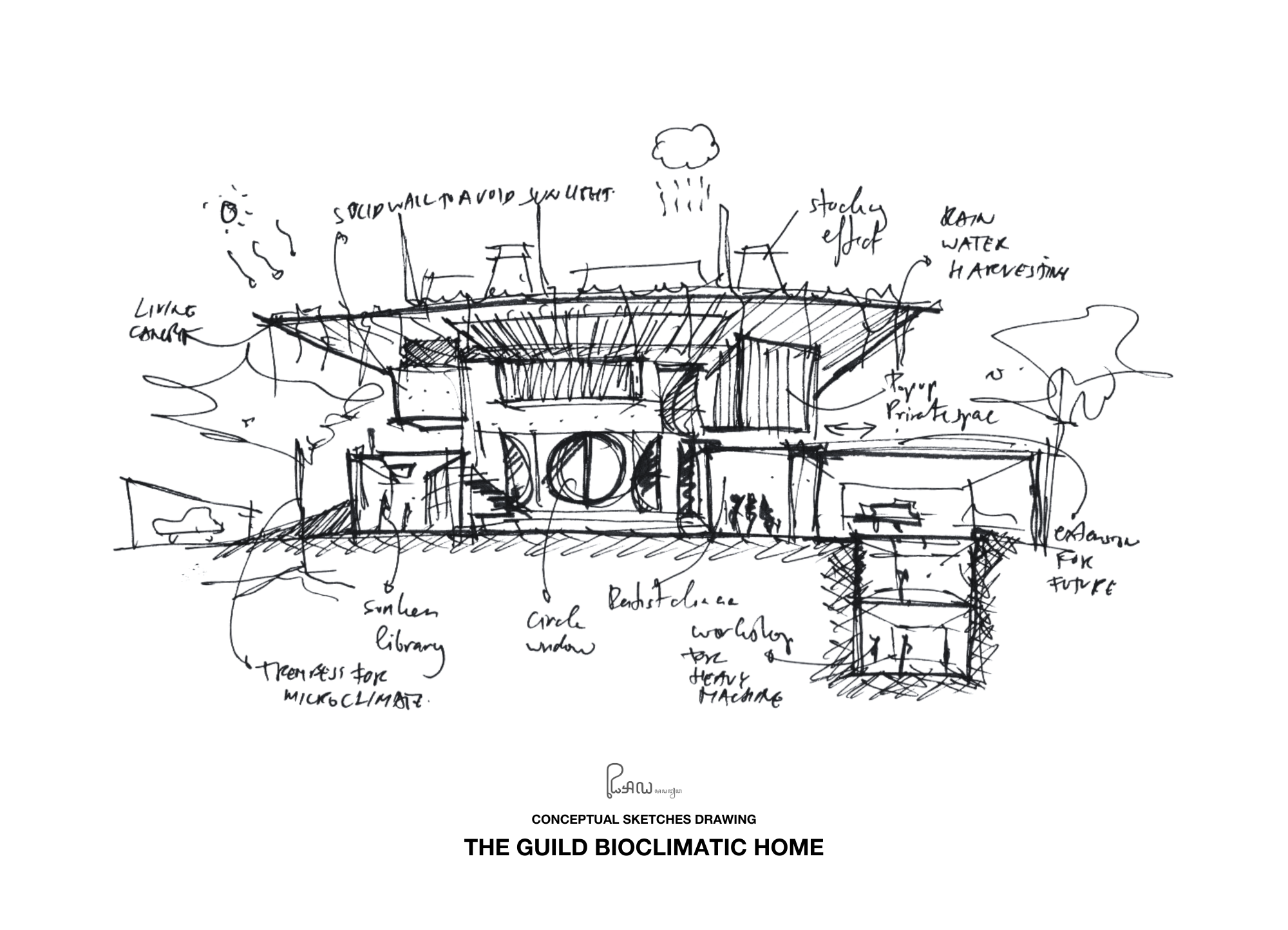
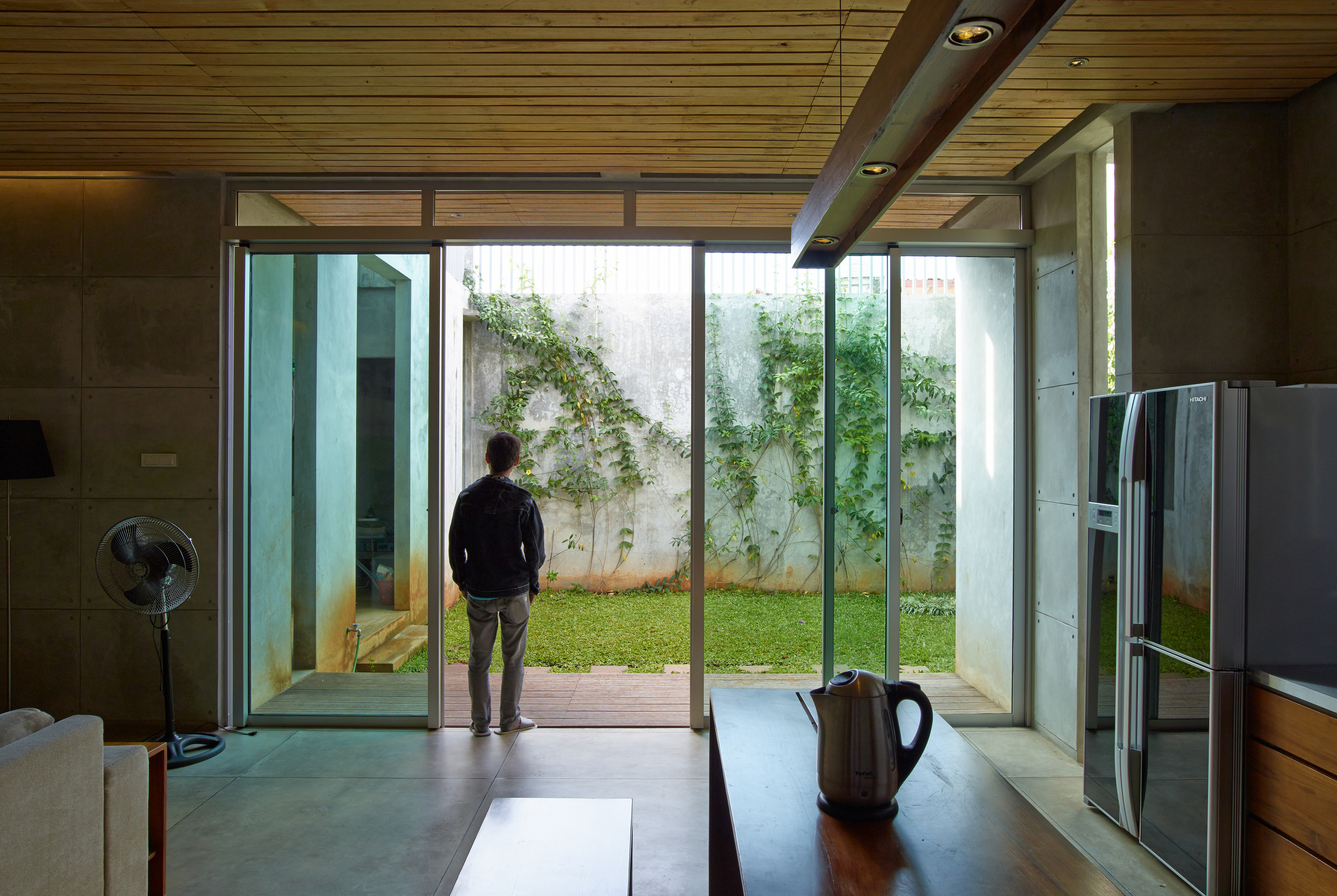
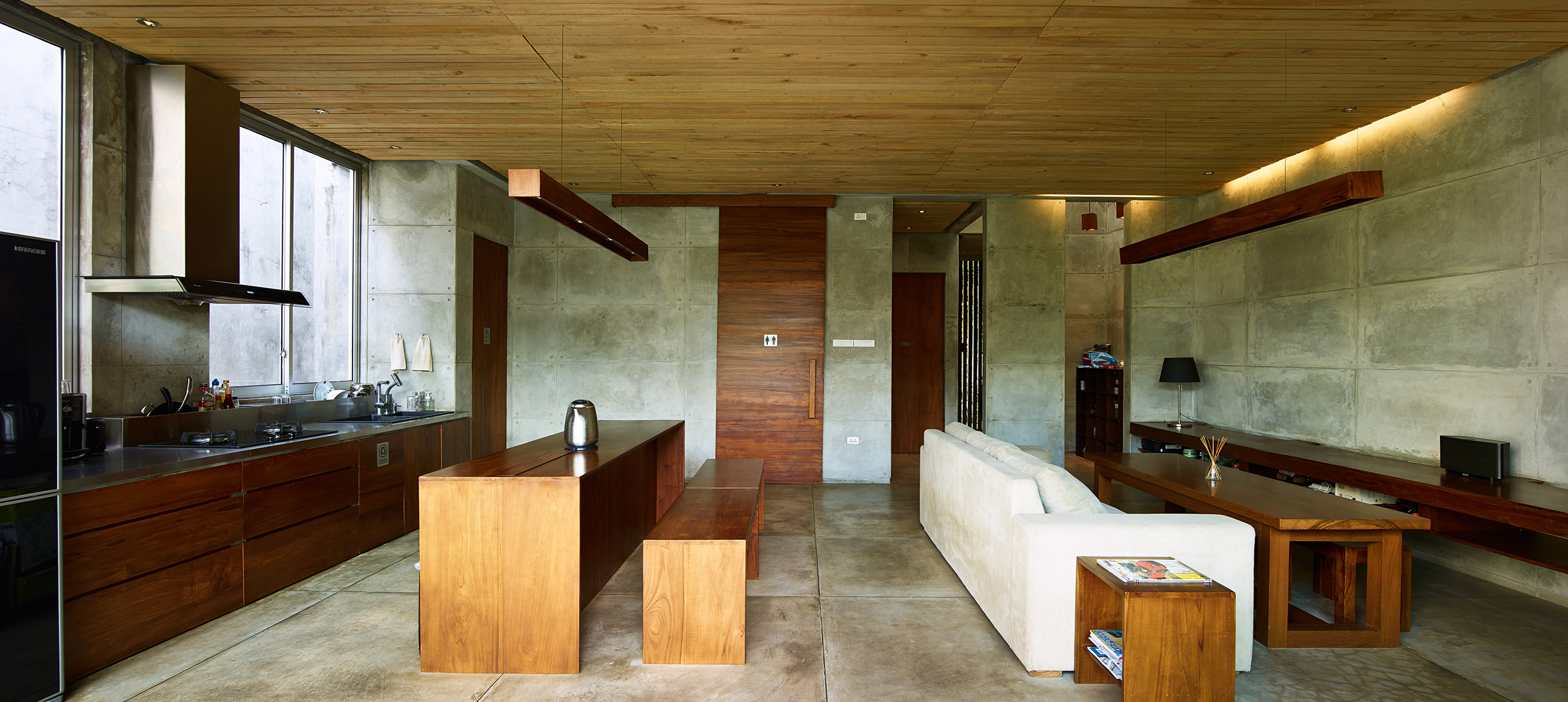
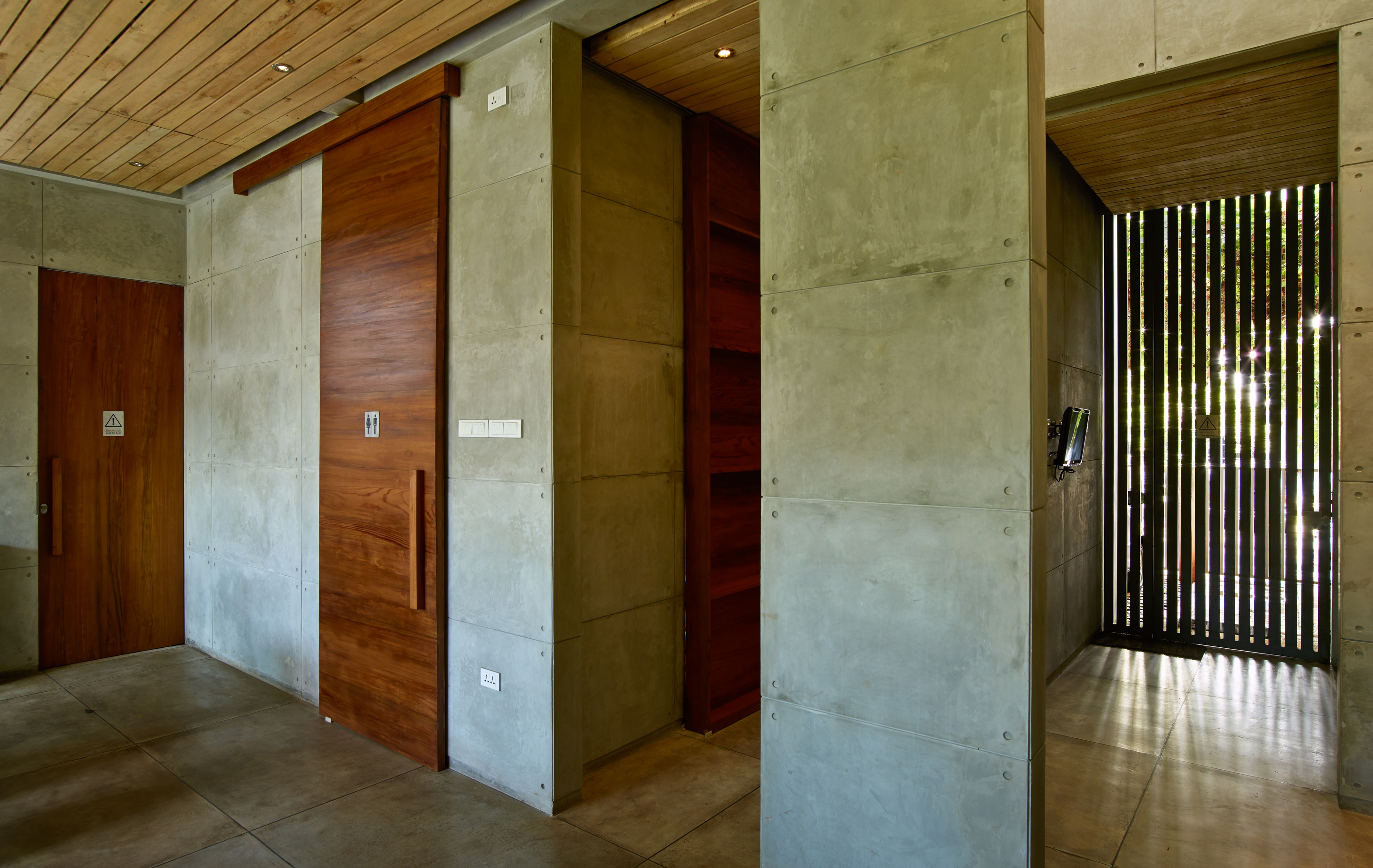
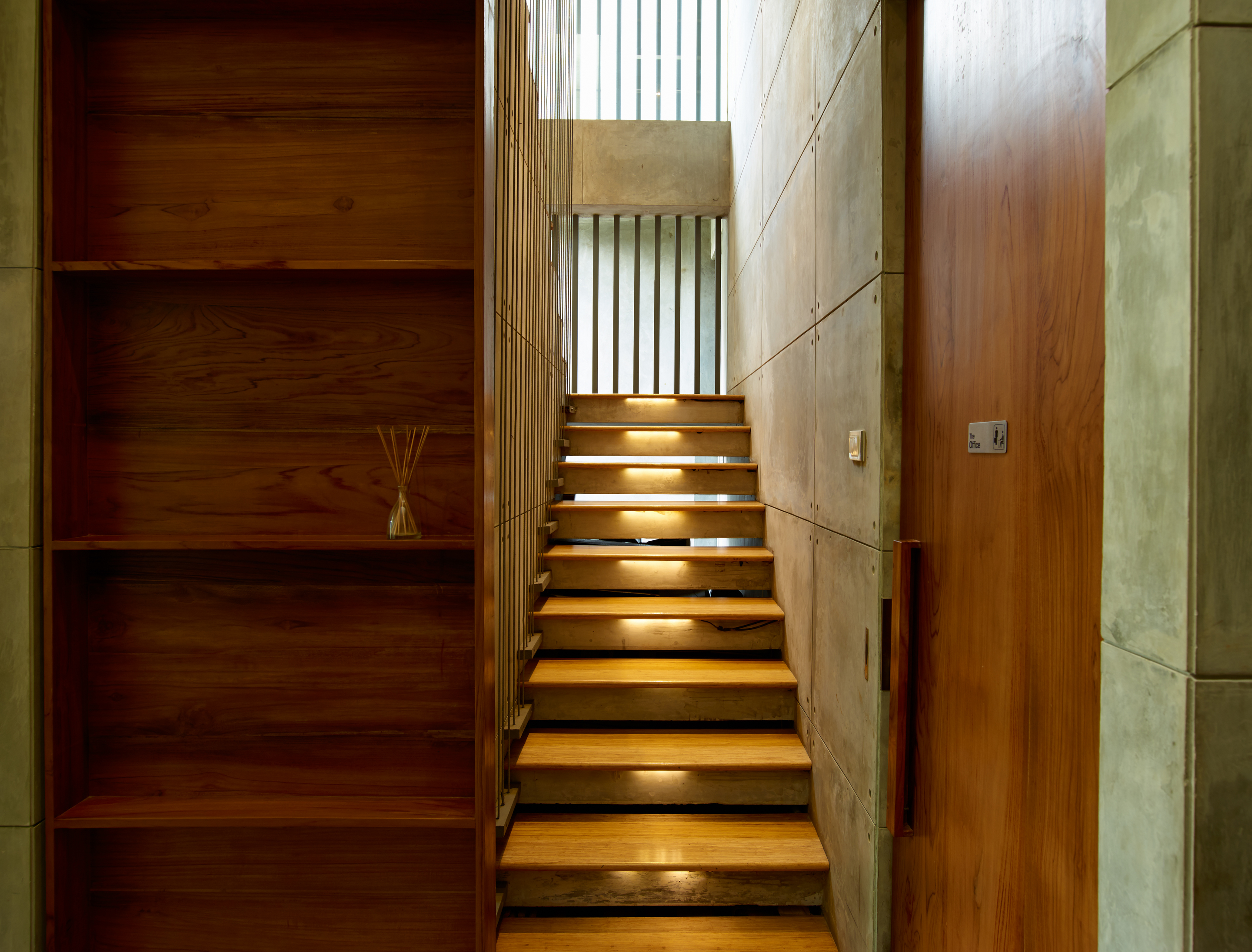
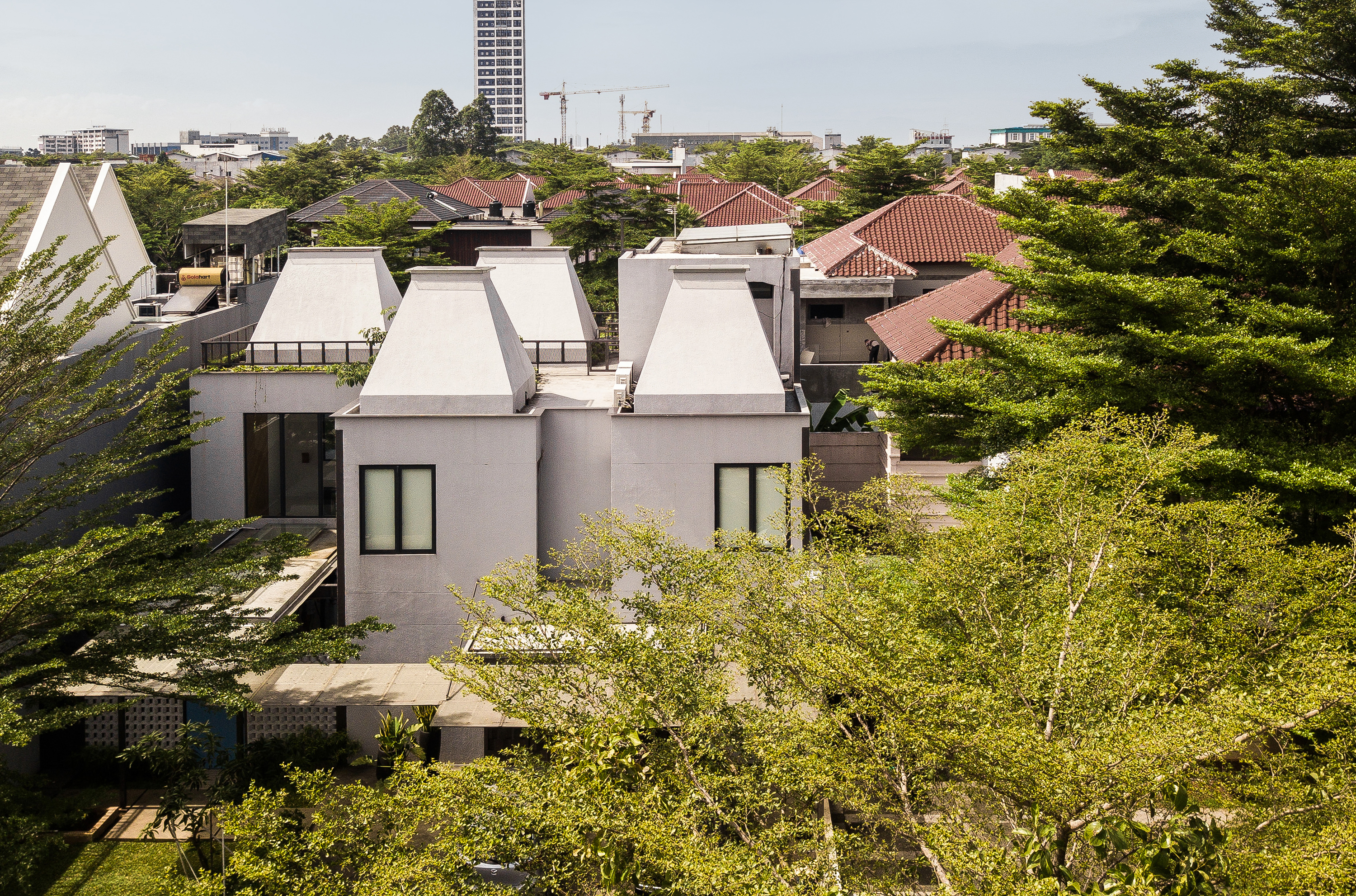
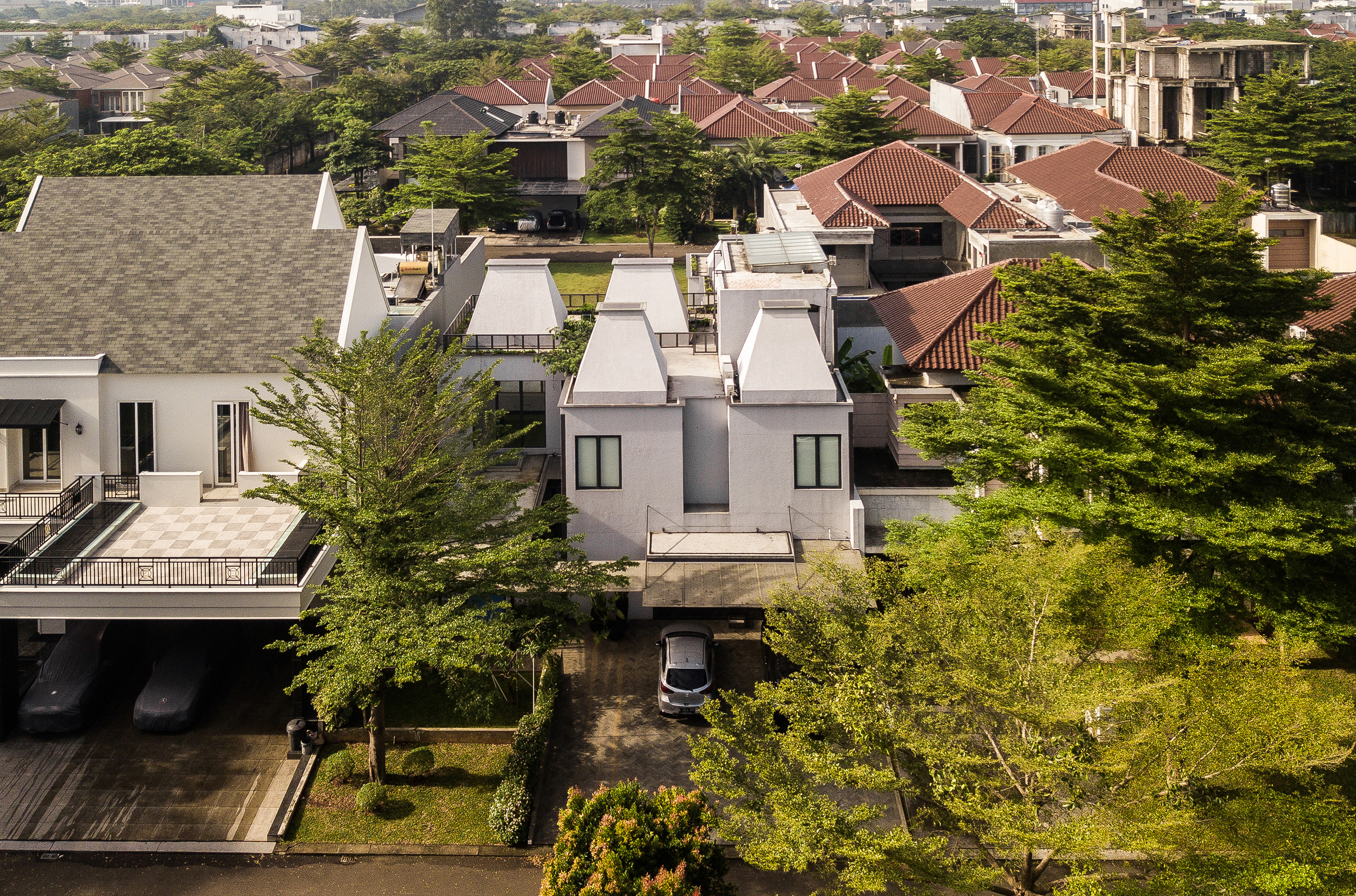
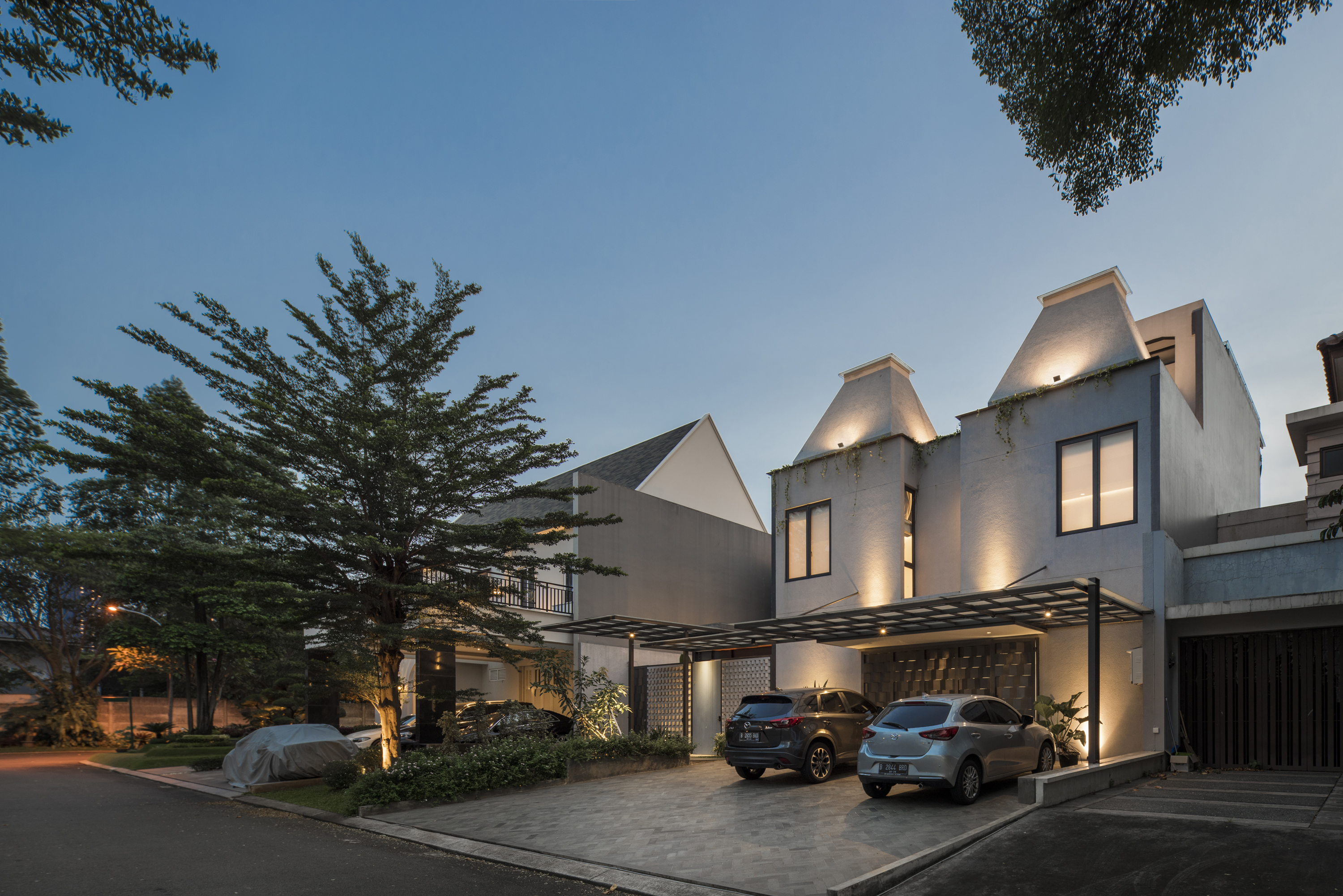
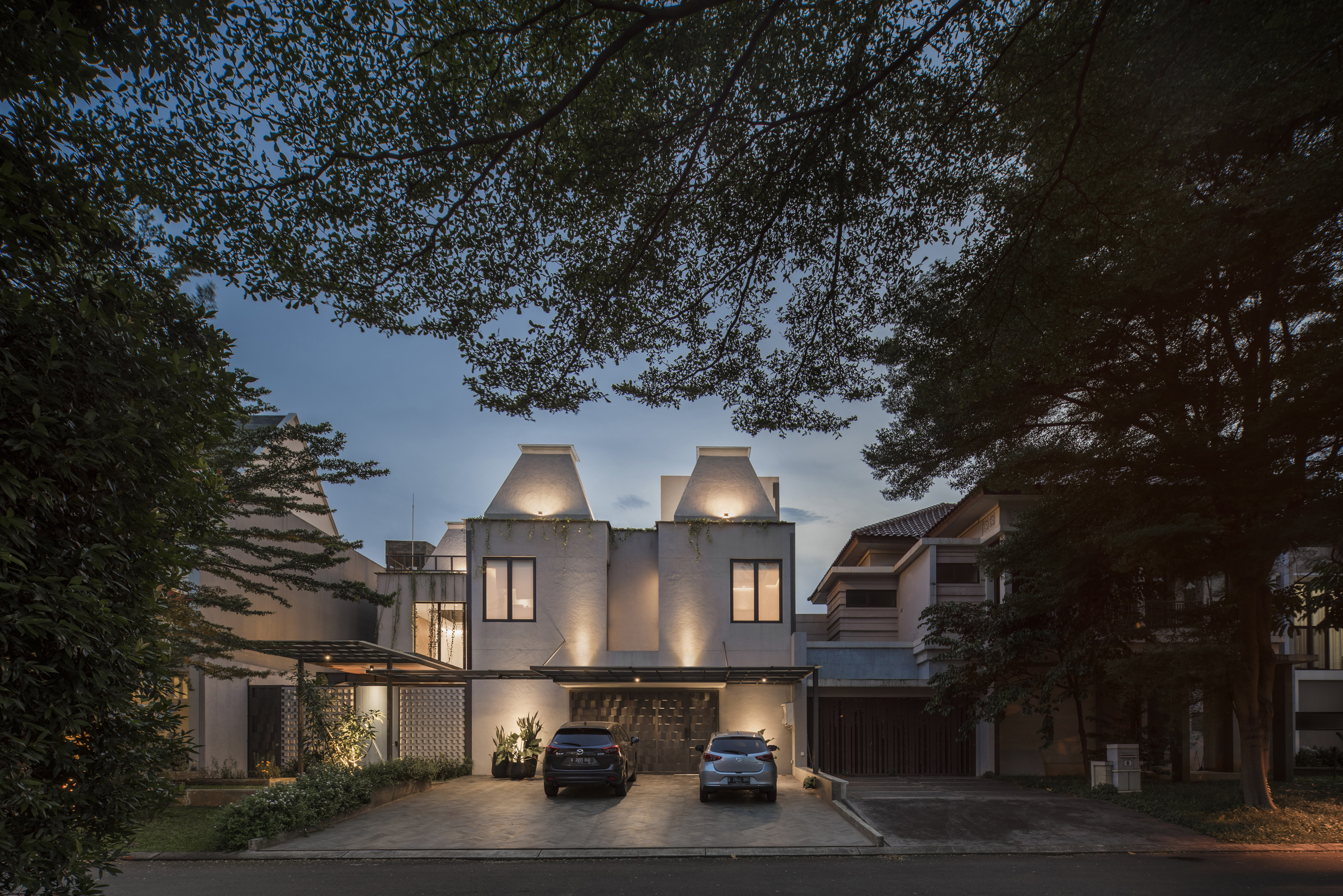
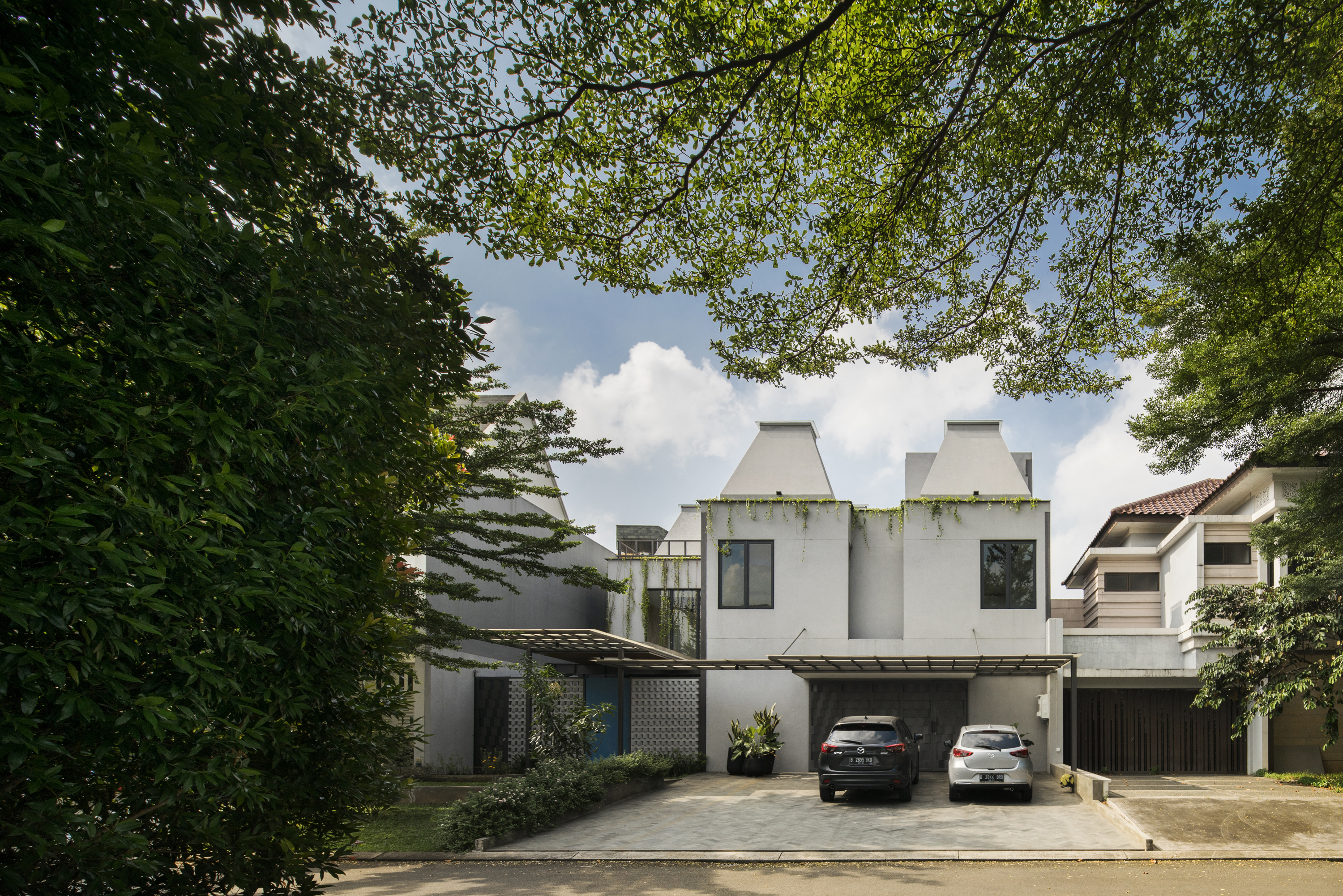
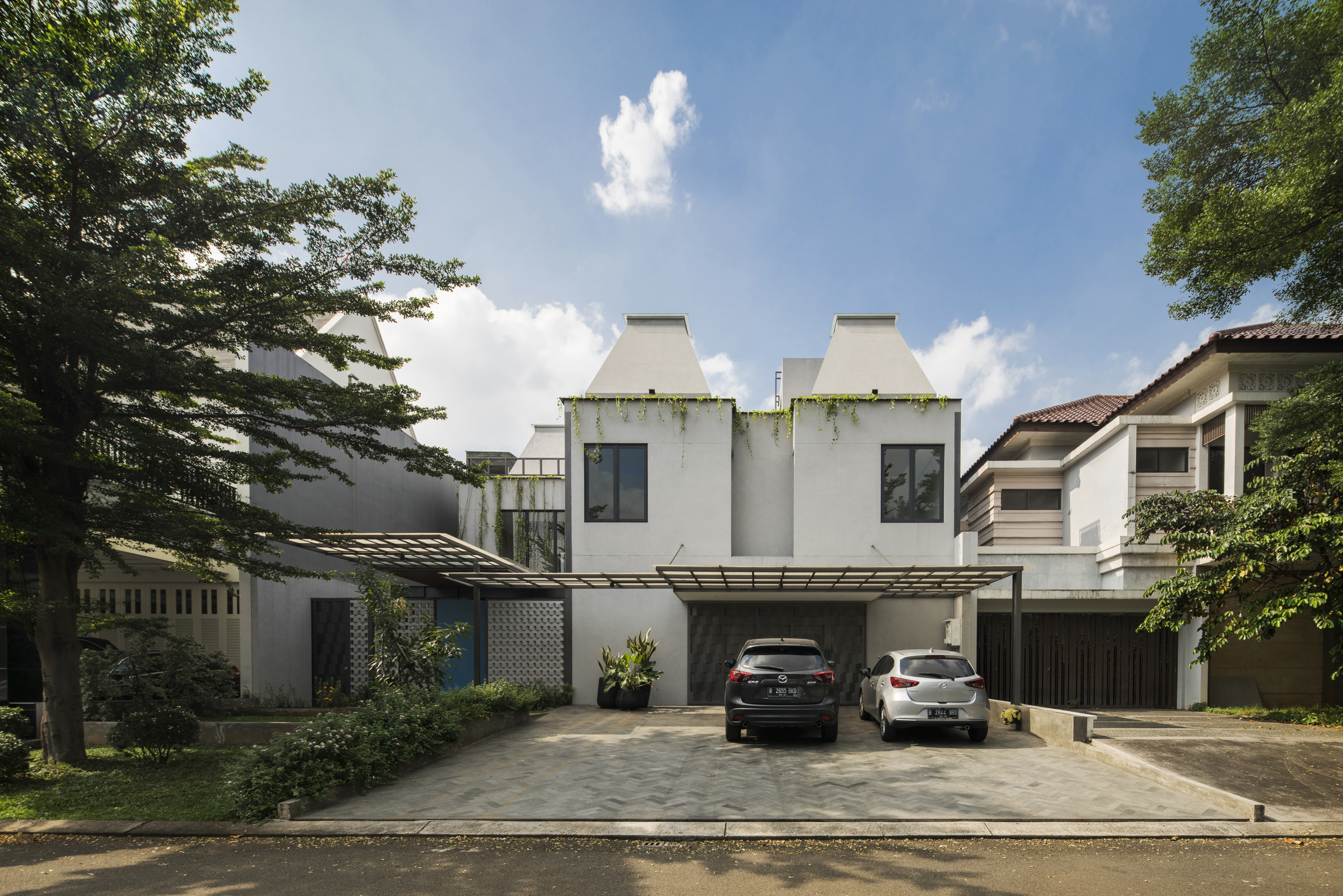
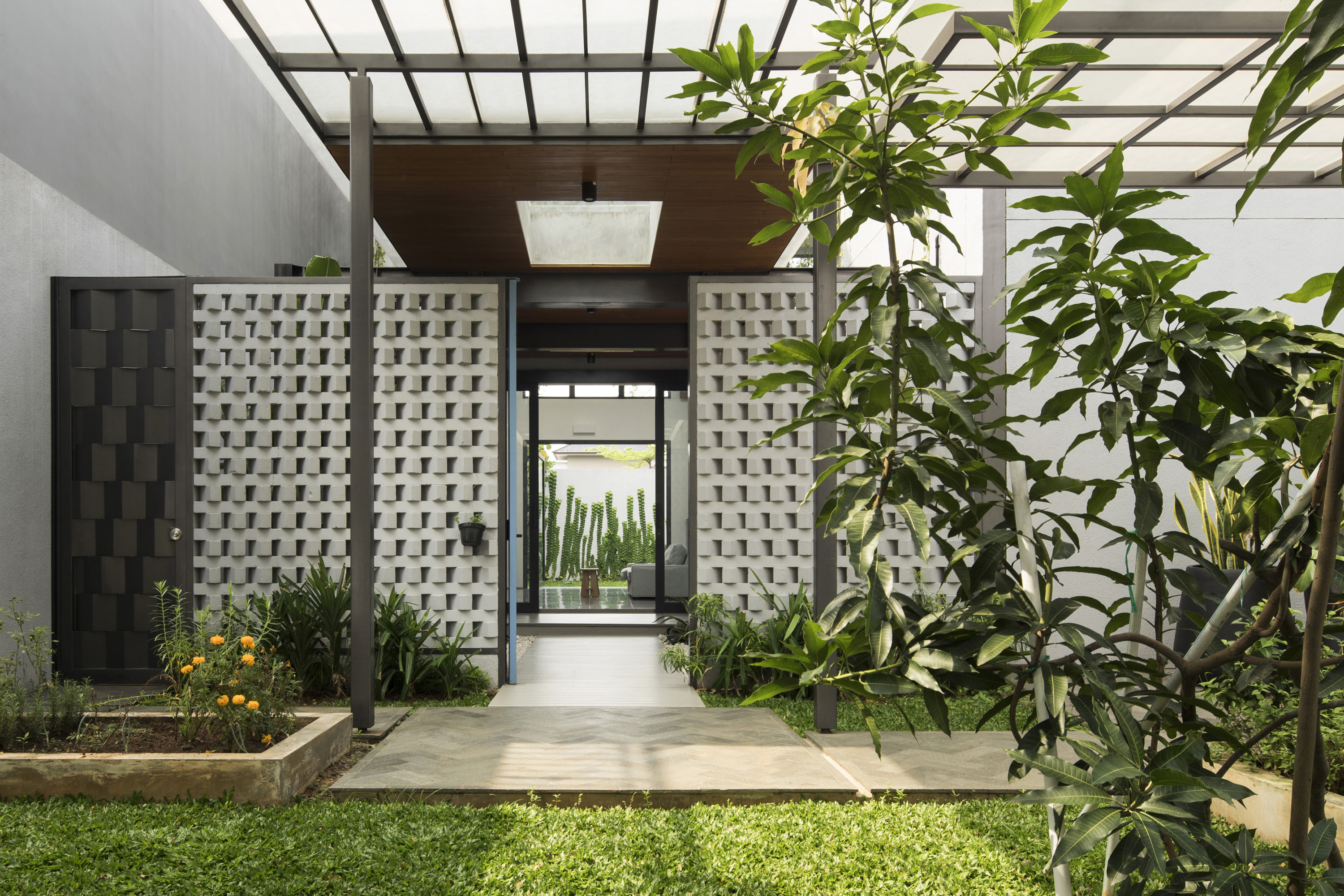
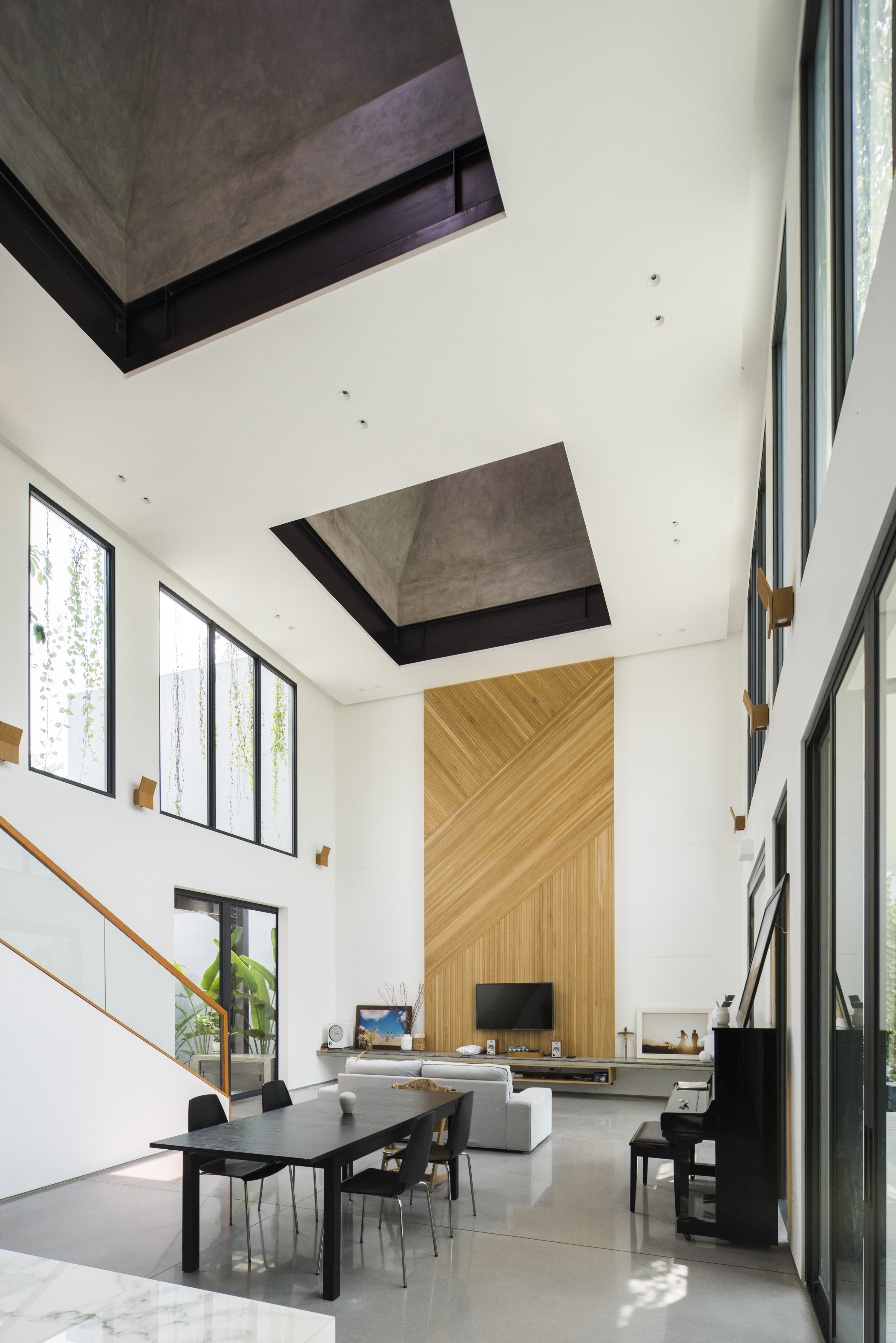
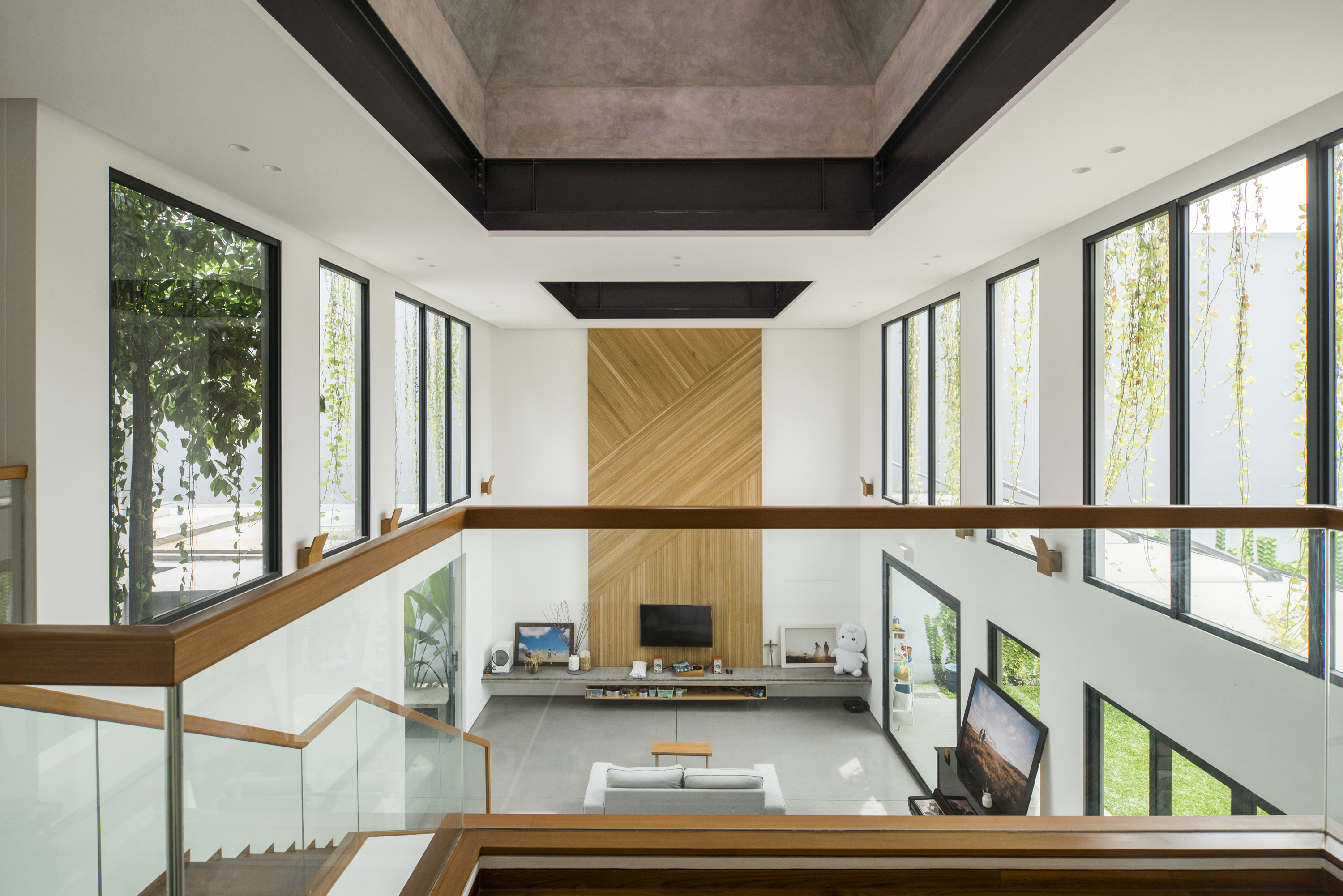
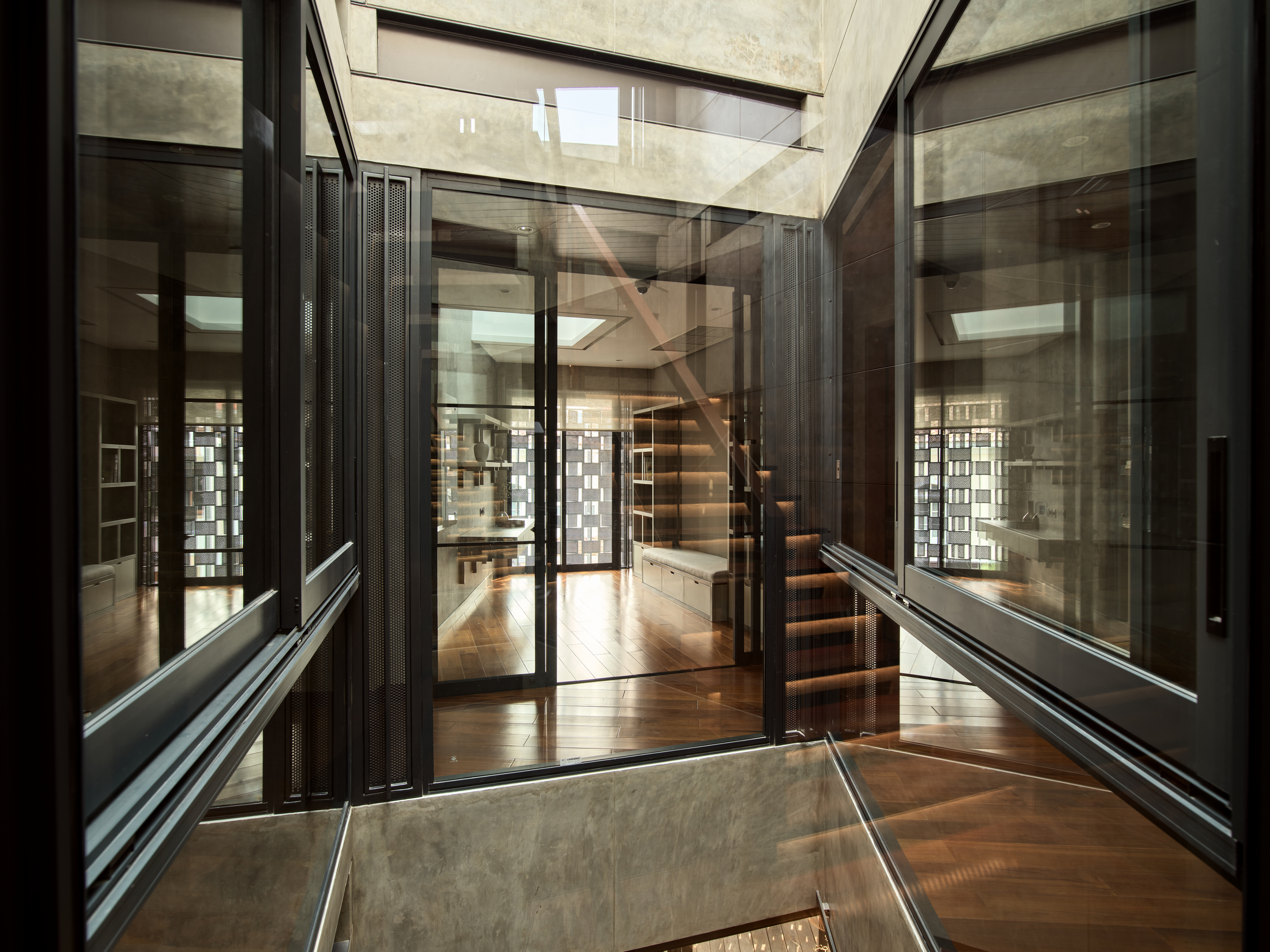
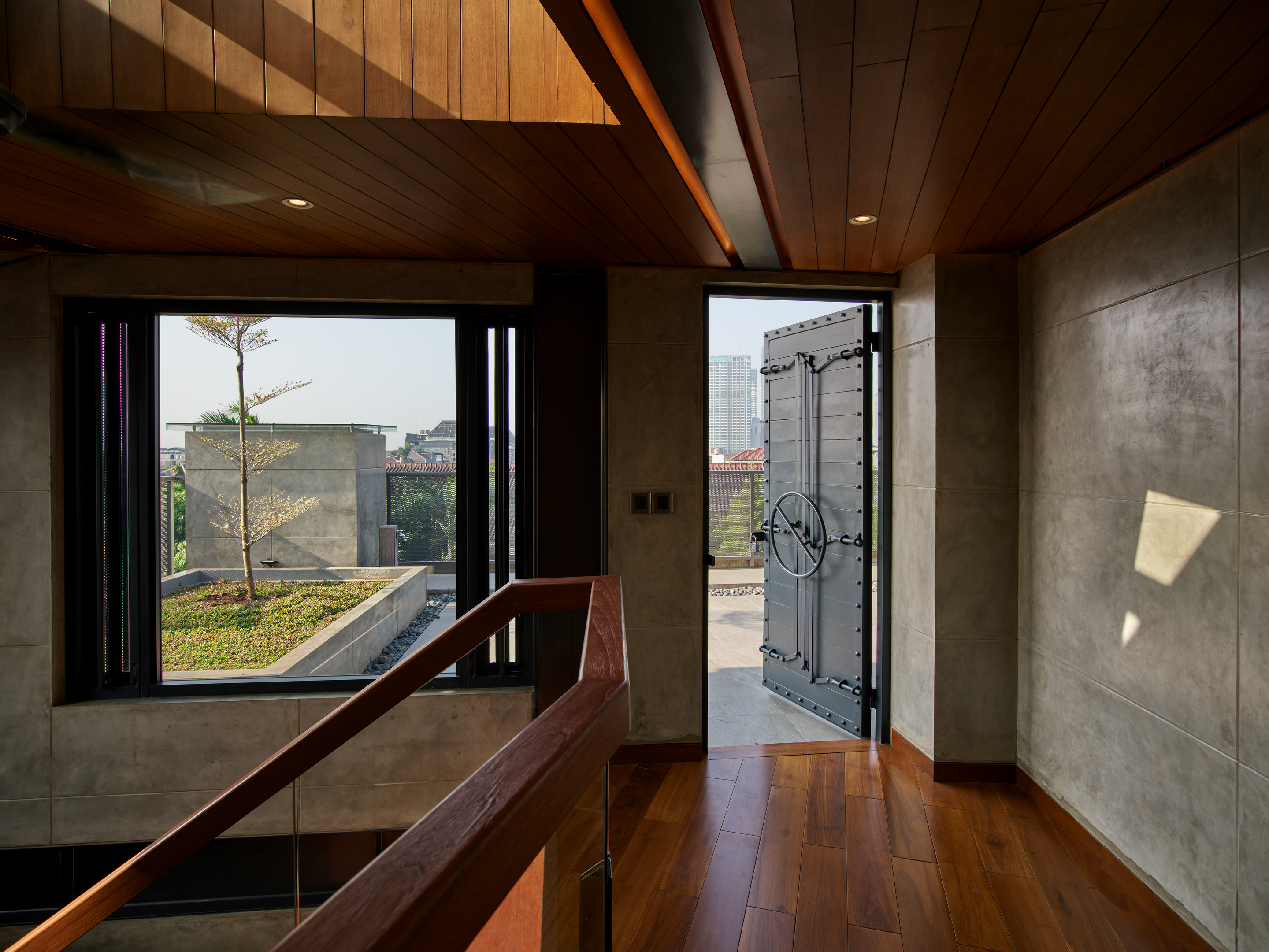
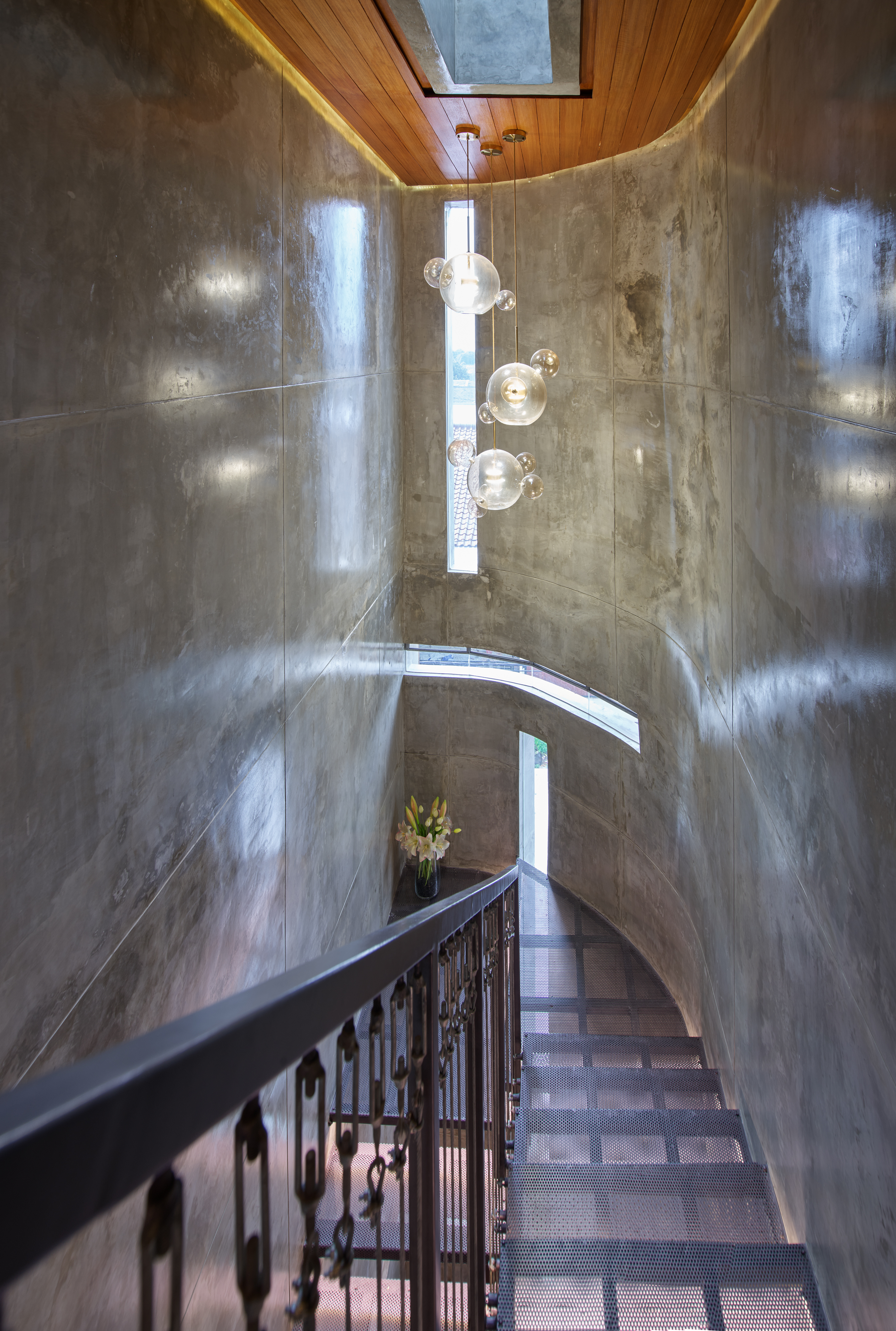
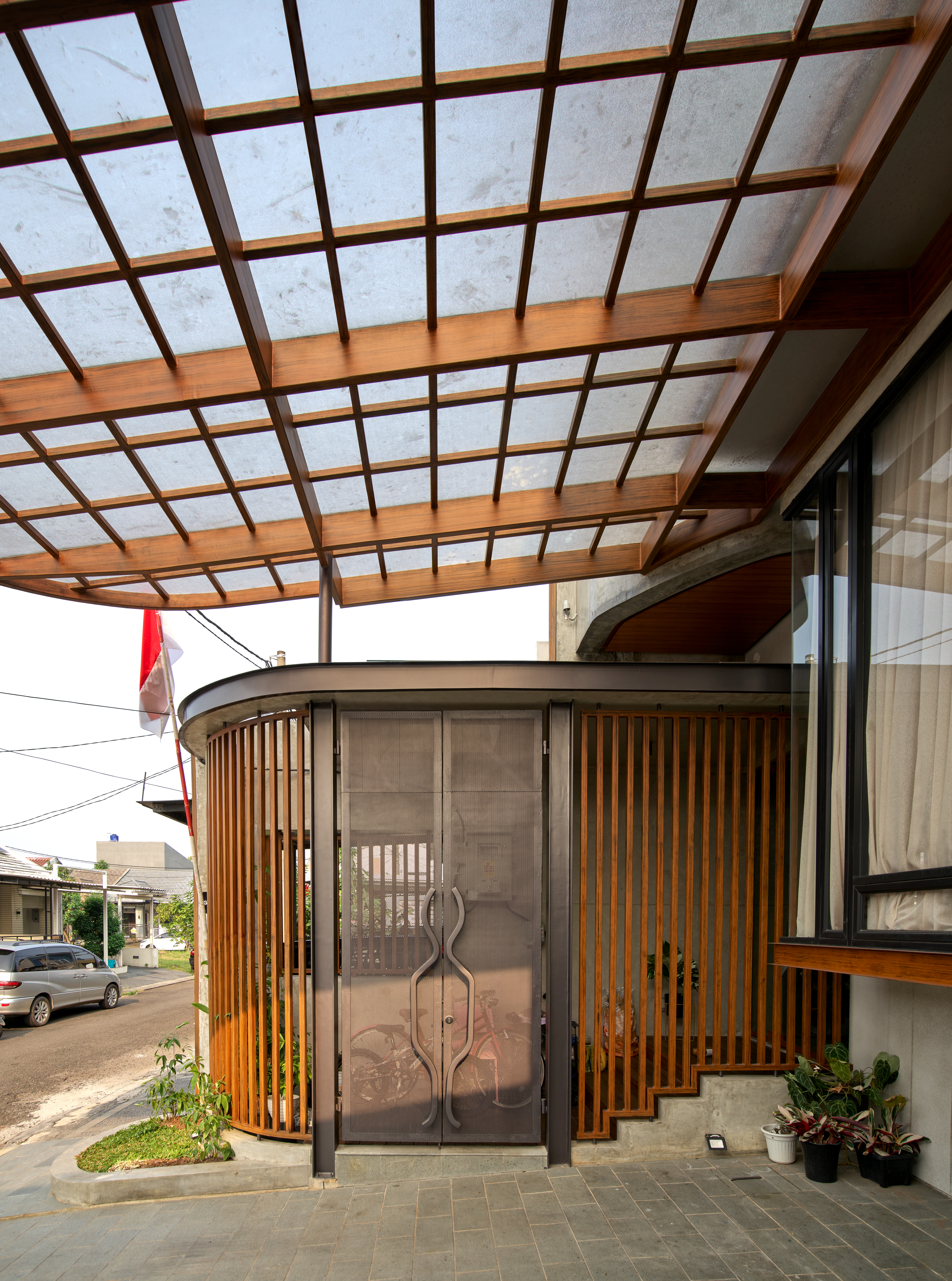
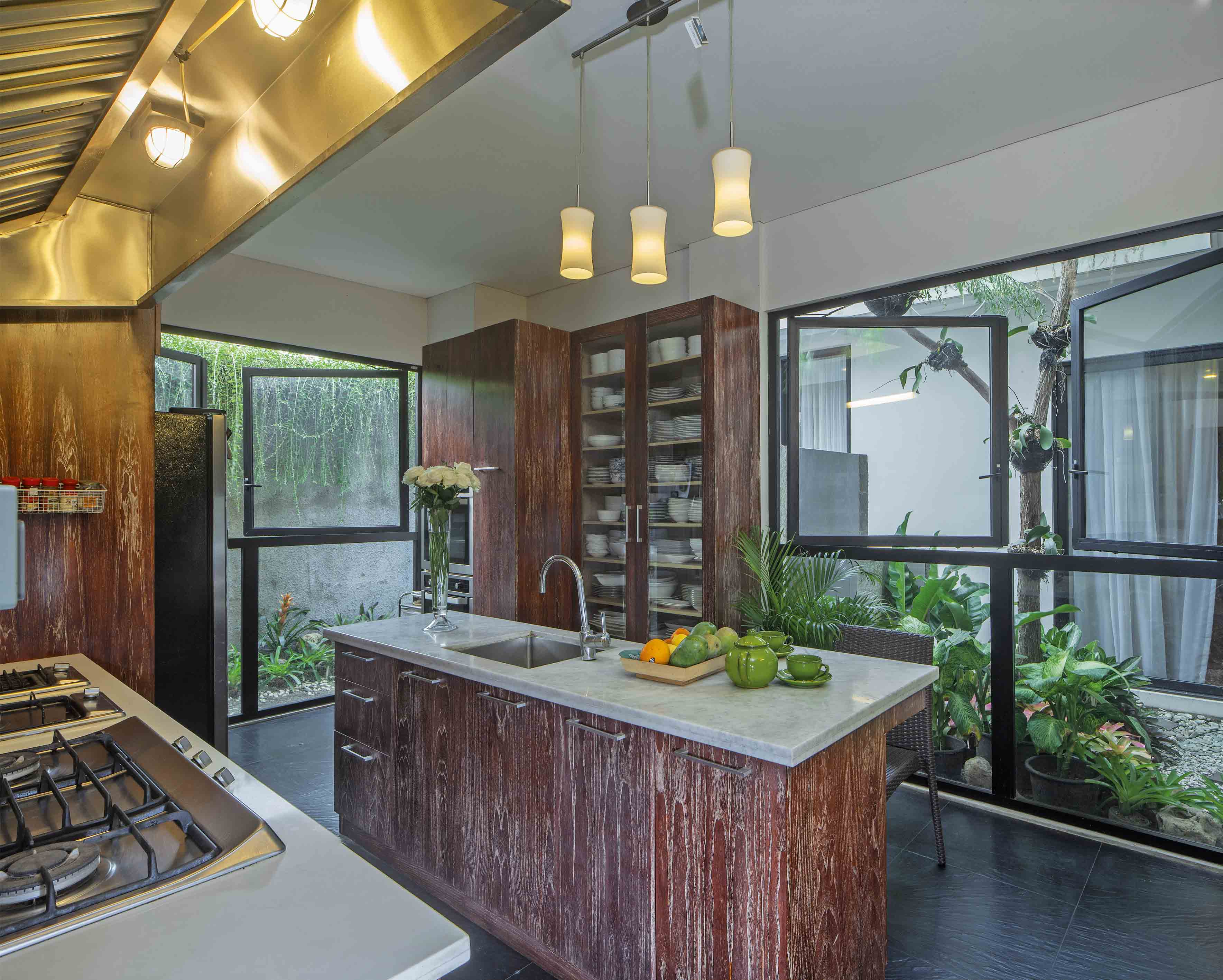
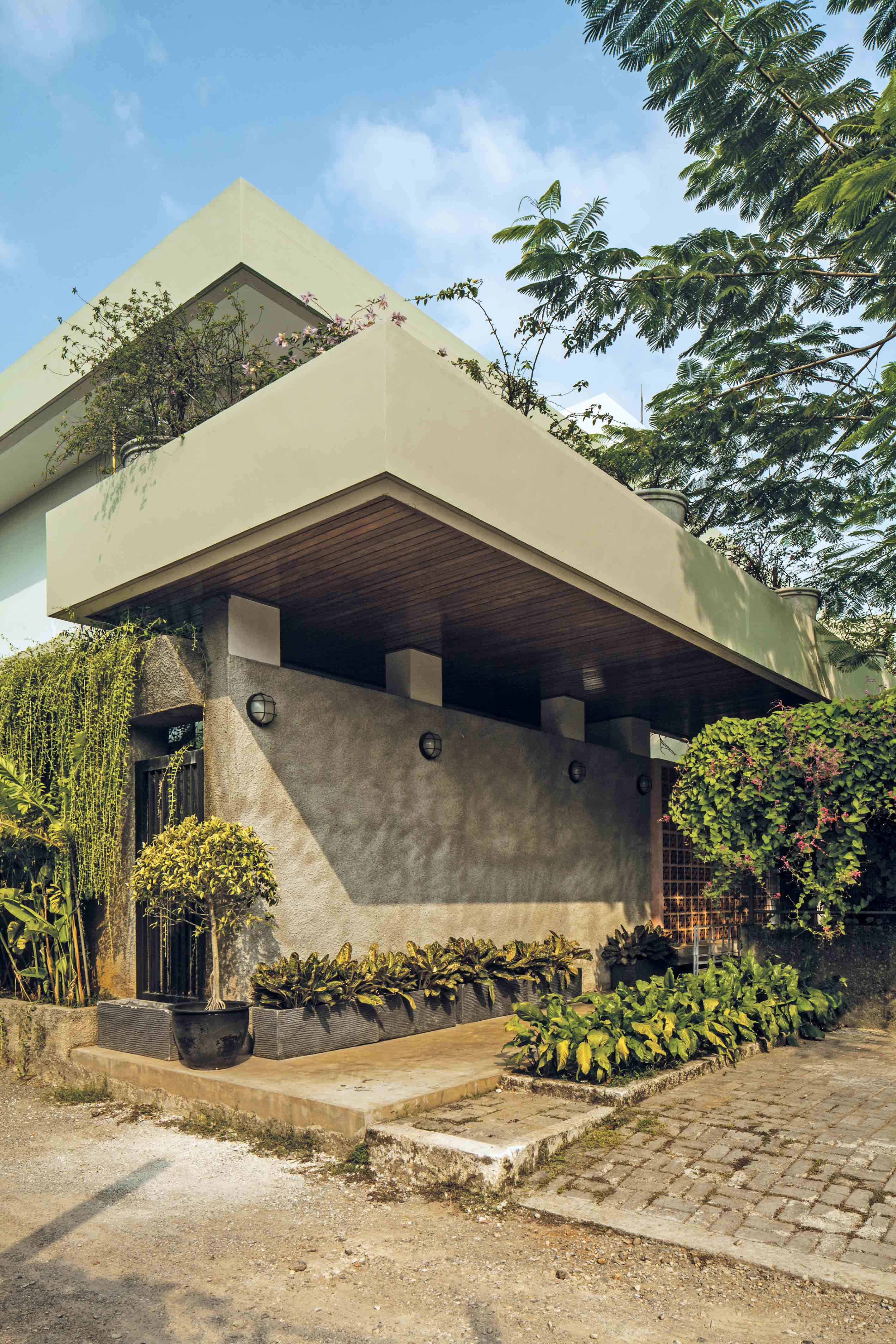
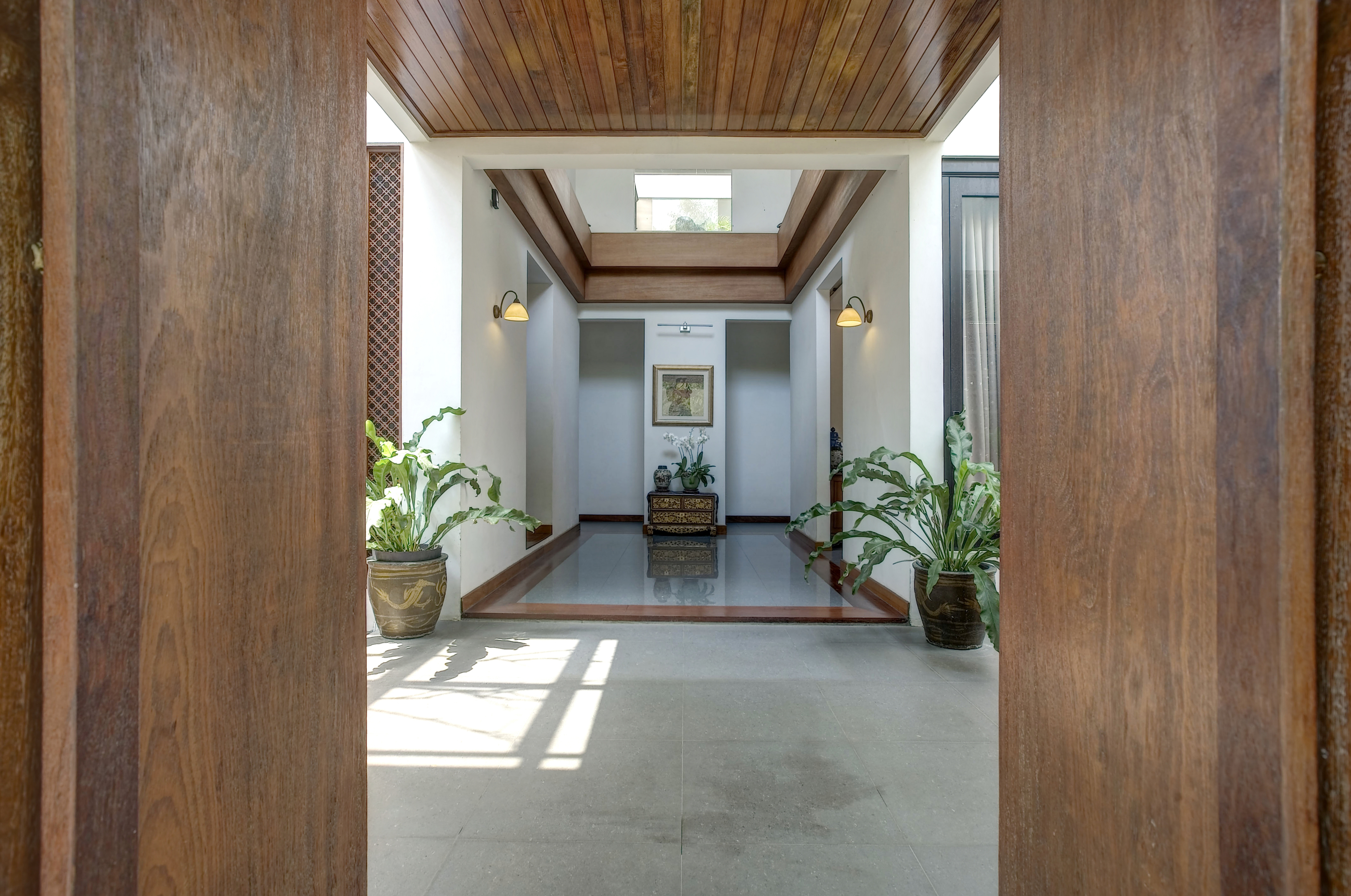
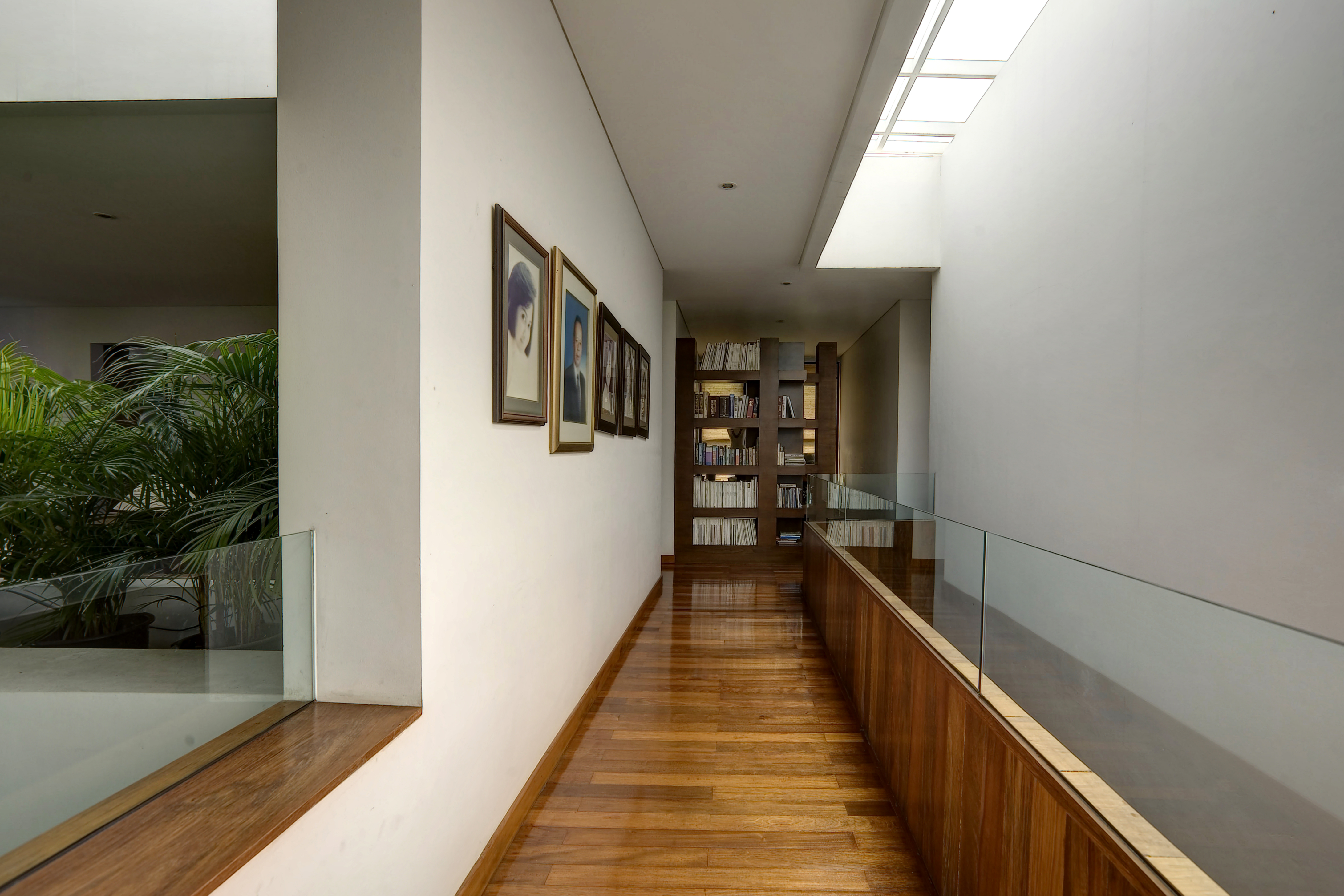
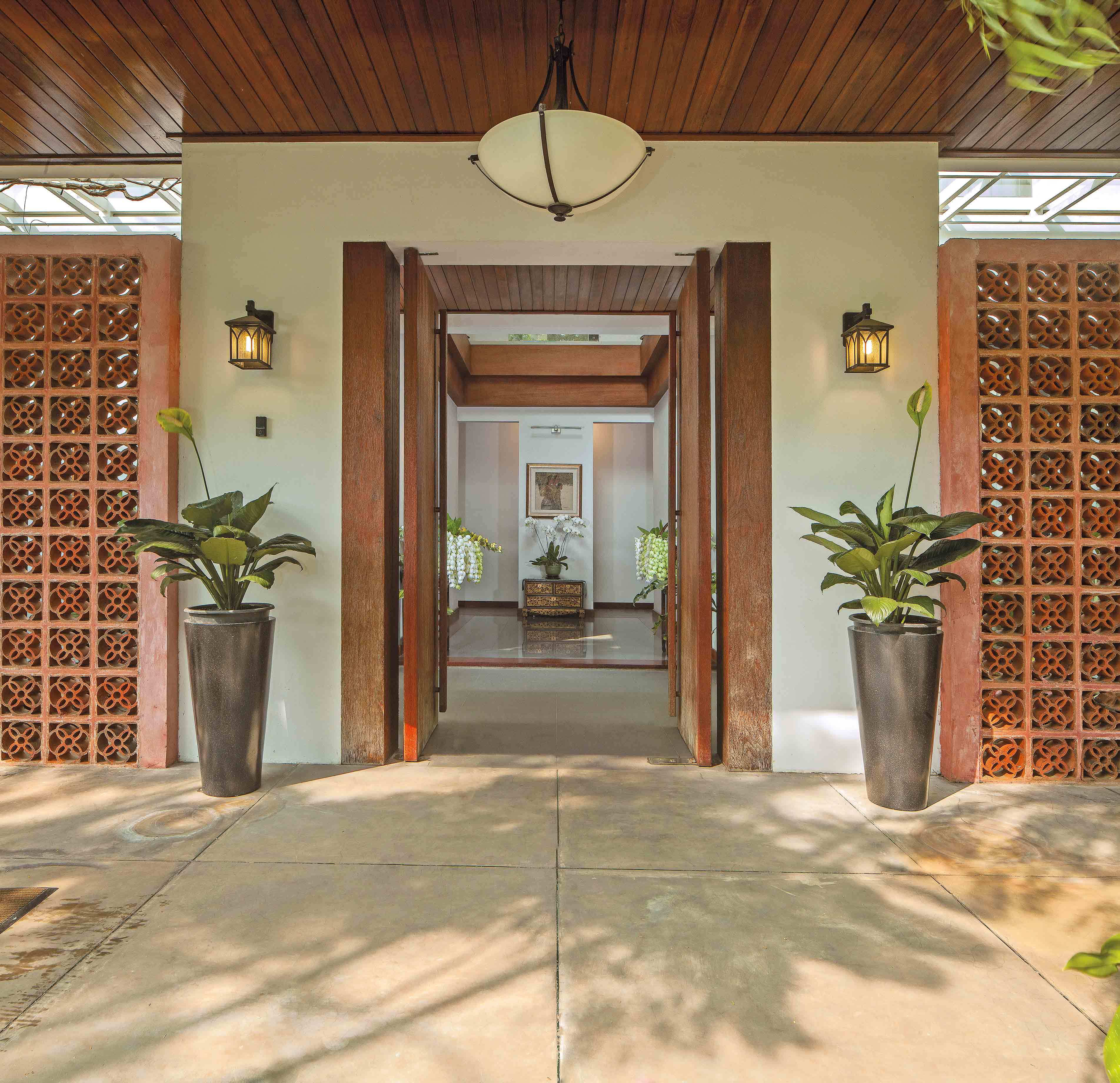
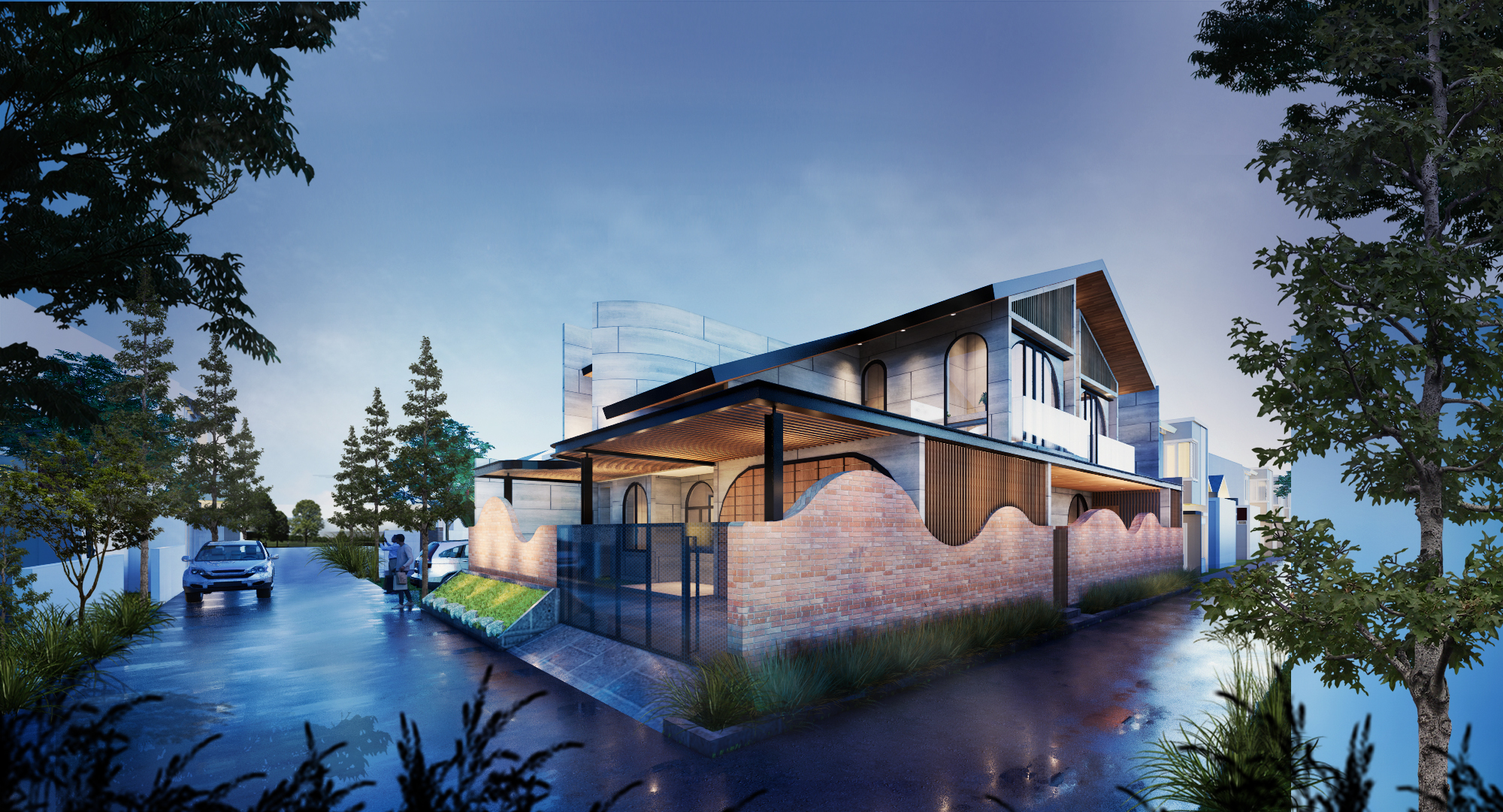
Located at the corner of the Street at Villa Meruya residential precinct, The guild shows its introvert side with the solid and high border wall, the solid fence without a gap to peek. As if to withdraw from the noisy Jakarta city and build its own sanctuary, the guild is solid from the outside but open on the inside. The Building consists of one residence, living room, studio a place to work for Realrich Architecture Workshop, Omah Library, one open courtyard, and a kitchen. The entrance is introduced by concrete, steel, glass, and polycarbonate sheet. The access from public and private is separated by an open-air corridor. The access to the House and the Studio are separated by 2 x 2 m foyer.

photography by Eric Dinardi

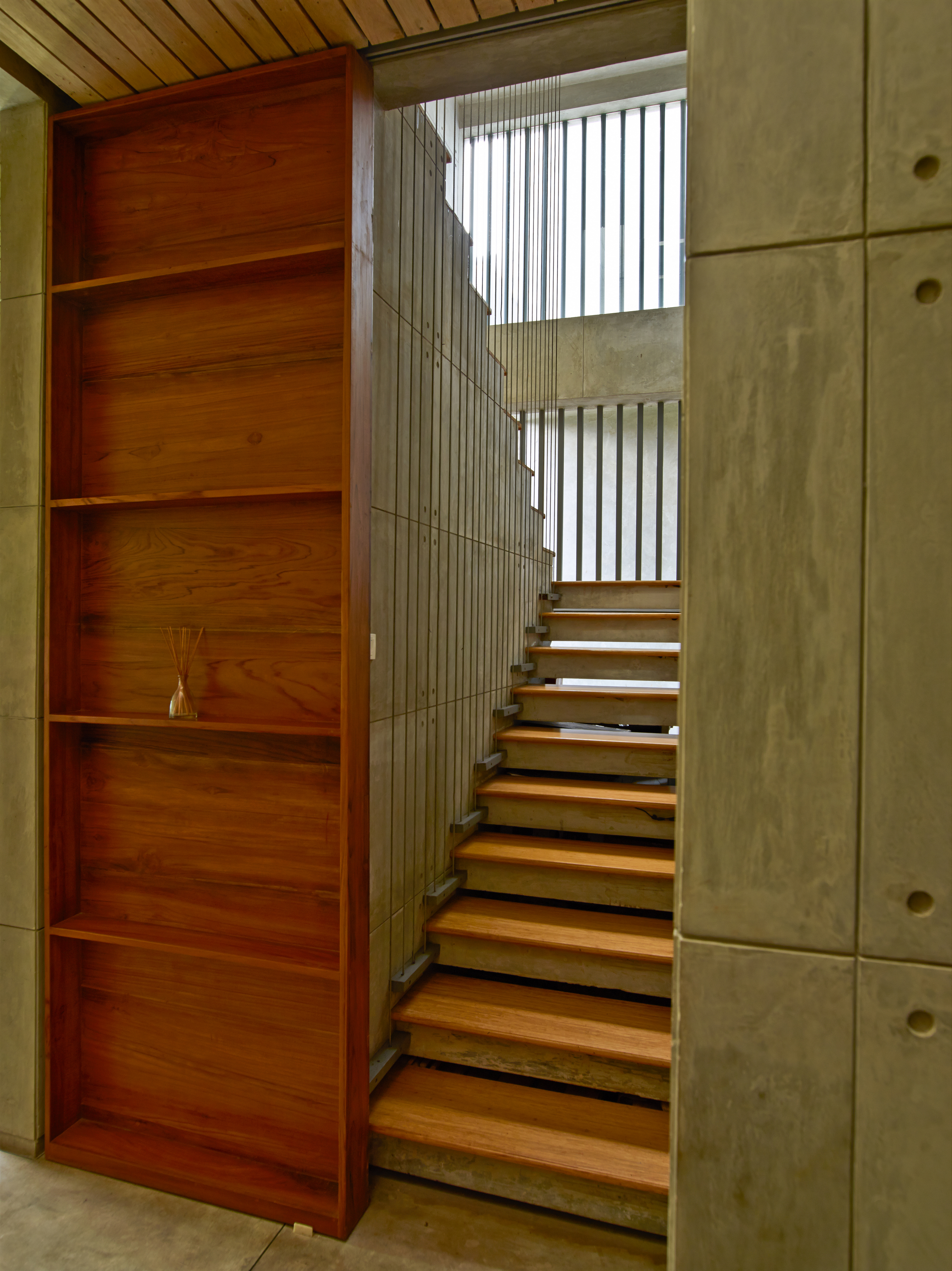
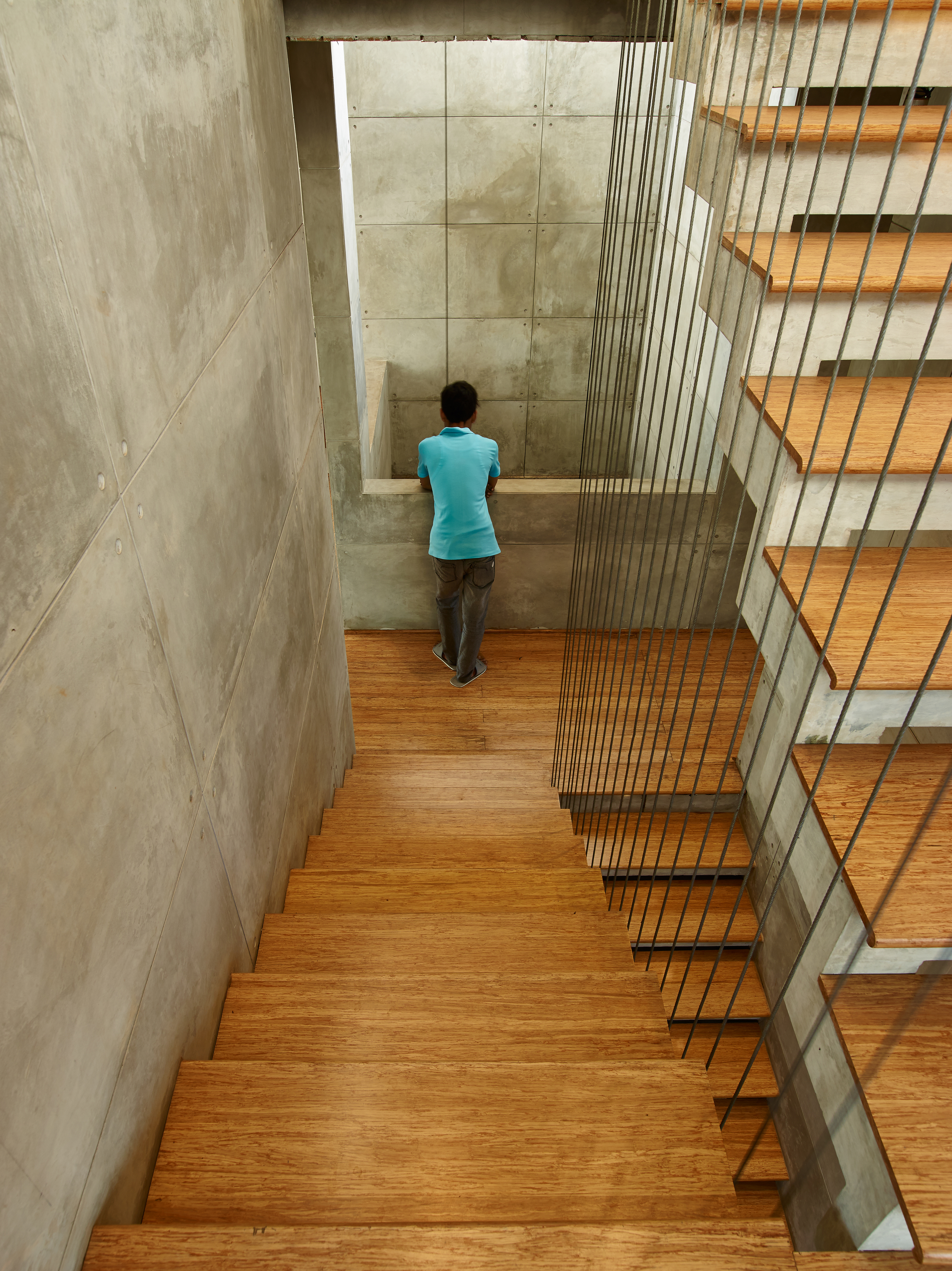
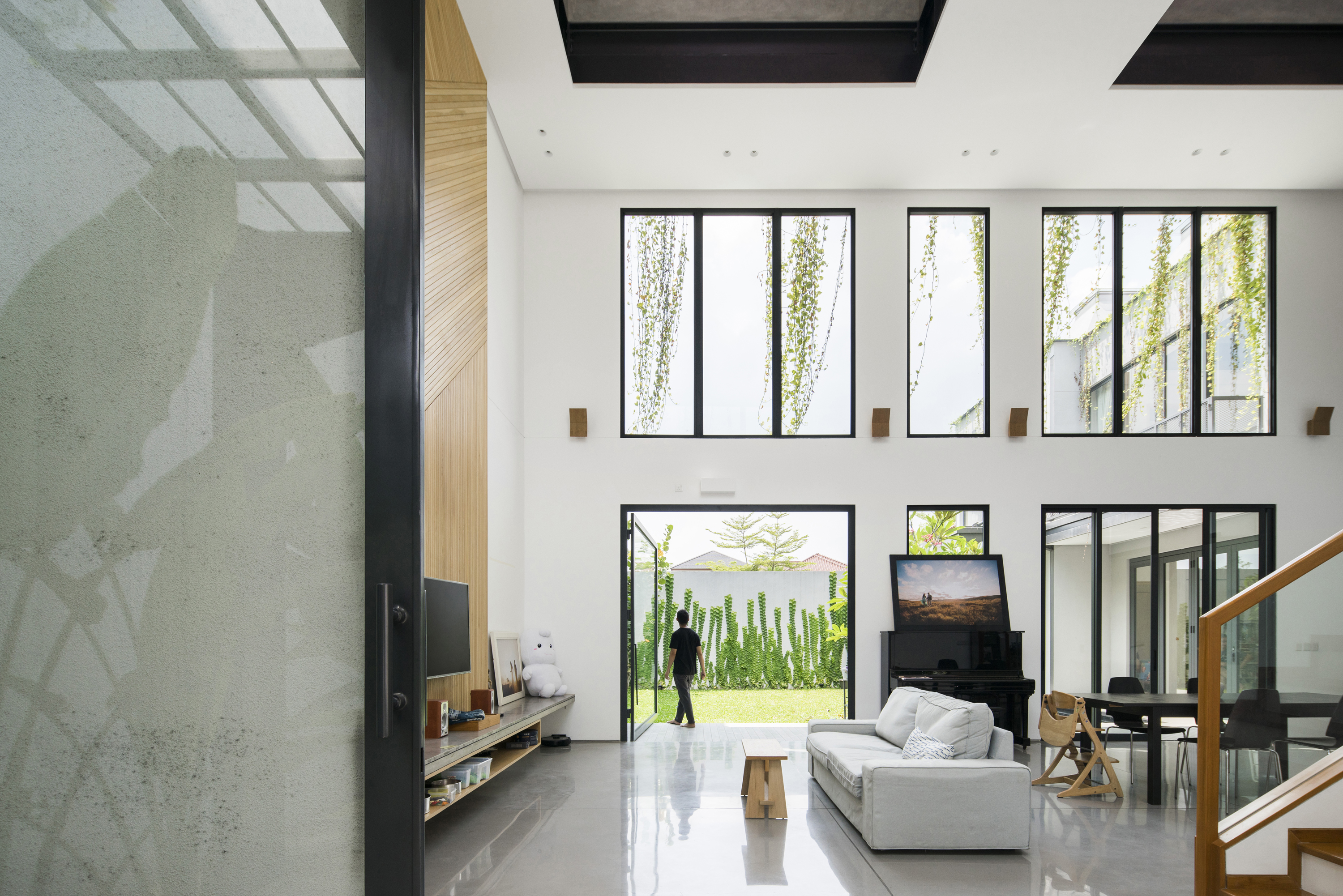
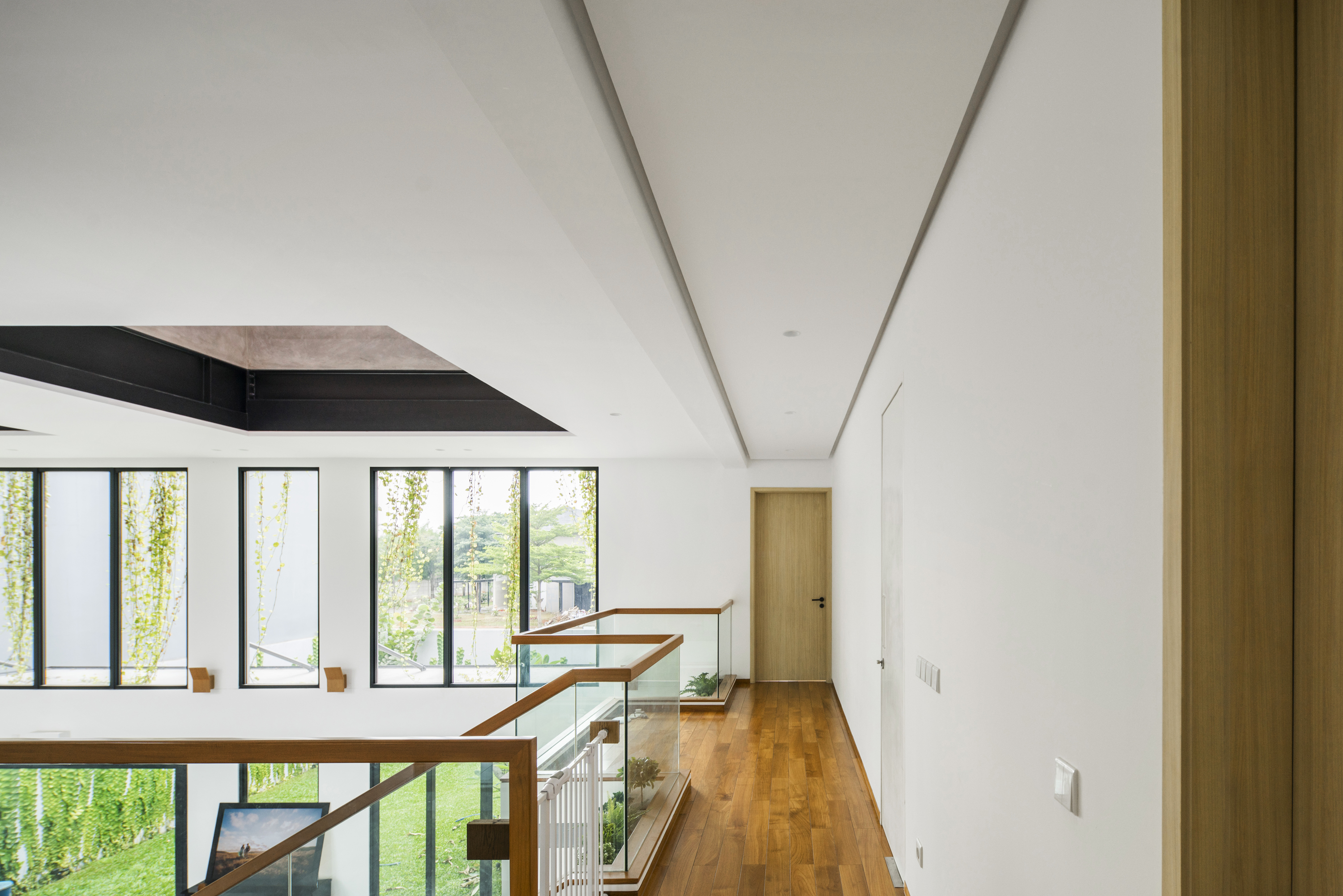
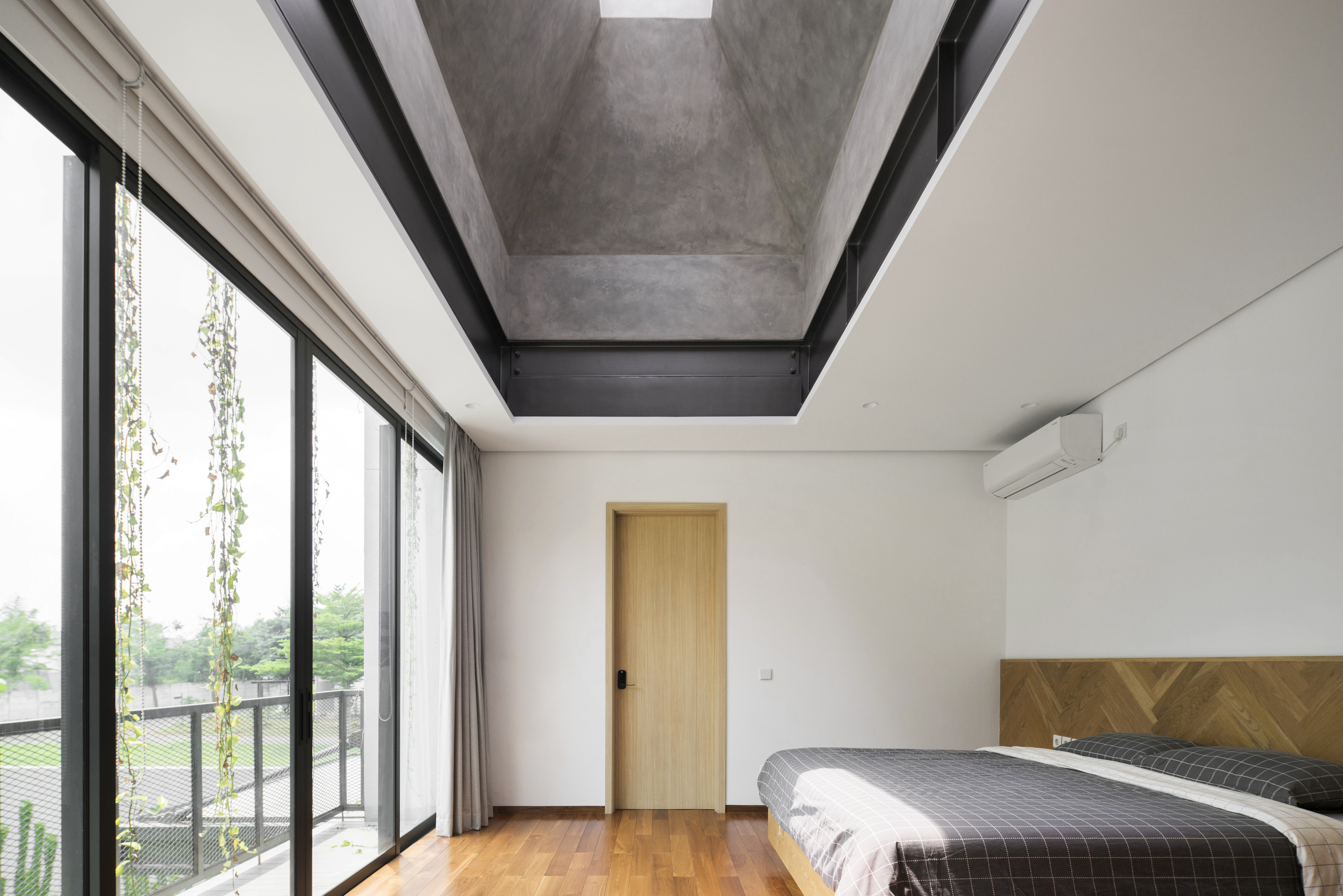
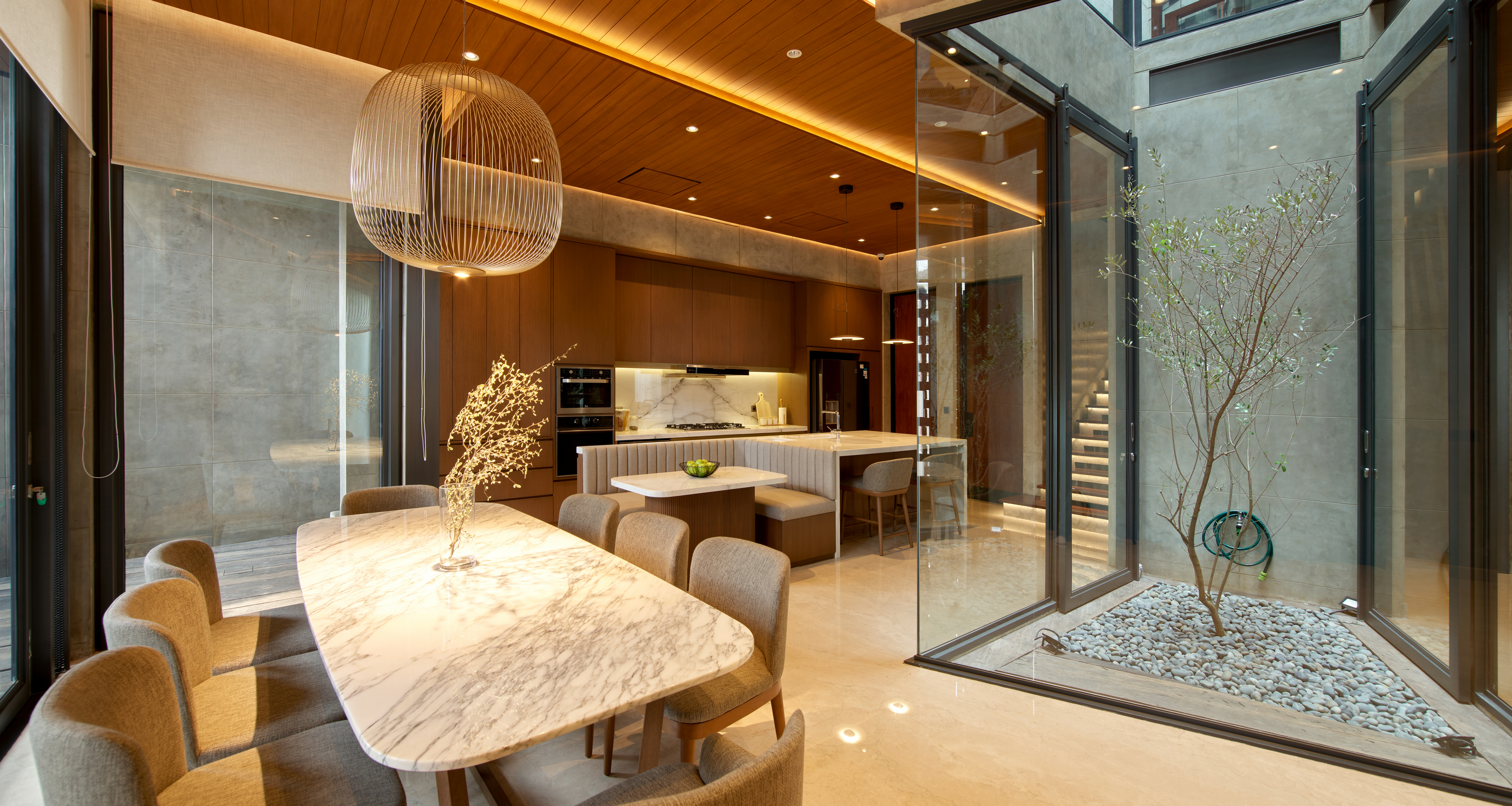
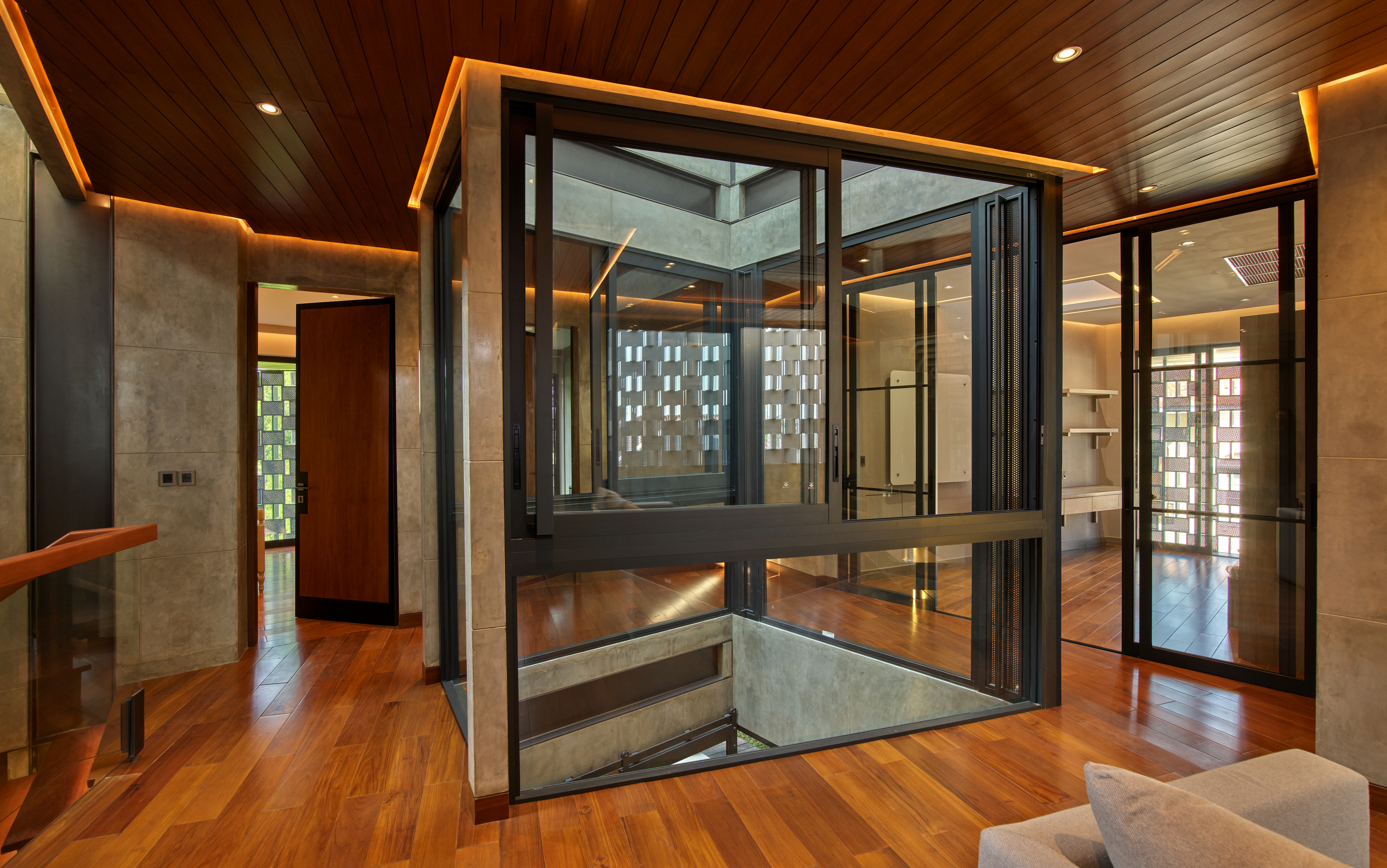
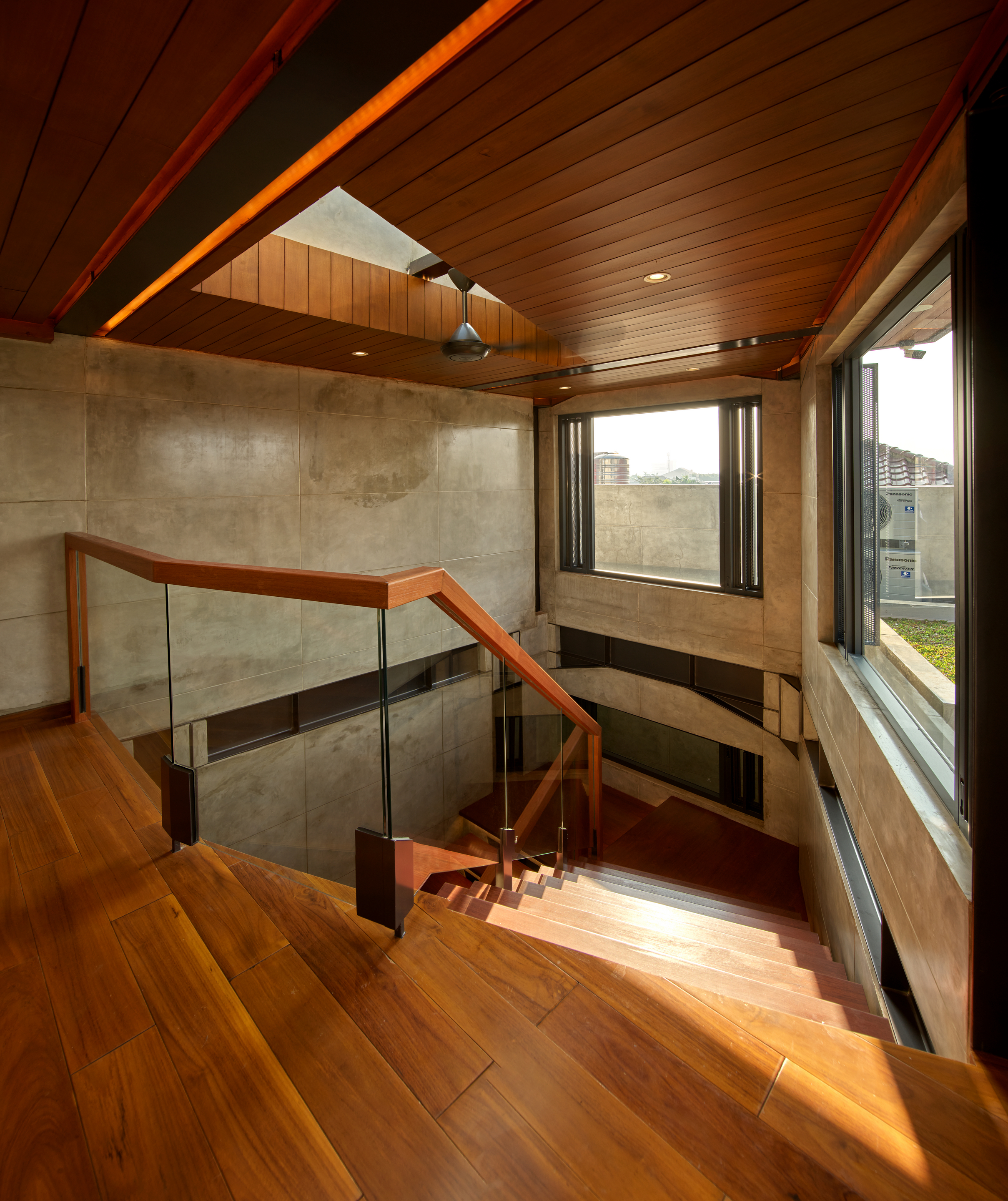
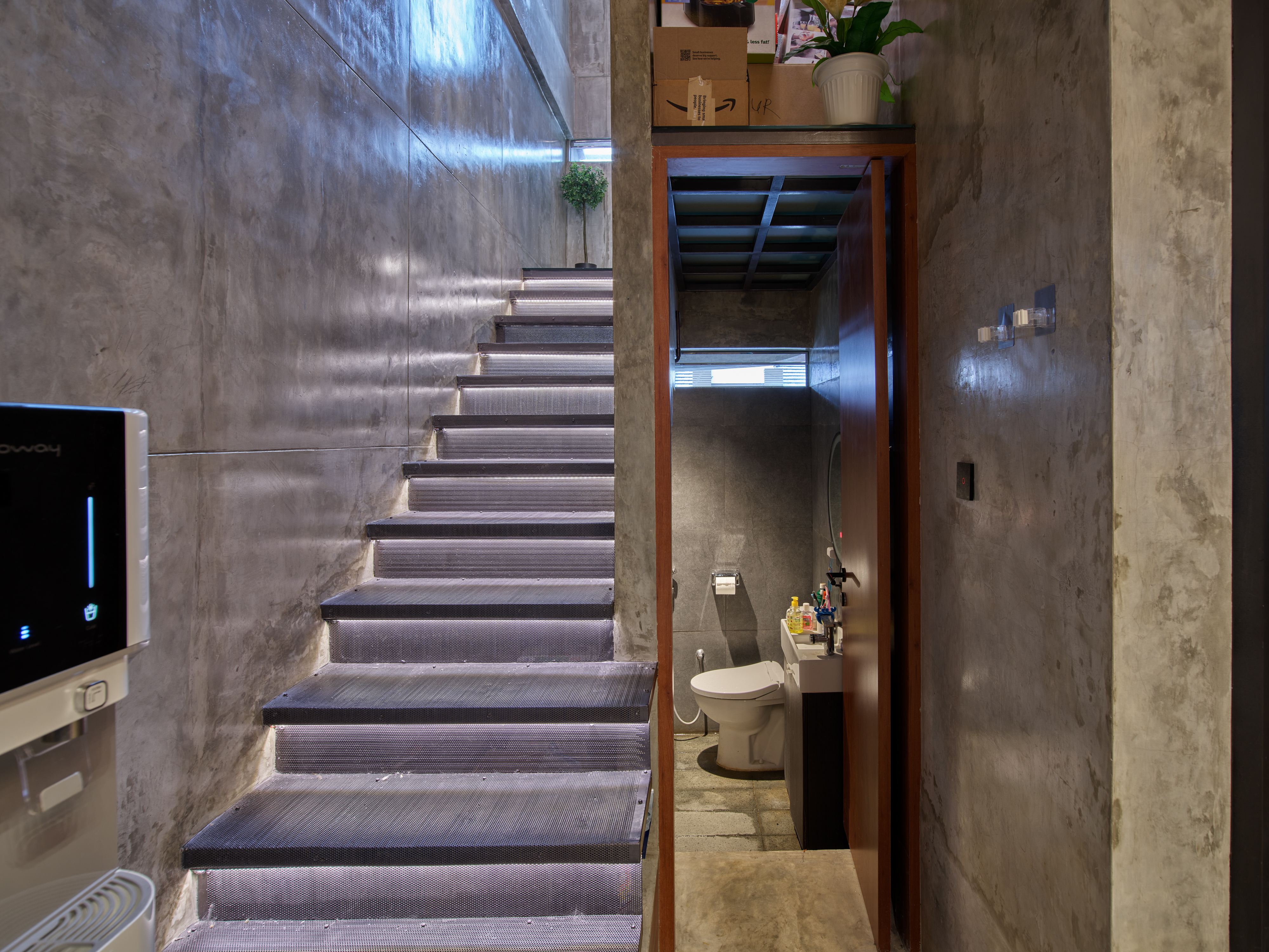
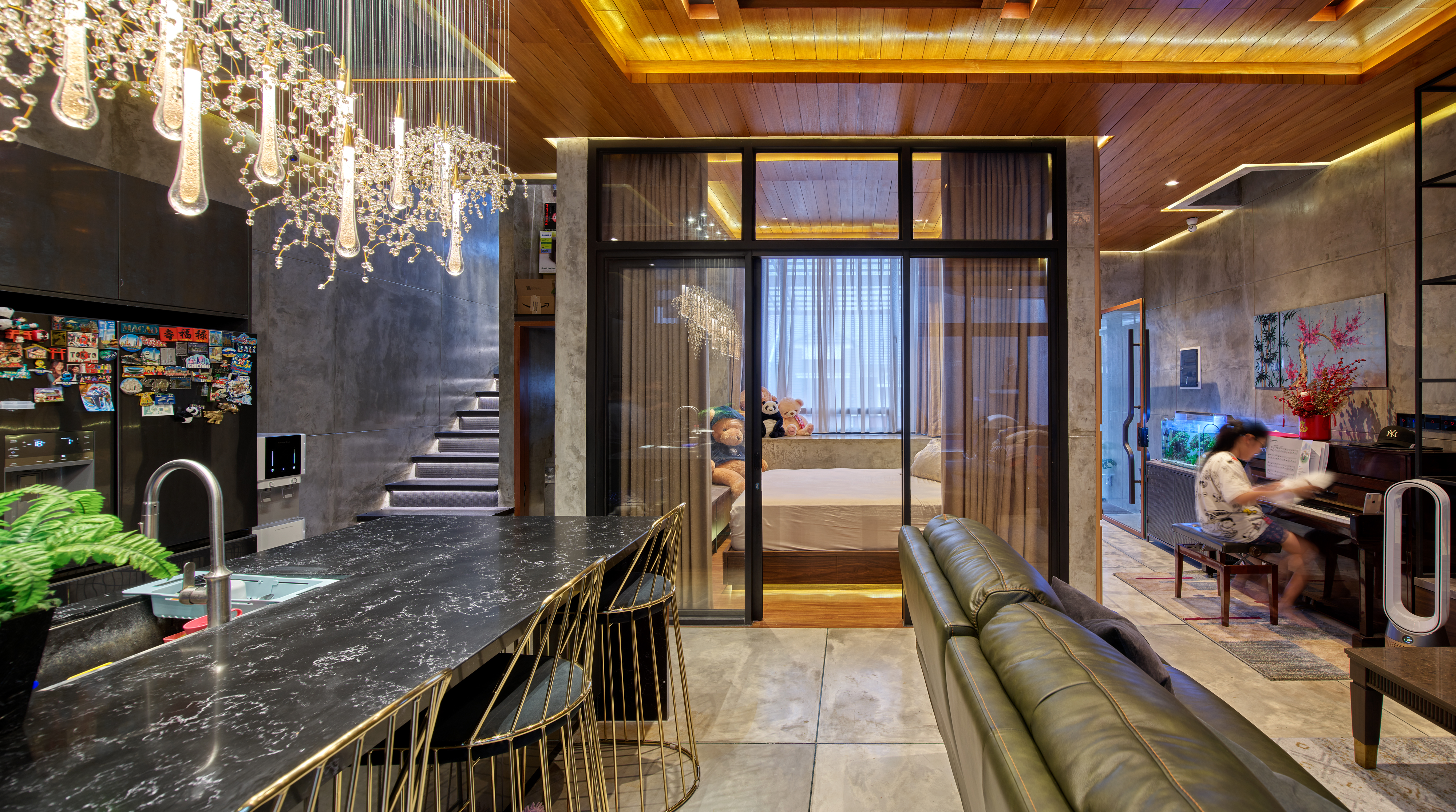
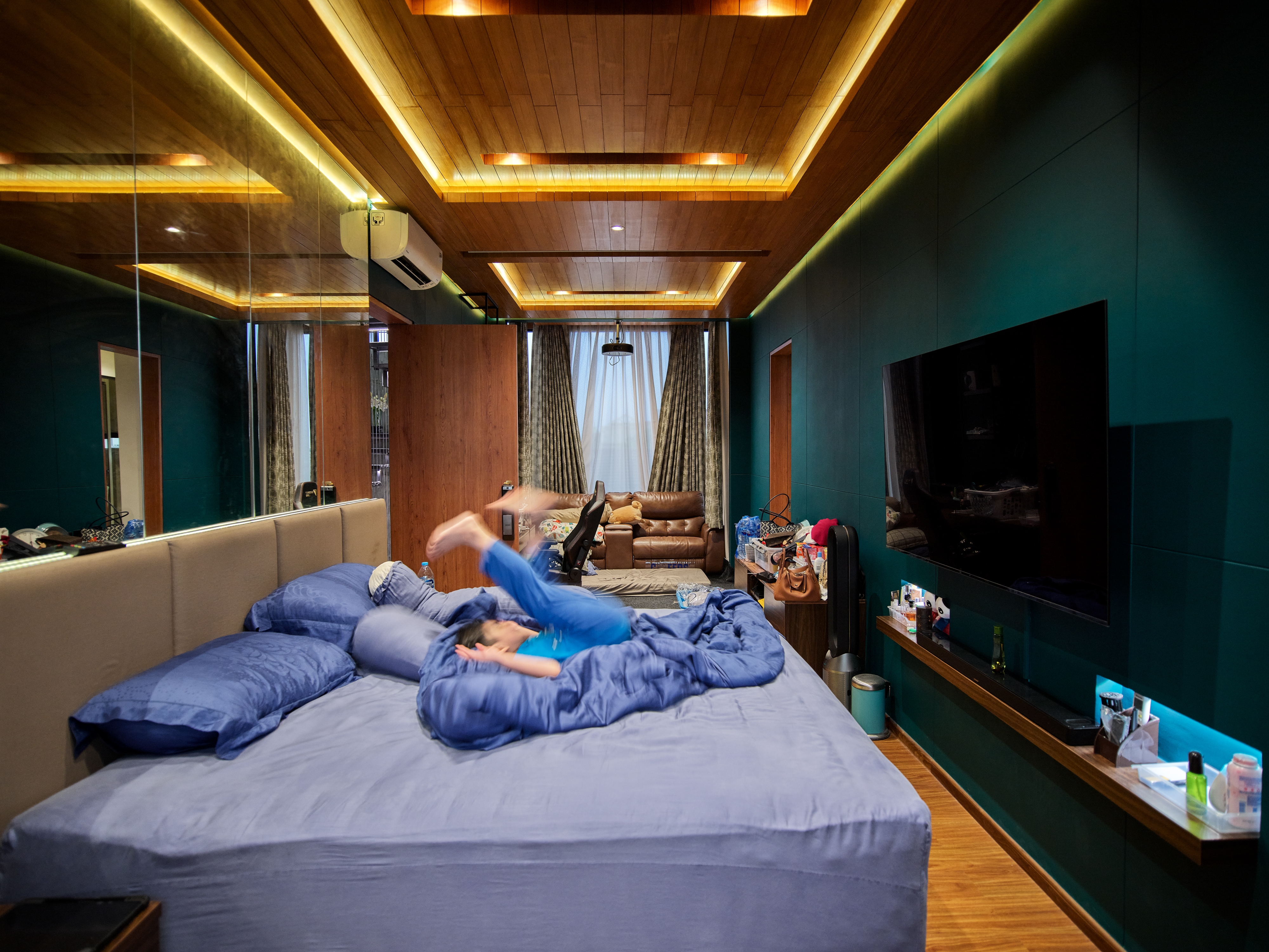
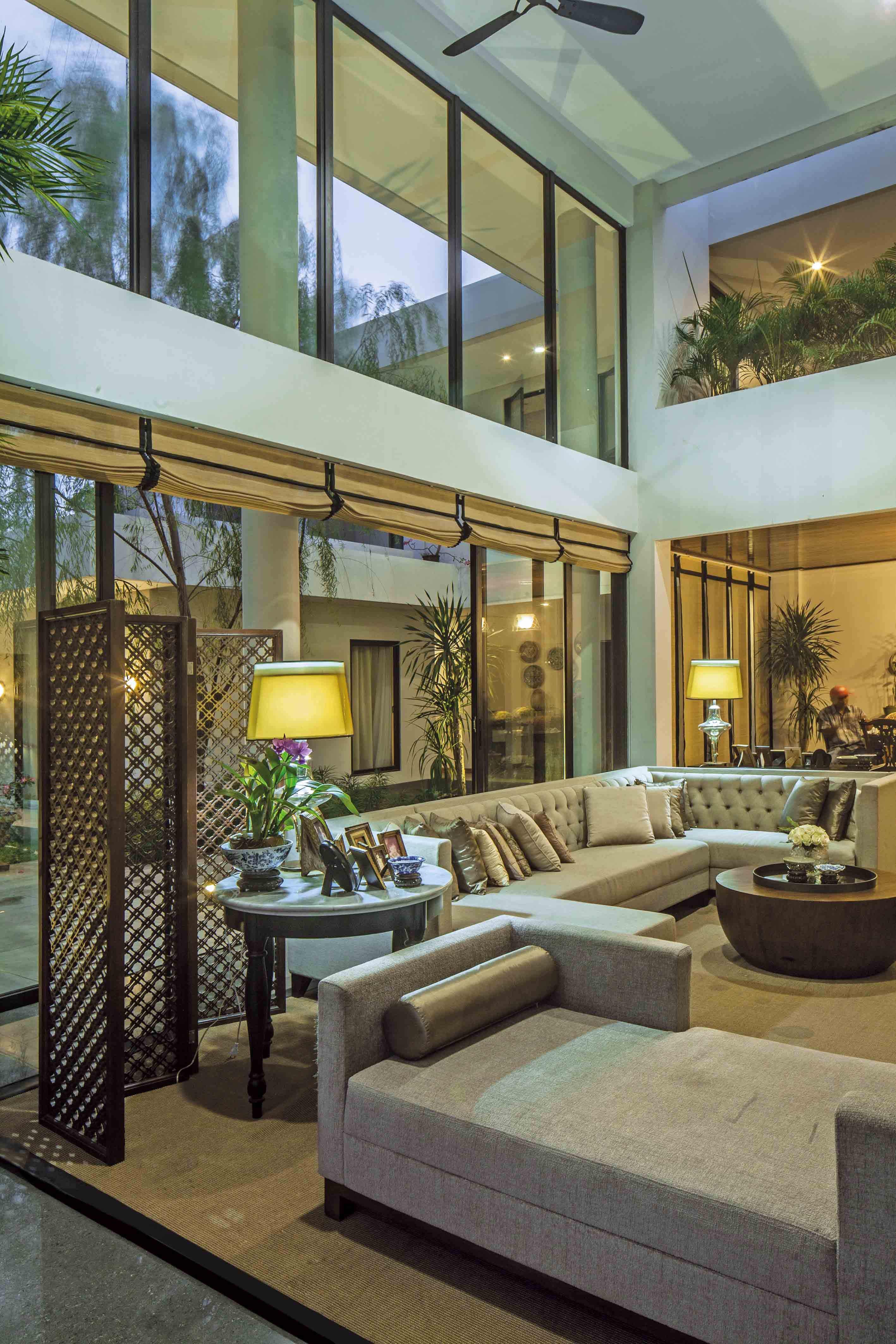
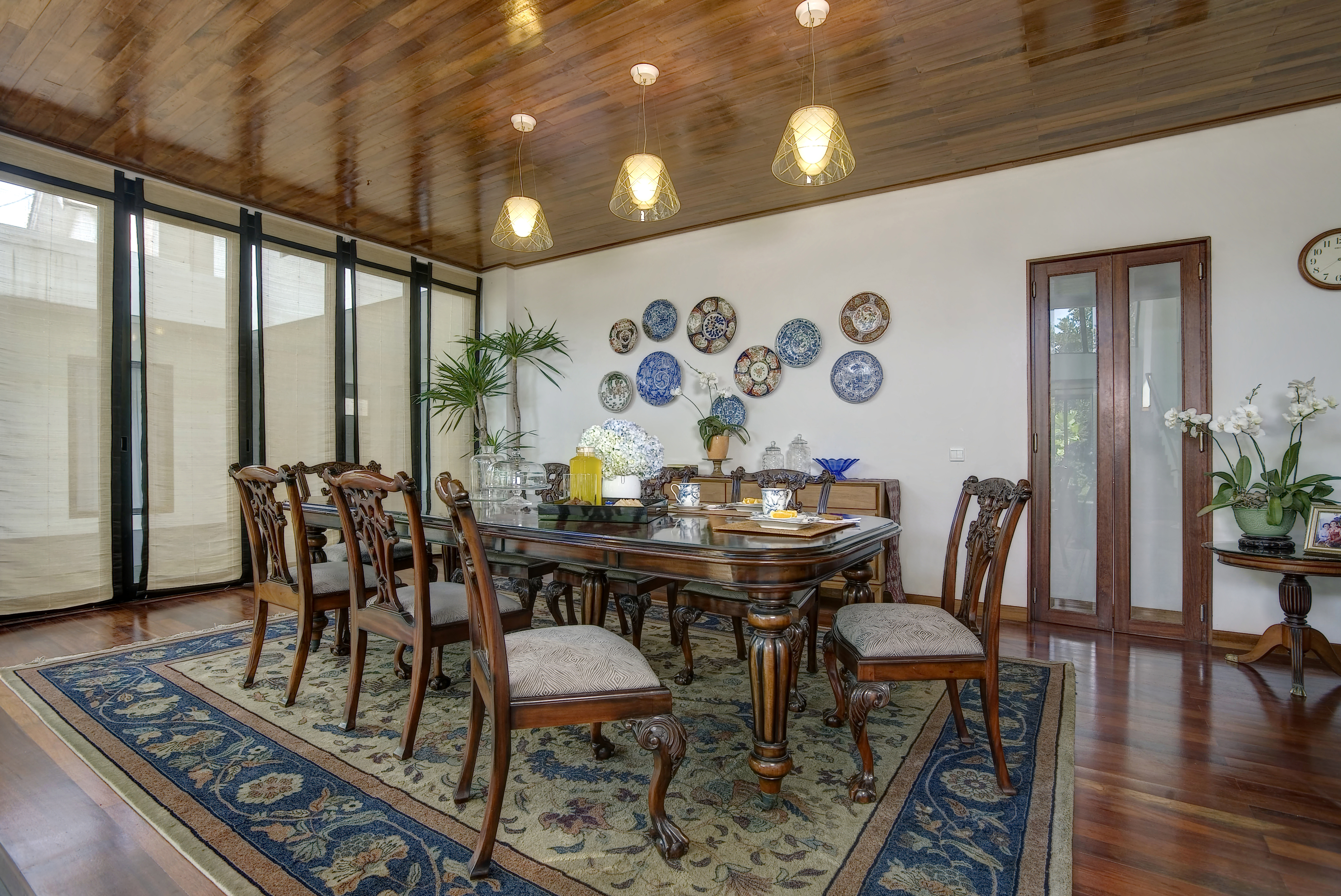
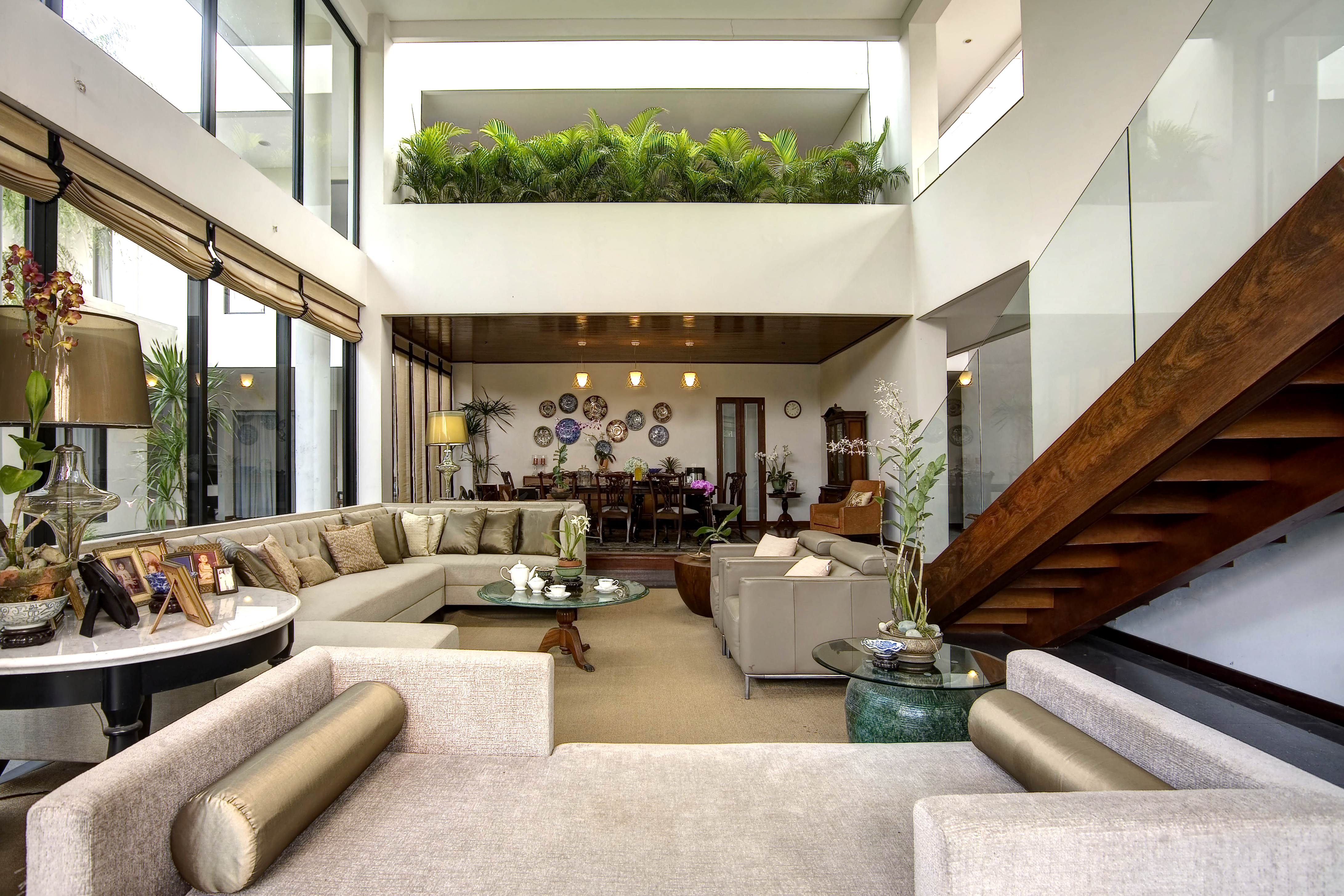
The bedroom is located on the 1st floor while the other program is located on the ground floor. The circulation is interlocked to give easy access for the owner to access the studio below. Living room and also the dining room with a total area of 35 sqm located on the ground floor, while the more private family rooms are located on the first floor and limited by the void of stairs to separate family area and the studio.

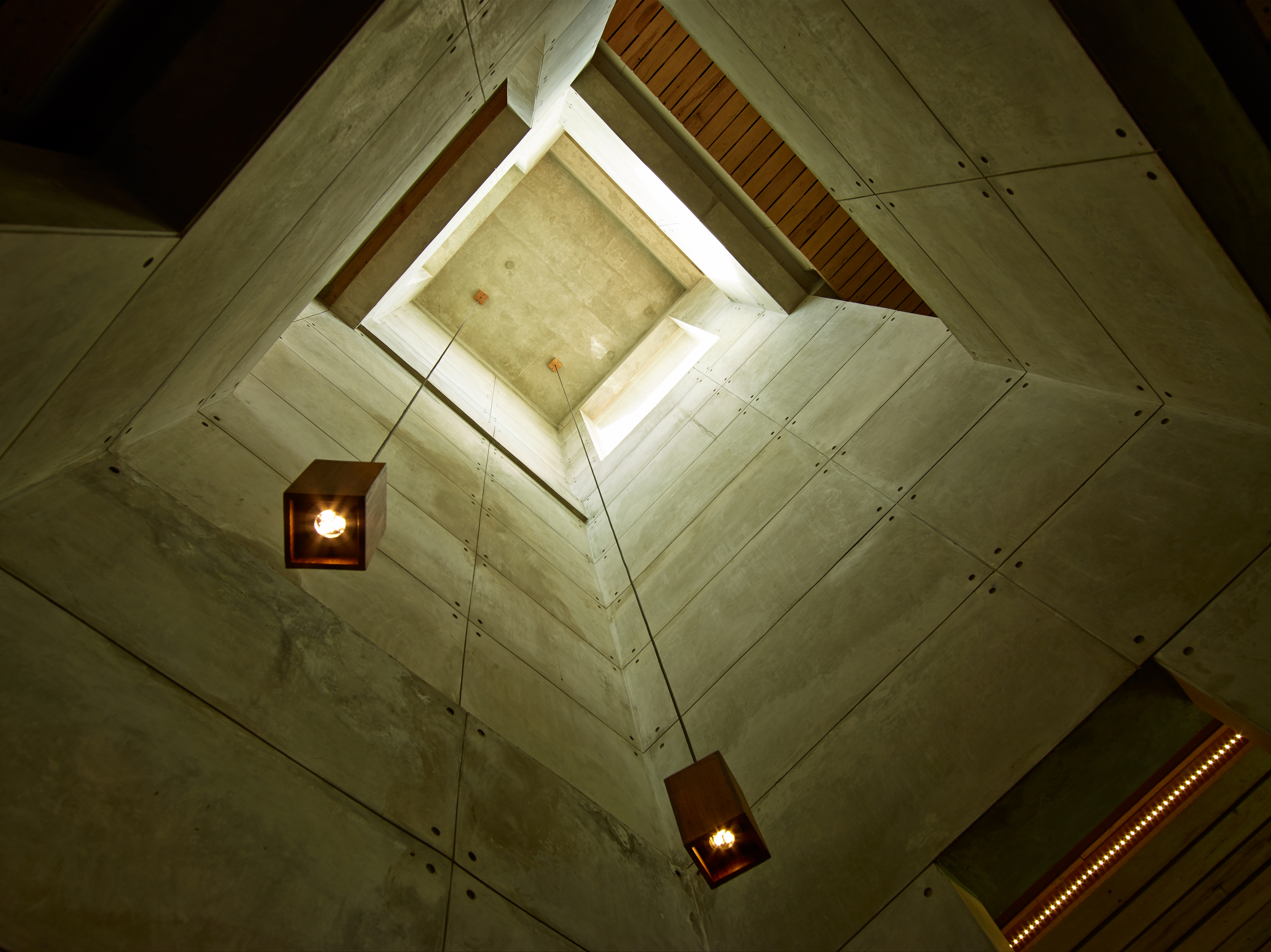
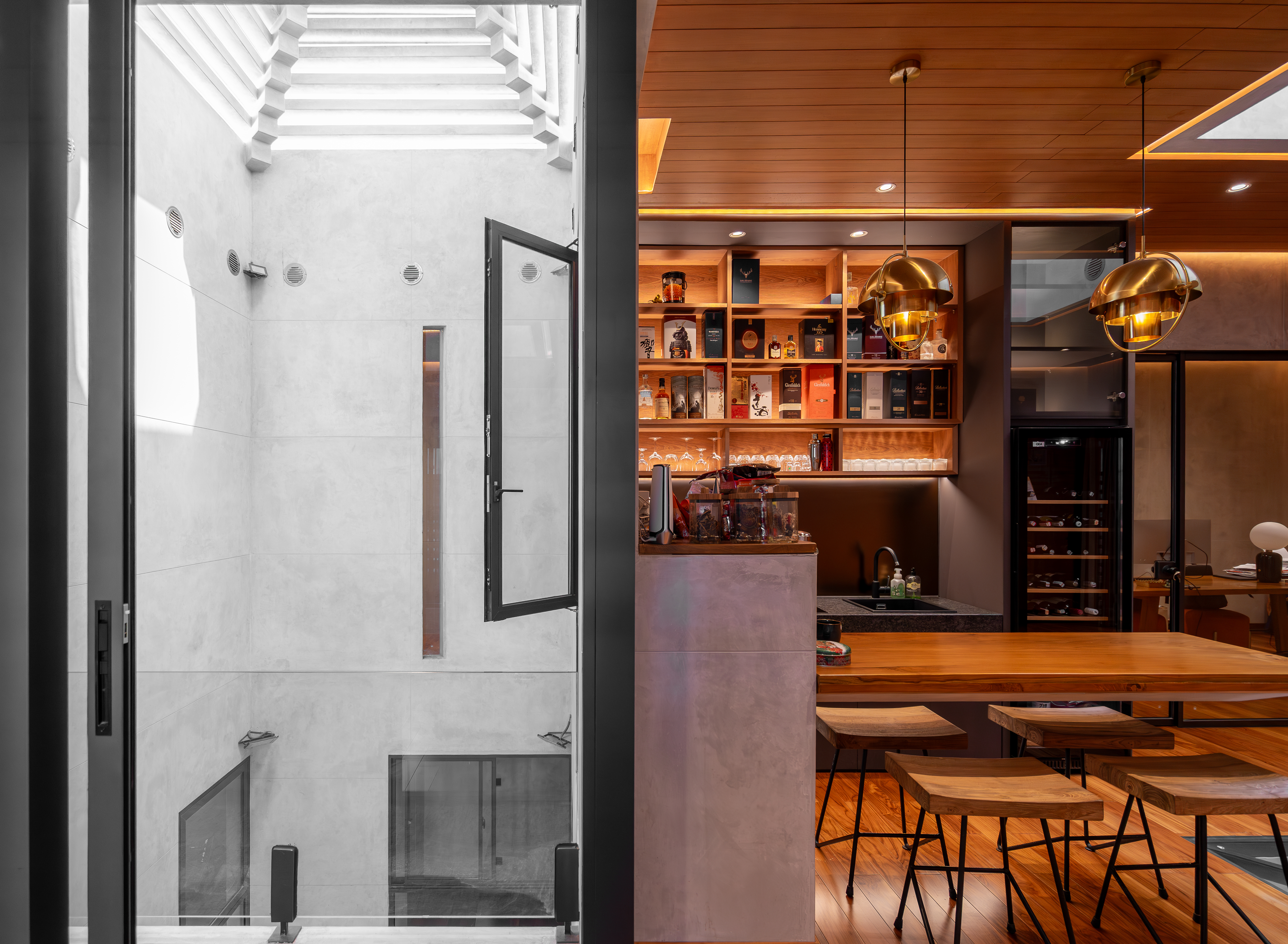
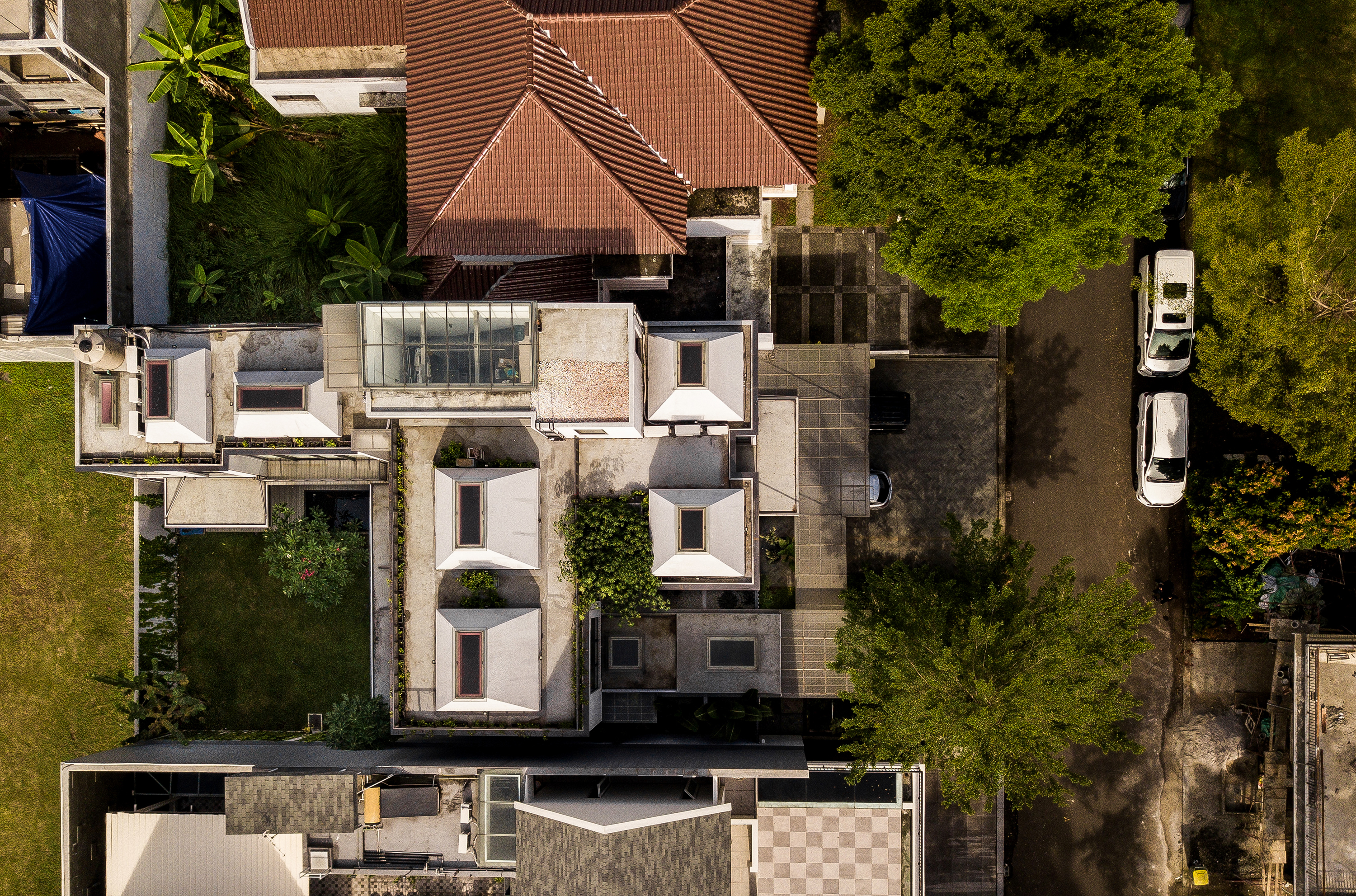
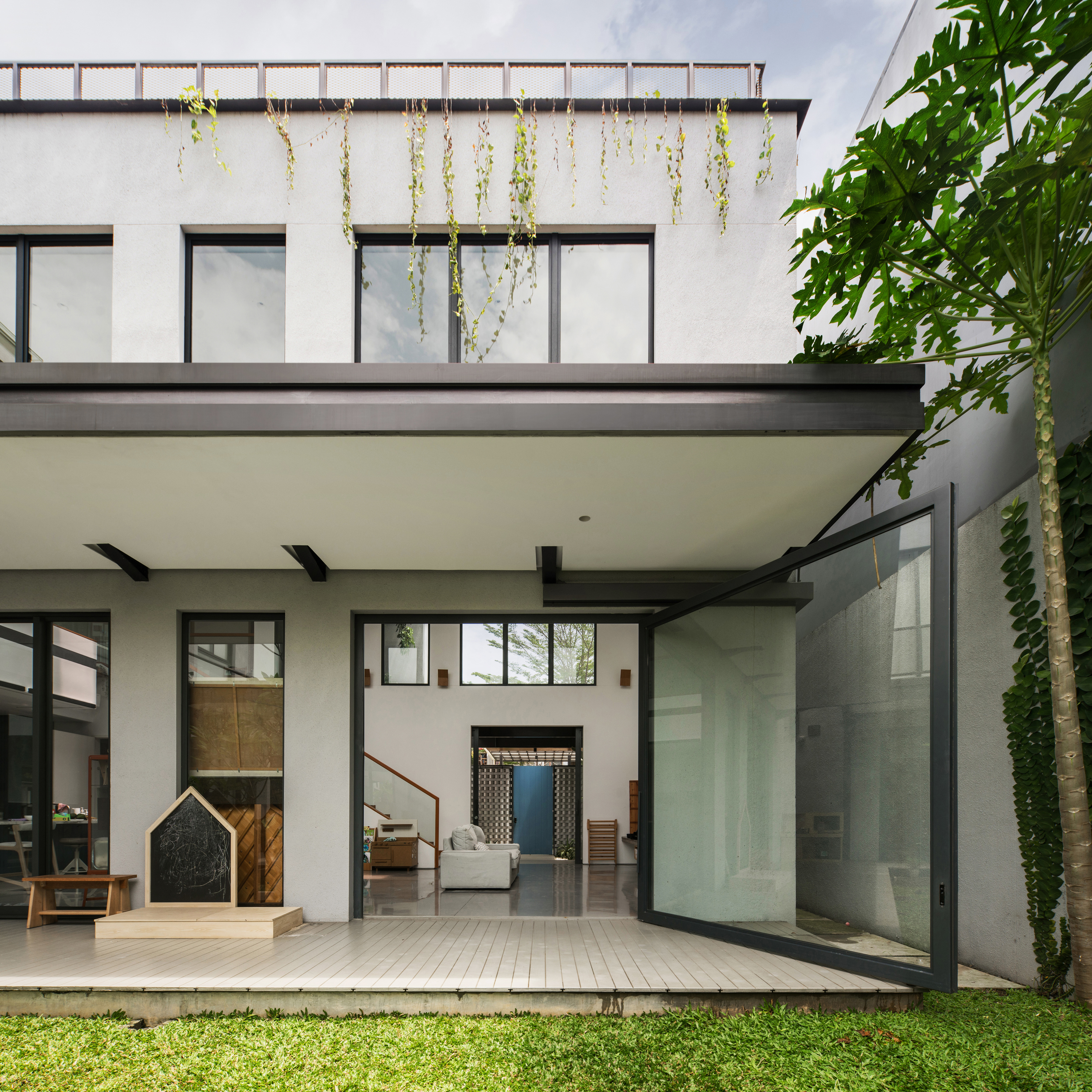
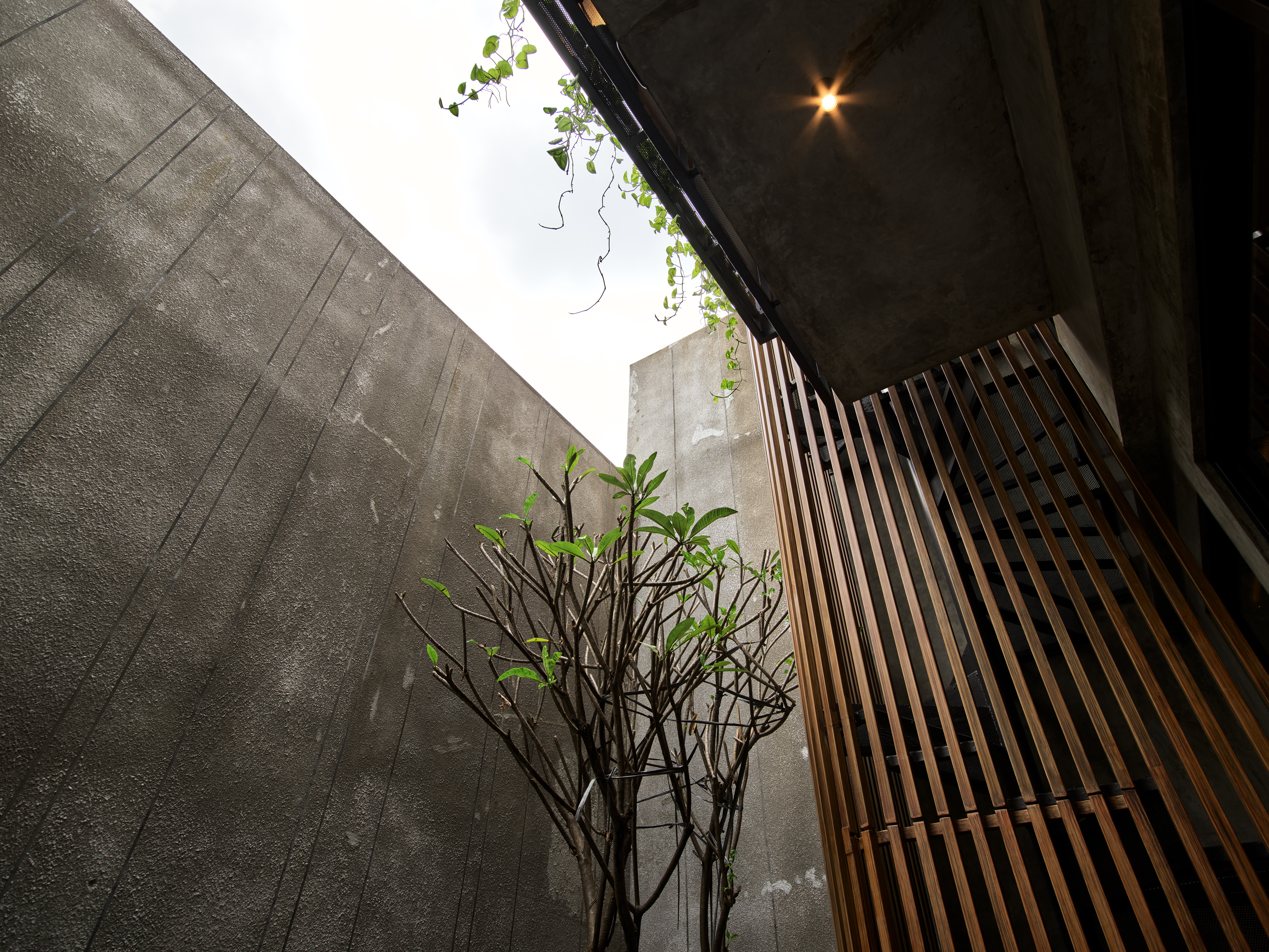
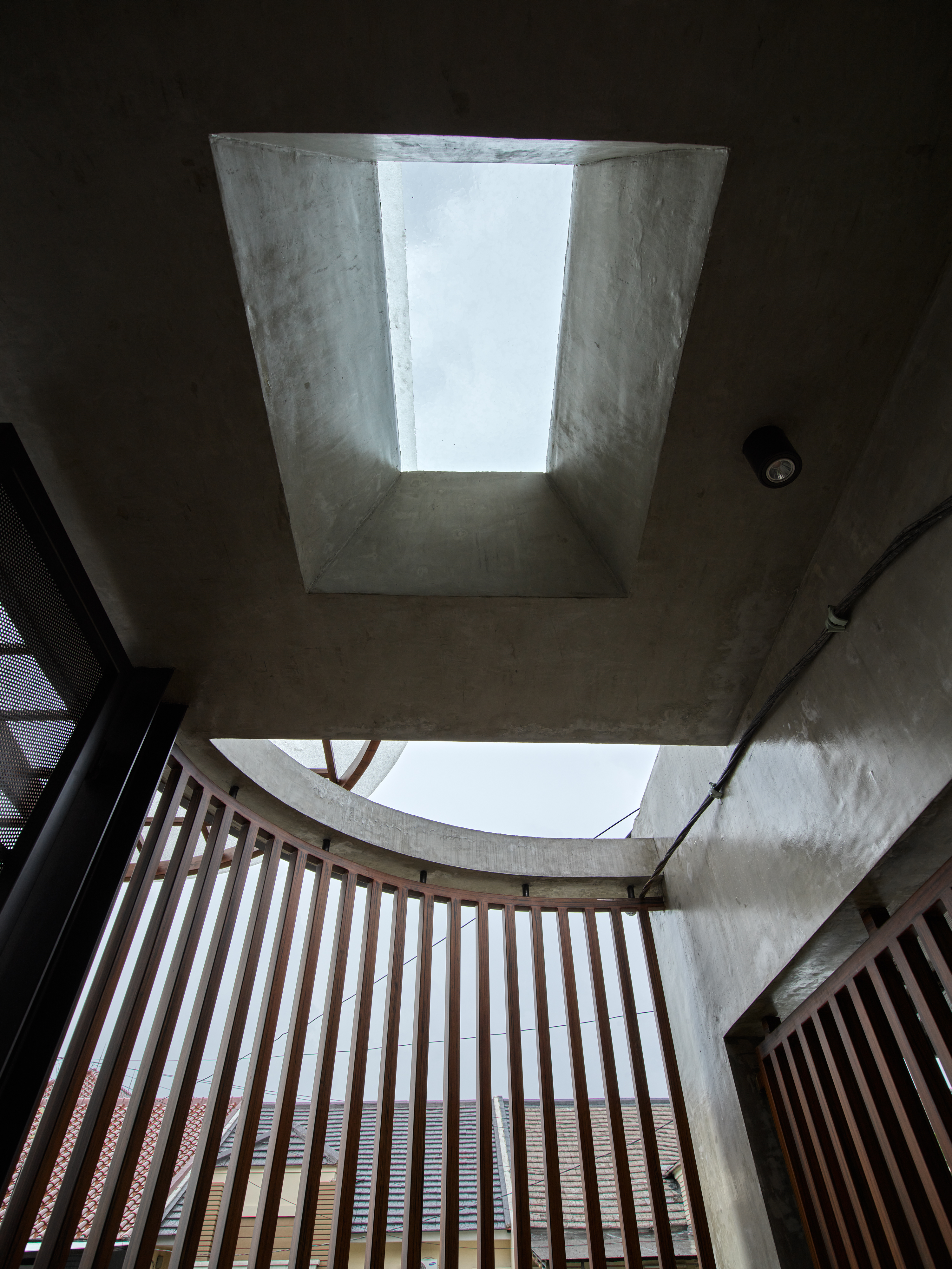
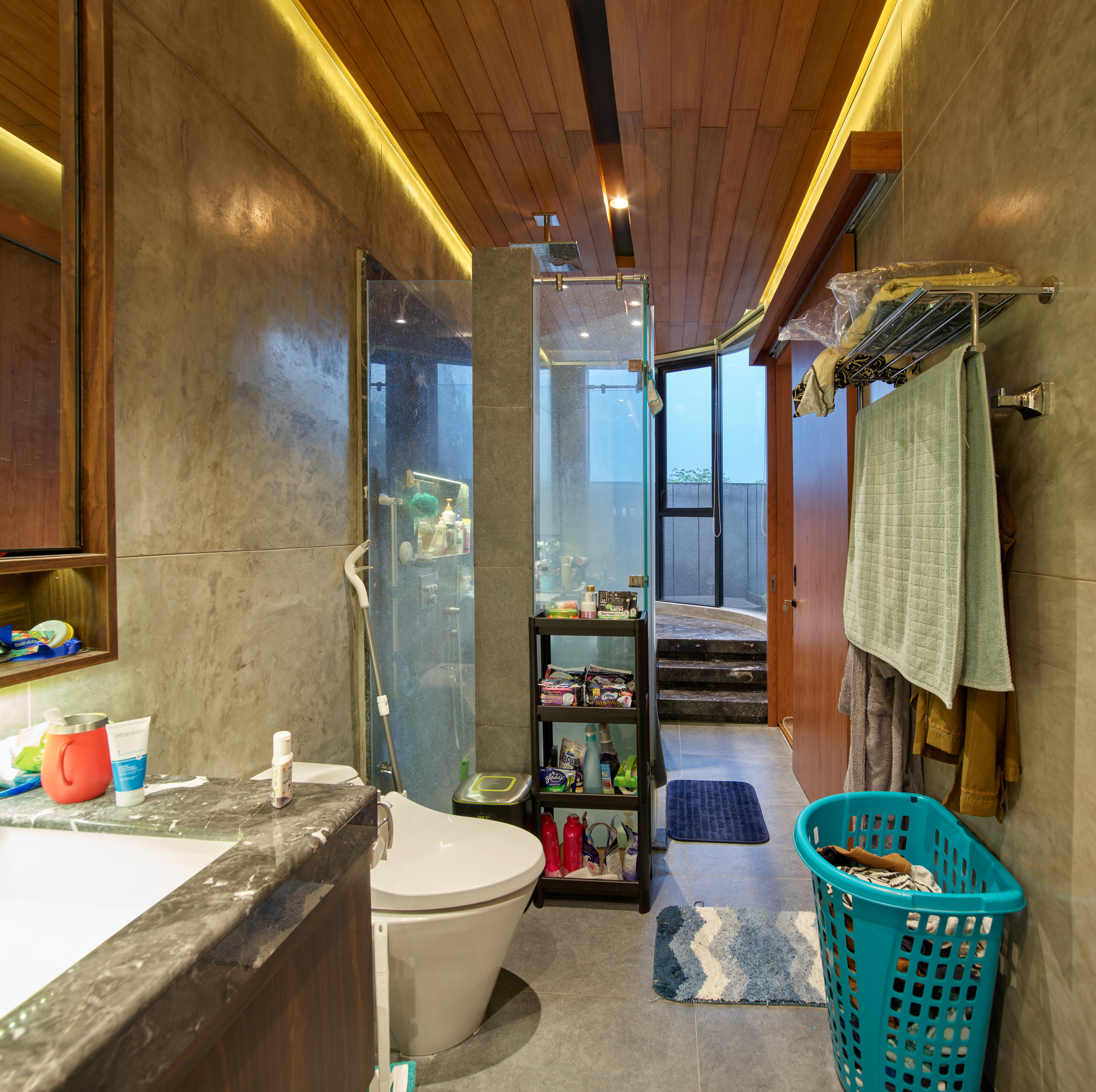
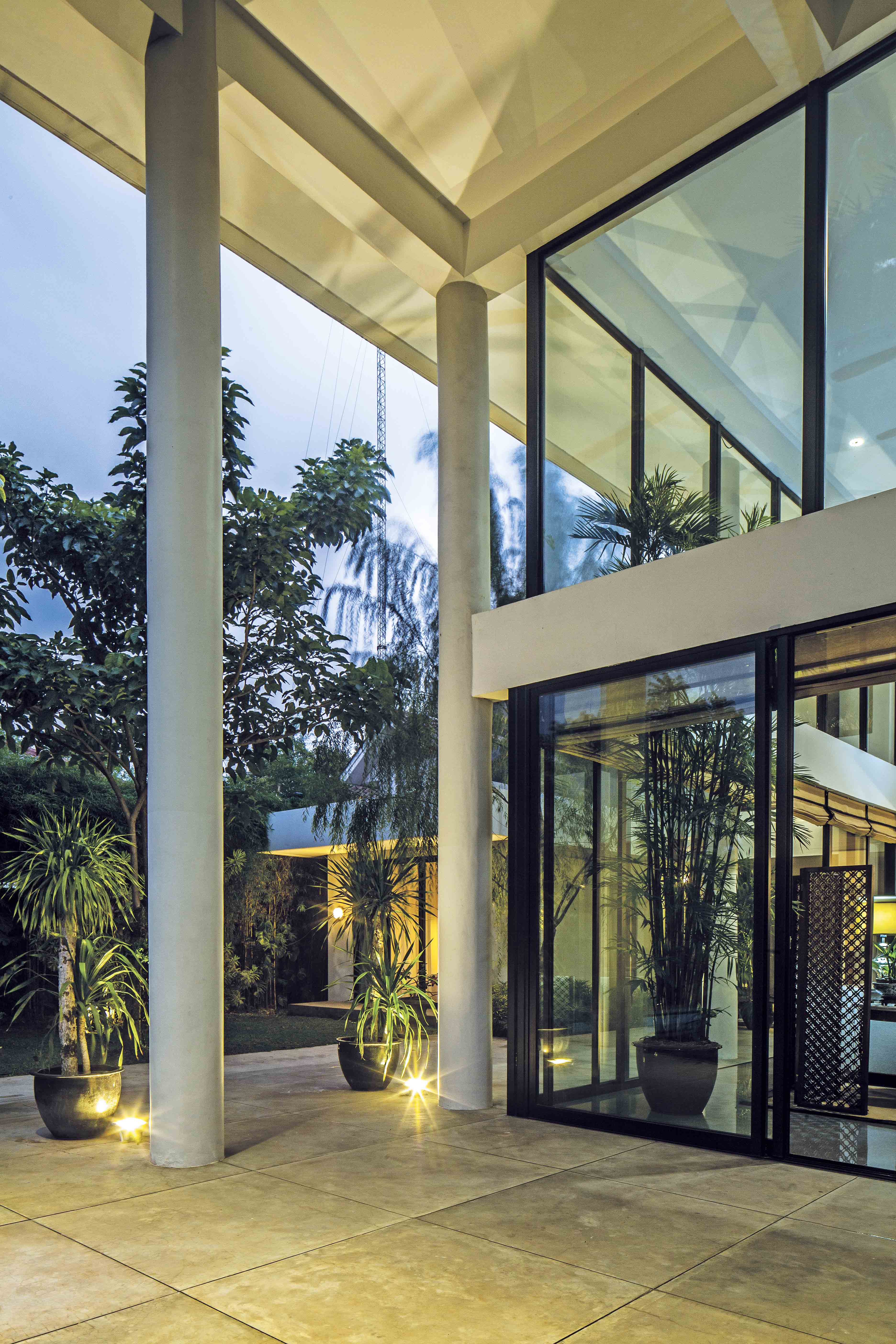
Hot west-east tropical sunlight is blocked by placing a solid wall and bathroom while the facade is open to the north-south orientation. Several pyramids shaped form is also introduced to allow sunlight coming to the middle of the building and allowing fresh air circulation through the small gaps in between glass and concrete. The building system uses an automatic watering system that applies zero greywater runoff and zero stormwater runoff. It means the whole water is collected to the retention basin with 8 m3 capacity and 2.75 x 3 m of catchment basin with 1,5 m of depth that also contributes the catchment to the neighbor.

photography by Eric Dinardi

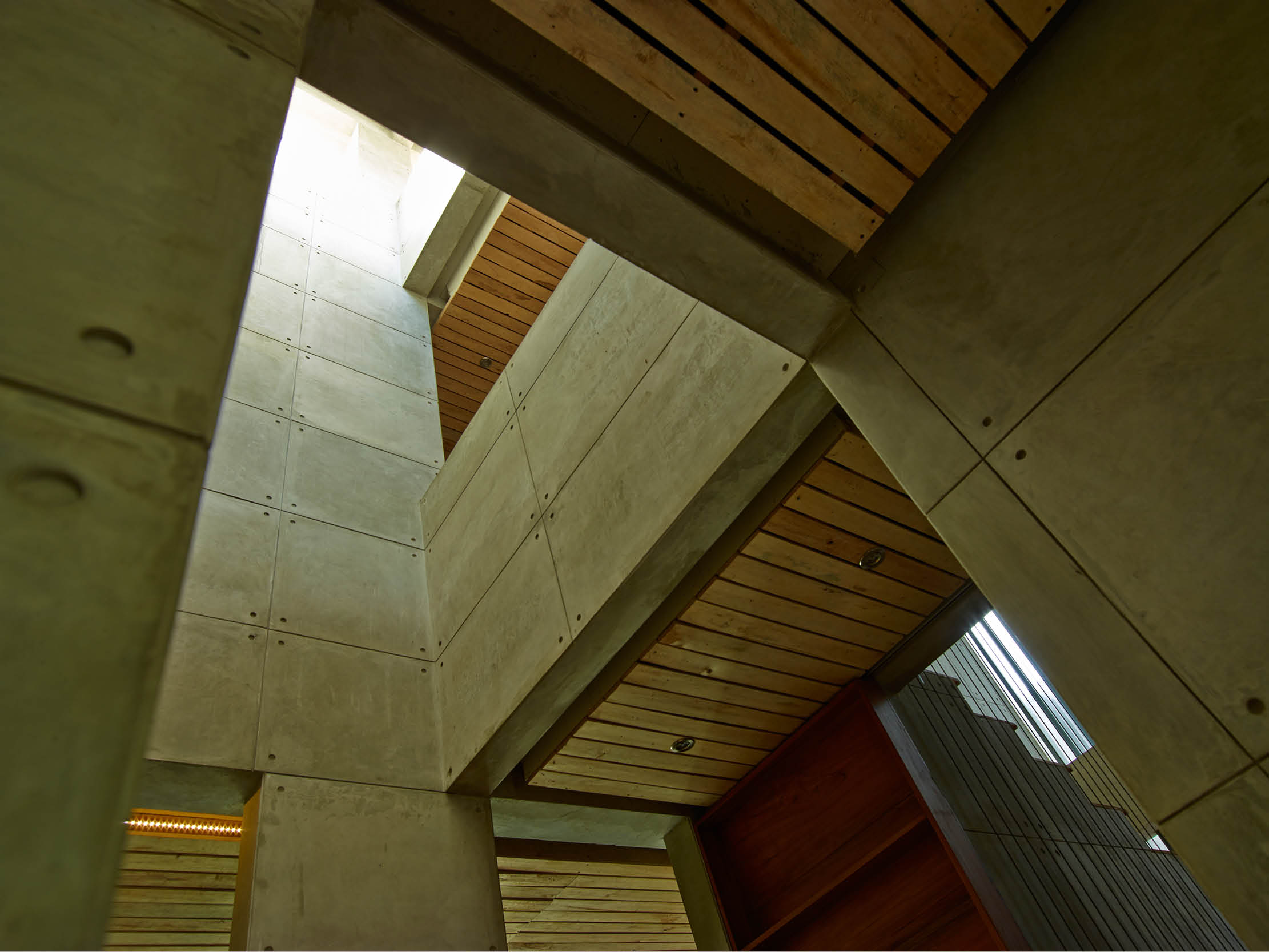
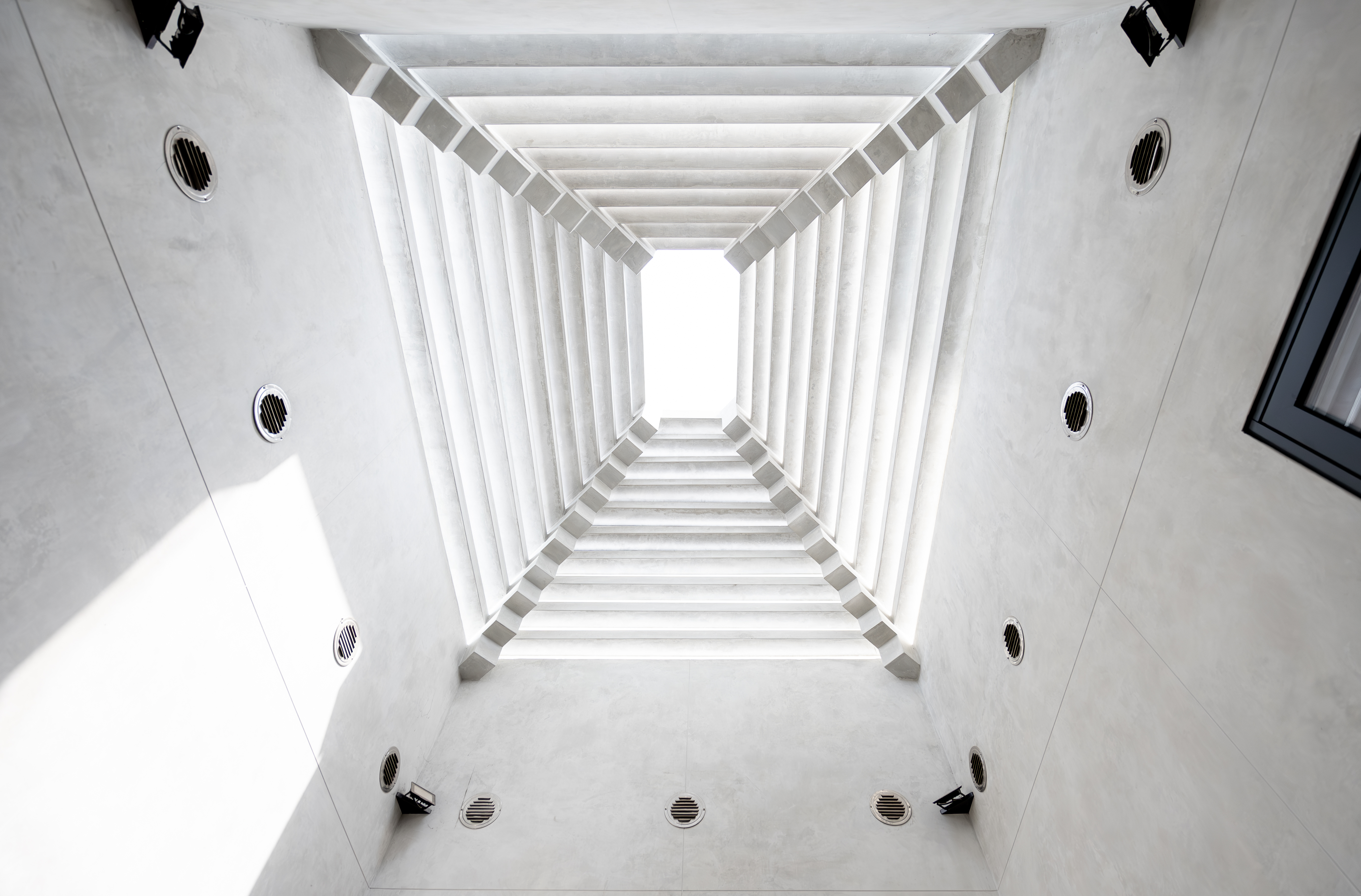
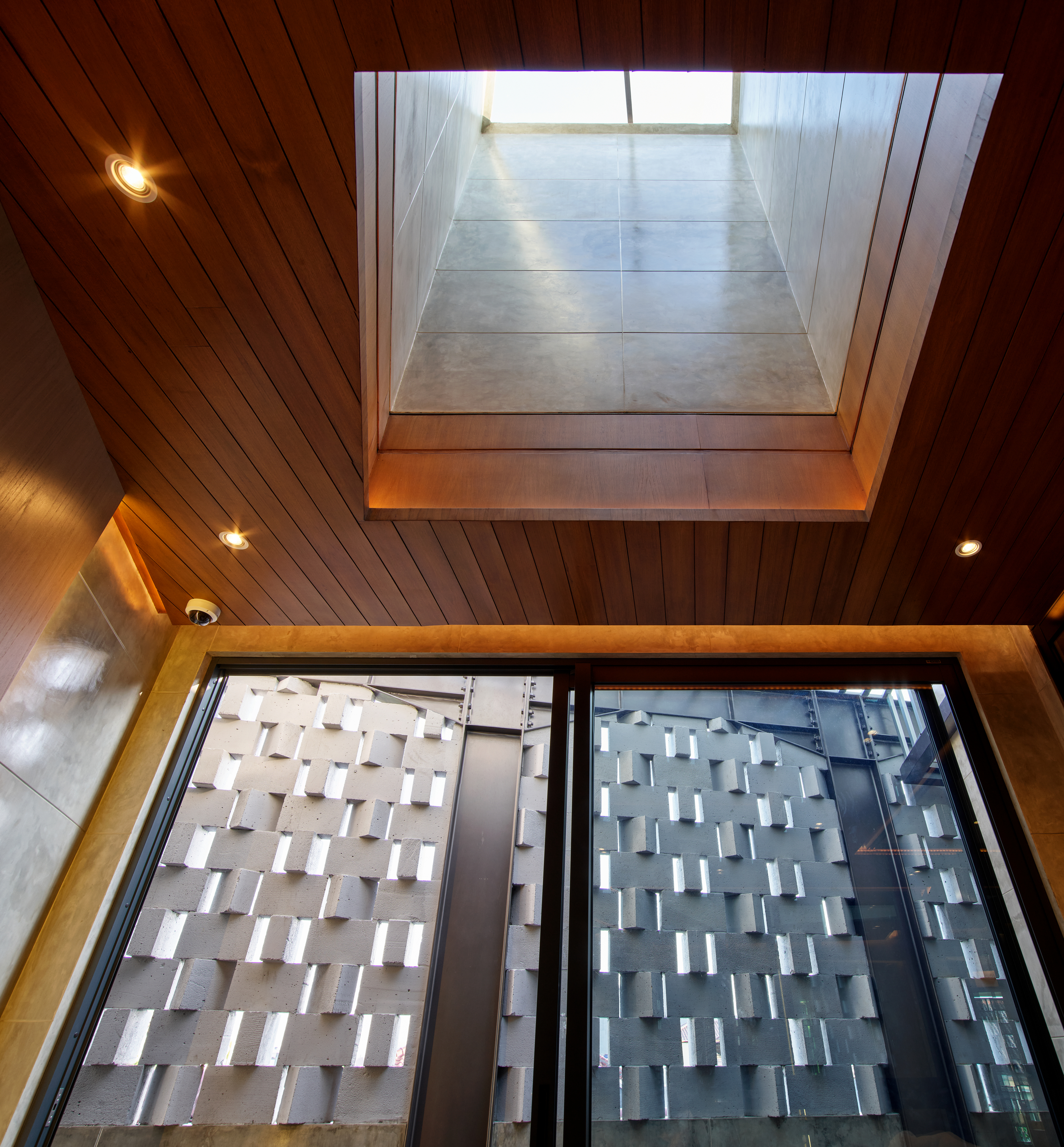
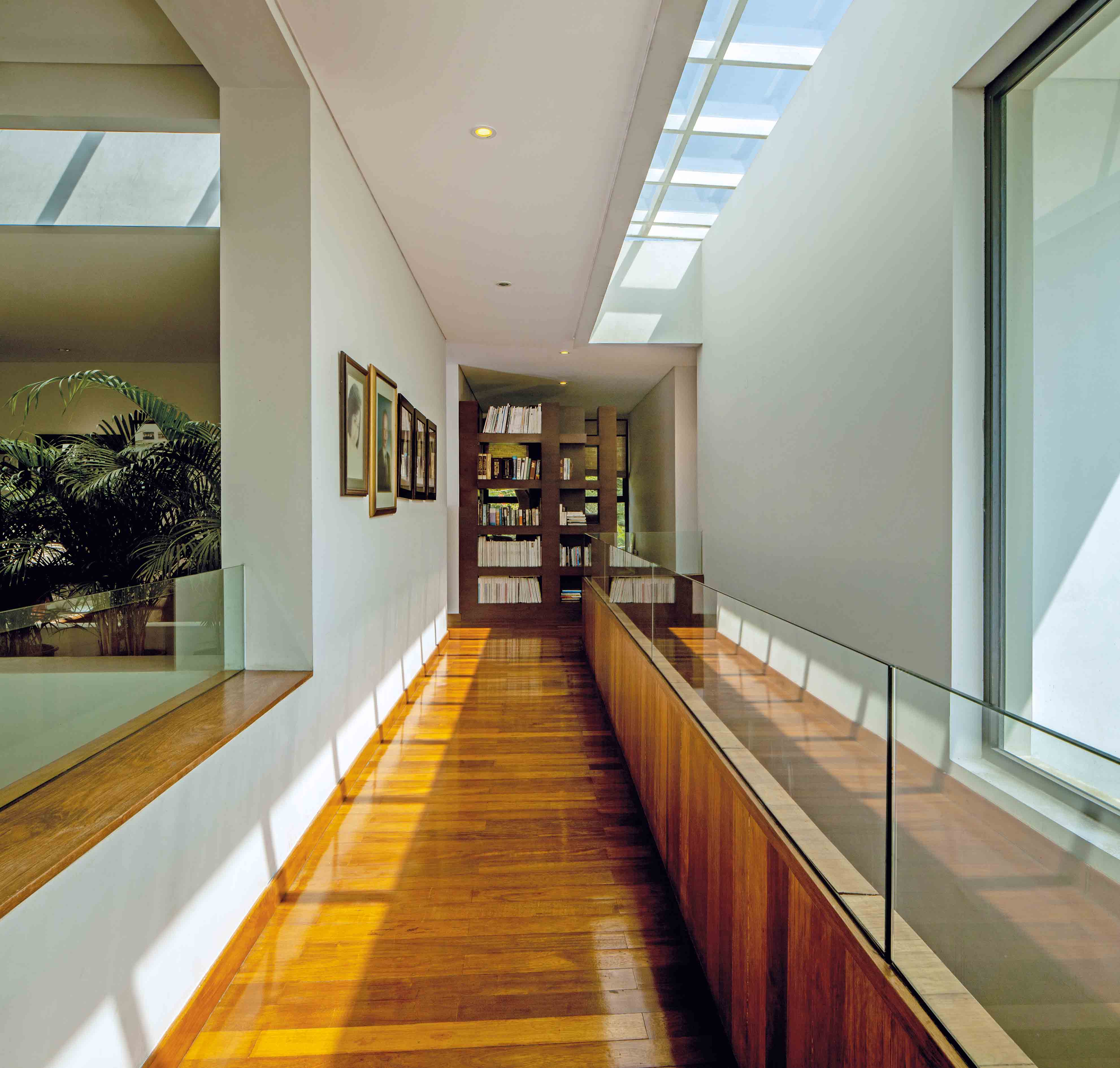
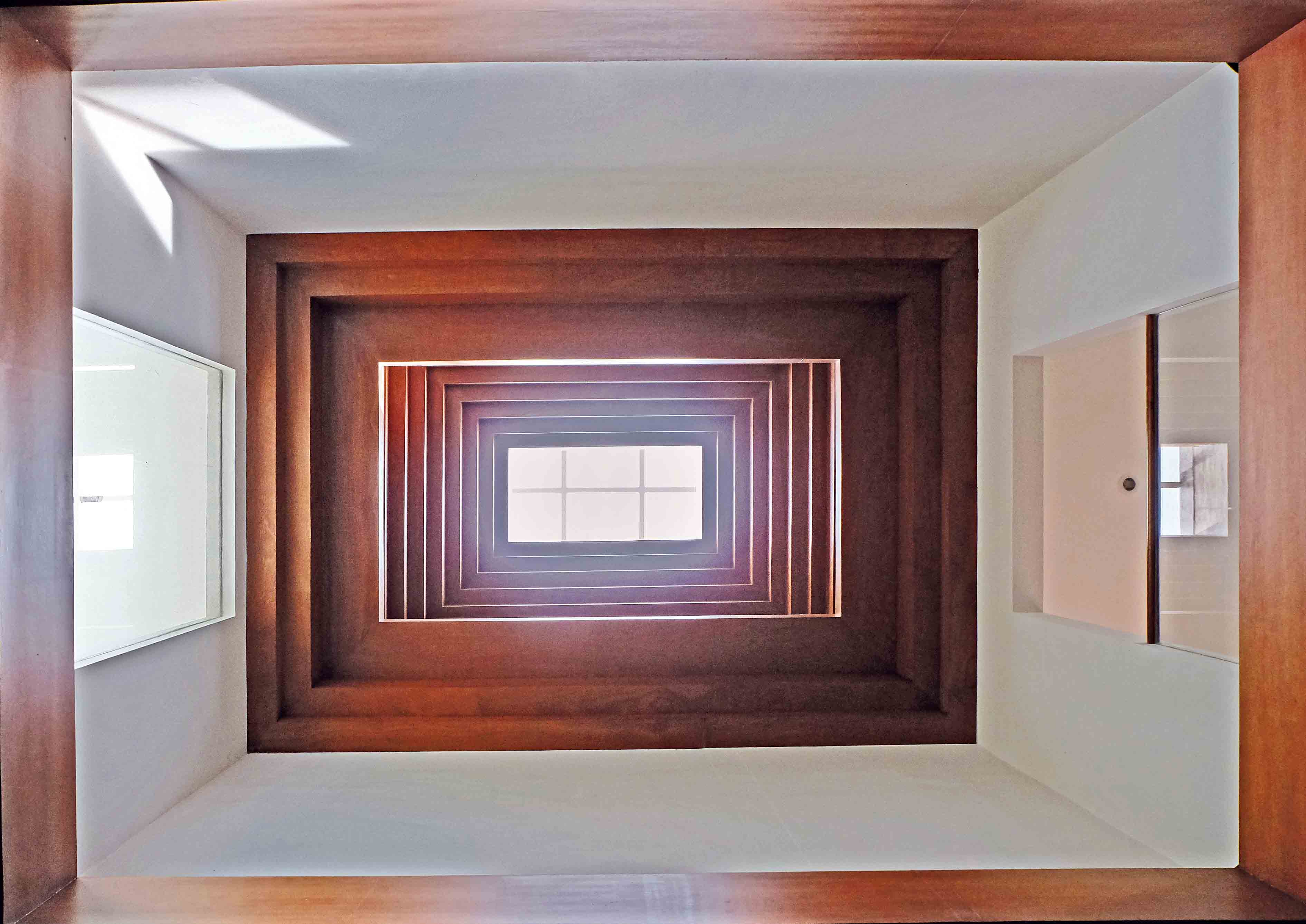
The studio consists of 6 x 6 m square shapes, a small void. The small void has a tapered skylight made of concrete with several small gaps to provide light and air circulation. The library named Omah which is open at the weekend has a size of 3,4 x 12,3 m. It is sunken at perimeter area, half below the height of 0:00 meters considering public access and the needs that require a condition to keep books from the sun and constant temperature with the minimum possible to use the air conditioner. At the heart of the house is a courtyard with a fish pond with a background of the 3.5 m radius circle window with 3.50 m looking through the family room. The Guild is one example of a project which exercises the modification of form and program with interlocked circulation in the tropical climate of Jakarta, Indonesia.

Kategori
Project Bioclimatic House

Bioclimatic Home 02 – Bare Minimalist

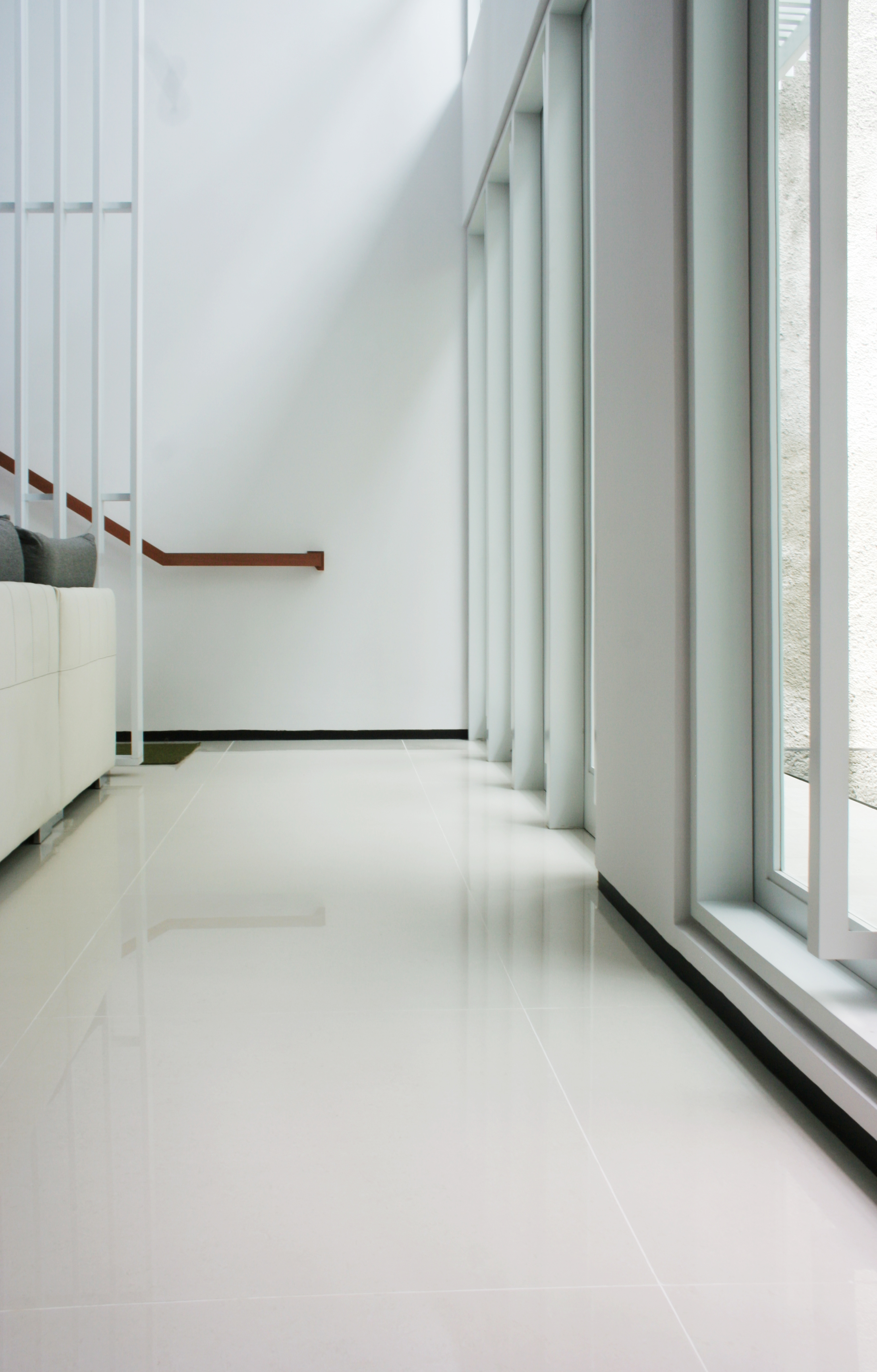
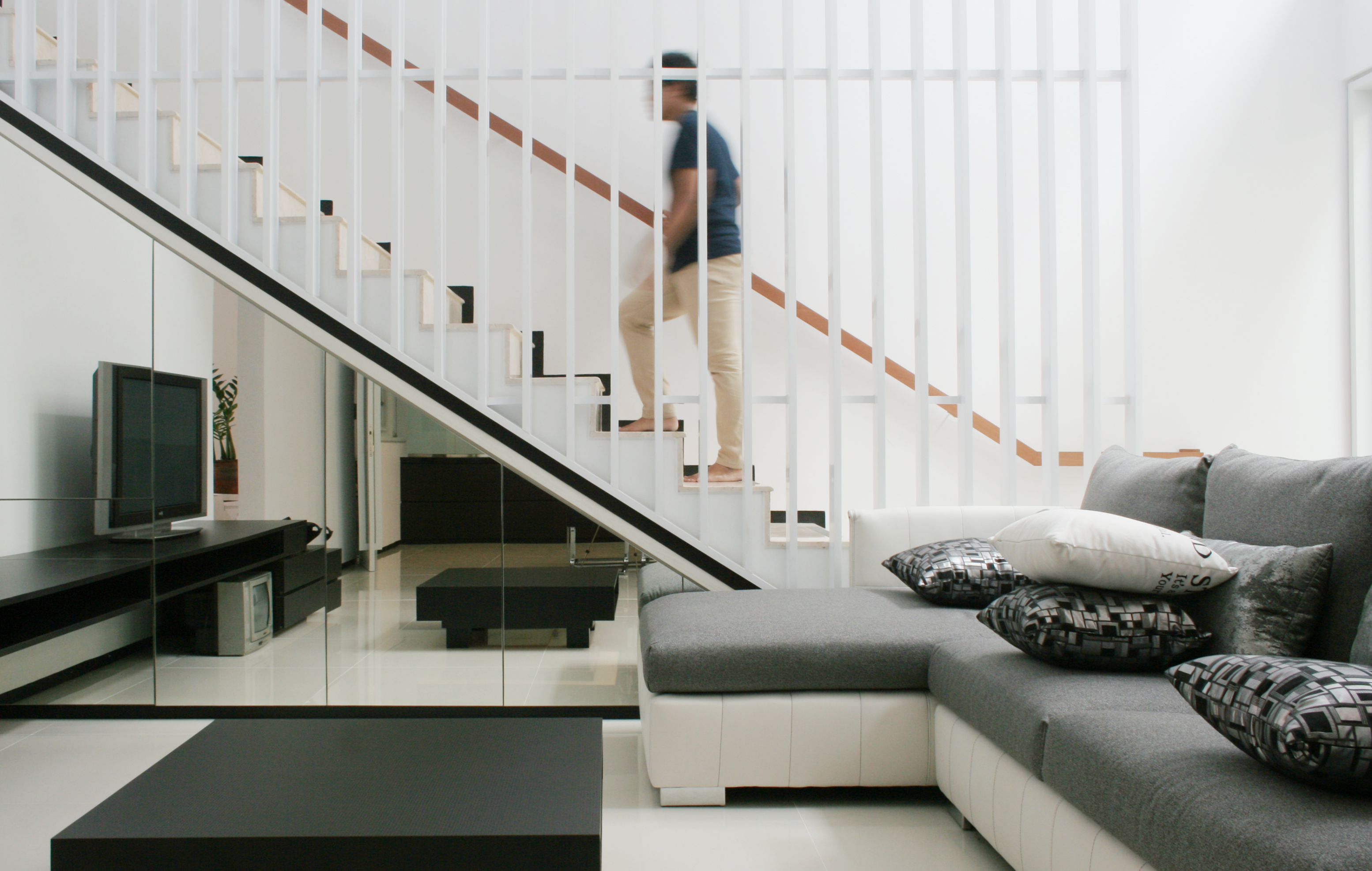
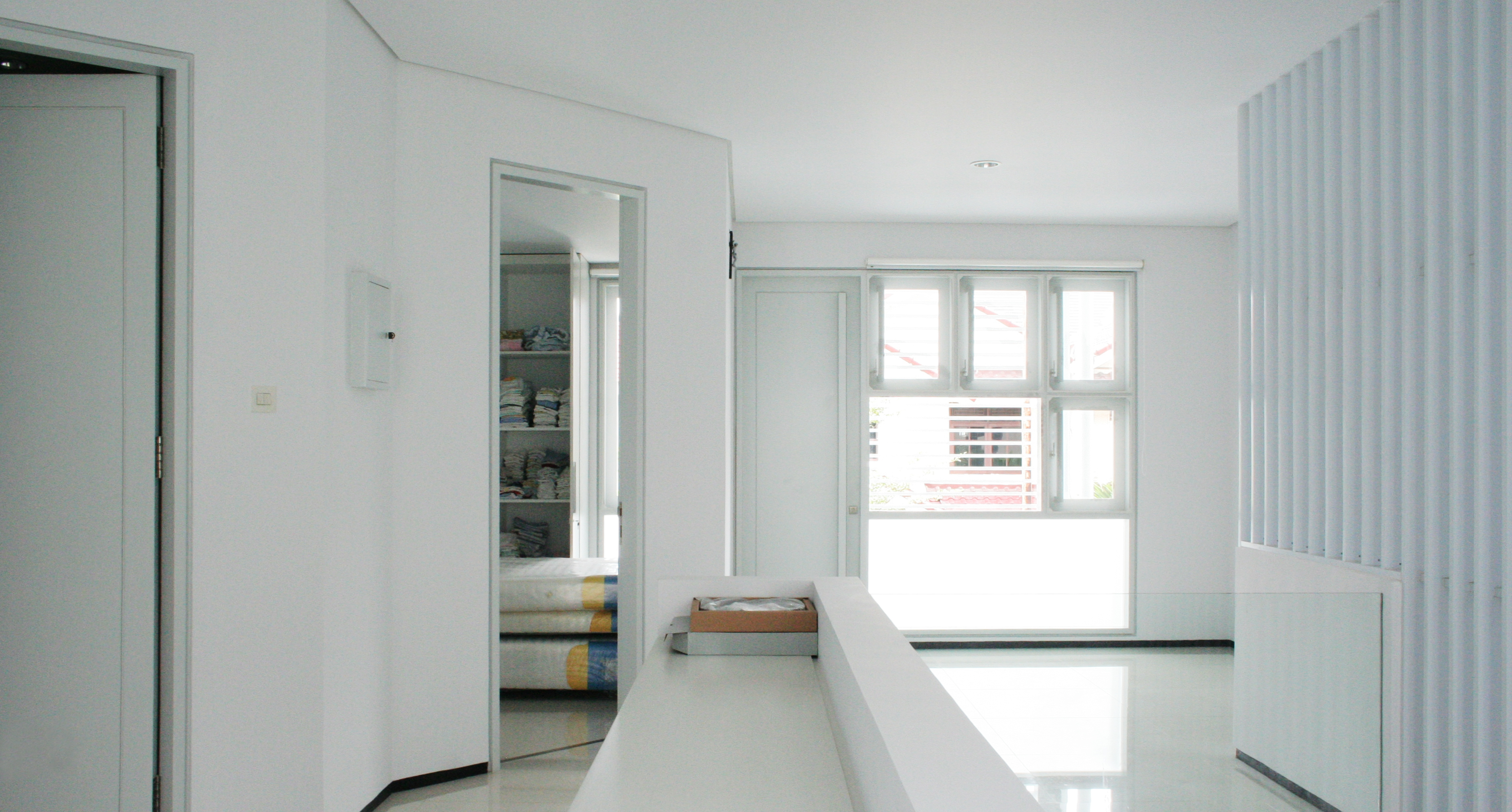
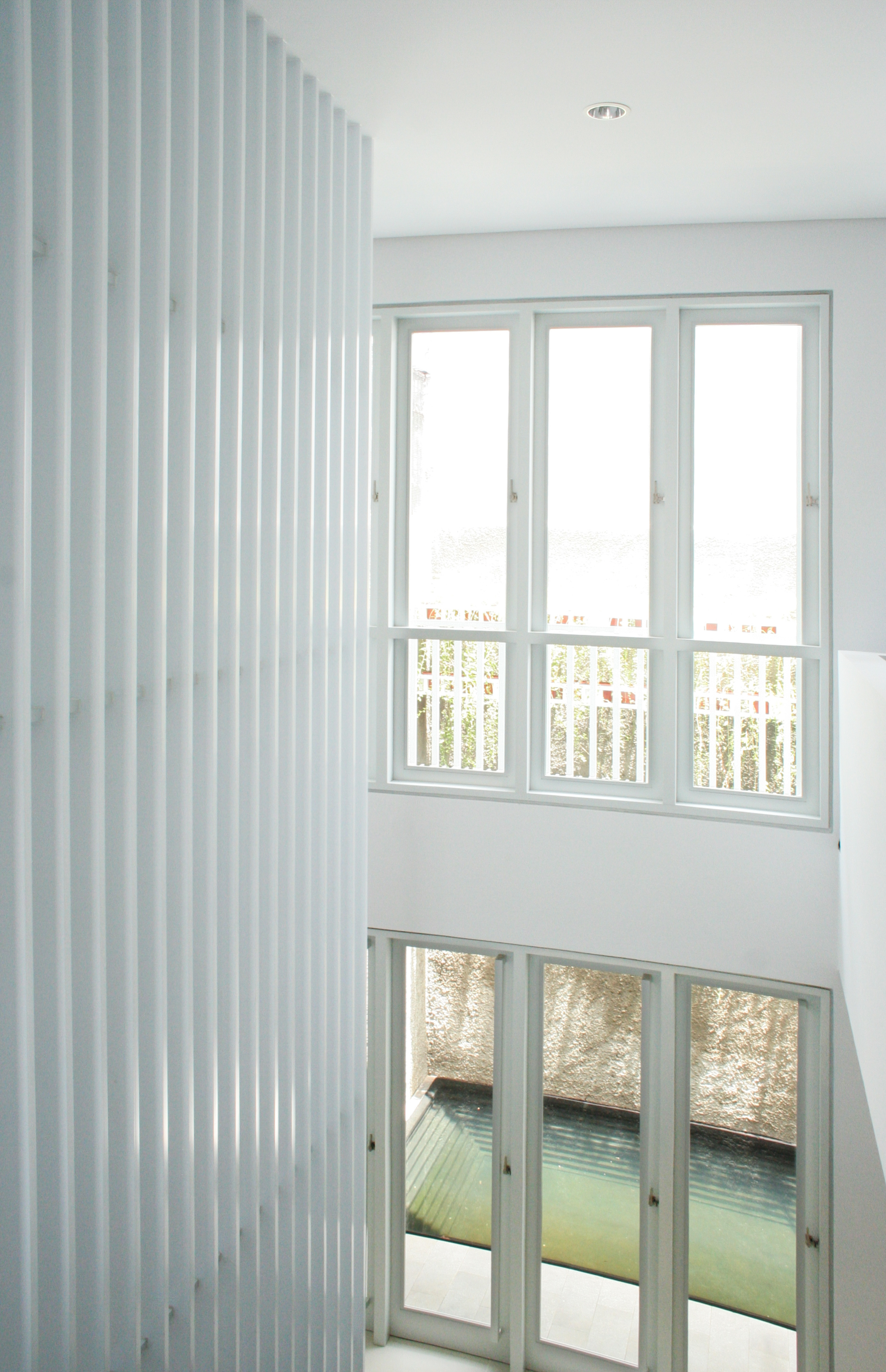
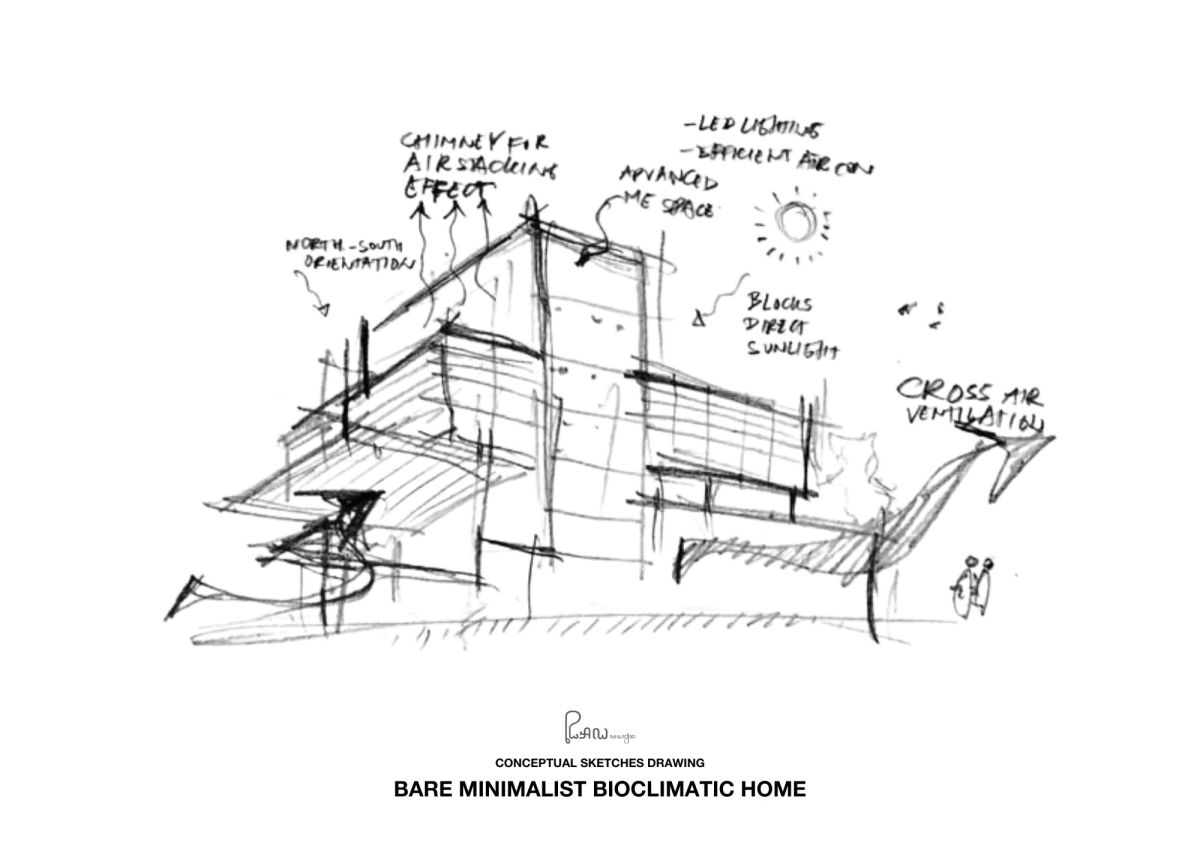
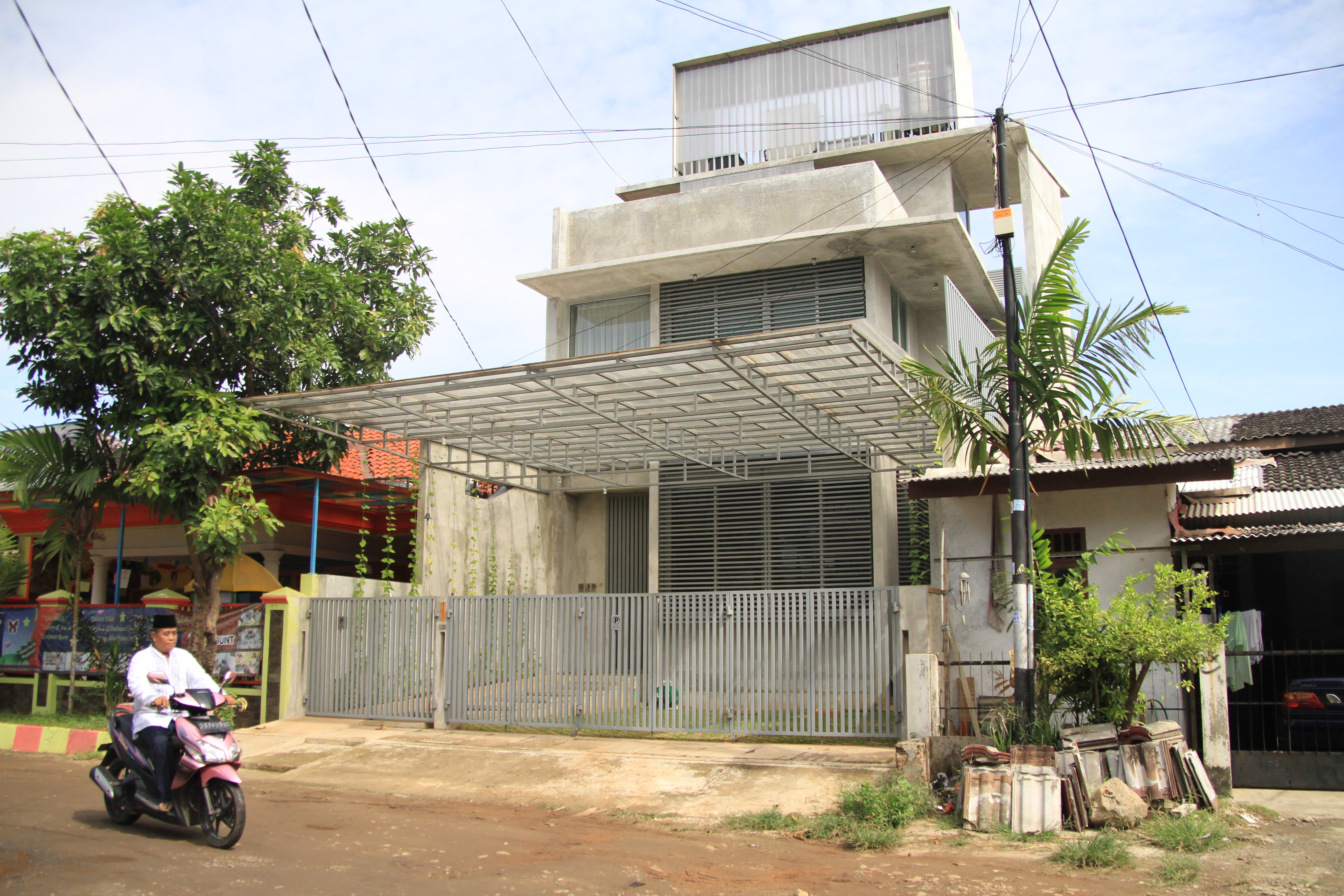
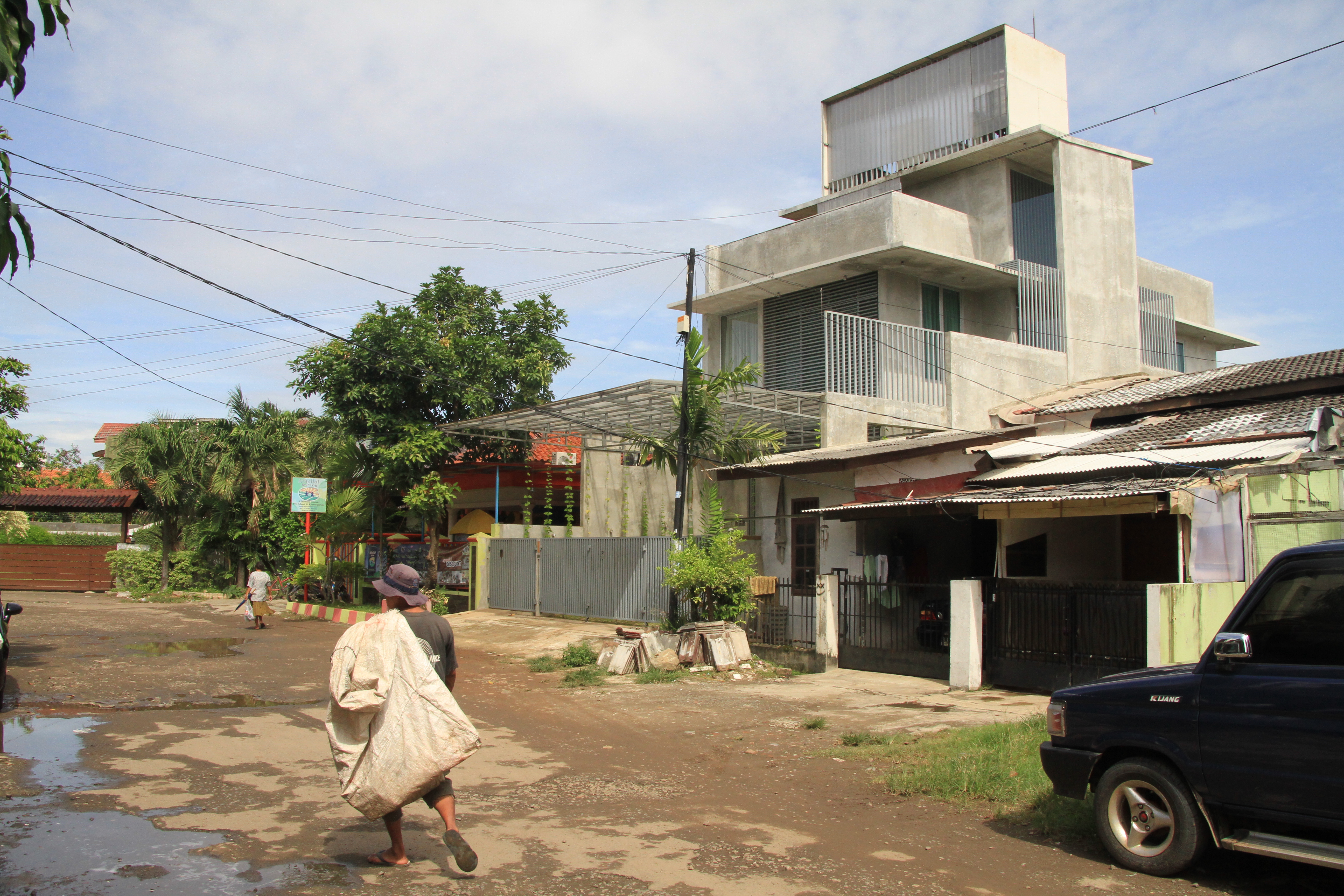
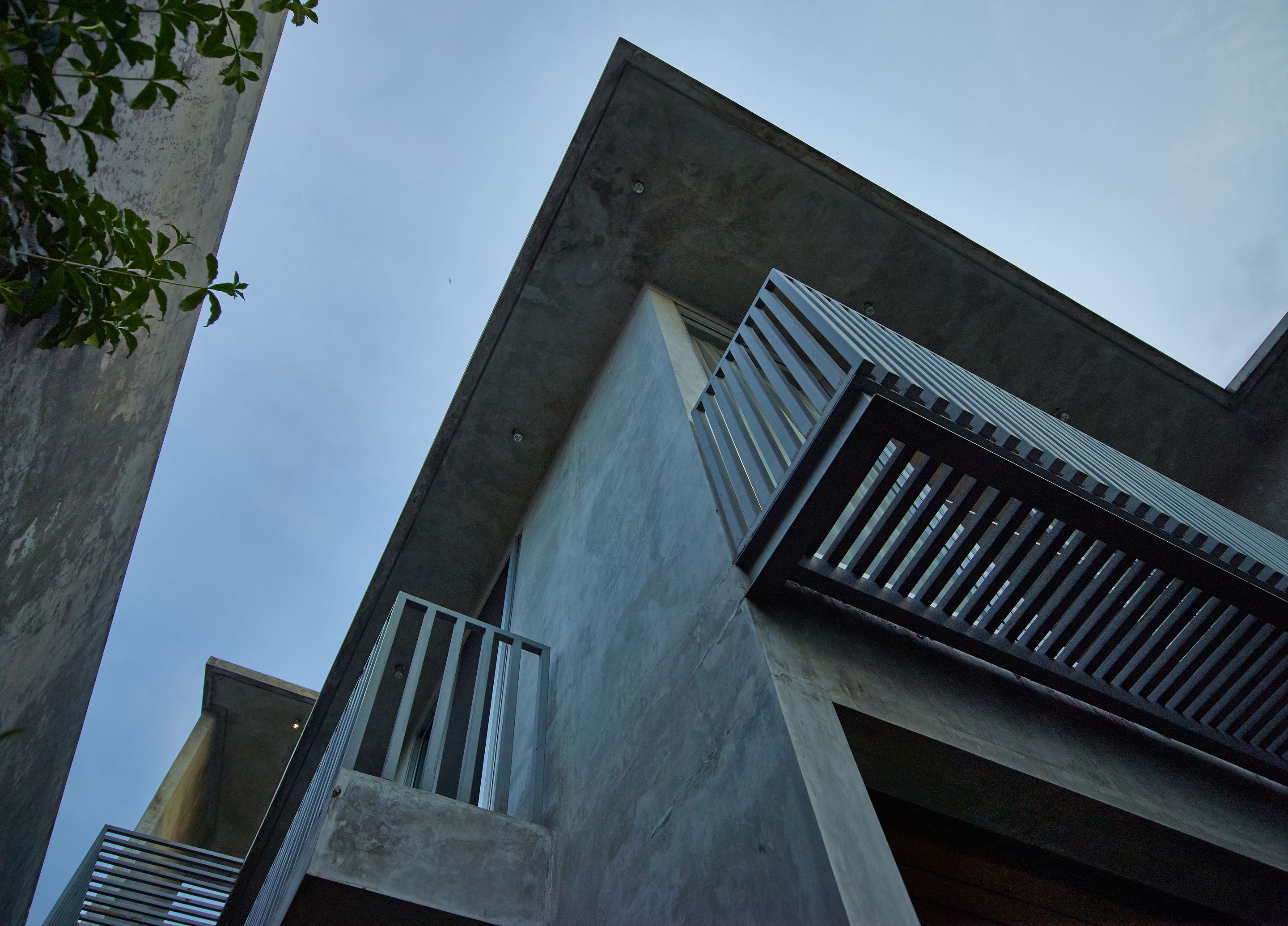
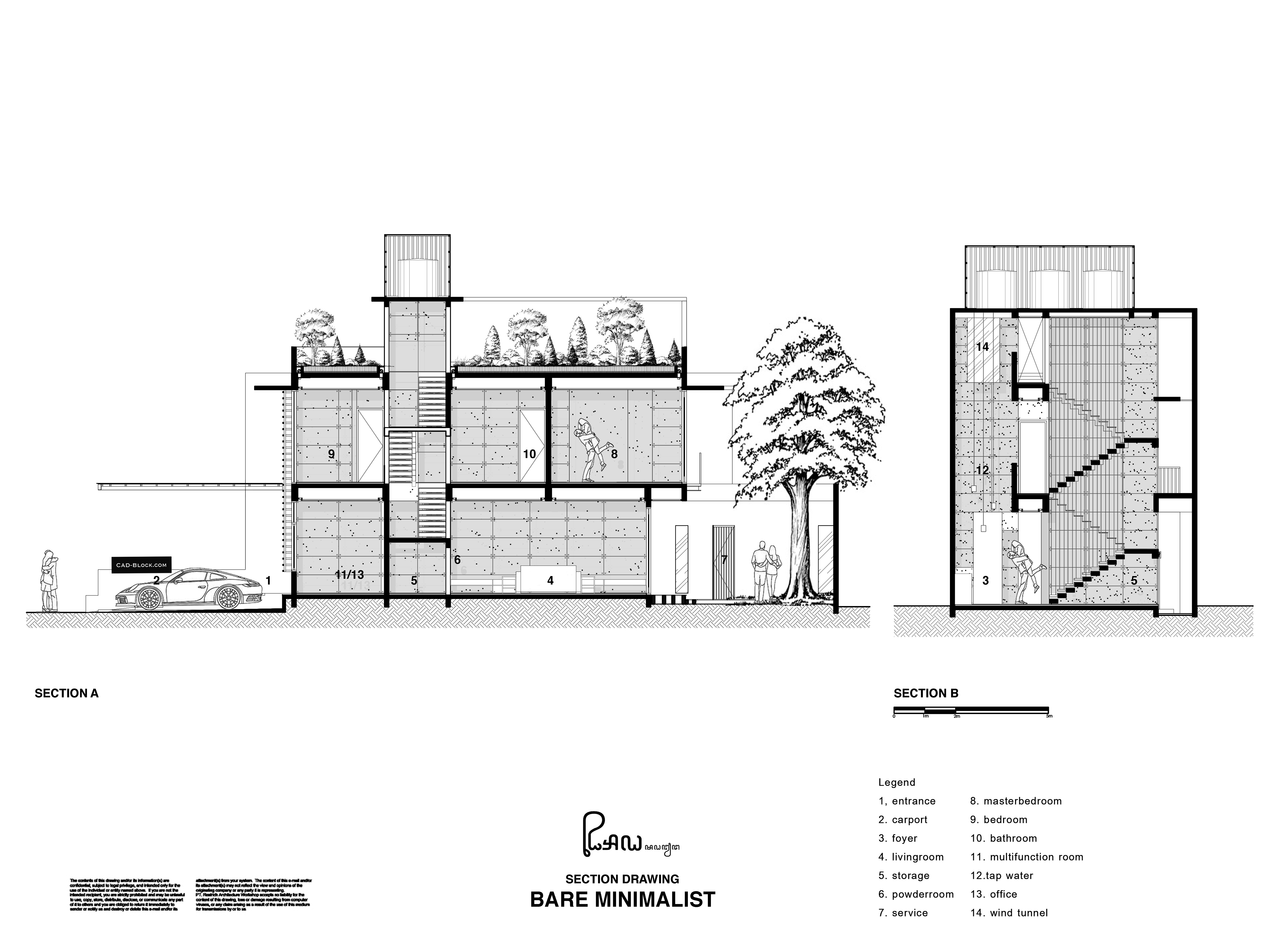
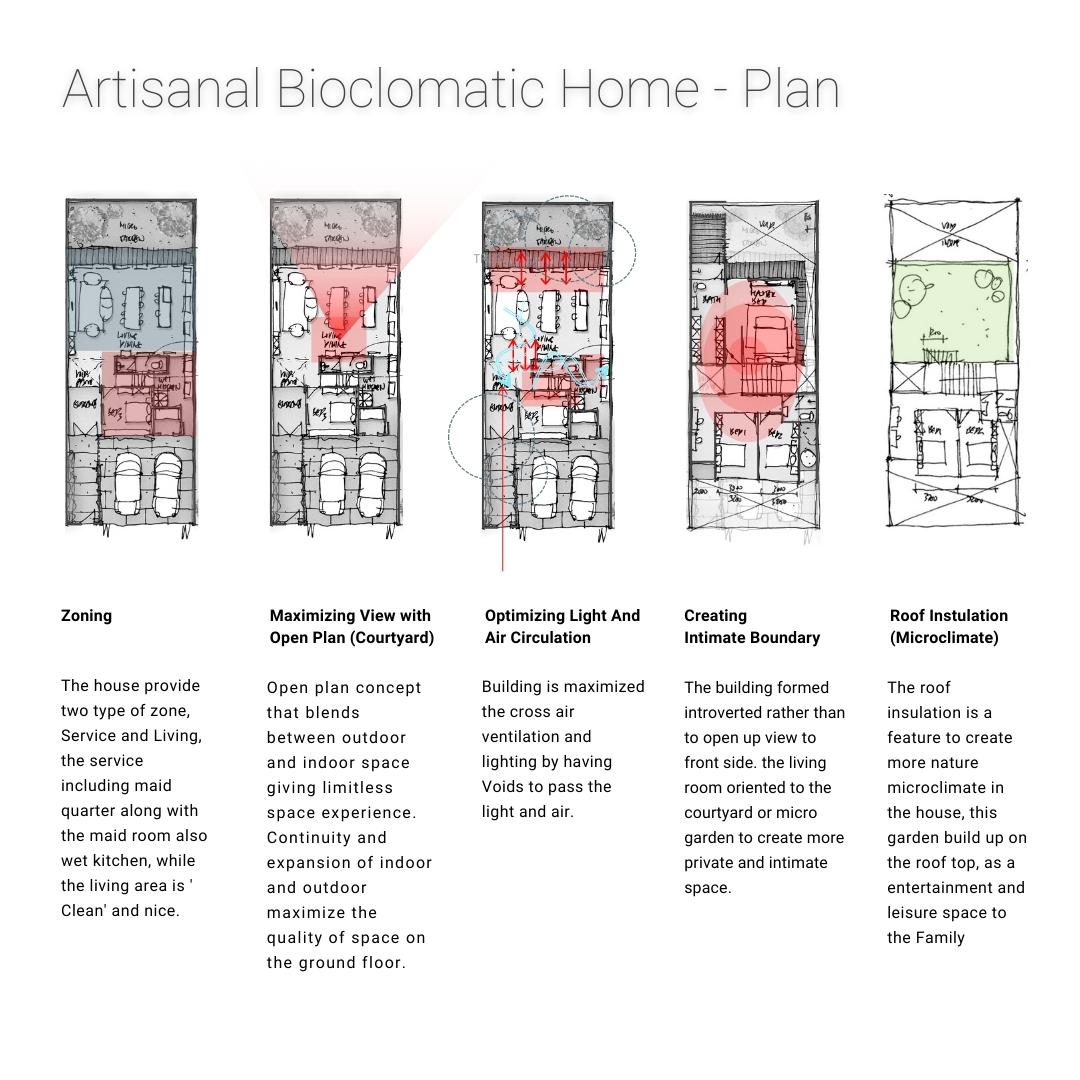
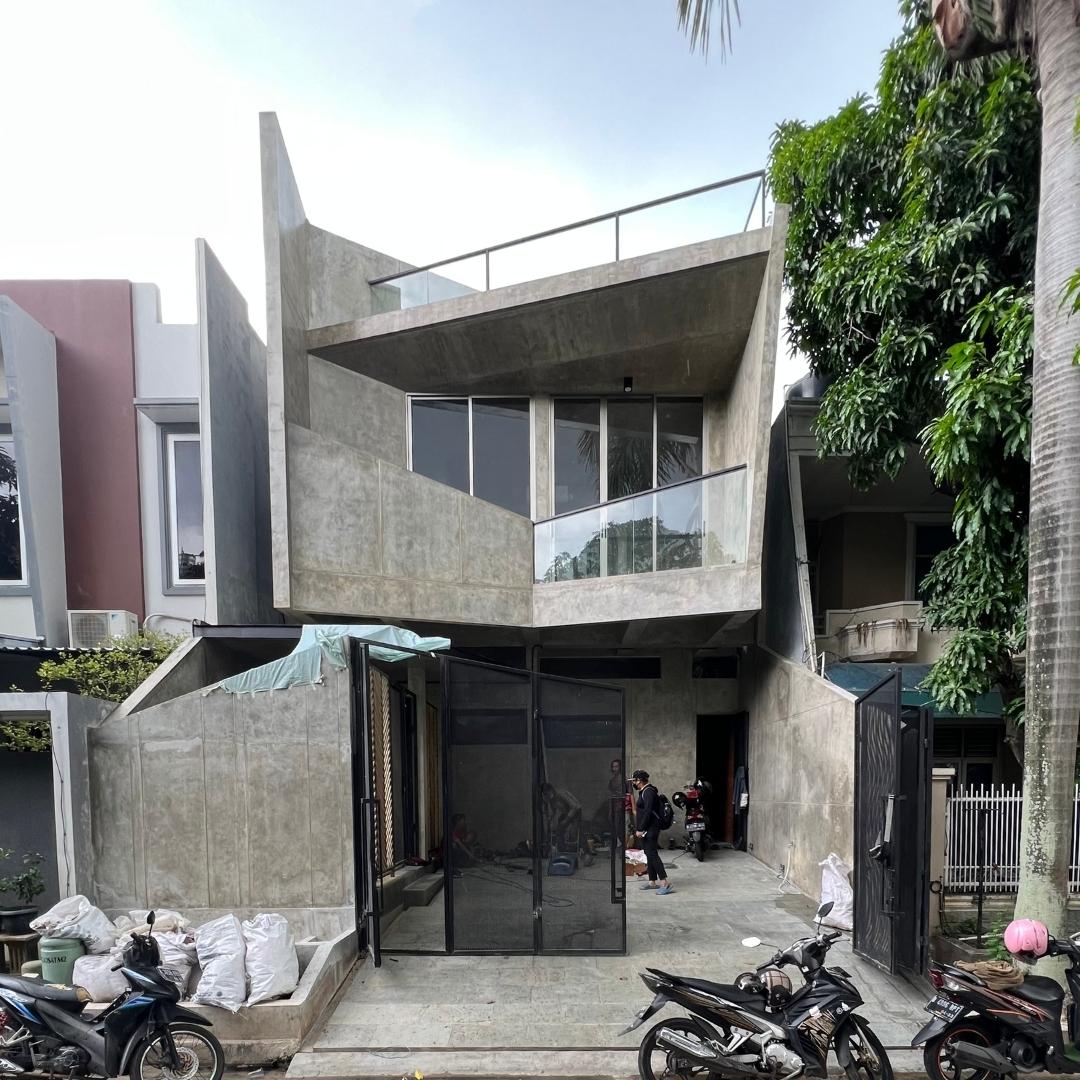
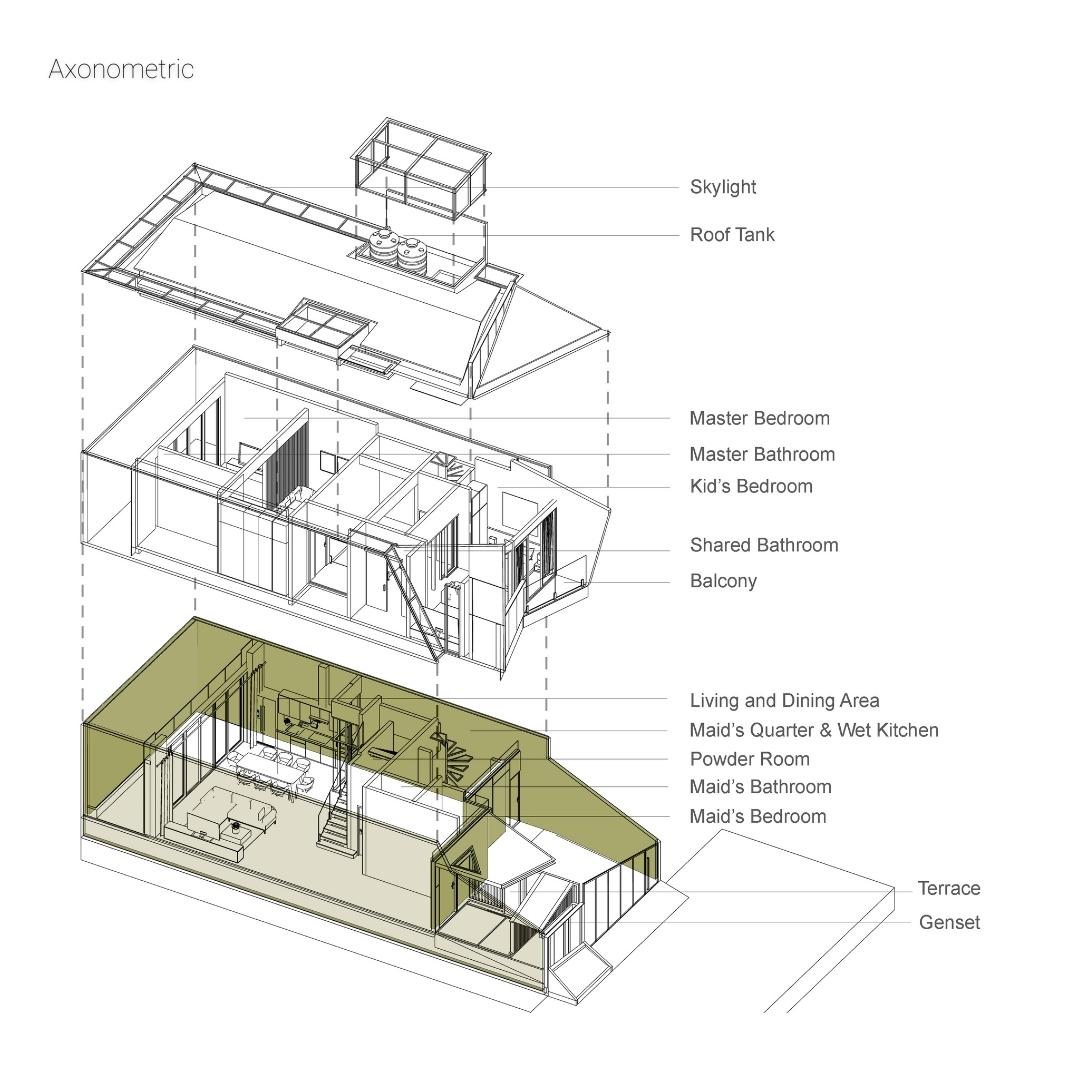
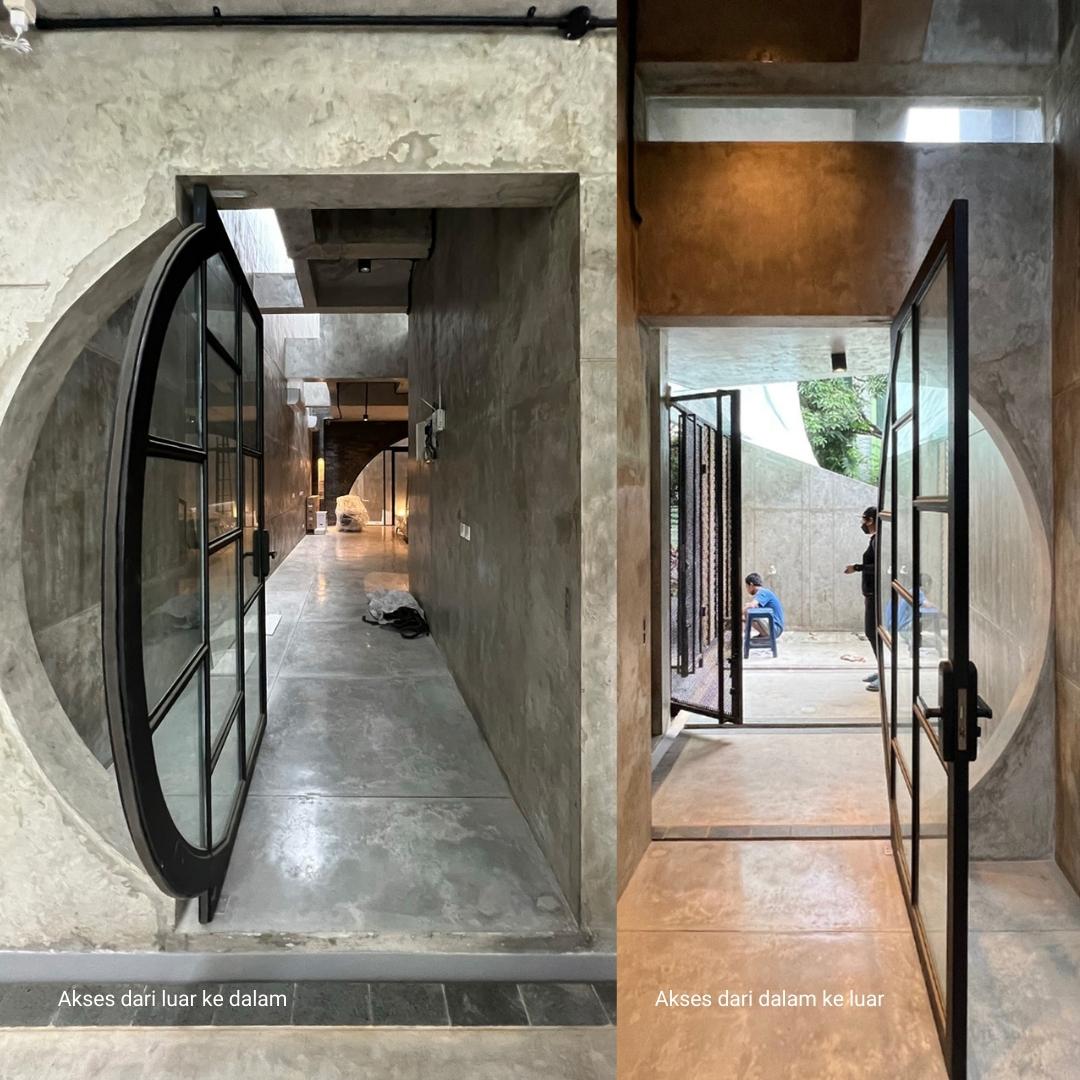
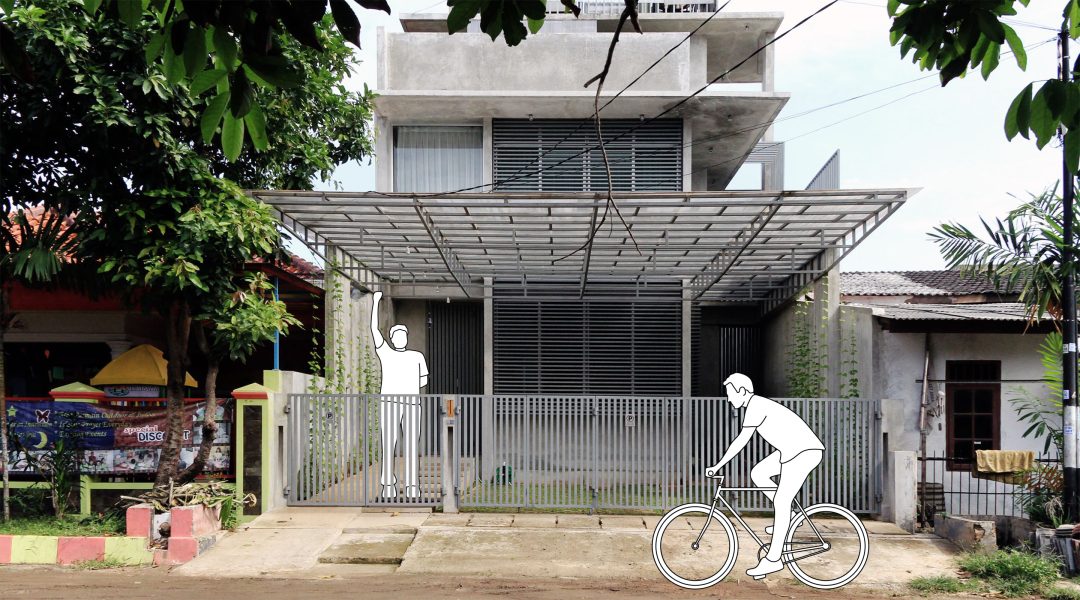
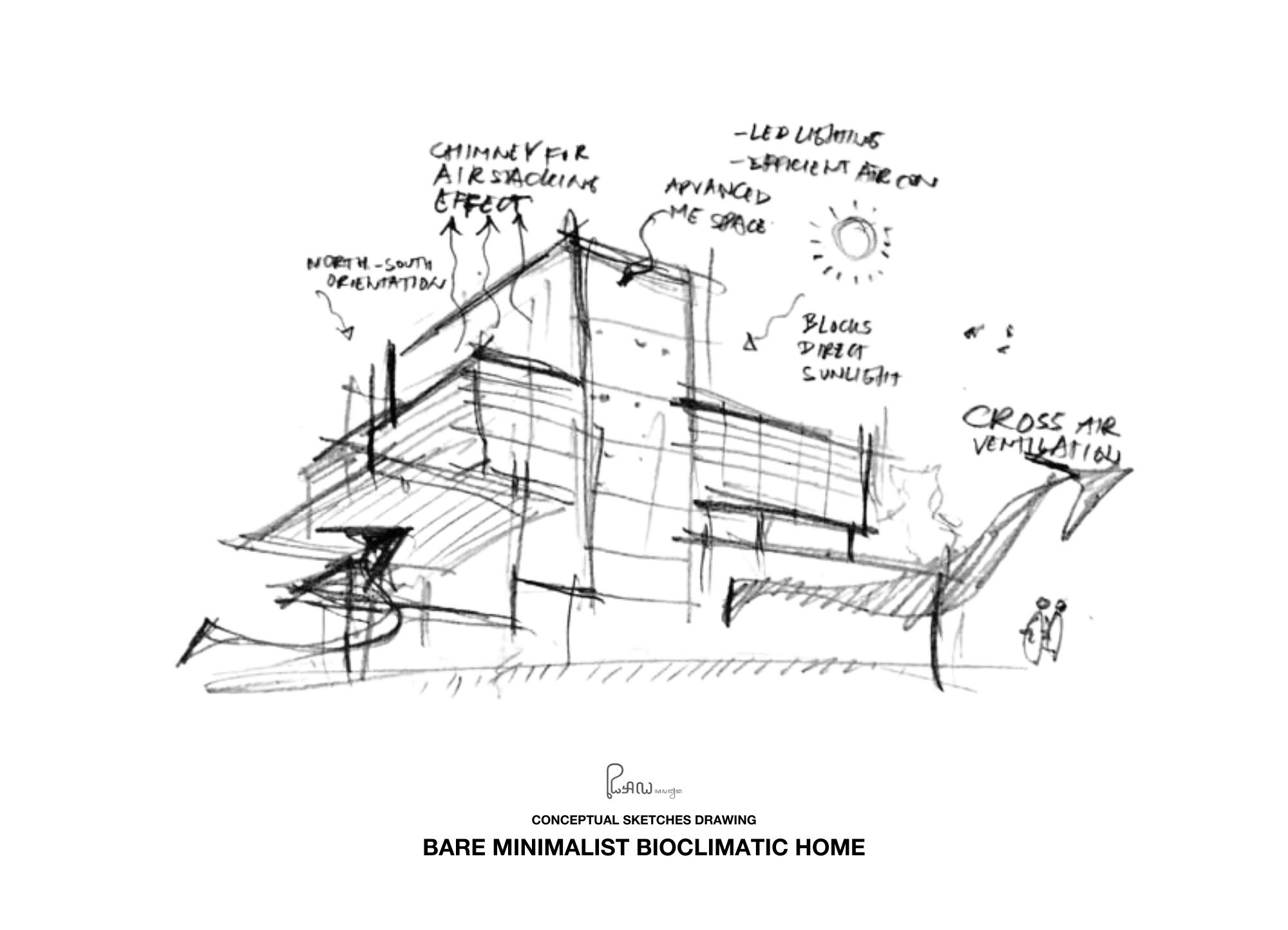
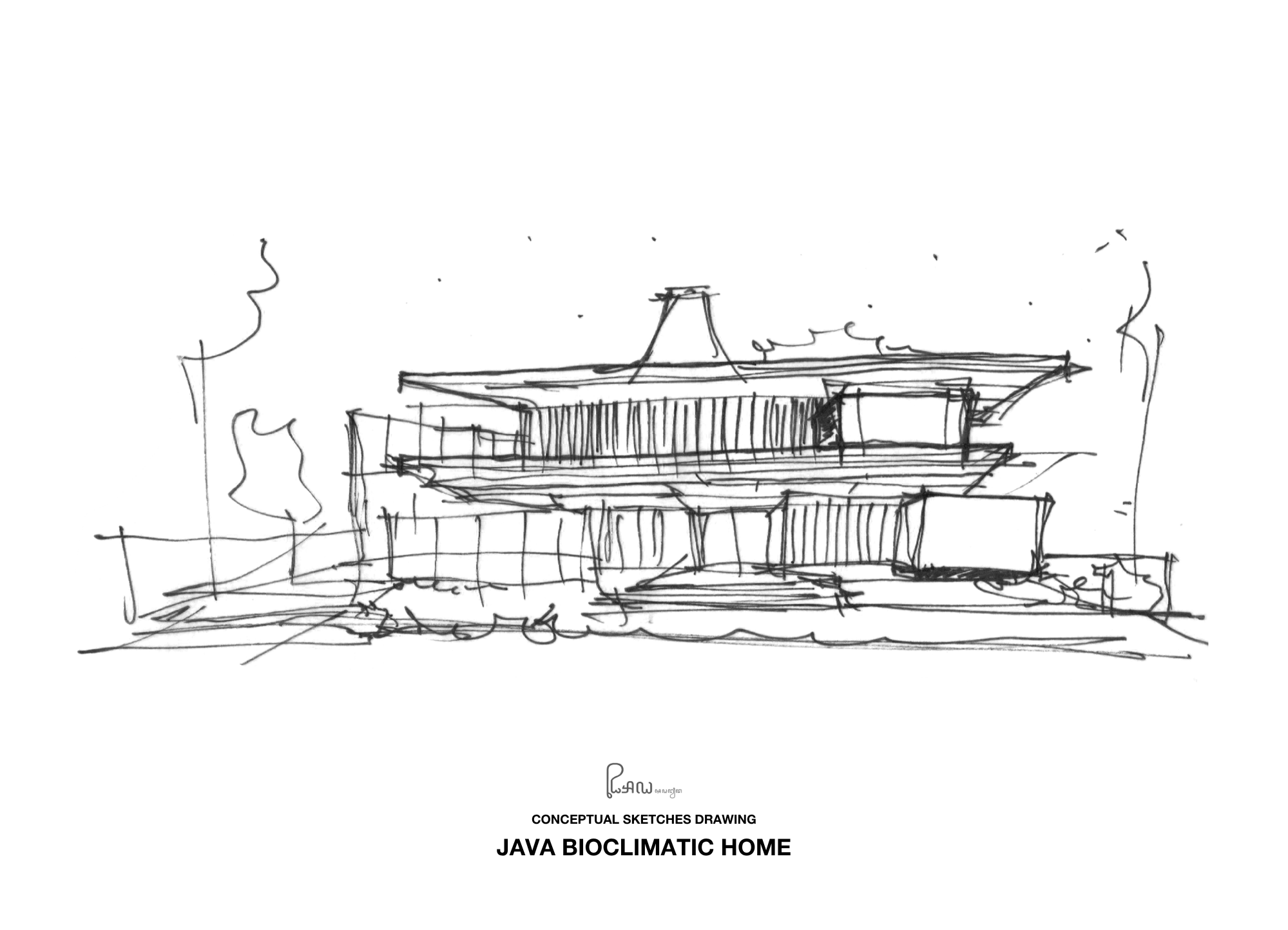
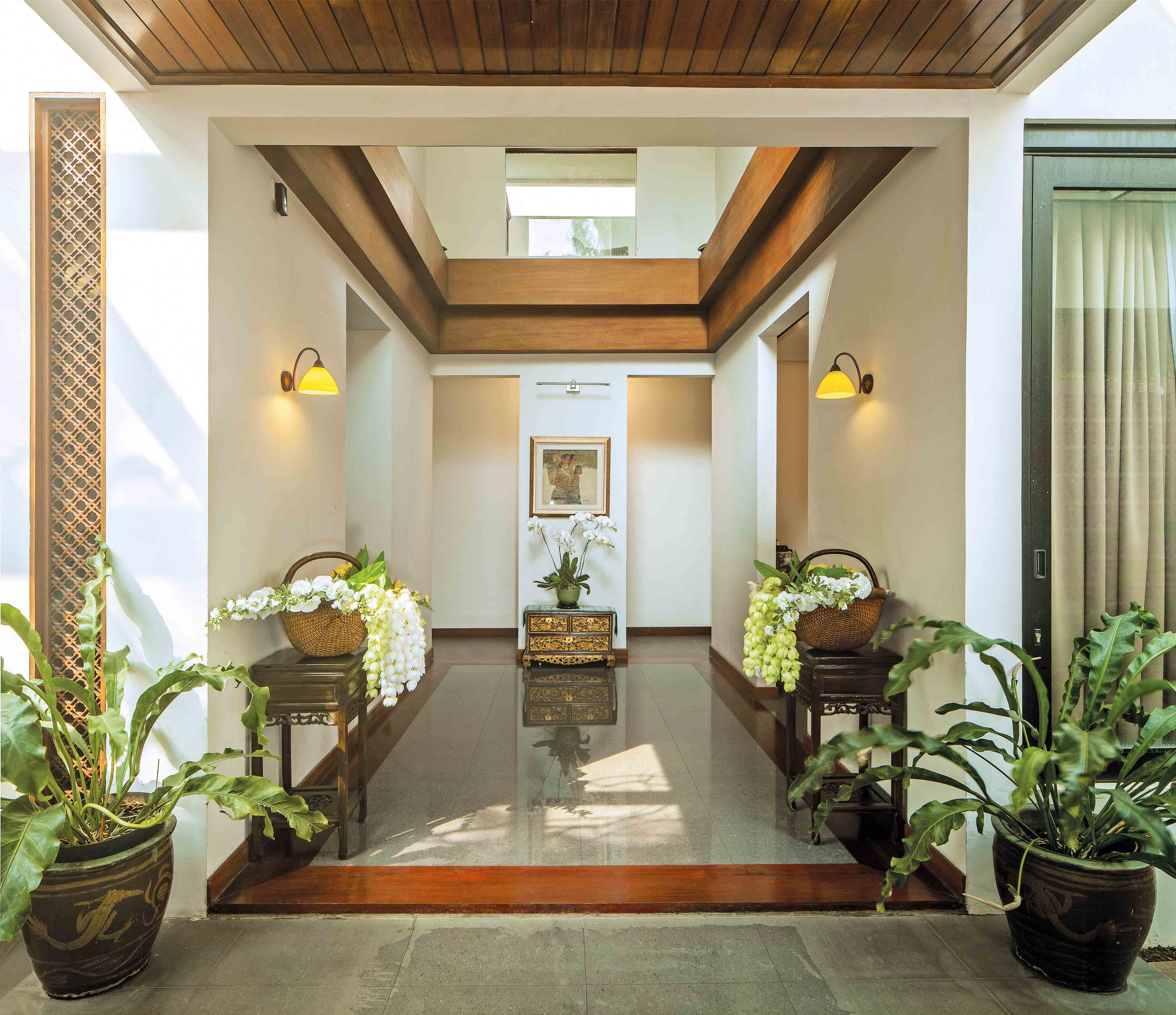
Bare Minimalist artinya adalah rumah yang tampil minimal, fitur utamanya adalah light and wind tunnel di tengah – tengah foyer yang menyatukan pintu masuk living room, bedrooms, dan tangga. Lahannya berukuran 8 x 24 dengan orientasi menghadap utara, timur dan selatan. Sisi barat ditutup dinding solid dan dilengkapi dengan sistem air minum terintegrasi. Materialnya menggunakan beton cetak, parkit bambu, kayu palet.

Kategori
Project Bioclimatic House

Bioclimatic Home 03 – Guha The Guild

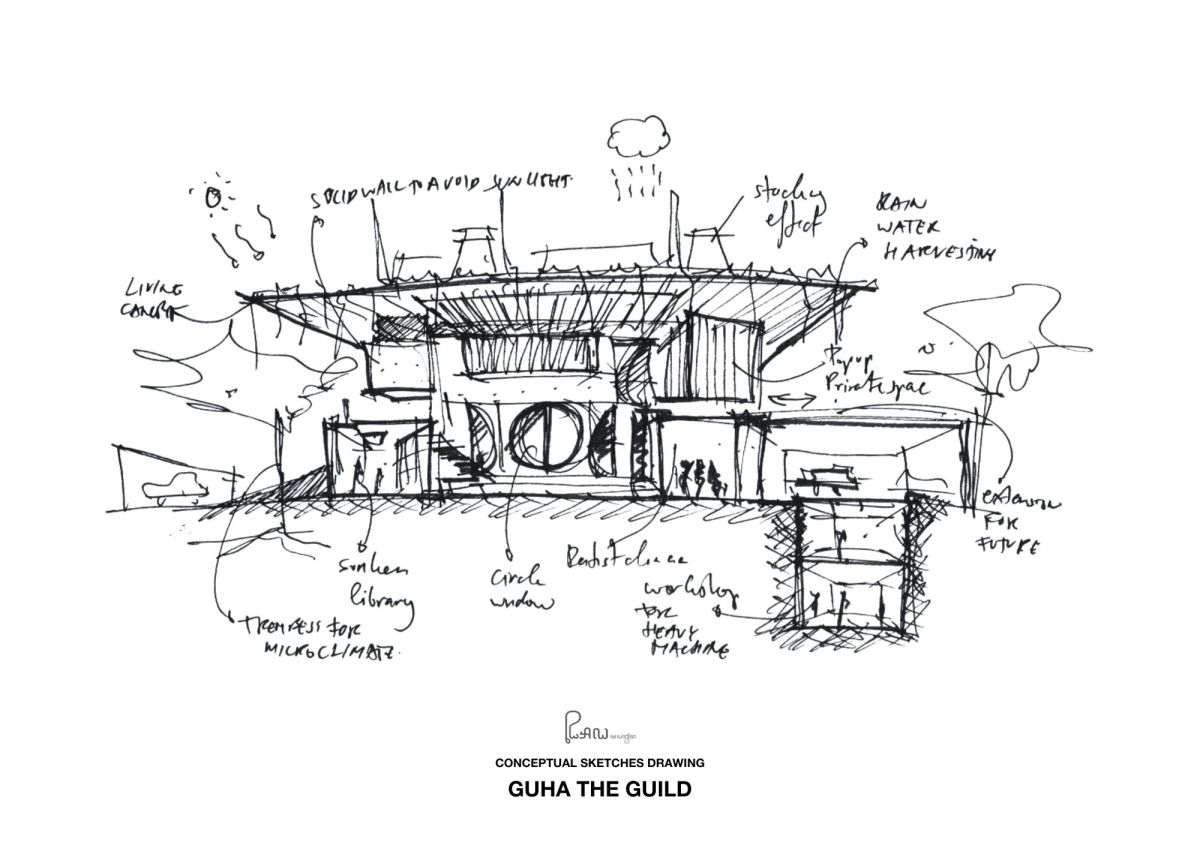
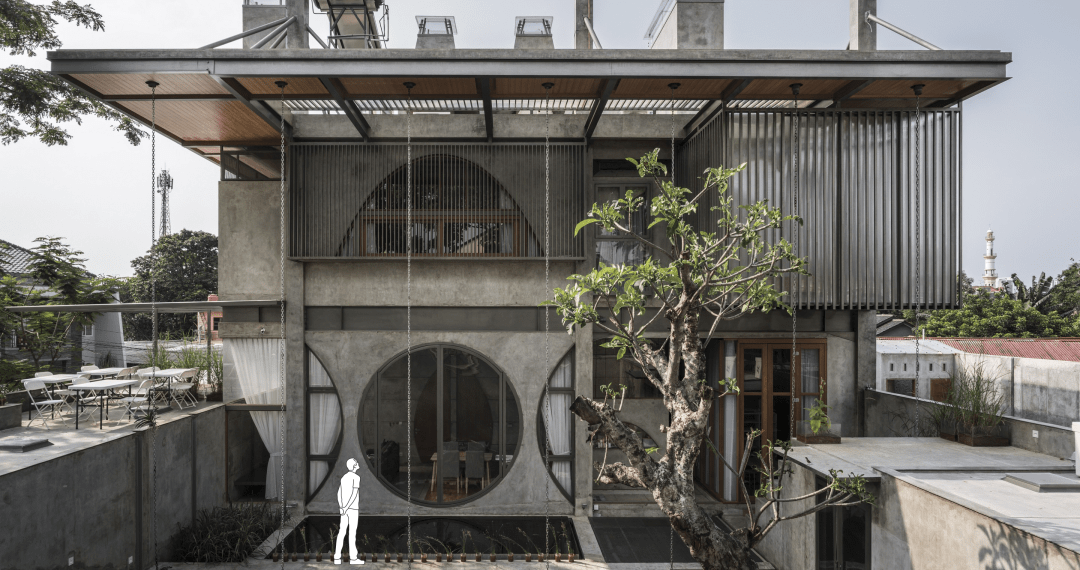
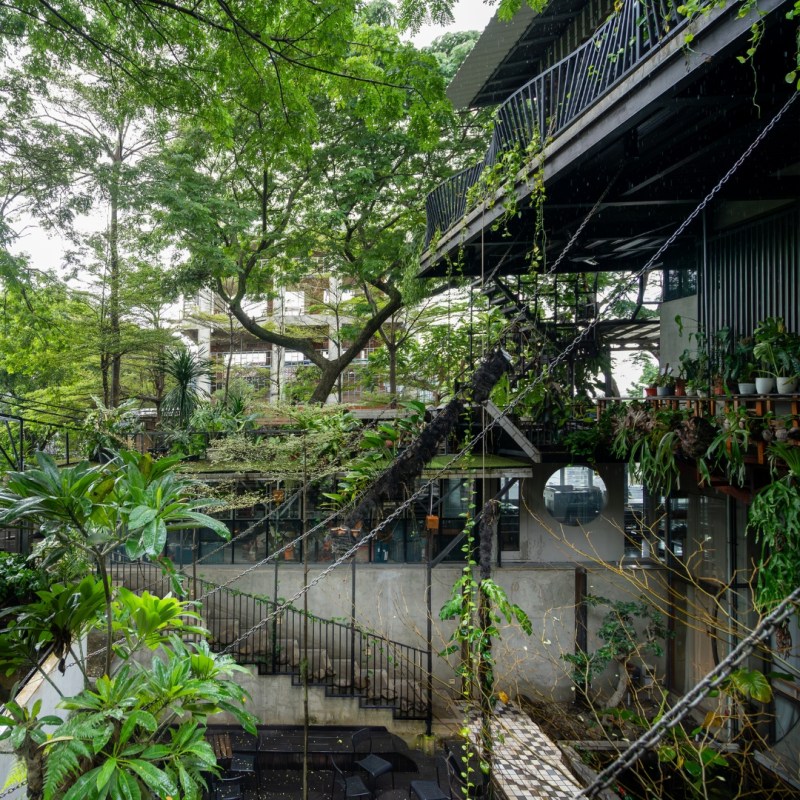
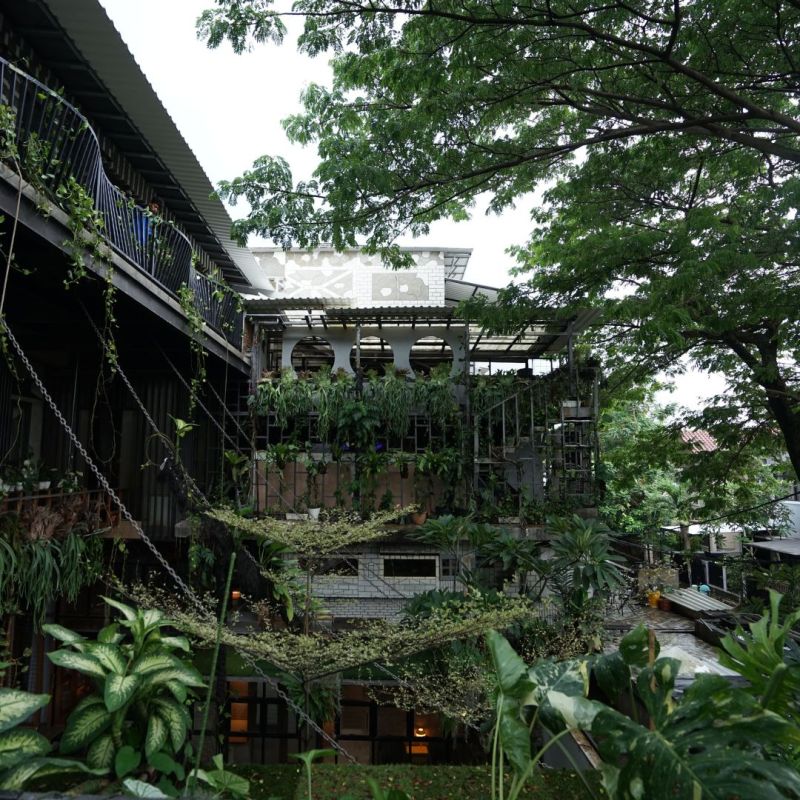
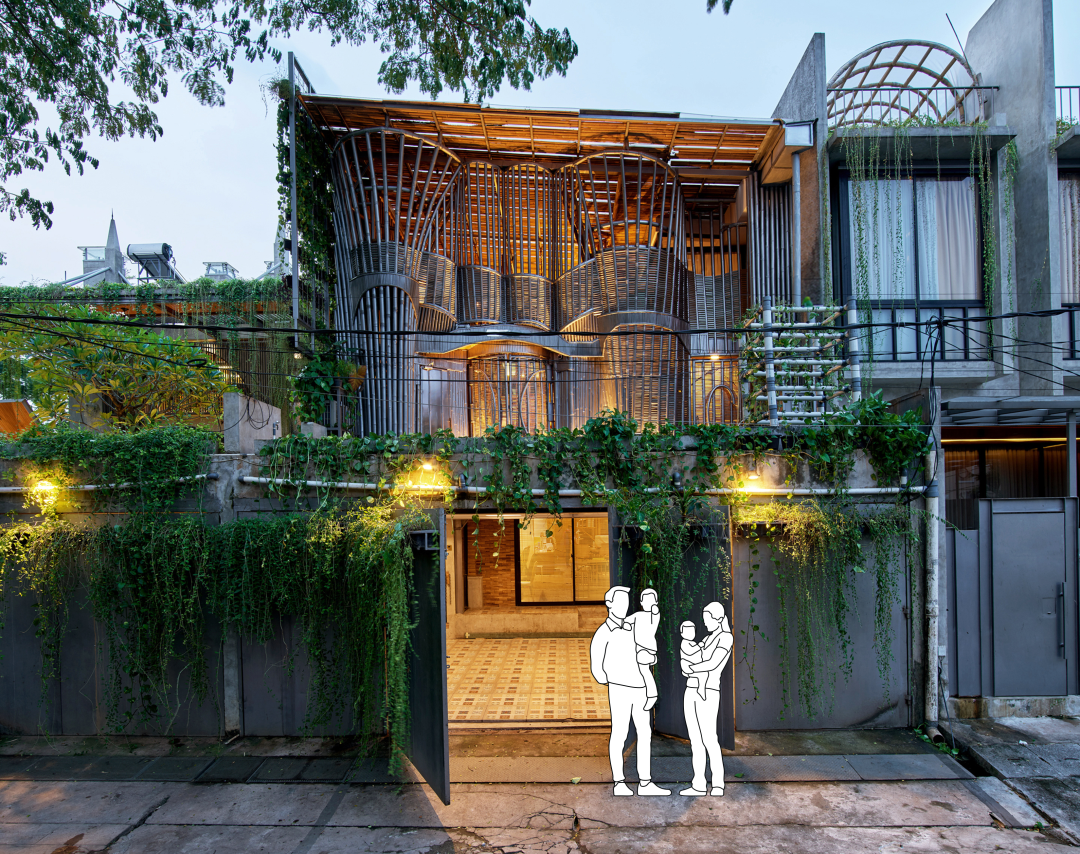
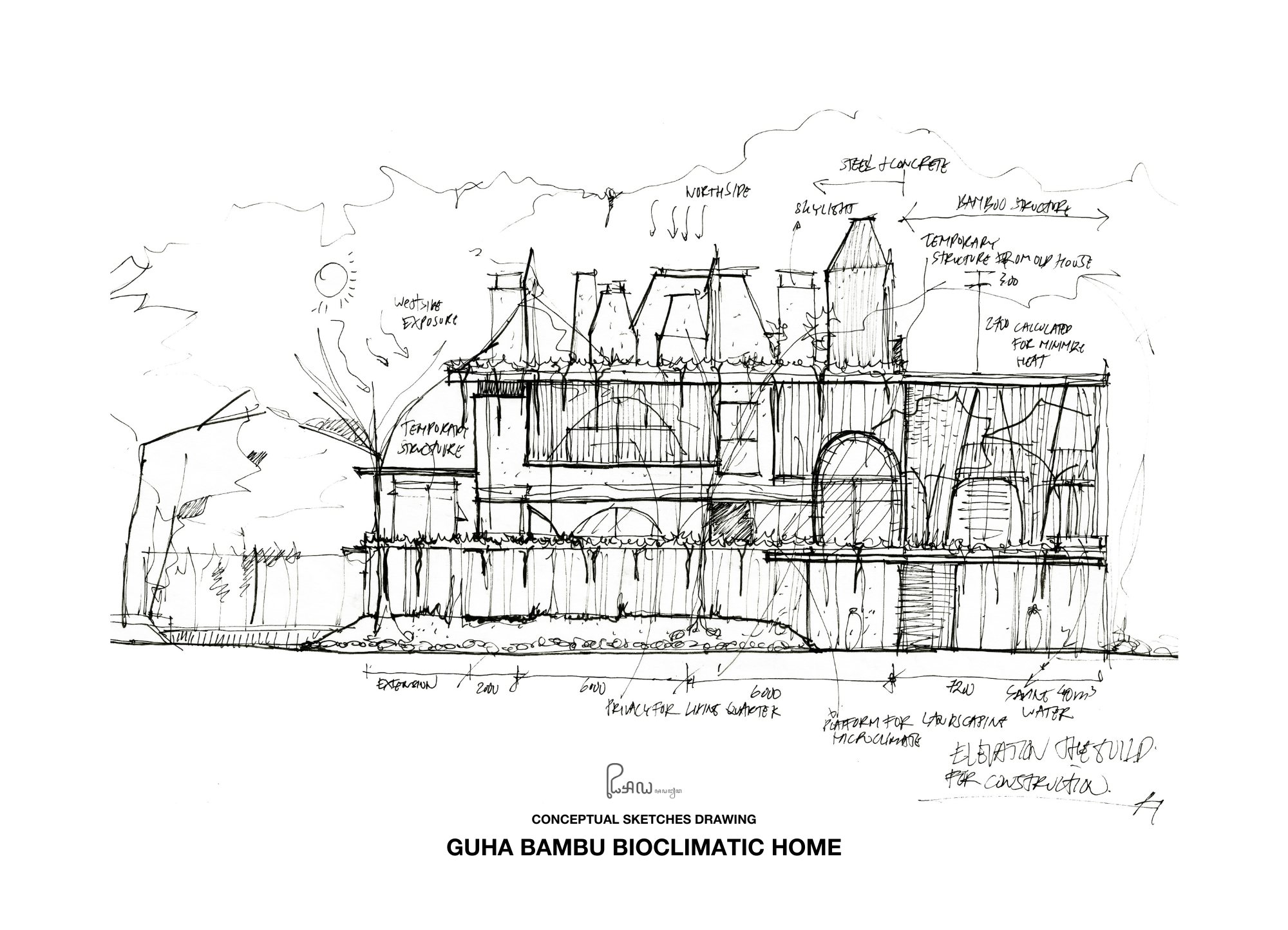
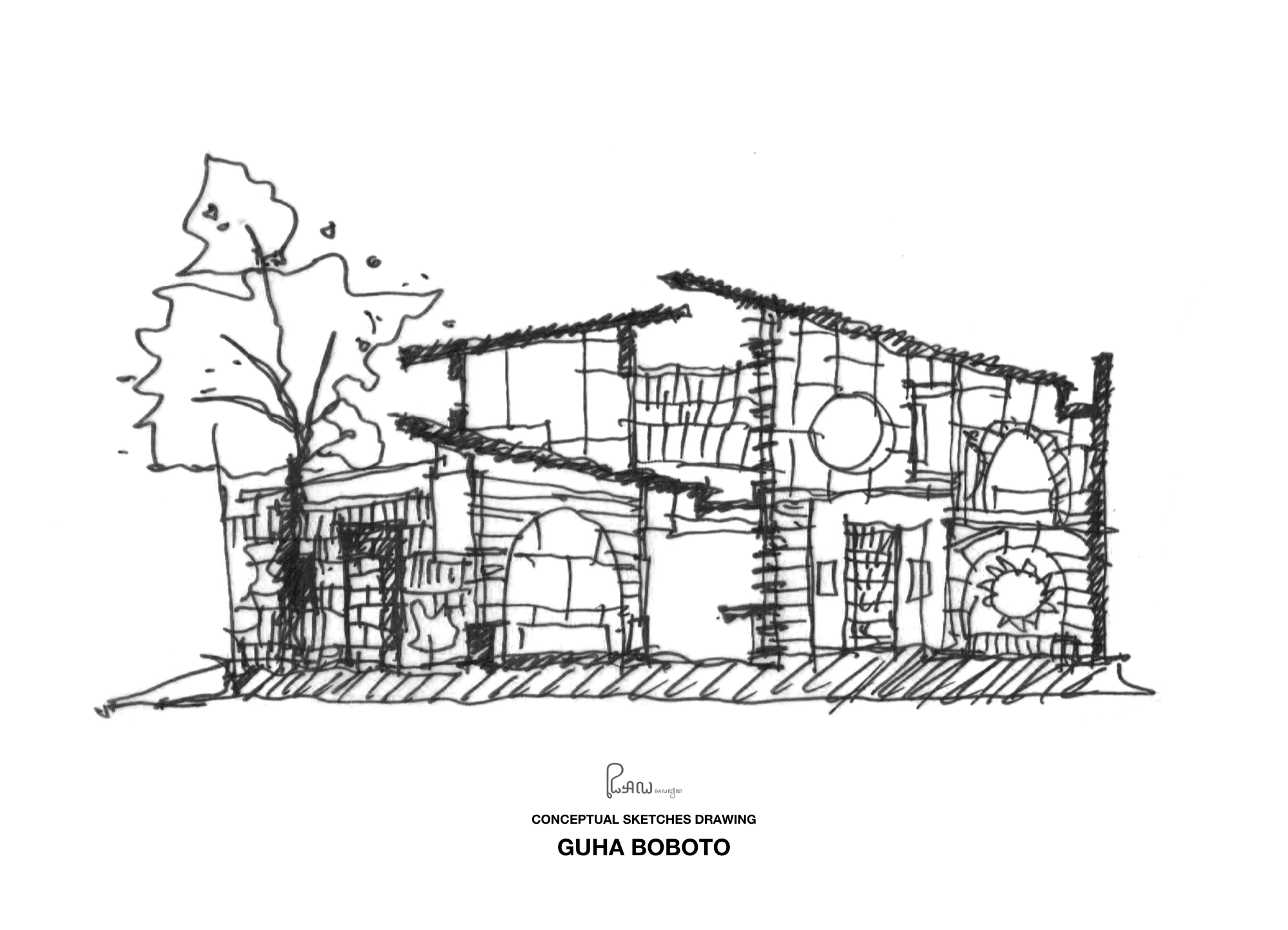
Guha is an combination of new and renovation project based on previously “The Guild” located in Taman Villa Meruya. The Project consist of Omah Library, Dental Clinic, residence and Realrich Sjarief’s studio named Guha Bambu, The studio is Realrich Architecture Workshop (well known by name of RAW Architecture).

The renovation section is consisted on adding sequence for adding elaborated programs for Omah Library such as more storage for book shelves, bookstore and gallery. The circulation is designed to separate the public and private which is solved by separating the access at the entrance.

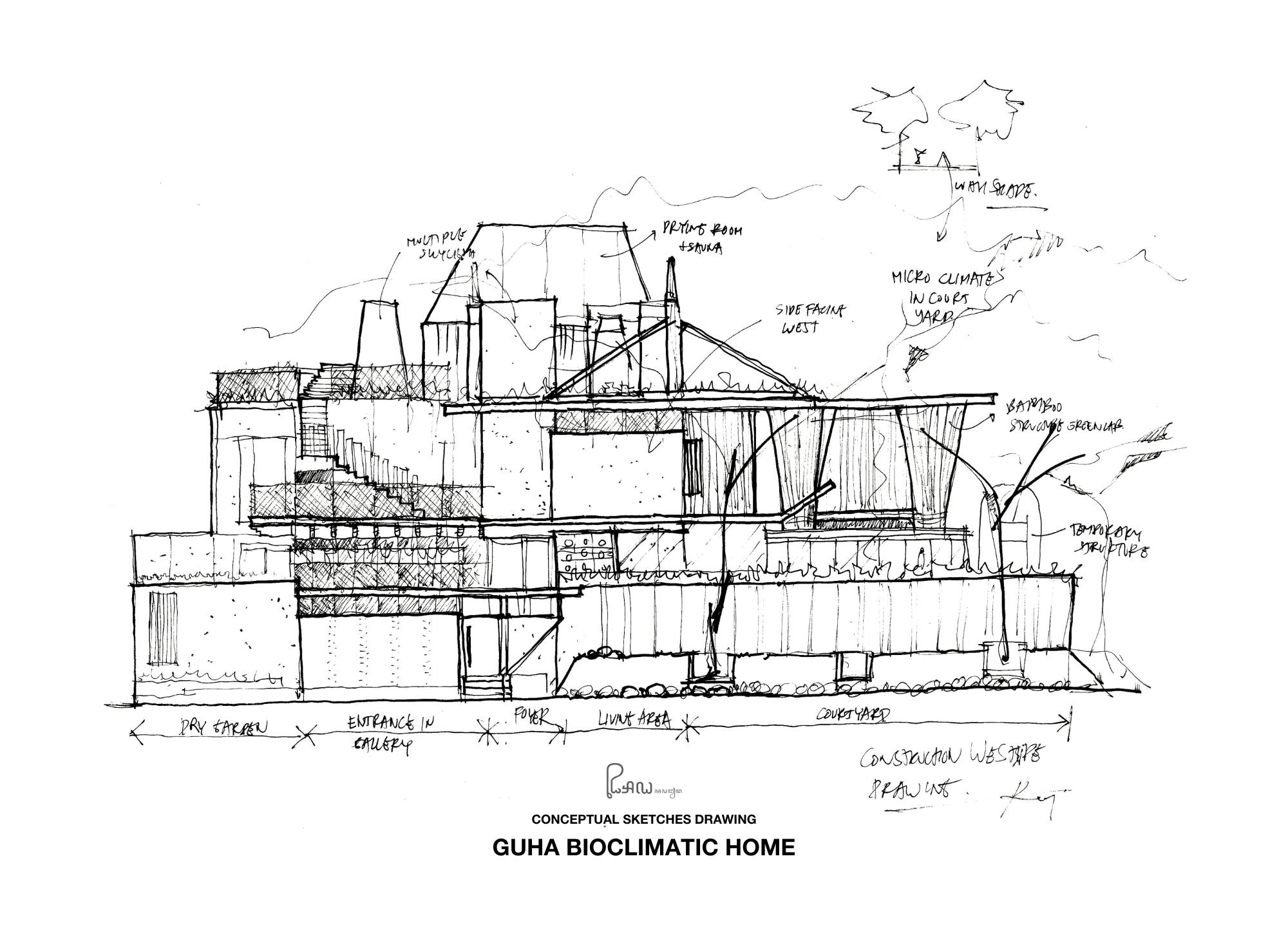
The new project, named Guha Bambu is at the east side. This building stands in the lot of 7.5 x 26 m size consisted new 3 storey Bamboo structure, 2 storey of basement. The technique to build the structure is elaborated from experimental school of alfa omega project. The technique separates the steel plane truss structure as a roof and bamboo structure to hold the 3 floor plate under steel structure roof.

Construction of Guha is elaborated into 9 materials to sum up craftsmanship experimentation in Realrich Architecture Workshop such as : steel, wood, glass, metal, gypsum, bamboo, plastic, stone and concrete. The layout is flexible, and open while some of the rooms is opened by minimum 2 doors allowing the further scenario while the program can be changed. The idea is basically addressing the tropical climate to open north south and close the facade at west side.

The Facade is basically basic material, concrete, vertical louver by steel and bamboo. The program it self challenge the typical housing in Indonesia to be mixed with more micro business programs such as education, even coffee shop in the future by maintaining privacy and opening itself to the public. The construction is done by generations of craftsmen from west java which integrate some of traditional fish mouth joint in bamboo constructions and more modern construction method such as steel and construction.

Kategori
Projects Collective Cave

Collective Cave 03 – Cibubur Mall

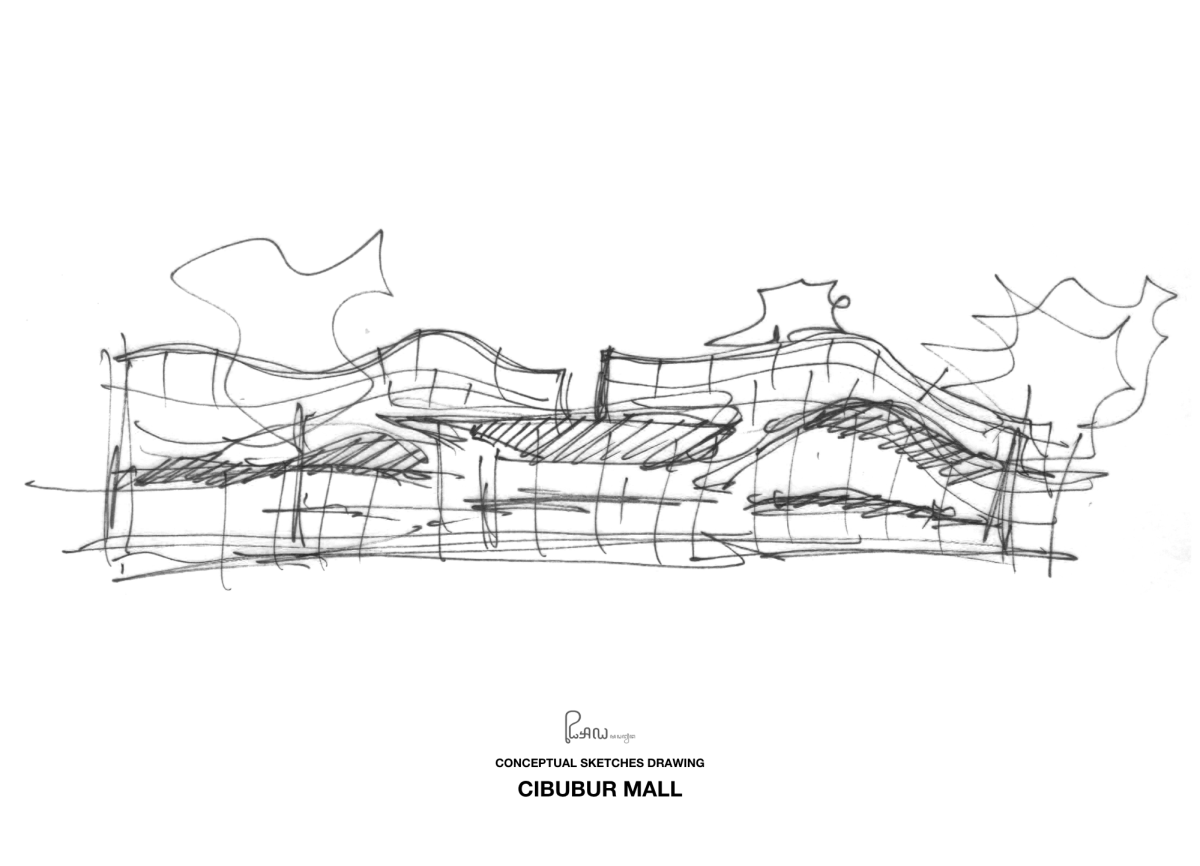
Cibubur Mall Extension and Hotel Development
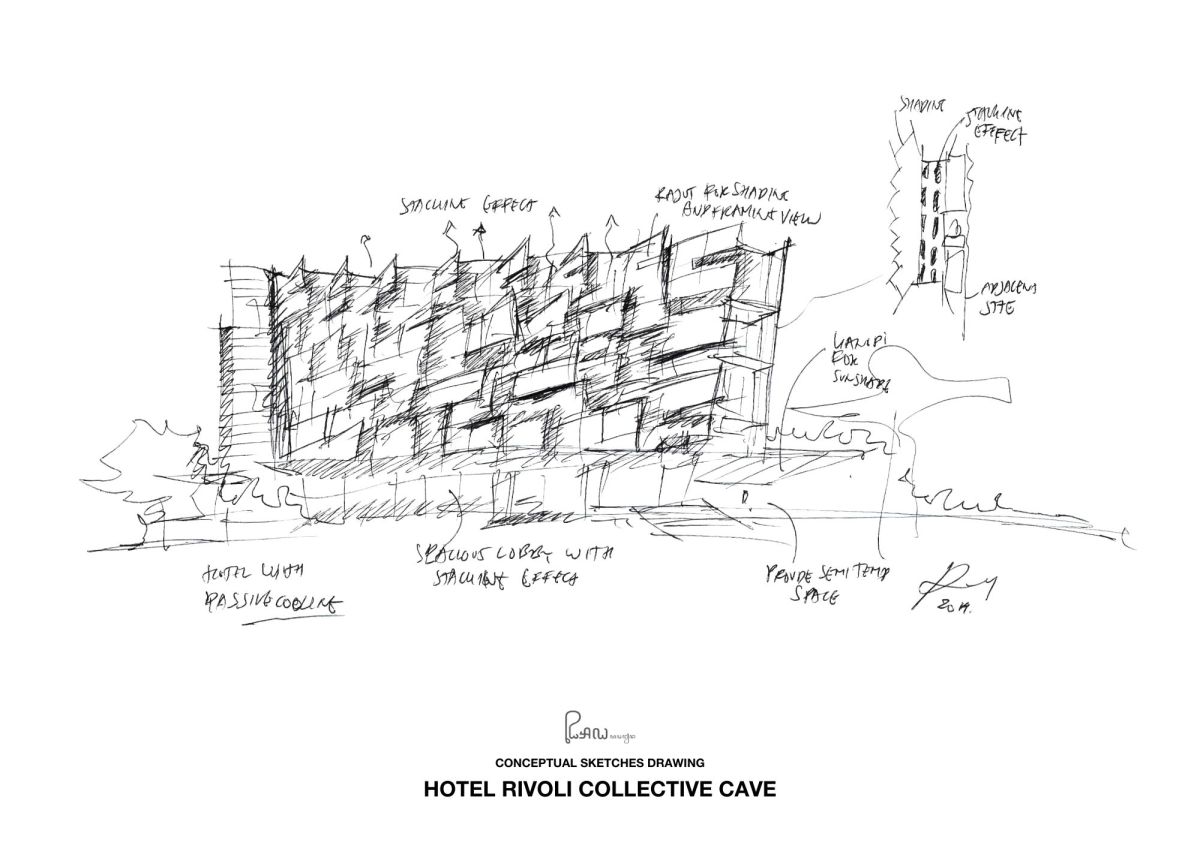
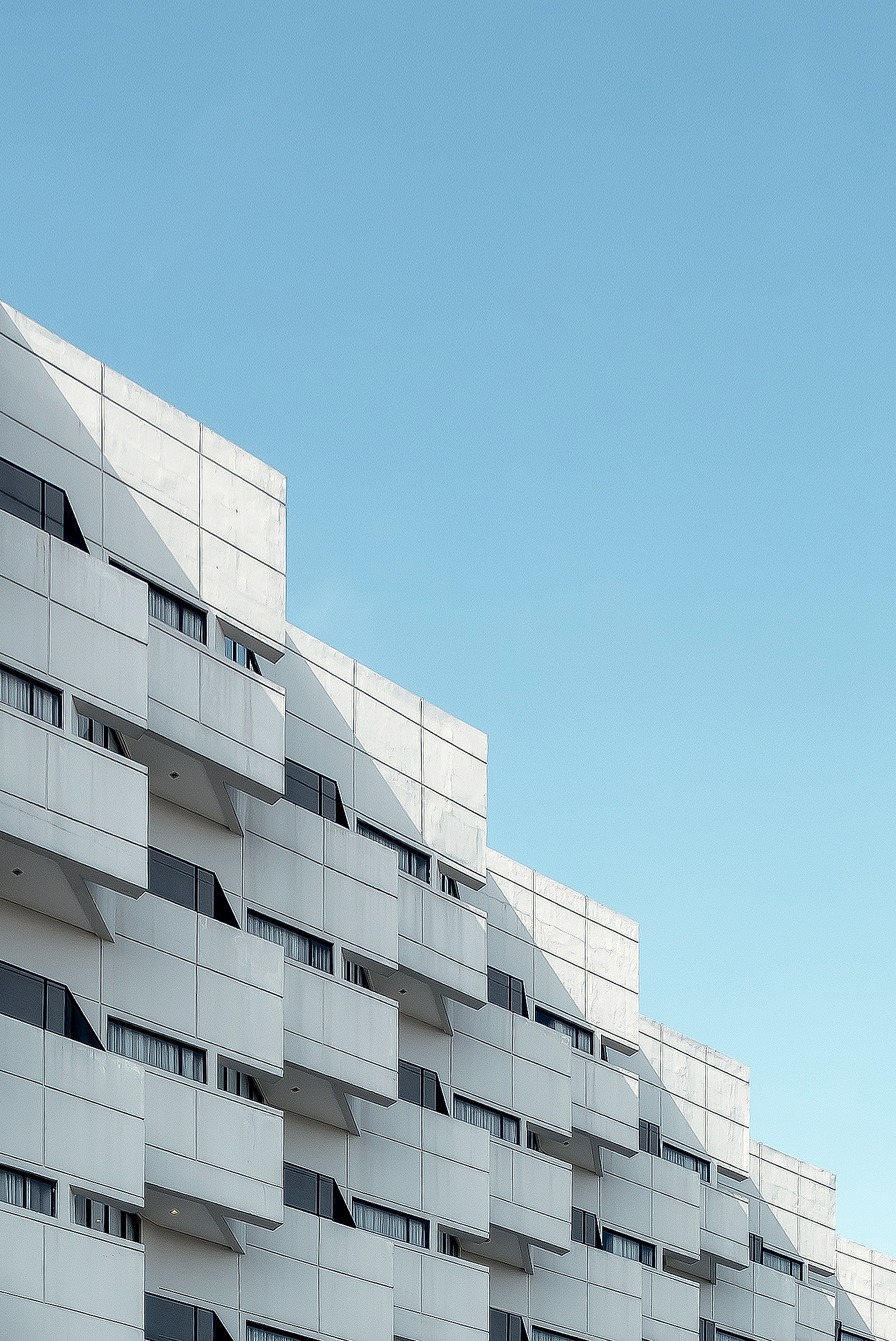
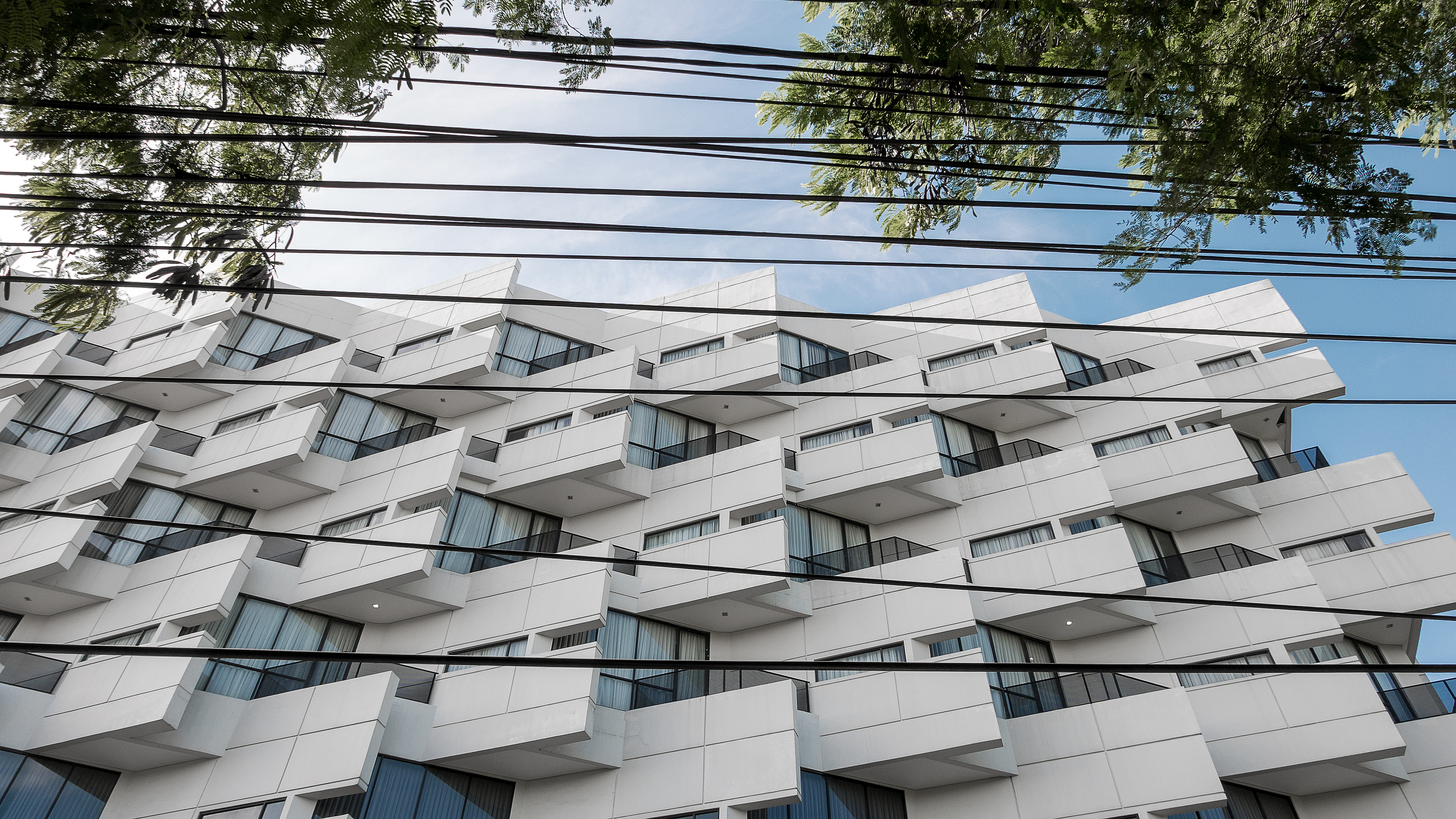
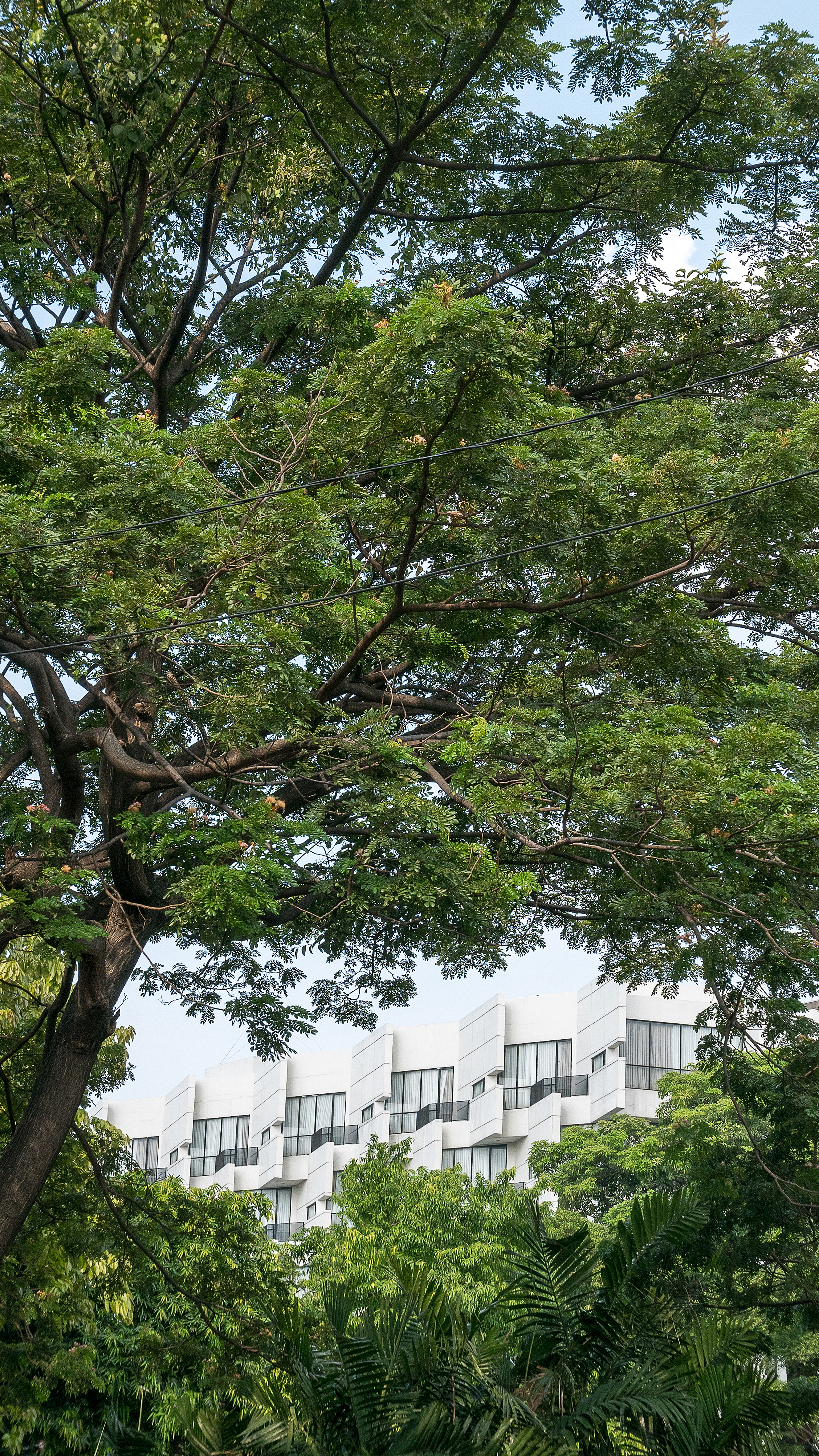
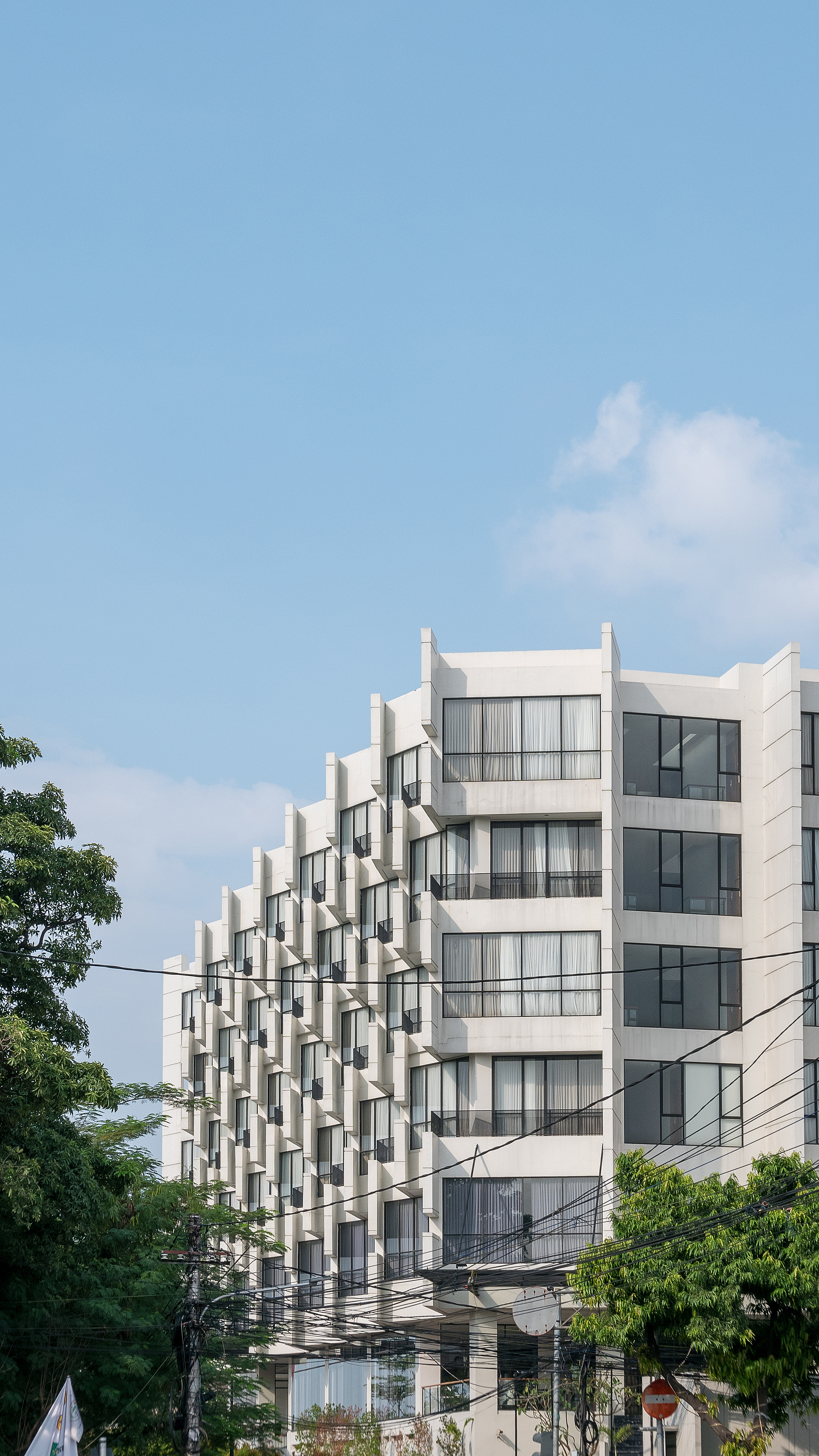
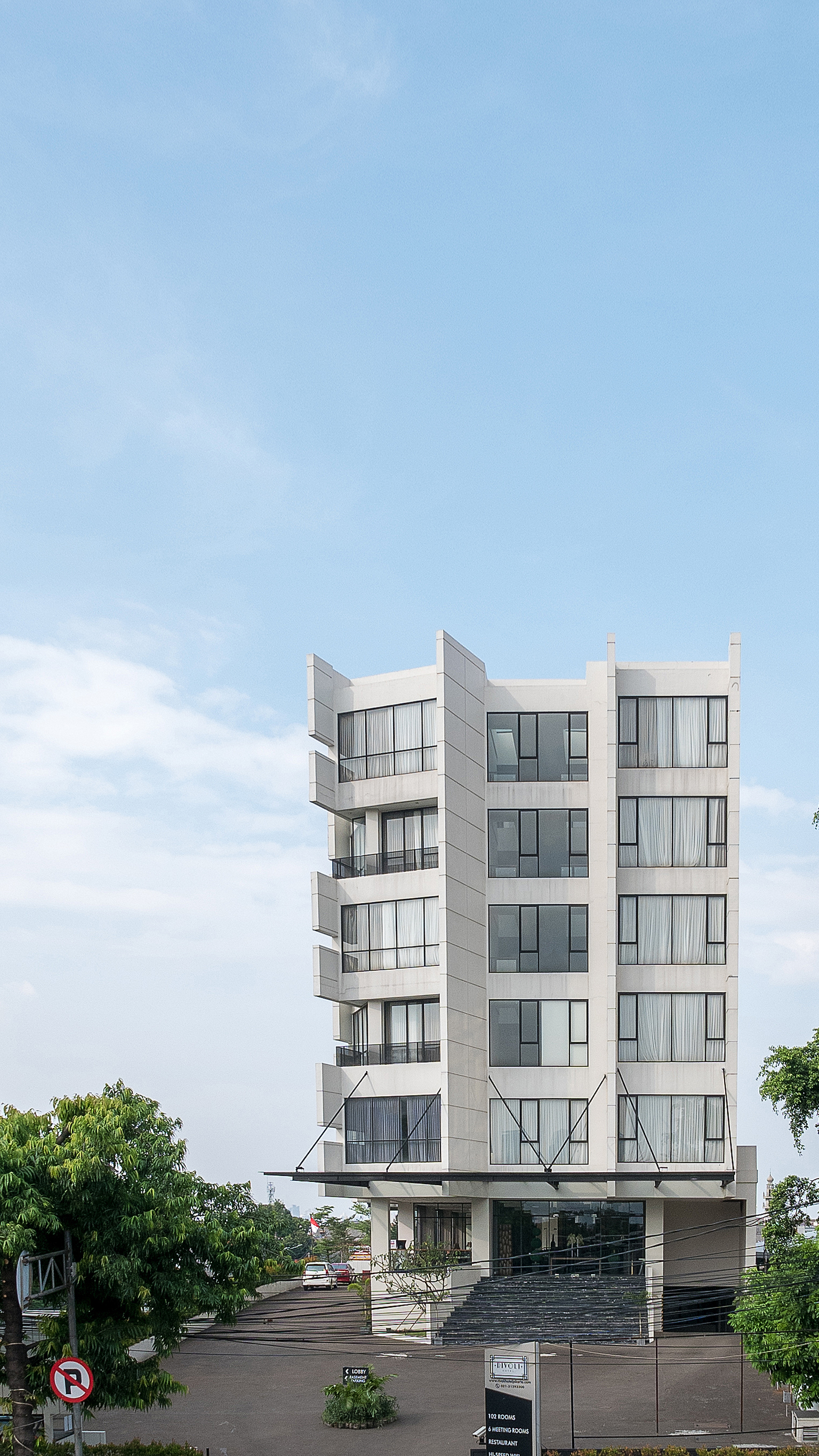
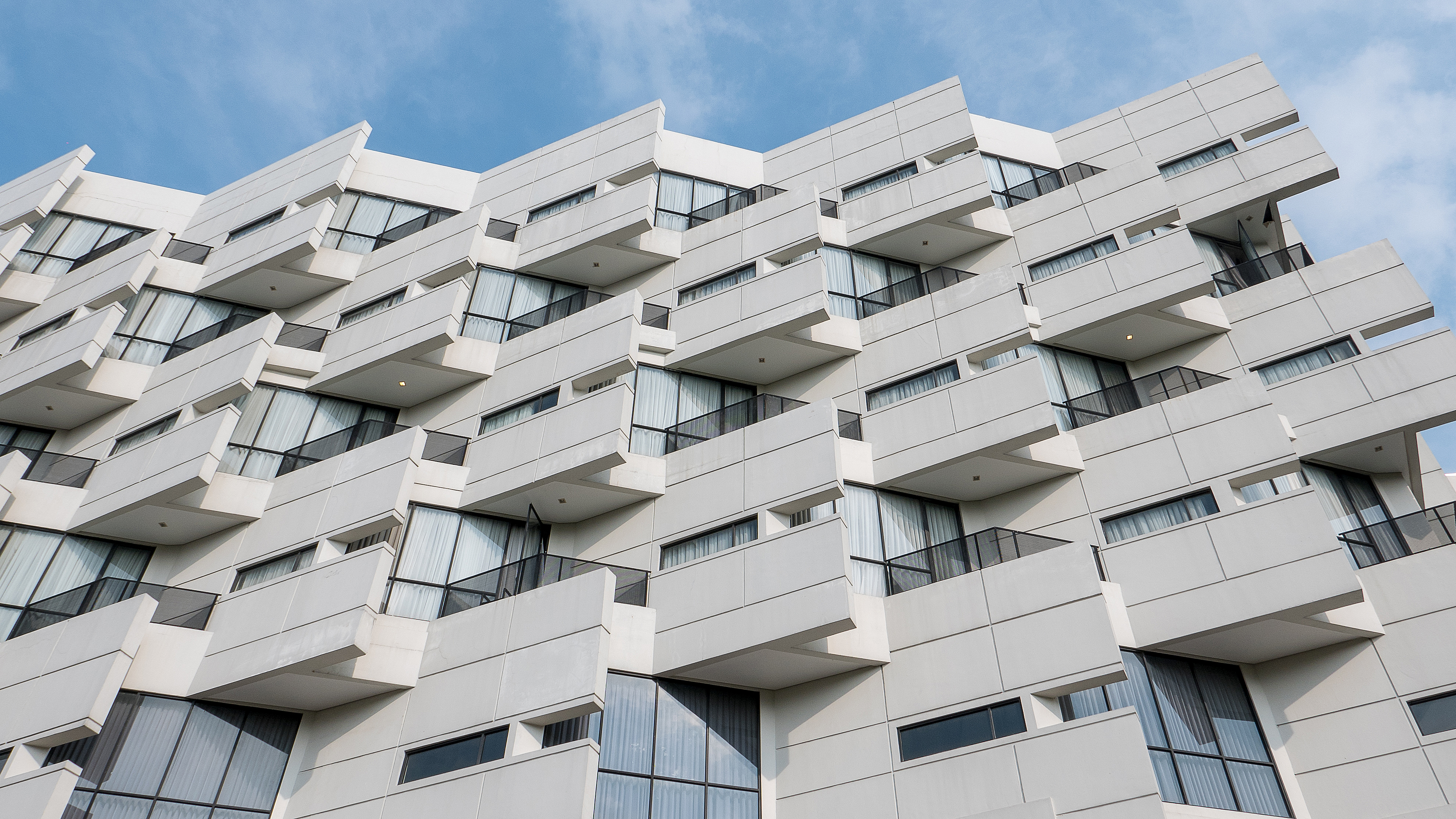
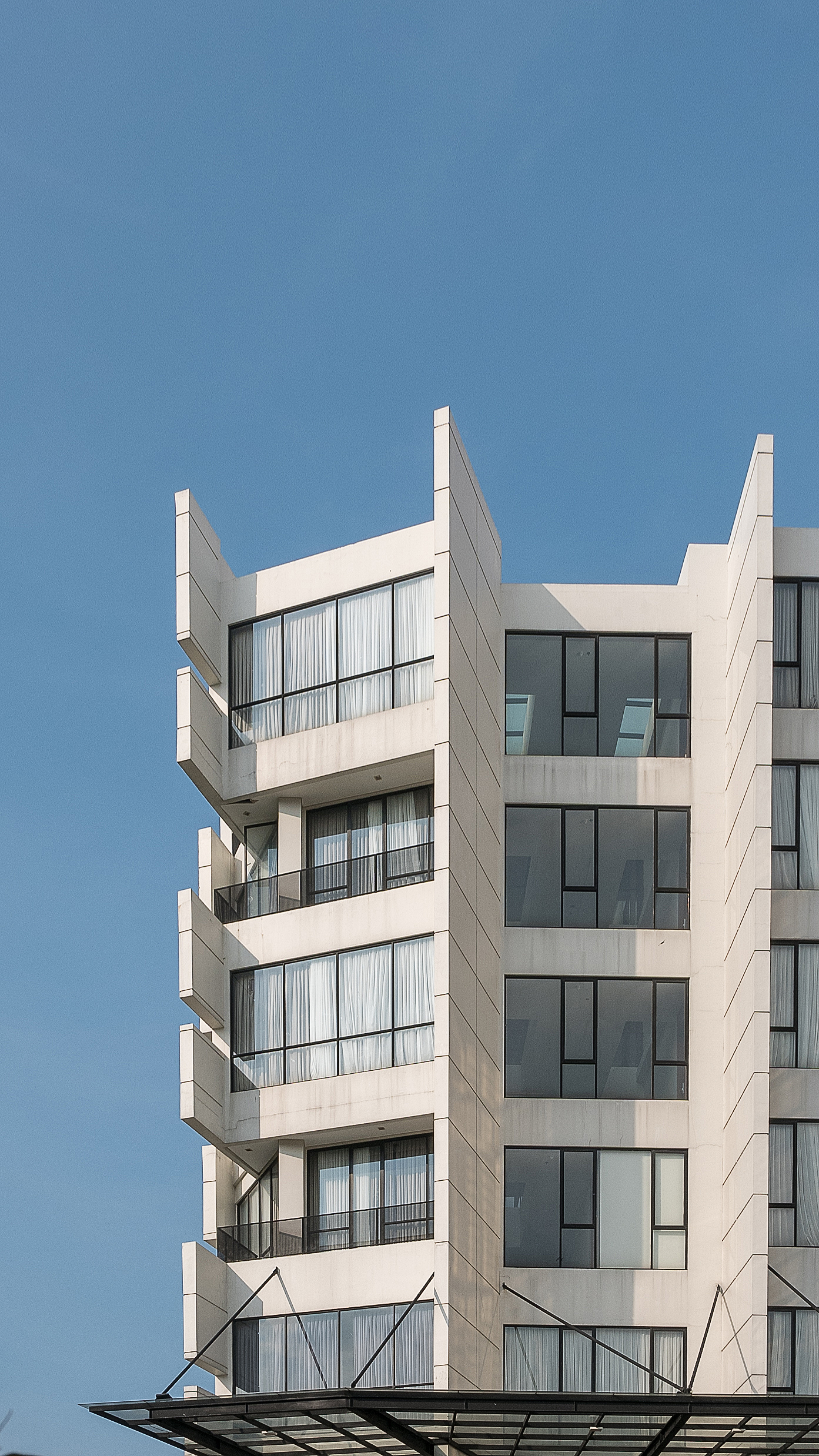
Features : 2 levels of integrated pedestrian walk and Hotel development consists of 120 luxury rooms with double loaded corridor which offers architecturally balanced between open air pedestrian walk and undulating surface of facade.
Conceptual design of RAW (Former DOT) In collaboration with Andy Prasetyo Architect
Status : Built
Appointment: 2011
Construction Start: 2012
Completion: 2012

Kategori
About Us

Contributors

Contributors| Past + Present

Contributors | Para Kontributor

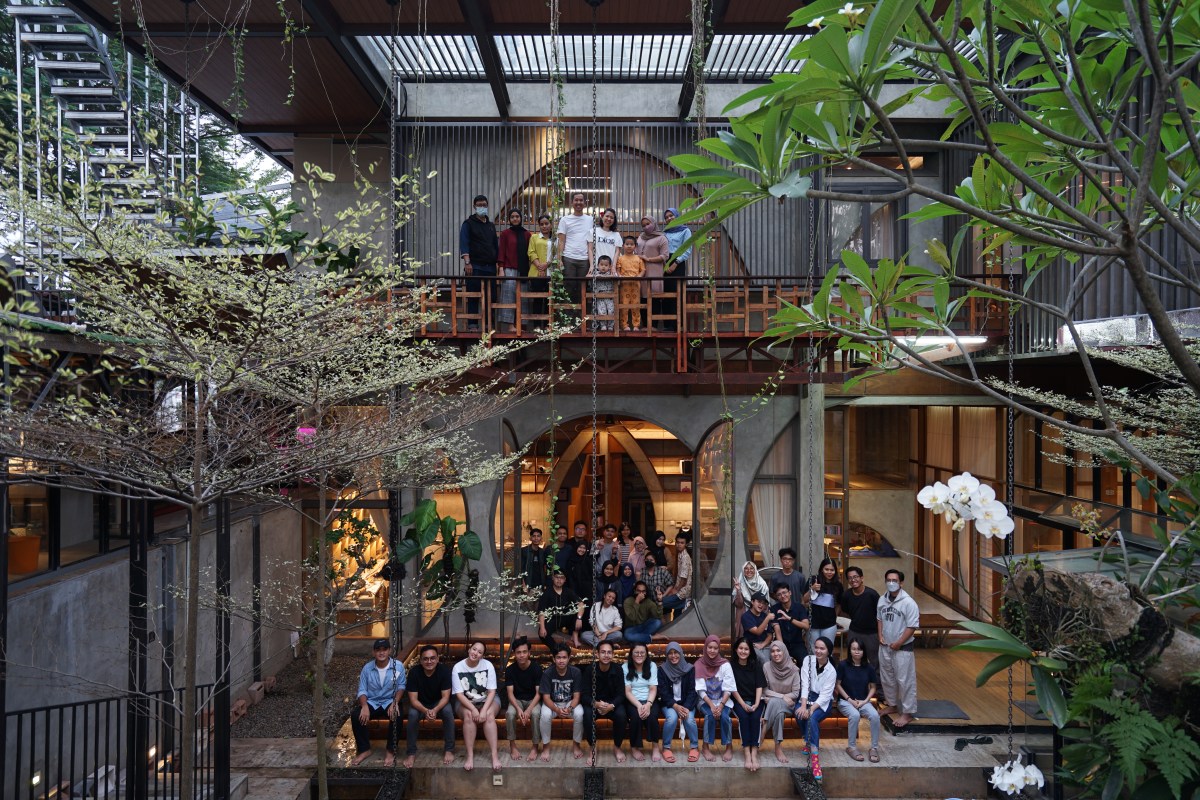
I credit the teamwork, noting that several beautiful people such as craftsmen, supervisors, and clients have contributed to the body of work. My grandfather and father started the builder’s ecosystem before, and I extended it and focused on architecture. Please have a look at the name and studio dream team, and I appreciate the effort collaboratively. The current squad handles experimentation, controlling the design and crafts, and executing it wholeheartedly. That’s why I am proud of their progress, and all of the sincere talks, workshops, and experimentation make the ecosystem stronger.

Principal Architect | Founder

Realrich Sjarief

Advisors

Singgih Suryanto

Head of Administration, HRD, and Finance

Laurensia Yudith, Caroline Moeljono


Craftmanship Leader

Wisnu Wibowo, Sirin, Muhamad Enoh, Sakum, Solehudin Grandong, Engkos, Aep Syapuloh, Ujang, Itno, Komeng, Sumardi, Endang Syamiyudin (In Memoriam of), Bonari, Tohirin, Bayu, Kunto

Founding Fathers

Asnawi Sjarief | Candra Tobeng

Past Contributors | Para Kontributor Masa Lampau

Some of the people who have worked with me and They have been bringing beautiful memories. I feel grateful for their presence. And, they are advancing to improve the architecture ecosystem in their life. Every life intersects between each other. I always remember the first moment when we started the studio in a garage. I spent most of my daily life there. It’s a state of being humble and always stays in progress. I experimented in the garage studio and changed some details, places, shapes, and ambiance. I had experience with the craftsmen for almost even days and weeks. It shows the positive energy of gradual improvement.

I want to say Thank you for all of the efforts, past serendipity, positive mindset, and I pray for the best of their progress.

Past Projects Team (2010) 2011 – 2025

Anastasia Widyaningsih, Alhamdamar Mudafiq, Alifian Kharisma Es, Andhang Trihamdhani, Apriani Kurnia Sarashayu, Amirul Farras, Arlene Dupe, Bambang Priyono, Bayu Prayudhi, Christiandy Pradangga, Cintya Meidina Lubis, Claudia Cynthia Javanny Jo, David Sampurna, Dicke Nazzary Akbar Lubis, Dini Aghnia Lukman, Donald Aditya Epiphanius, Erick Fei, Ellena Monica, Fakhriyyah Khairunnida, Fatima Chitra Setiawan, Fernando Cardoso Gomes, Fachrizal R. Pamungkas, Fadiah Nurannisa, Fiona Elochita, Galuh Pramesti, Hardiyanto Agung Nugroho, Hawandi Wijaya, Hendrick Tanuwidjaja, Horas Napitupulu, Indra Dwinugraha, Imam Setiawan, Iqbal Zuhri, Jovita Lisyani Halim, Larasati Ramadhina, Lia Kurniadewi Hariadi, Kafi Pangestu, Kanigara Ubaszti Putra, Maria Vania Pardede, Morian Saspriatnadi, Mukhammad Ilham, Miftahuddin Nurdayat, Michael Chen, Primaldi Perdana, Putut Trianggana, Randy Abimanyu, Refano Citra Puspita, Regi Kusnadi, Reinard Christiansen, Rifandi S. Nugroho, Rimba Harendana, Riswanda Setyo Addino, Rofianisa Nurdin, Rudianto, Sapta Putra, Satria Triwardana, Scott Valentine, Septrio Effendi, Silvanus Prima, Soraya Khaerunissa, Suryanaga Tantora, Tatyana Kusumo, Tirta Budiman, Thomas Santoso, Tony Hartanto, Vivi Yani Santosa, Yusni Aziz, Yuliana K. Widjaja, Kirana Nandang SB, Sharfina Nur Dini, Alvyan Adi Saputra, Pandu Nazarrusadin, Sofiana Estiningtyas, Alvyan Adi Saputra, Pandu Nazarrusadi, Sharfina Nur Dini, Rico Yohanes, Muhammad Alim Hanafi, Sultan Arya Manarul Hidayat, Richie Alexander W, Audy Kiranaputri Ramadewa, Aqmarina Badzlin, Timbul Arianto Simanjorang, Yunita Nurul Hasanah, Meizzhan Hady

Book Writing Team 2016 – 2025

Anas Hidayat, Amelia Widjaja, Bangkit Mandela, Dimas Dwimukti, Johannes Adiyanto, Jolanda Atmadja, Kirana Ardya Garini, Kumbang Bernaung, Regina Firda Amalia, Satria Agung Permana, Nirma Ayuni Setiasih, Muhammad Farhan Nashrullah, Wahyu Prasetyo, Christie Maylinda, Aryo Pramudhito, Maylani Tiosari, Imega Reski, Lu’luil Ma’nun, Alifia Farras Hanifah Salsabila

Past Craftsmen 2016 – 2021

Ari Komari (RIP), Jasno, Moel Soemadi, Yudi Atang, Saepudin

Past Book keeper 2016 – 2021

Asep (RIP)

Admistration 2016 – 2022

Novita Gunawan,

Internship | Kerja Praktek
2025 – Anevay Florizal, Riki Riyanto, Luna Aulia Kirana, Olga Maisha Vaniavivia, Gervasius Nicholas Tristan, Octavius Setiawan, Rizal Virgyanto, Hasna Ayudya Aulia, Azzahra Shylla Halalita, Bimasetya Mahardhika, Felicia Roseanne Sandrea, Dimas Dwi Cahyo, Jonathan Juan Carlos Mulia, Zakka Zaharul Kais, Haidar Tamimi Mustofa, Lusi Resti Anggraini, Syahid Alshadiq Rizal, Bugis Batubara, Maritza Ayunala Maheswari, Fida Izzaturrohim, Garneta Nofkila Zahrani, Alif Salma Hanani, Ramadhan Pratama, Davina Shafa Felisa, Syahidah Al Khonsa, Halifaldza Jaladri, Lhutfi Iqbal Maulana, Quirinus Alfa Harjuniertha, Muhammad Iffat Almuthahari, Adli Shiedieq Hanif Ibrahim, Gonthier Ambre, Suchet Noemie, Izza Dennas Syahputra, Faisol Yazid, Gustaviano Victor William Aritonang, Radita Aulia Utami, Carina Hady, Nabilla Wahyudi, Maria Theresia Sutanto, Dias Rahadian Ismail, Jethro Jordan, M. Ariiq Raffa Malika, Samudra Aushafal Ghazzali, Garicsen Yeo, Fajar Wanengpinto, Syaukat Firdausi, Shoffa Alayya Maulani, Therayudha, Bahana Raissa Khan Putra, Bramertha Salsabella Roselin, Unggul Priyo Prasetyo,Maulidi Akmal Aminullah, Afitri Yoshinta Salsabila, Nisrina Ismu Fitri. 2024 – Darwis Jayadi, Diamanda Izur Syavira Fadilla Jasmine, Ivana Alfadeli Randalinggi, Audreylia Adeana Kayla Putri, Salma Putri Naila, Bening Putri Kasandra, Marvella Felicia, Muhammad Feza Habieb Fiendrartama, Alexandrina Soesanto, Teuku Ariq Syahrafif, Agung Tri Sujatmoko, Nabil Fikri Hakim, Rizky Qybar, Silvia helga, Yorendy Saputra, Ricky Fernando, Muhammad Muhaimin, Ahmad Faqih Sadewa, Hasanub Basriyah Herdi, Lenny Inriyani, Lulu Farahdina, Tria Agustin Pratiwi, Raissa Nadhif Astianara, Bernadette Claudike Febyan, M. Muhaimin, Nicolas Ciu, Laura Mellisa, Syahlaisa Afra Amani, Zhevansco Wijaya, Julia Putri Prihatin Ningsih, Muhammad Rahmatulloh. 2023 -Revania Azzahra, Khairina Alfin Nada, Muhammad Zulkifly Suradin, Andriano Gabriel Shevchenko Rumbajan, Renadi Mohammad Rediansyah, Satrio Aulia Firdaus, Qealyn Diamanta Adikusuma, Danita Austin Halim, Heru Setya Budi, Rifa Raudhotul aulia Fachrul Mardianto, Lauritta Pradyani Wilandika, Nisrina Umniyati Fahira Warganegara,Lauritta, Peter Maretto, Rainandi Pambayu, Edho Baron Mack, Lauren Marxoni, Muhammad Bintang A, Jonathan Subagiyo, Jelena Jarita Putri, Anastacia Sherly Wijaya, Najwa Chika Salsabila, Faisal Cahyo Romadhon, Verra Andryanni, Heru Setya Budi, Irvita Ingrid, Rifa Raudhotul Aulia, Yunita Nurul Hasanah. 2022 – Devy Annisa, Khairina Alfin Nada, Satria Aulia Firdaus, Qealyn Diamanta Adikusuma, Jessica Eleora, Muhammad Kemal Haqqy, Revania, Stefanus Wardhana, Andriano G. S. Rumbajan, Renadi Mohammad Rediansyah, Manuel Hendru, Devi Angraini, Irviananda Adenia, Damas Dwinito Pradipta, Muhammad Akmal, Muhammad Zyadi, Ryan Dwi Priyambodo. 2021 – Evanjelicel Tamio Dimpudus, Angel Gabriella Kusuma, Maria Angela Rowa, Aulia Gema Alfaatihah, Gabriela Marcelina, Lu’luil Ma’nun, Joscelind Vallen Kawengian, Eubisius Vercelli Ocvanto Kuncoro, Nielsen Huang, Dheavindra Fara Ayesha, Joshi Situmeang, Panji Ugra. 2019 – Miftahurrahma Ridwan, Christine Gunawan, Rucha Vivek Jaykhedkar, Kristoforus Kevin. 2018 – Sanjida Amir Trina, Yoseph Duna, Gregorius Jasson, Bobby Naiggolan,
Irfan Hidayat, Nardi Kurniawan. 2017 – Aprilea S. Ariadi, Kurniawan Bayu Aji, Riza Larenahadi, Beatricia Bea, Yuki Fadilah, Humam Abdulloh, Lady Viona Yacup, Amelia Aussie, Dody Tansil, Ahmad Zabel Fachreza, Fahry Triza Nugraha, Aurelius Aaron, Ivan Fadhilah, Neysa Difi, Annisa Zakira Fillah, Natalia, Sigit Prayogo, Regina Chandra, Linton Sianturi, Ishani Dayal. 2016 – Yuramia Oksilasari, Dimas Hedito Rahardian, Veronika Selly, Clara Priskila Pranata, David Kharisma, Dio Asmandaru, Michael Funnggretio, Elisabeth Kathryn, Hendra Agustin Sugiarto, Novitasari Leonard Tanaya, Mohammad Irfan Andhikaputra, Ahndya Chita Sekar Anggriti, Devyna Pricilla, Sherika Permana, RR Anissa Larasati, Agnia Gama Priviyanti, Farah Andani. 2015 – Margaret Pranoto, Melina Santoso, Bernadette Hesty Prameswari, Edelyn Elpetina Ibrahim, Novia Oliviani Salim, Hansdika Agustinus, Harzha Syafarian Surya, Arabela Grania, Dwi Cahyo Husodo, Ruth Liana Fransisca, Pandu Tedja, Alya Yasmin, Nik Hazreen Nik Fauzi, Hendy Wu, Yono Ngalimin.

Kategori
projects

Project 03 – Guha

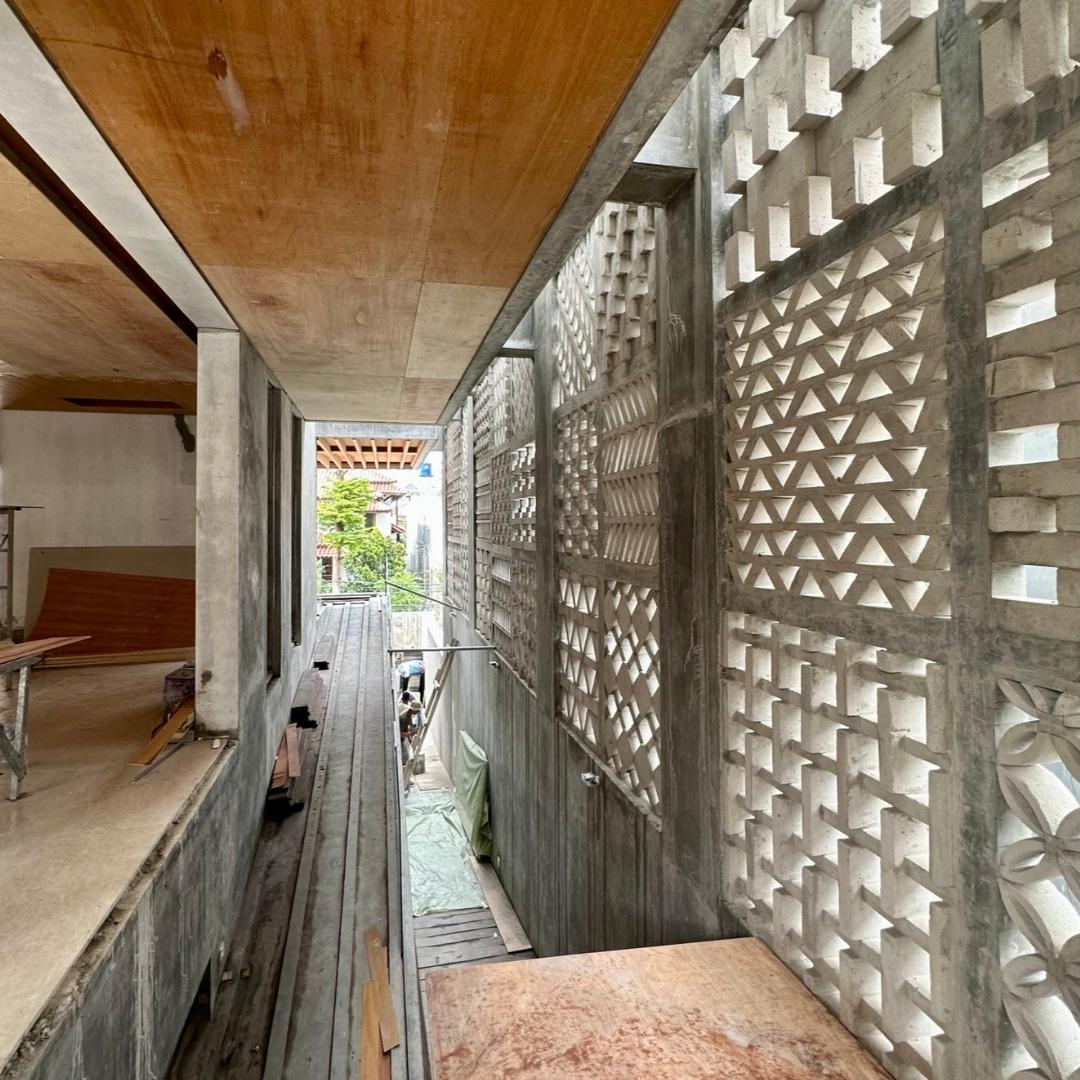
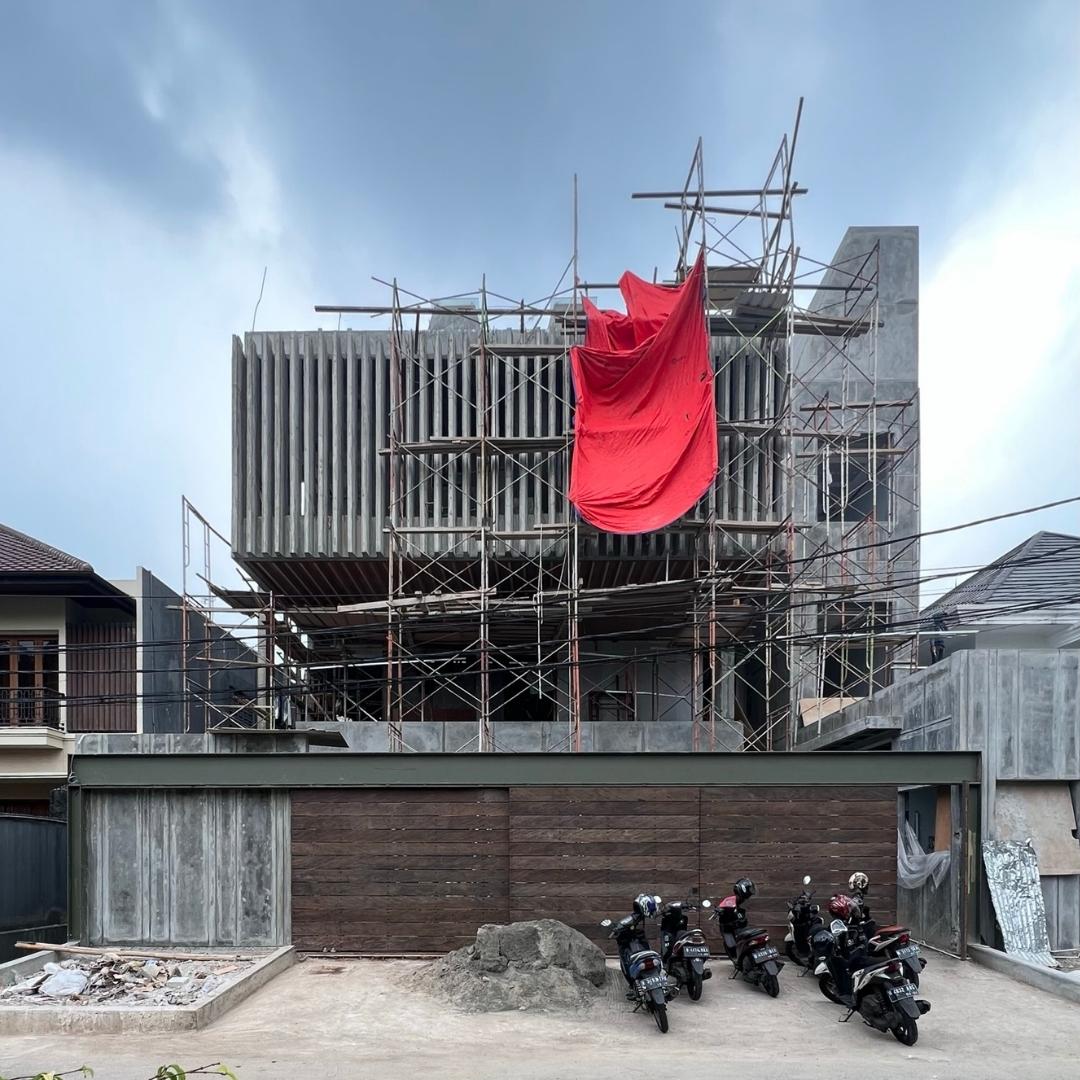
Guha is a combination of new and renovation projects based on previously “The Guild” located in Taman Villa Meruya. The Project consists of Omah Library, Dental Clinic, residence, and Realrich Sjarief’s studio named Guha Bambu, The studio is Realrich Architecture Workshop (well known by name of RAW Architecture). The renovation section is consisted of adding sequences for adding elaborated programs for Omah Library such as more storage for bookshelves, bookstore, and gallery. The circulation is designed to separate the public and private which is solved by separating the access at the entrance. The new project, named Guha Bambu is on the east side. This building stands in the lot of 7.5 x 26 m size consisted of new 3 levels Bamboo structure, 2 levels of the basement. The technique to build the structure is elaborated from the experimental school of the Alfa Omega project. The technique separates the steel plane truss structure as a roof and bamboo structure to hold the 3-floor plate under the steel structure roof.

Construction of Guha is elaborated into 9 materials, to sum up, craftmanship experimentation in Realrich Architecture Workshop such as steel, wood, glass, metal, gypsum, bamboo, plastic, stone, and concrete. The layout is flexible, and open while some of the rooms are opened by a minimum of 2 doors allowing further scenarios while the program can be changed. The idea is basically addressing the tropical climate to open north-south and close the facade on the west side. The Facade is basically basic material, concrete, vertical louver by steel and bamboo. The program it self challenge the typical housing in Indonesia to be mixed with more micro business programs such as education, even coffee shop in the future by maintaining the privacy and opening itself to the public. The construction is done by generations of craftsmen from west java which integrate some traditional fish mouth joint in bamboo construction and more modern construction methods such as steel and construction.

Kategori
Projects Collective Cave

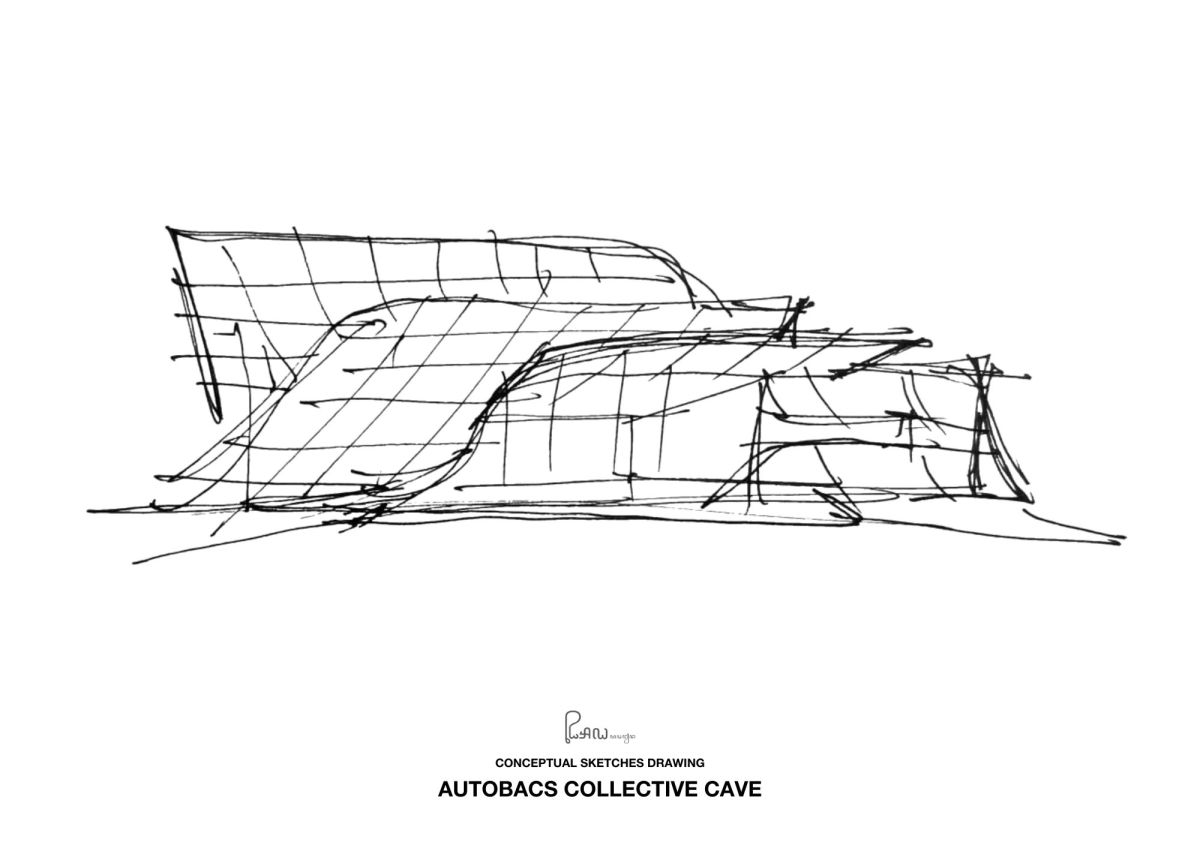
Collective Cave 04 – F&B Center

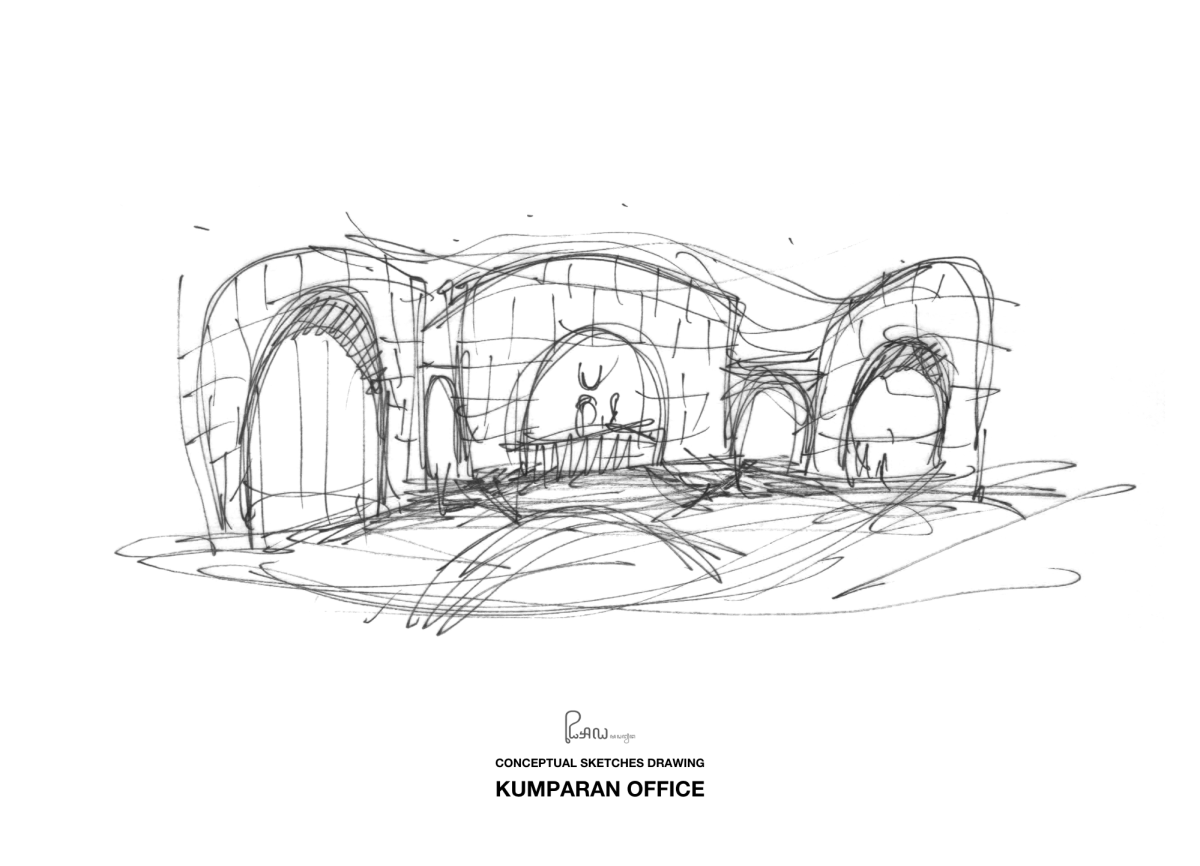
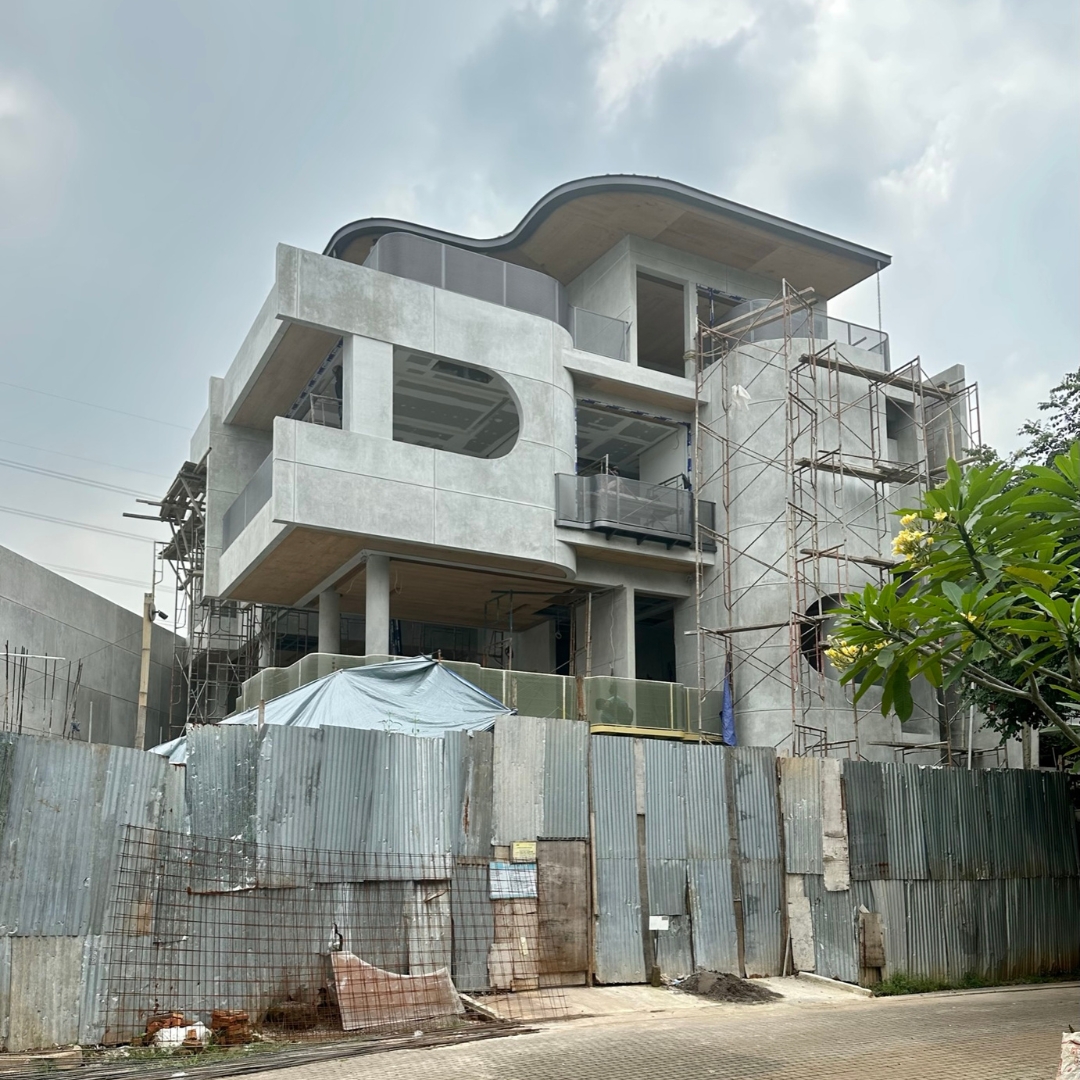
Salah satu pengembang properti datang kepada kami untuk merancang suatu F&B Center dengan fungsi temporer di lahan berbukit yang belum mereka manfaatkan. Muncul sebuah pertanyaan, bagaimana membuat bangunan ini bisa menyatu dan membuatnya seirama dengan bukit-bukit itu.

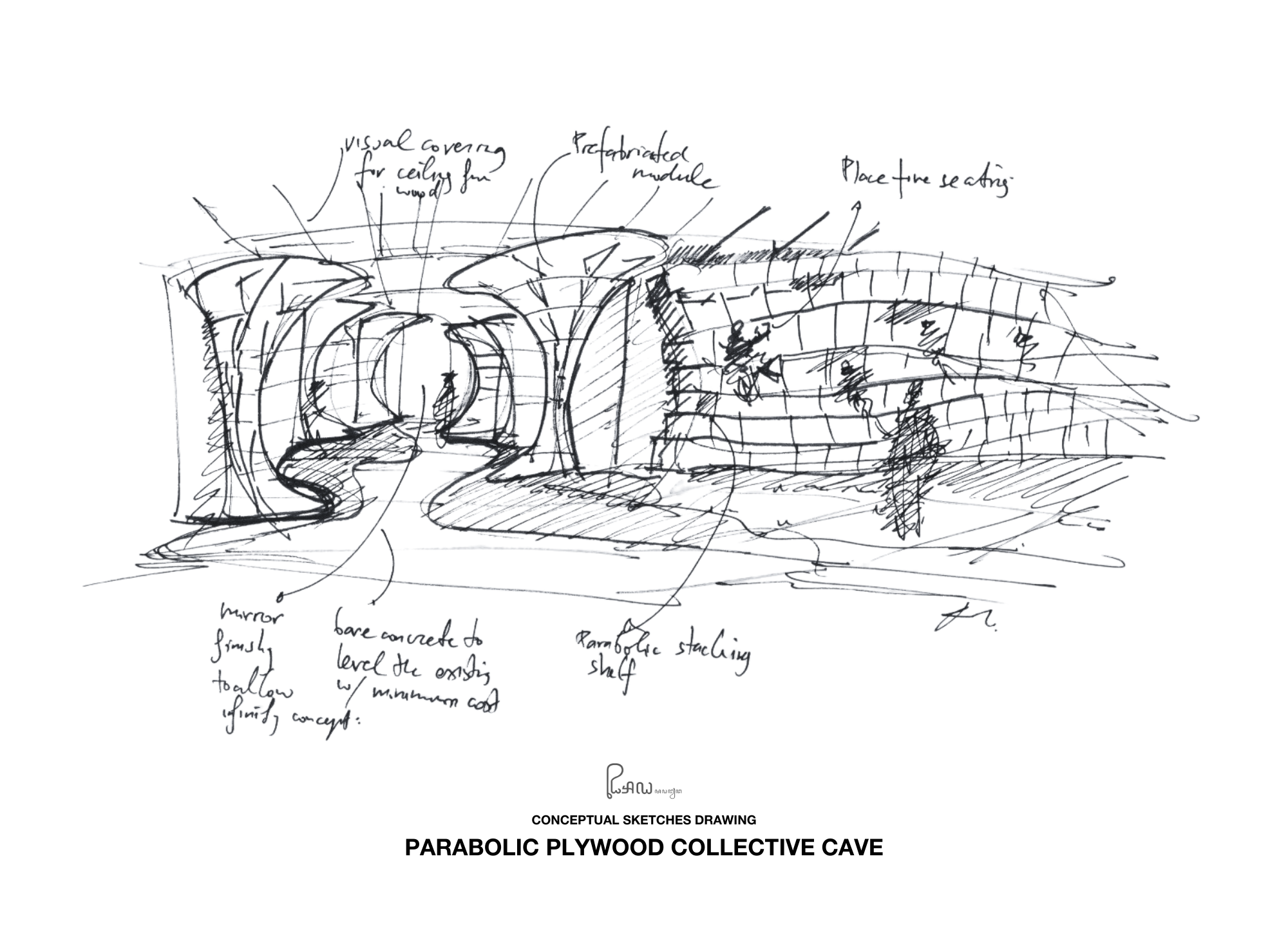
Kami berpikir untuk memberikan atap penutup melengkung seperti bukit di atas bukit. Lengkungan atap yang naik-turun tidak semuanya dibuat menyentuh lantai, sehingga tampak seperti membelah bukit, kemudian masuk dan keluar dari bukit. Atap lengkung ini didesain dengan tanaman, aliran air, dan juga jalan setapak menuruni bukit yang kemudian menghubungkan satu plaza dengan yang lain di dalamnya. Secara arsitektur bangunan ini hanya memiliki satu lantai dengan atap lengkung plywood yang sederhana.

Kategori
About Us

Studio Culture

Team Updates| Studio Culture

Team Updates + Studio Culture

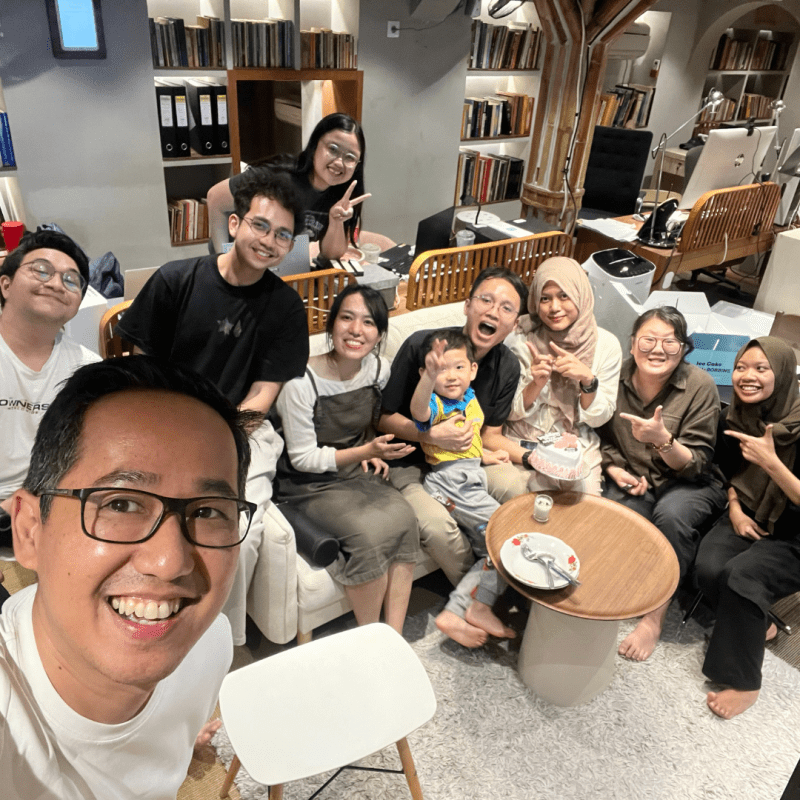
Zyadi Birthday

11 Februari lalu menjadi salah satu hari yang istimewa di studio kami. Hari itu, kami merayakan perjalanan seorang teman yang bertumbuh bersama Tim Phronesis di…

Nielson Birthday

21 Januari lalu menjadi salah satu hari yang istimewa di studio kami. Hari di mana kami merayakan perjalanan seorang teman yang tumbuh bersama Tim Techne…

Back to Genesis- Studio Garasi (Sylvanus)

Cuplikan film pendek ini merekam percakapan bersama kak @silvanusprima, berlatar di masa Studio Garasi RAW Architecture (2011–2015), sebuah periode pembentukan sikap, jiwa kebersamaan padepokan, dan…

Studio Culture – Muhammad Irfan Al Mujaddidi

Kak Irfan @almujaddidi adalah salah satu leader di RAW Architecture. Ia lulus dari @its_arch.official dan kini menjadi bagian penting dari Tim Strategic. Tim Strategic berperan sebagai pusat koordinasi seluruh…

Acha Birthday

22 Desember lalu menjadi hari yang spesial di studio RAW, hari untuk merayakan Acha, salah satu sosok yang kehadirannya memberi warna dalam keseharian kami di…

Studio Culture – Joana Agustin

Kak @joanaagustin atau yang akrab disapa Kak Mei adalah salah satu leader di studio kami. Ia lulus dari @ukmc.palembang dan kini menjadi bagian dari Tim Strategic. Tim Strategic berperan…

Aditya Birthday

Pada 9 Desember lalu, kami merayakan ulang tahun @adityakosman. Di tengah dinamika proses bekerja di studio, ada pribadi-pribadi yang kehadirannya memberi kedalaman, bukan hanya pada pekerjaan,…

Farewell Ambre + Noemie

We first crossed paths with @noemieschhand @amber_gth_ during a presentation by our principal, @rawarchiteture_best, in La Réunion. What was shared that day was personal. Yet…

Farewell Haykal

Beberapa waktu lalu, kami merayakan graduasi salah satu rekan kami, @ha.ykal. Haykal adalah salah satu rekan kami di studio yang punya banyak bacaan yang disukai.…

RAW DOT OMAH Team

Di RAW DOT OMAH, kami memiliki berbagai divisi, dan komunitas yang saling terangkai. Yang menarik adalah kami tidak melihat arsitektur sebagai semacam kotak kaca, tetapi…

Tyo Birthday

23 November menjadi salah satu hari yang spesial di studio kami—hari di mana kami merayakan perjalanan salah satu teman yang sudah berjalan cukup panjang bersama…

Zikri Birthday

Di antara dinamika ruang kerja yang terus bergerak, ada pribadi-pribadi yang memberikan pengaruh yang berarti. Mereka hadir, belajar, berproses, dan pada akhirnya meninggalkan jejak baik…

Shafira Birthday

Setiap pertemuan selalu memberikan makna berharga bagi kami, teman-teman yang baru kami temui di guha, juga teman-teman yang sudah berjalan bersama kami. Semoga dengan merayakan…

Happy Birthday Chai, Pak E, Nurul, Alya, dan Kamil

Studio kami merayakan hari ulang tahun lima orang spesial. Mereka adalah @chairunnisabels, Pak Effendi, @septia.ti, @rrianditaa, dan @ridwan.kp. Dalam ucapan selamat ini, terselip doa untuk mereka semua agar selalu…

Kenn Birthday

Tanggal 18 Oktober lalu, menjadi momen kecil yang berarti di studio kami. Di tengah ritme kerja yang padat, kami berhenti sejenak untuk merayakan perjalanan seorang…

Ezra Birthday

Beberapa hari yang lalu, terjadi momen hangat yang mengisi studio kami. Hari di mana @k.ezraa salah satu anggota tim Techne merayakan ulang tahunnya. Di hari…

Farewell Karisya, Syahid

Beberapa waktu lalu kami baru saja melepas adik-adik kami yang telah menyelesaikan masa magangnya di studio kami. Kedua adik kami ini memiliki satu kesamaan, yaitu…

Farewell Gabby, Adli, Riki, Luna, Mai, Tristan

Akhir bulan Agustus lalu menjadi akhir perjalanan belajar adik-adik kami berikut ini di program magang studio kami. Ada @carmelinagabriellah, @lunaakirn, @olgamaisha, dan @gervahoy dari Institut…

Farewell Yoshinta, Zakka & Haidar

Beberapa waktu lalu, kami kembali melepas adik-adik yang magang di studio kami. Mereka adalah @yoshintaas_, @zakkazx, dan @haidartmm, tiga nama yang hadir dari tiga kampus…

Farewell Meizzhan

Ini adik saya namanya Meizhan, dan beberapa bulan, minggu, dan hari-hari terakhir adalah hari yang spesial dan bagaimana saya harus berterima kasih atas seluruh semangatnya…

Farewell Uung

Uung @yunitauung kami memanggilnya, adalah kesayangan kami semua. Hari ini adalah hari spesial, dan bagaimana saya berterima kasih atas seluruh semangatnya di studio. Ia salah…

Farewell Unggul & Akmal

Hari ini hari yang penting ^^ With 2 of the best intern in RAW, you will be missed. Dari bulan Januari dan Februari tidak terasa…

Farewell Intern Gustav

Di tanggal 31 Januari 2025 kemarin kami juga melepas adik kami, Gustaviano, yang sudah bersama kami selama satu tahun dari Universitas Bina Nusantara. Selama setahun…

Farewell Intern Faisol

Hari-hari di studio kami dipenuhi dengan orang-orang yang tulus belajar arsitektur dan memiliki kecintaan mendalam terhadap arsitektur. Di Guha, ditempat yang terlihat sunyi ini, pikiran…

Kategori
projects

Project 04 – Guha Bambu

Guha is an combination of new and renovation project based on previously “The Guild” located in Taman Villa Meruya. The Project consist of Omah Library, Dental Clinic, residence and Realrich Sjarief’s studio named Guha Bambu, The studio is Realrich Architecture Workshop (well known by name of RAW Architecture).

The renovation section is consisted on adding sequence for adding elaborated programs for Omah Library such as  more storage for book shelves, bookstore and gallery. The circulation is designed to separate the public and private which is solved by separating the access at the entrance.

The new project, named Guha Bambu is at the east side. This building stands in the lot of 7.5 x 26 m size consisted new 3 storey Bamboo structure, 2 storey of basement. The technique to build the structure is elaborated from experimental school of alfa omega project. The technique separates the steel plane truss structure  as a roof and bamboo structure to hold the 3 floor plate under steel structure roof.

Construction of Guha is elaborated into 9 materials to sum up craftsmanship experimentation in Realrich Architecture Workshop such as : steel, wood, glass, metal, gypsum, bamboo, plastic, stone and concrete. The layout is flexible, and open while some of the rooms is opened by minimum 2 doors allowing the further scenario while the program can be changed. The idea is basically addressing the tropical climate to open north south and close the facade at west side

The Facade is basically basic material, concrete, vertical louver by steel and bamboo.  The program it self challenge the typical housing in Indonesia to be mixed with more micro business programs such as education, even coffee shop in the future by maintaining privacy and opening itself to the public. The construction is done by generations of craftsmen from west java which integrate some of traditional fish mouth joint in bamboo constructions and more modern construction method such as steel and construction.

Kategori
Project Bioclimatic House

Bioclimatic Home 04 – Istakagrha

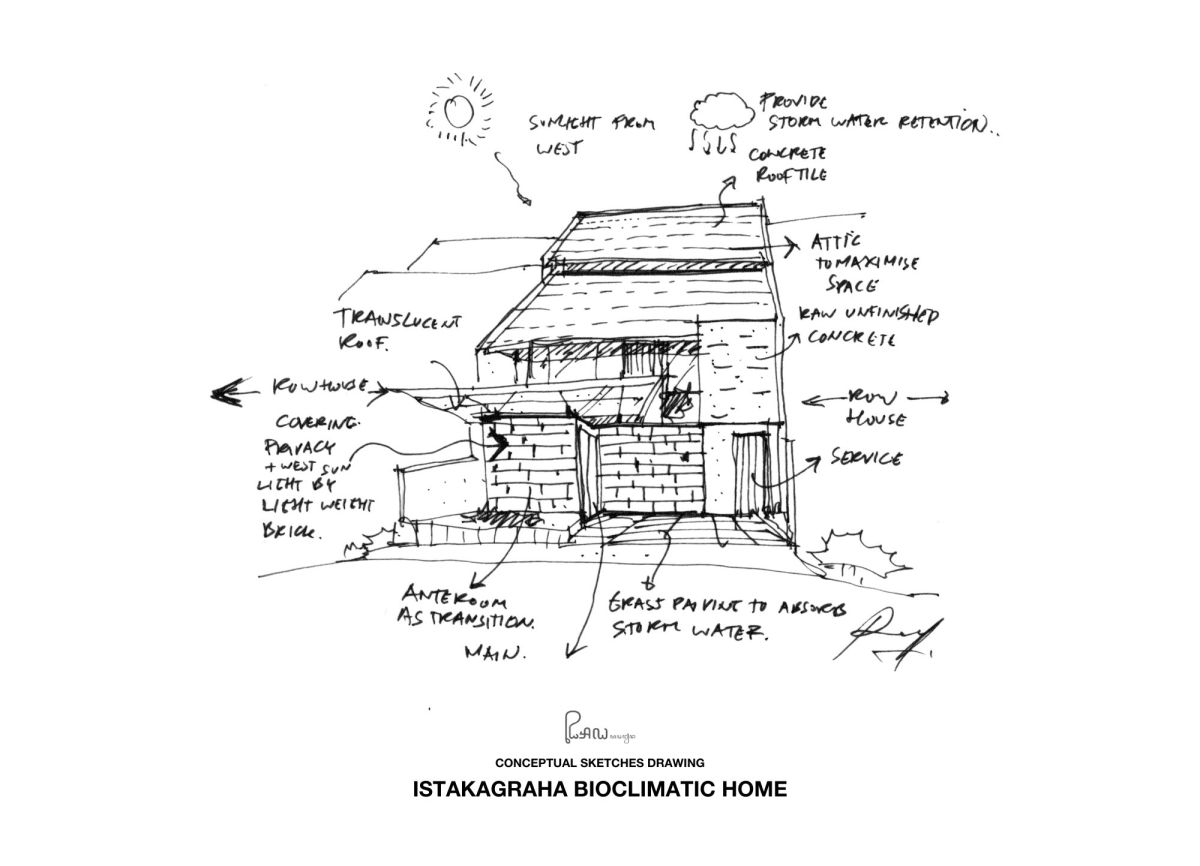
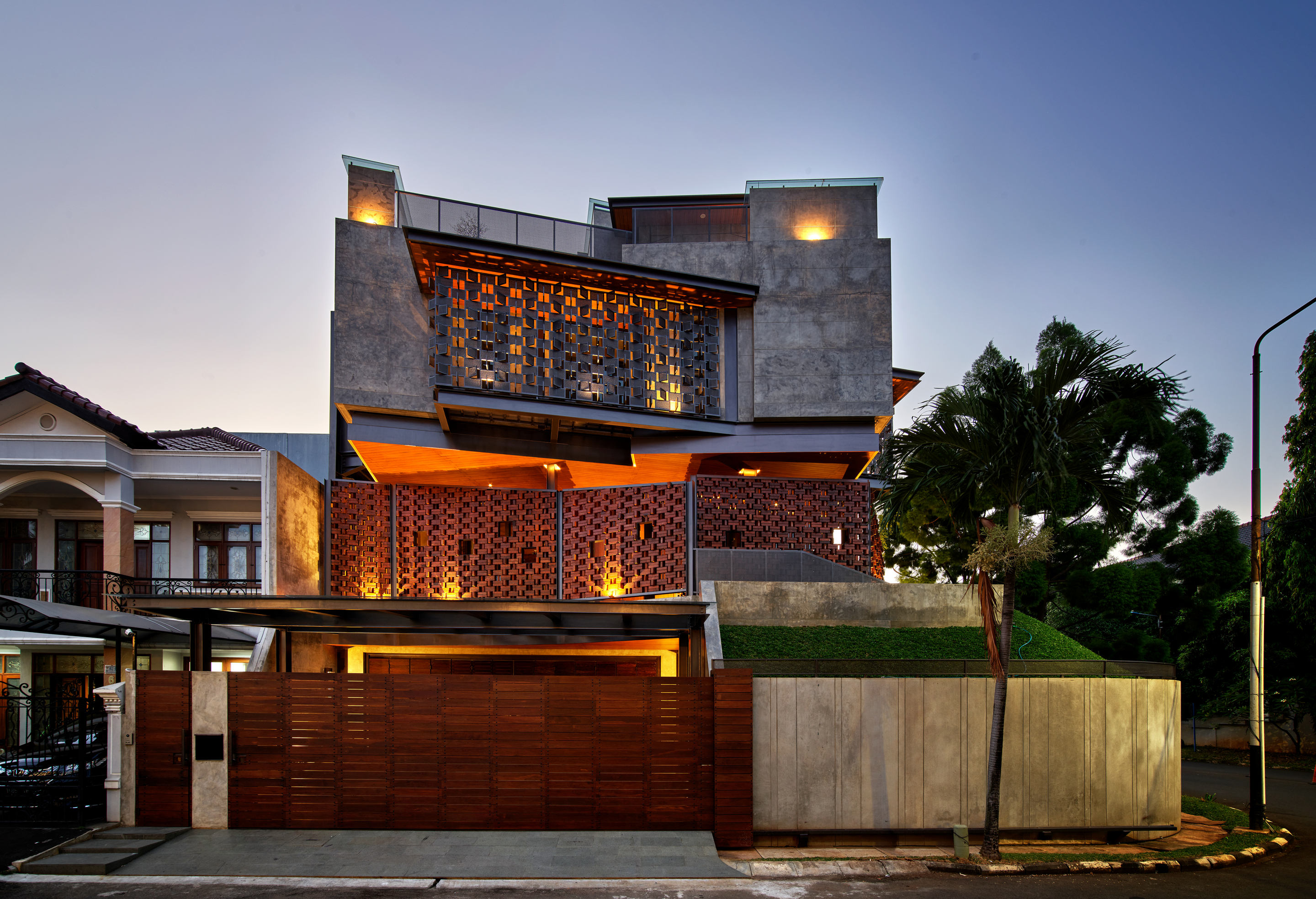
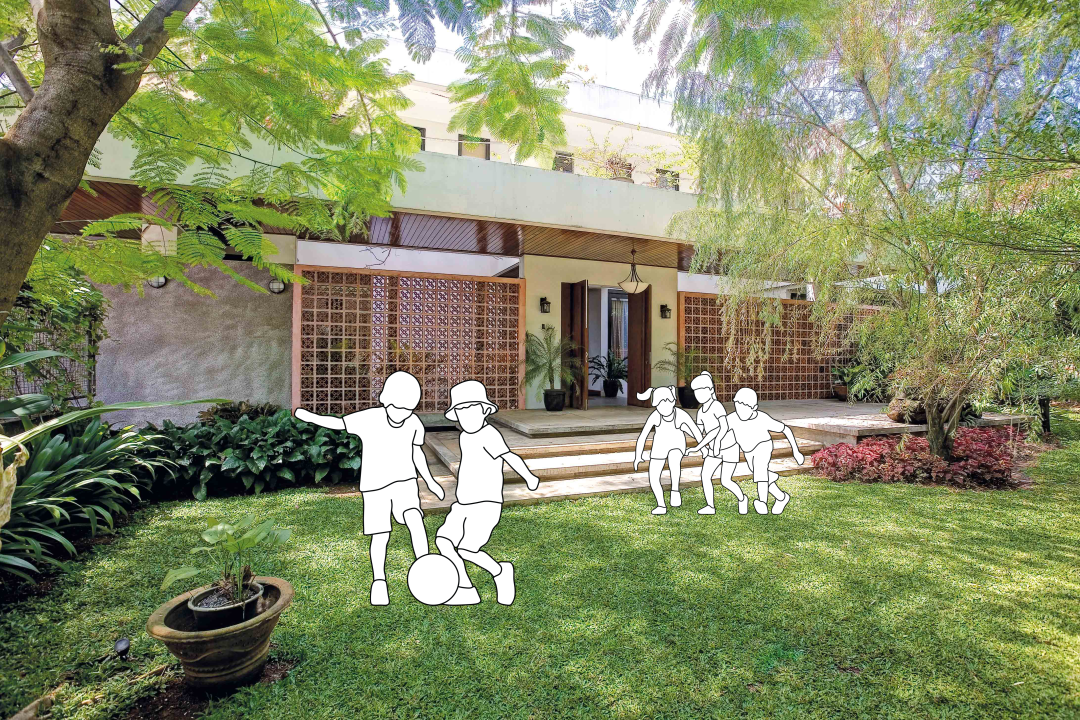
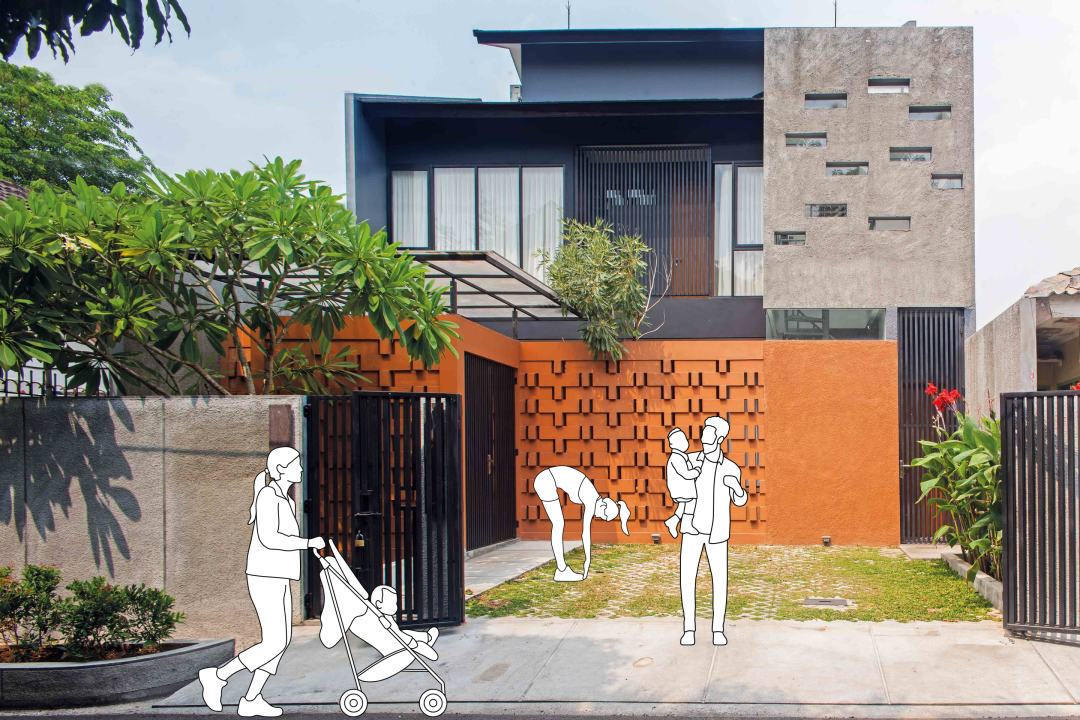
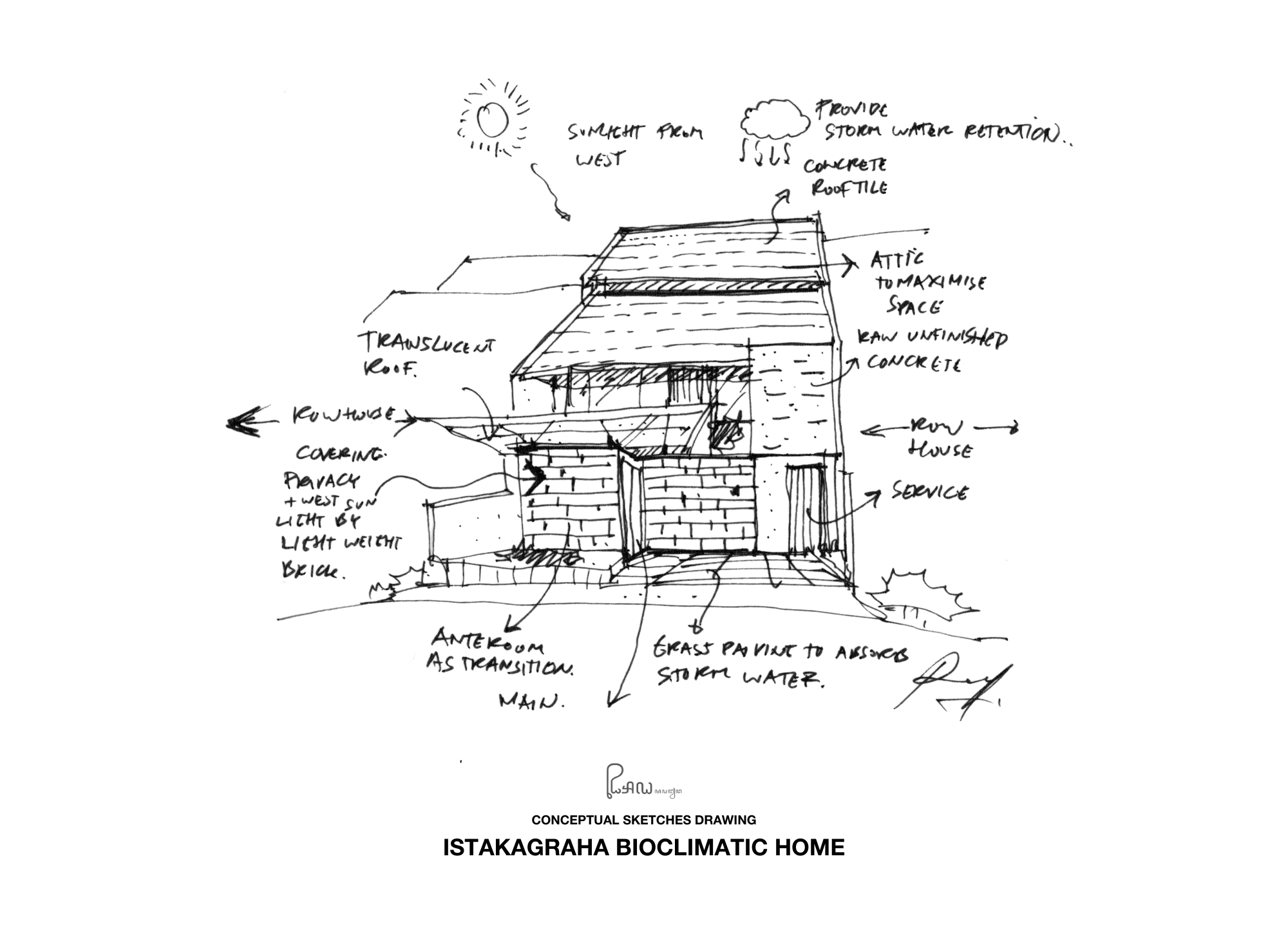
Located in Taman Meruya Ilir, West Jakarta region, Istakagrha meaning brick house, Situated in the increasingly crowded West Jakarta area, the 150 sqm house occupies a 150 sqm plot of land, 10m x 15m. Istakagrha is reflected by its name, brick House, it is a small and compact house with a orange painted color on the light weight brick, black colour , and rough concrete texture finishes.The expression creates humble and distinctive look.

“We have a dream to have a house which like a villa in Bali. A house more than a functional but a place to live and grow with feel of nature, we really love staying in tranquil house” explains homeowner Mr. Ferdian Septiono and Ms. Joice Verawati to Realrich Sjarief. The couple are graphic designer who are willing to have a compact Ecological house which is resortlike.

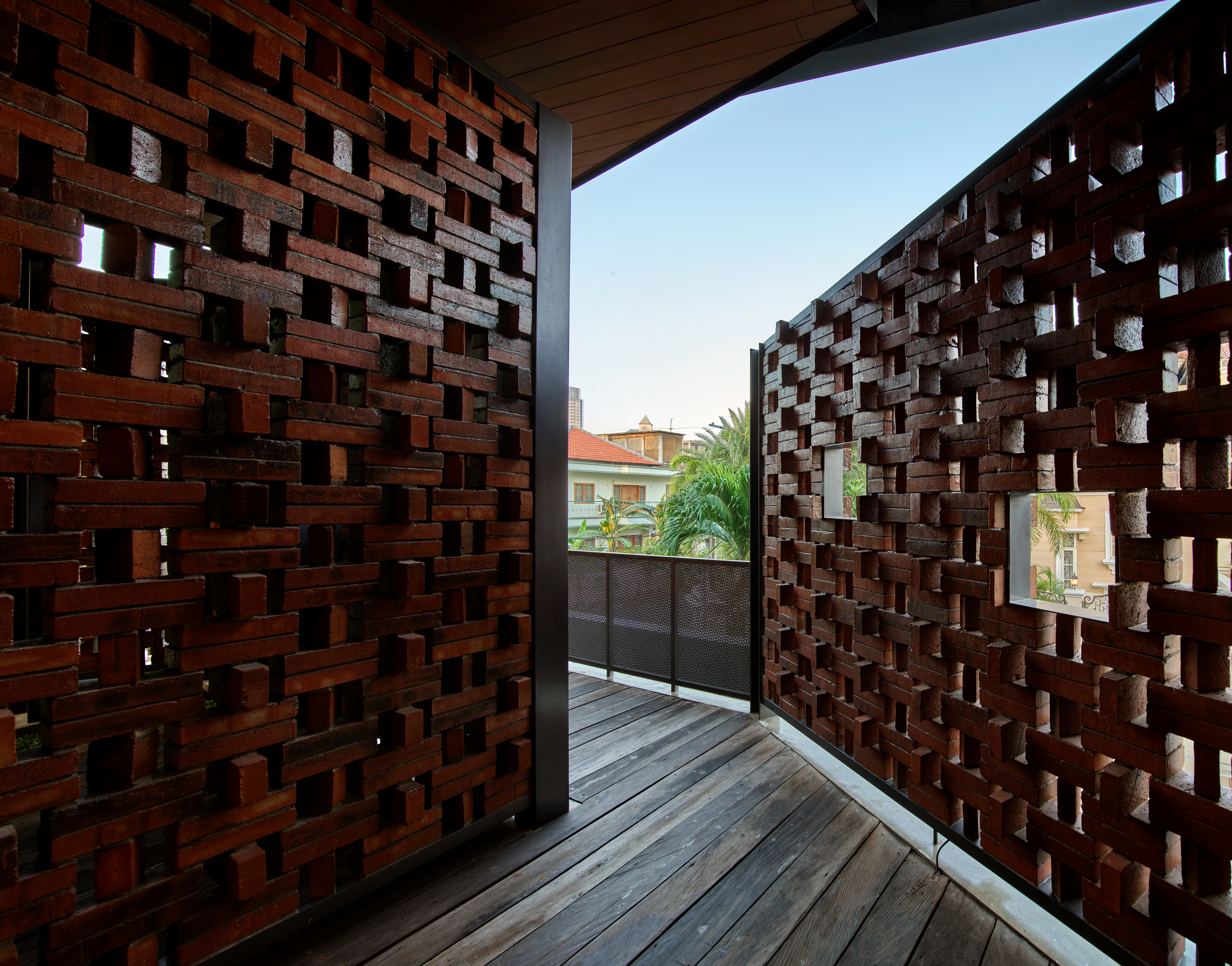
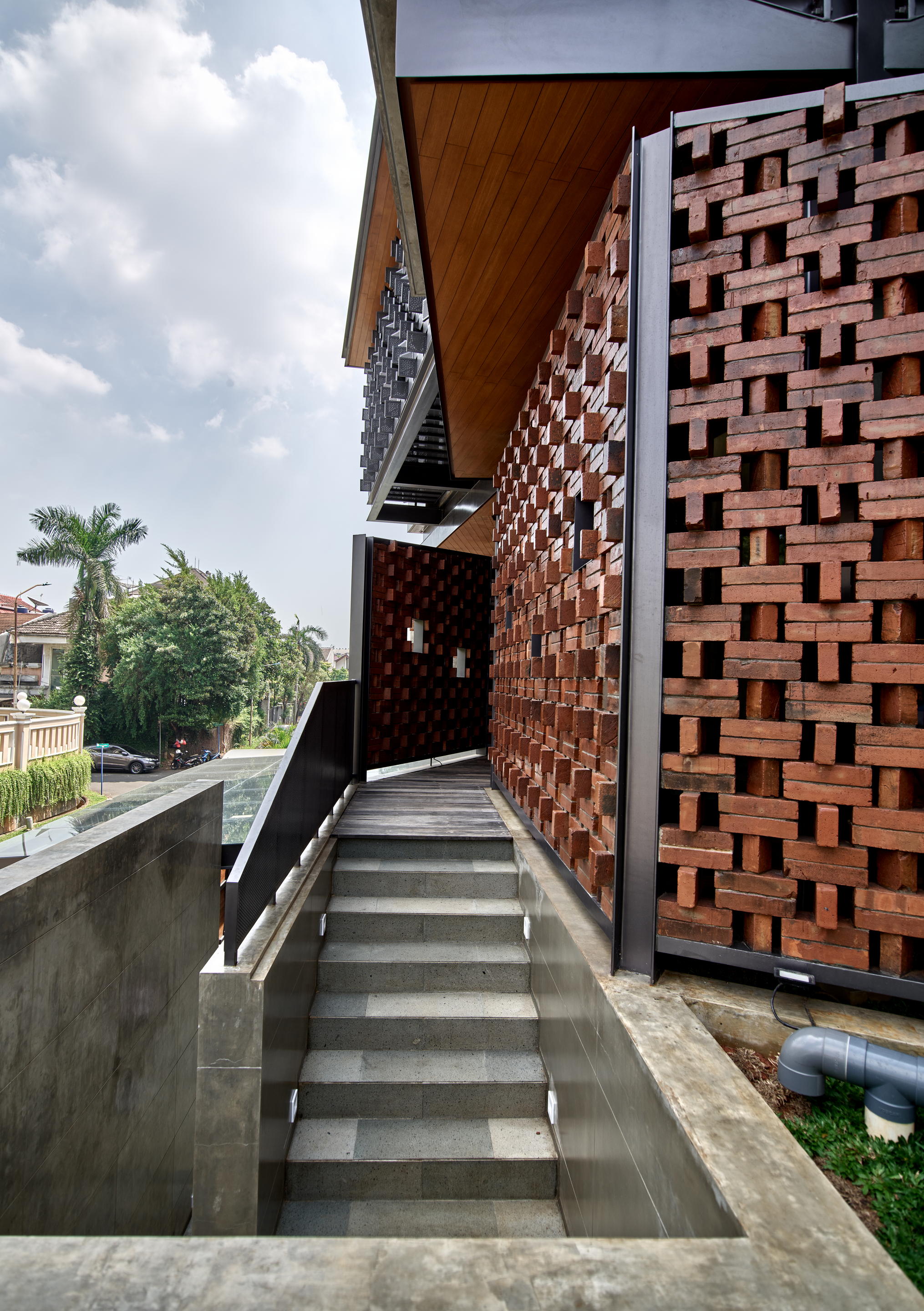
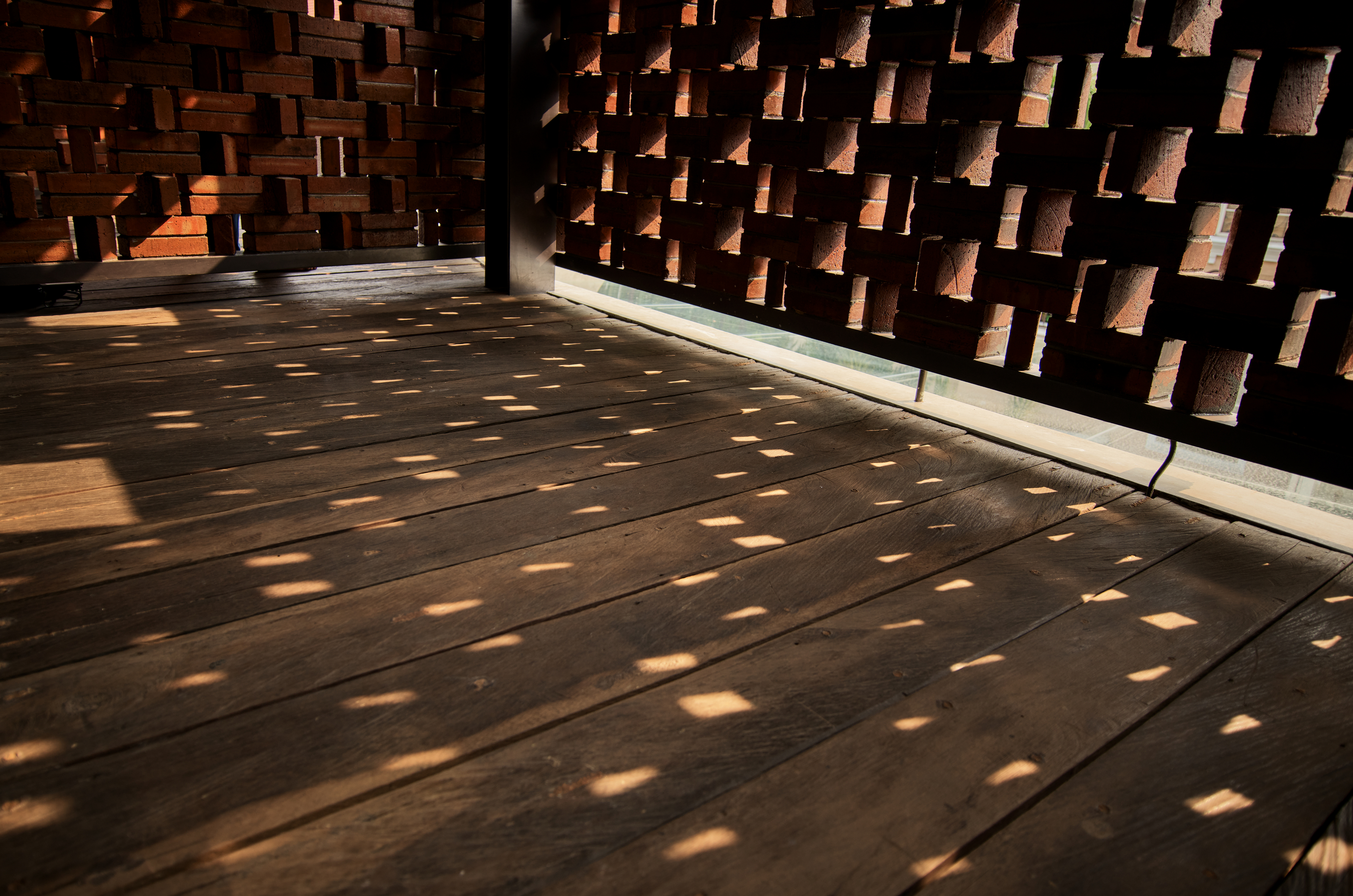
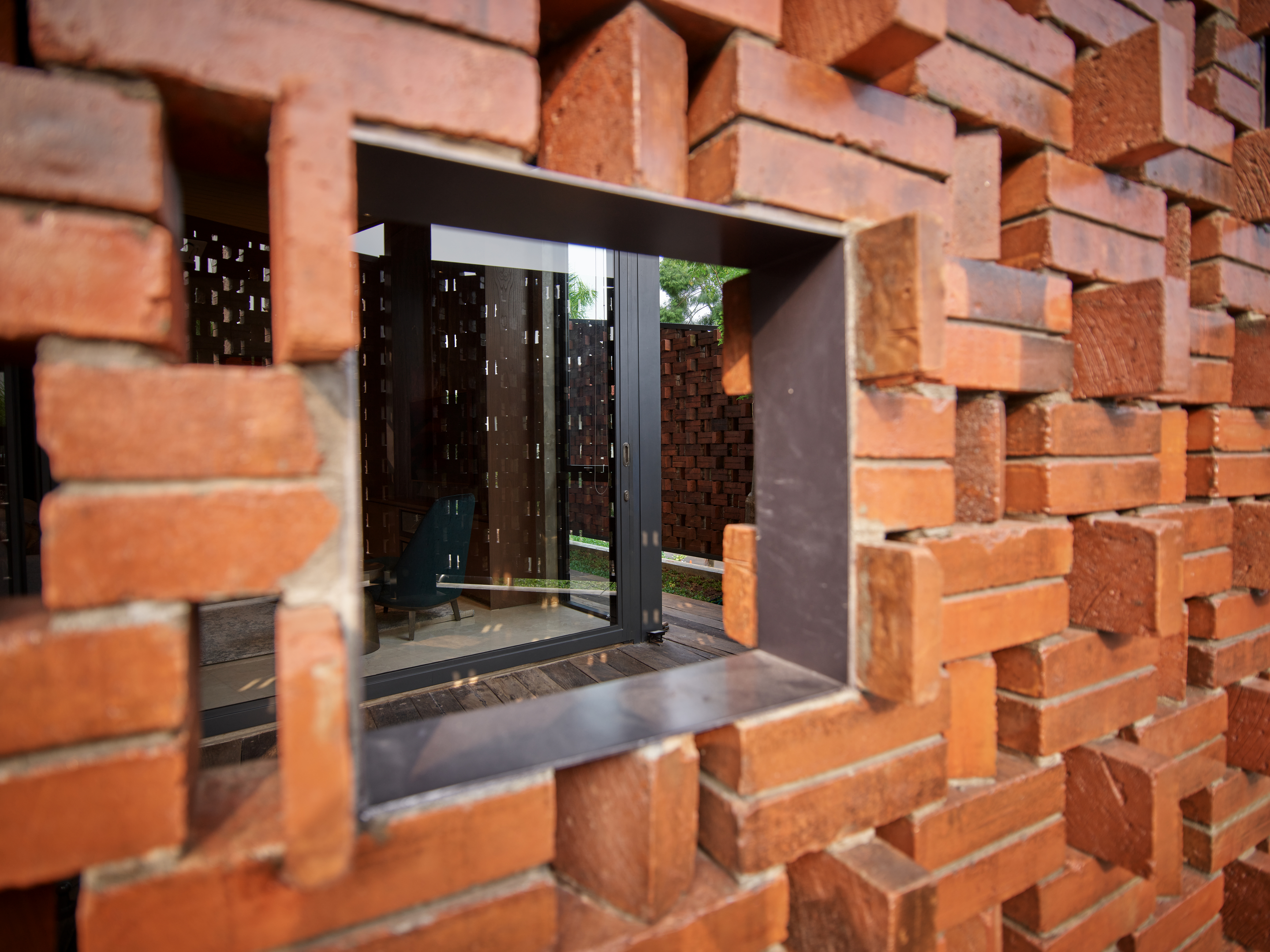
The architecture of Istakagrha separated inside and outside with the landscape of a barrier wall made by light weight brick. The combination is stacked with pattern of solid void, which provide sense of privacy and security, meanwhile allowing sunlight and air circulation to flow inside the living room. The Ecological Approach of this house elaborated from Realrich Architecture Workshop’s project such as Bare Minimalist project and the privacy design elaborated by Bris Soleil (sun breaker) elaborated from akanaka.

The house faces east side allowing morning sunlight come to the space at 9 am. The stair is placed at the west side, the west side is walled with brick to provide thermal insulation. The air ventilator is placed at the west side of the house above the stair from ground to 1st floor providing fresh air circulation through air stacking effect. The house has one open air receiving area as anteroom then no more separation wall between living, dining, and cooking which In the living room, the kitchen also takes some importance its final layout is the result of few adjustments based on the owner’s domestic habits. The only enclosed space in the second storey is guest room, which doubles as a working space and guest bed room. A simple foyer and a light well integrated with stair, and art work is placed after the receiving area at the west side of the building. The second story houses private spaces. At the end of the corridor is 1 bedroom with shared bathroom and a walk-in closet. An simple and functional feel showering area is attached to the bathroom. The material used in this building is choosed based on the best craftmenship available in Jakarta, concrete structure is used because of the cost efficiency, engineered wood is used because of the look and lightness, metal frame for facade and sunshading are used because of durability.

3 types of brick was used based on each character. First, is light weight brick, 200 x 600 x 100 mm, for the facade. Light weight brick was chosed because of the lightness, precision and can be easily molded and constructed as facade/ Second, orange brick which is most common material used in Jakarta, The third one is the ceramic brick 50 mm x 150 mm x 10 mm which is used for covering the stair wall as insulation and interior surface. An additional bedroom, bathroom and a stair way to the attic on the 1st floor is linked by a corridor leading to an open space beside the void leading to the stairwell and stair case through compact space. Istakagrha showed an example of small house in Jakarta with small plot of land with sustainable design approach and keeping privacy from out side to inside through simple form which is stacking brick.

Kategori
blog

1st Prize Teaching Hospital University of Gadjah Mada

Design dari Rumah Sakit Akademik UGM ini terinspirasi dari analogi peredaran darah dalam tubuh manusia, dimana pusat dari site diibaratkan sebagai jantung yang merupakan pusat kegiatan rumah sakit Universitas Gadjah Mada dan jalinan sirkulasi manusia sebagai struktur pembuluh darah utama yang membentuk sirkulasi di dalam massa bangunan. Kriteria rancangan yang ingin dicapai ada 3 , 1) Mengambil tema yang dekat dengan dunia kedokteran dan akademis menimbang fungsinya sebagai Teaching Hospital, 2) konfigurasi bangunan yang tropis, dan 3)mengakomodasi fungsi – fungsi sesuai dengan standar – standar yang berlaku.

Gagasan Rancangan Rumah Sakit Akademik (RS Akademik). Sebagai sebuah RS Akademik mengemban dua peran sekaligus yaitu memberikan pelayanan kesehatan umum (Standar Penyelenggaraan Rumah Sakit Kelas B yang dikeluarkan oleh Departemen Kesehatan RI Direktorat Jenderal Bina pelayanan Medik Direktorat Pelayanan Medik dan Gigi Spesialistik Tahun 2005) serta peran sebagai center for excellent dengan menggunakan forum program pendidikan dan penelitian. RS Akademik UGM akan dikelola oleh Unit Pelaksana Teknis UGM. Melalui Unit Pelaksana tersebut, RS Akademik UGM siap dikelola dan berorientasi kepada tercapainya kinerja operasional dan finansial rumah sakit yang baik dengan tetap mengedepankan fungsi sosial sebuah rumah sakit.
Disamping RS Akademik UGM sebagai RS pelayanan kesehatan umum juga sebagai RS pelayanan spesialis (misal : Pelayanan Jantung dan Kardo Vaskuler Invasive, Pelayanan Ginjal, Pelayanan Bedah Jantung, Pelayanan Mata spesialistik).

Orientasi Bangunan didesain dengan menggunakan arah orientasi bangunan Utara – Selatan. Keadaan ini meminimalisasi cahaya matahari langsung dari arah barat masuk ke bangunan dalam konteks area yang ada di daerah tropis. Pemilihan bentuk atap massa bangunan hunian menggunakan atap joglo untuk menonjolkan budaya jawa dan konteksnya untuk memenuhi konstruksi yang efisien dan mengakomodasi iklim tropis. Mengingat besarnya KDB, mengakibatkan lahan yang bisa terbangun hanya maksimal 20%, sehingga massa bangunan dipecah-pecah menjadi massa kecil. Pemecahan massa bangunan ini juga dimaksudkan untuk memaksimalkan cahaya matahari yang masuk dan penghawaan alami. Dengan memecah massa bangunan menjadi kecil maka didapat pengaturan optimum single loaded corridor.

Secara Umum, daerah hunian yang berisi rawat inap dan asrama dipisahkan dengan fungsi publik didesain secara berdekatan namun dengan pemisahan vertikal yang jelas. Fasilitas rawat inap diletakkan di lantai 2 dan fungsi public diletakkan di lantai dasar dan lantai 1. Potensi site memiliki 2 akses masuk dari sisi barat dan timur. Strategi yang di pakai untuk akses sirkulasi pemisahan daerah public di sisi barat dan daerah yang privat di sisi timur dengan pertimbangan sisi barat yang memiliki densitas lebih tinggi untuk kendaraan bermotor, Jalan sebelah barat memiliki lebar lebih besar, 12 meter, sedangkan jalan sebelah timur, 9meter. Oleh karena itu, jalur masuk utama atau umum diletakkan disebelah timur sedangkan jalur privat dan emergency masuk dari sebelah timur. Fungsi Layanan konsultasi rawat jalan diletakkan di sisi barat bangunan. Di daerah sisi barat diletakkan fungsi pelayanan poliklinik umum, poliklinik gigi, pelayanan spesialis dan radiologi. Hal ini menyebabkan daerah public diletakkan di sisi barat. Fasilitas yang terdapat di sisi timur termasuk instalasi bedah, laboratorium dan beberapa fasilitas penunjang. Fasilitas penunjang yang terdapat di sisi barat termasuk auditorium, bangunan penerima dan fungsi pelayanan. Di dalam fasilitas pelayanan sendiri terdapat poliklinik umum, poliklinik gigi, pelayanan spesialis dan radiologi. Auditorium diletakkan di daerah sisi area karena akses publik yang langsung dan dimungkinkan untuk mengakomodasi fungsi – fungsi public yang membutuhkan akses lebih cepat dan lebih besar. Fungsi Layanan konsultasi rawat jalan diletakkan di sisi barat bangunan. Pemulasaran Jenazah diletakkan di sisi belakang site, beserta dengan sirkulasi privat menuju daerah belakang seperti asrama, perpustakaan. UGD di diletakkan dekat terhadap jalan masuk darurat untuk mempermudah akses langsung mobil ambulance ke instlasai gawat darurat.

Landsekap dan ruang public terbuka.

Ruang – ruang taman diletakkan di dalam podium sebagai pelataran dalam yang dirasakan oleh pengunjung begitu memasuki Rumah Sakit Akademik Universitas Gajah Mada. Ruang taman ini juga sebagai tempat untuk membudidayakan taman obat tropis Indonesia dan selain berfungsi untuk meneduhkan , taman ini juga berfungsi sebagai tempat penelitian herbal.

Ruang terbuka publik diletakkan di lantai 2 [atap podium] sehingga menciptakan ruangan relaksasi bagi pasien dan plaza terbuka di atas langit. Dengan cara ini rumah sakit menjadi rumah sehat yang mendorong orang untuk sehat dari kegiatan relaksasi yang didiukung oleh segi arsitektural.

Principal : Realrich Sjarief
Collaborator : Meirisa Trinkawati, Mondrich Sjarief

entrancedrop-offinterior

Kategori
Projects Collective Cave

Collective Cave 05 – Rivoli Hotel

Rajutan Rivoli is a Hotel located in crowded area next to Kramat Raya street, east Jakarta, with street’s length of 50 m. It standing on a 1500 sqm land in hook position, with only 16 m width facing south and 97 m length facing west. Within early construction phase, this area had already have existing main stake columns on one floor high construction. The plan was business hotel that yet to be discussed in detail about its program.

The Hotel were designed to inject new design by splitting building masses from north-south side. The splitting achieved by few lightwell corridor, placed in linear manner that allows light to penetrates from transparent roof to first floor. Each lightwell designed in 1.0 m x 4.5 m size, installed on the highest point of the building’s 4th floor, creating a luminous bridge before entering rooms in west side.

West and east side designed to be more introvert. This achieved by a plane that weaved from imaginary line of view, resulted in forming a rationalized balcony with 2.5 m concrete cantilever width and 6.0 m diagonally. This cantilever functioned as room’s eaves that give shade on west side from 3.00 PM at noon until night.

This concrete cantilever also illuminating vista and landscape of south area, which is Kramat Raya street to Tugu Tani street and capital city’s landmark Monas. This cantilever projection also forming a passive design inside planned interior of the hotel.

This hotel designed with module of 21 sqm per room. Each divided by bathroom as 20% and 2 bedroom as 80%. The design totalled of 109 rooms on 4-7-4 m grid section long and 7.7 m width, with briefing area placed on the 1st floor of the building.

Basement area designed to receive natural light and air by cross ventilation system. Hotel corridor also designed to gain same effect from north and south area. Material design were chosen with easy maintenance and accessibility towards minimal cost due to financial situation that available within construction period. This followed by time-challenge on 15 months period, that the architect’s solution is to design building’s structure with prefabrication floor plate technology, to accelerate construction time.

Kategori
Project Bioclimatic House

Bioclimatic Home 05 – Kampono

Setiap beberapa bulan sekali pasti ada kalanya kami (saya dan Laurensia) menghabiskan waktu bersama Mirza dan Adhisty. Lingkaran pertemanan kami tadinya saya pikir tidak beririsan dan ternyata sangat beririsan, terkadang ada saja teman atau klien kami yang saling kenal.

.

Dua orang ini unik, karena apa yang kita bicarakan biasa berkutat akan kehidupan sehari – hari, keluarga, pekerjaan, sampai karya arsitektur yang termuktahir yang sedang kami kerjakan.

.

Satu saat mereka bercerita, bahwa rumah Kampono menghadap ke kiblat. Saya sendiri pernah menulis sebuah postingan tentang tangan yang berdoa. Doa yang menghadap sisi barat memberikan keteduhan, dan kepercayaan akan niat untuk berbuat baik. Di balik itu memang fasade kaca di rumah ini serta merta dihadapkan ke arah barat sisi terpanas yang juga membingkai pohon eksisting di sisi tersebut, hasilnya adalah bayangan-bayangan yang hadir mewarnai ruang keluarga memberikan ruang yang sinematik menuju sore hari.

.

Saya menulis kalimat tentang simbolisme disini , “bentuk – bentuk lengkung tersebut secara sadar membentuk symbol jari yang menapak bumi, yang menyiratkan bentuk doa di dalam konsep tangan yang sedang berdoa di dalam tarian. Di dalam proses desain iterasi bentuk lengkung banyak sekali dicoba dan digunakan dari bentuk yang liar sampai bentuk yang tidak lebih – tidak kurang dengan takaran yang pas.

.

Permainan bentuk ini dimulai dari proses pengolahan bentuk partii (susunan organisasi sub-massa) yang jelas dahulu, dan

kemudian tiap- tiap massa tersebut di acak dan disusun ulang menurut dasar kriteria seperti : proporsi ruang, arah pandangan, dan kemungkinan – kemungkinan ruang yang tidak

terduga yang terbentuk. Proses in berlanjut dengan kuantitas pilihan yang banyak, sampai terbentuk komposisi yang optimal.

.

Pendekatan ini dibahas Antoniades dan Jean Labatut di dalam pendekatan yang desain inklusif dan bagaimana perspektif yang berbeda, aktor yang berbeda berpengaruh di dalam sebuah alam kreatifitas yang membentuk kenyamanan penghuni.

.

Membentuk lengkungan adalah pemberontakan terhadap keseragaman, dan bentuk yang itu – itu saja, mendekati alam dan juga pertanda akan pemberontakan terhadap rasionalitas melalui intuisi dan percobaan desain. Di dalam

kasus ini pemberontakan dijadikan alasan untuk membuka sisi terentan di iklim tropis, dimana melalui desain justru penghuni bisa mendapatkan kenyamanan sekaligus, pandangan, bayang – bayang, sinar matahari, udara segar, dan semuanya adalah seni untuk perlawanan terhadap diri sendiri.

Di dalam alam seni hal tersebut menjadi sebuah pernyataan akan visi misi, bahwa klien percaya pada eksplorasi sang arsitek. Sebuah perjalanan seumur hidup.

Kategori
About Us

Realrich Sjarief’s Bio

Realrich Sjarief ‘s Bio | Riwayat Hidup

Realrich Sjarief ‘s Bio | Riwayat Hidup

I am just an ordinary person who likes to design, write, doing experimentation. I love to explore and meet many great people who are my inspirations. I live in Jakarta and Bandung, city and rural, in a beautiful country Indonesia. I believe that architecture can change people’s lives, human life. I came from a builder’s family. My family is a builder from a small city, my grandfather was from Samarinda, and my father was born in Lampung.

I was born in Surabaya, moved to Bali, Jakarta. Finally, I did my undergraduate studies at the Institute Technology of Bandung which I graduated in 2005, then worked for Urbane Indonesia, DP Architects, and Foster and Partners in London. I worked for many competitions when I was a fresh graduate, and sometimes I won, many times I lost. I continued my master’s in Urban Design Development at UNSW Sydney. I traveled to many countries, working on many projects to form my initial years.

In 2011, I started my office in the garage, we won several competitions, and some got built. We got several commissions, and some of them got made. Some of the build works earned nominations and winning some of them. Then, I realized that my grandfather and my father left a legacy in craftsmen’s hearts. I started to realize that there was something about the craftsmanship in the family. And I need to take care of the value. It’s a revelation of life.

My family has been a builder for three generations, 60 years of practice since Indonesia’s independence. At that time, the practice has no name. The relationship between the supervisors and laborers was intimate and personal to service some clients. The practice is well known for trust, quality, and its authentic design innovation in the mastery of building construction in Indonesia. 

Realrich Architecture Workshop | RAW Architecture revived the idea of harmonic relationship between the craftsman, designer, people, and buildings as a whole. The projects and the studio culture has become the manifestation of this belief. I put my heart into critical and creative thinking, trying to reflect what’s the best possible way to optimize the world of design.


I like to write several books with my friends, co-author, and Omah Library team. I found Omah Library as a part of the studio to bring discourse of theory and case study in public discussions and give discourse for Indonesian Architecture. There are some of publications that I put below, please have a look at it.

The studio is active in designing specific approach building that is interested in locality and craftmanship to define an architecture that is simple, humble, no pretension, and has a simple quality of transcendence. The design approach is that every building developed wholeheartedly will create a timeless, surreal, and mastery quality in its simplest form, most straightforward process with multiple perspectives.  

The achievement that I got was the collective effort from people around me. There are awards, publications, and lectures below that become our legacy that I am proud of and grateful for our current state.

In 2018, 2019, 2020, 2021, Dezeen nominated Realrich Architecture Workshop as the world emerging architect in Long listed Dezeen award and won high commendation on the Alfa Omega project.

In 2018 and 2019 Recently Alfa Omega was nominated for two prestigious awards, World Architecture Festival in Amsterdam and Fibre Award led by Laetitia Fontaine and Dominique Gauzin-Muller. In 2021, Terra Fibre Award and architizer + Award also sets the Piyandeling Artisan workshop as one of its finalists.

INDE Asia pacific design award also nominated the Guha project in its influence in 2020 and the studio as its finalist category in 2021 and 2020. In 2012, RAW Architecture’s work, Bare Minimalist, was nominated for the Indonesian Institute of Architects Jakarta Award. In 2015, the Indonesian Institute of Architects Jakarta set for the first time, National Gallery of Indonesia for the Recognition Award category. Indonesian Institute of Architects Jakarta nominated Akanaka as a finalist in IAI Jakarta Award 2017, and Omah Library won the Indonesian Institute of Architects Jakarta Award 2017. Recently The studio won IAI Jakarta Award 2020 for the Alfa Omega school.

I also taught at several universities as adjunct professors or guest lecturers and did sharings or lectures on several occasions. I learn that to learn is to teach. To be a long-life learner is what makes me happy. Below is the picture of me and my team, I wish you happy life and can enjoy beautiful architecture around you.

Greetings,

Realrich Sjarief

Kategori
projects

Project 05 – Piyandeling Artisan Residence and Workshop

Piyandeling is a new project consisting of The Residence and Artisan Workshop The concept is elaborated from the previously Realrich Architecture Workshop (well known by RAW Architecture)’s “Guha” project. Piyandeling is located in a tranquil area of Mekarwangi Village, North Bandung. 

Piyandeling adalah proyek baru yang terdiri dari residensi dan bengkel untuk berkreasi. Konsep ini dielaborasi dari proyek “Guha”. Piyandeling terletak di daerah yang tenang di Desa Mekarwangi, Bandung Utara.

Piyandeling is a new project consisting of The Residence and Artisan Workshop The concept is elaborated from the previously Realrich Architecture Workshop (well known by RAW Architecture)’s “Guha” project. Piyandeling is located in a tranquil area of Mekarwangi Village, North Bandung. 

The Residence consists of a three-storey house with a grid 3.0 x 3.0 m  for 1 family consists of 2 kid bedrooms, 1 master bedroom, and shared bathrooms. The building envelope is openable which is constructed with recycled 300 x 600 mm plastic panels to cover and protect the inner bamboo structure. The plastic panel is recycled from 99 percent Sumarah Pavilion, that is why the residence is named Sumarah.

Daerah residensi, terdiri dari rumah tiga lantai dengan grid 3,0 x 3,0 m untuk 1 keluarga terdiri dari 2 kamar tidur anak, 1 kamar tidur utama, dan kamar mandi bersama. Selubung bangunan dapat dibuka yang dibangun dengan panel plastik 300 x 600 mm daur ulang untuk menutupi dan melindungi struktur bambu bagian dalam. Panel plastik tersebut didaur ulang dari 99 persen Paviliun Sumarah, itulah sebabnya tempat tinggal tersebut diberi nama Sumarah.


The Residence consists of a three-storey house with a grid 3.0 x 3.0 m  for 1 family consists of 2 kid bedrooms, 1 master bedroom, and shared bathrooms. The building envelope is openable which is constructed with recycled 300 x 600 mm plastic panels to cover and protect the inner bamboo structure.

The envelope forms an 800 mm service corridor with double cross air ventilation and double wall insulations to the core living space of the building. This forms an adaptation of traditional and more industrial approaches mixing traditional joineries and glued joinery of bamboo. The technique is elaborated from Guha Bambu and Alfa Omega Project. which allows the experimentation of 3 storey of the bamboo structure by the diagonal bamboo structure of the floor plate construction.

Selubung tersebut membentuk koridor layanan 800 mm dengan ventilasi udara silang ganda dan insulasi dinding ganda ke ruang inti bangunan. Ini membentuk adaptasi dari pendekatan tradisional dan lebih industri yang mencampurkan sambungan tradisional dan sambungan bambu yang direkatkan. Teknik tersebut diuraikan dari Proyek Guha Bambu dan Alfa Omega. yang memungkinkan percobaan struktur bambu 3 lantai dengan struktur bambu diagonal pada konstruksi pelat lantai.

The envelope forms an 800 mm service corridor with double cross air ventilation and double wall insulations to the core living space of the building.
This forms an adaptation of traditional and more industrial approaches mixing traditional joineries and glued joinery of bamboo.

Construction of Piyandeling is designed as an exercise using 3 types of main material such as recycled plastic, a local type of sympodial bamboo, and local stone for the foundation. The composition started as an exploration on how bamboo craftsmanship integrated with modular rectangular space to create such integrated craft carving bamboo composition from the ceiling, floor, column, door handle, lock, and finishing details handcrafted in site creating art and craft composition in the whole integrated space.

Konstruksi Piyandeling dirancang sebagai latihan dengan menggunakan 3 jenis bahan utama yaitu plastik daur ulang, bambu simpodial jenis lokal, dan batu lokal untuk pondasi. Komposisi tersebut dimulai sebagai eksplorasi bagaimana pengerjaan bambu terintegrasi dengan ruang modular persegi panjang untuk menciptakan komposisi bambu ukir yang terintegrasi dari langit-langit, lantai, kolom, pegangan pintu, kunci, dan detail finishing buatan tangan di lokasi menciptakan komposisi seni dan kerajinan secara keseluruhan. ruang terintegrasi.

Construction of Piyandeling is designed as an exercise using 3 types of main material such as recycled plastic, a local type of sympodial bamboo, and local stone for the foundation. The composition started as an exploration on how bamboo craftsmanship integrated with modular rectangular space to create such integrated craft carving bamboo composition from the ceiling, floor, column, door handle, lock, and finishing details handcrafted in site creating art and craft composition in the whole integrated space.

Piyandeling is an example of bricolage architecture. It is an understanding that to design and build something out of the land, the project needs to find the roots of Local Genius by understanding the adaptation of local craftsmanship and local material available on specific sites.

Piyandeling adalah salah satu contoh arsitektur bricolage. Dimana Bricolage merupakan pemahaman bahwa untuk merancang dan membangun sesuatu dari tanah, proyek perlu menemukan akar dari Local Genius dengan memahami adaptasi keahlian lokal dan materi lokal yang tersedia di lokasi tertentu.

Kategori
Projects Collective Cave

Collective Cave 06 – Piyandeling Artisan Residence and Workshop

Piyandeling is a new project consisting of The Residence and Artisan Workshop The concept is elaborated from the previously Realrich Architecture Workshop (well known by RAW Architecture)’s “Guha” project. Piyandeling is located in a tranquil area of Mekarwangi Village, North Bandung.

The Residence consists of a three-storey house with a grid 3.0 x 3.0 m for 1 family consists of 2 kid bedrooms, 1 master bedroom, and shared bathrooms. The building envelope is openable which is constructed with recycled 300 x 600 mm plastic panels to cover and protect the inner bamboo structure. The plastic panel is recycled from 99 percent Sumarah Pavilion, that is why the residence is named Sumarah.

The envelope forms an 800 mm service corridor with double cross air ventilation and double wall insulations to the core living space of the building. This forms an adaptation of traditional and more industrial approaches mixing traditional joineries and glued joinery of bamboo. The technique is elaborated from Guha Bambu and Alfa Omega Project. which allows the experimentation of 3 storey of the bamboo structure by the diagonal bamboo structure of the floor plate construction.

Construction of Piyandeling is designed as an exercise using 3 types of main material such as recycled plastic, a local type of sympodial bamboo, and local stone for the foundation. The composition started as an exploration on how bamboo craftsmanship integrated with modular rectangular space to create such integrated craft carving bamboo composition from the ceiling, floor, column, door handle, lock, and finishing details handcrafted in site creating art and craft composition in the whole integrated space.

The Artisan workshop which is named Kujang is a two-storey floating structure for an open-air hall for meetings and gatherings connecting with organic farms. It is constructed from the 4 – 5 m grids of bamboo structure and covered with Nipah leaf combined with a waterproofing membrane for the roof. Forming the Julang Ngapak as a traditional West Java vernacular building, the playful balustrade of bent bamboo is played as a more elaborated hyperboloid form, it is stronger, and more flexible and creates a silhouette of the natural movement of birds or movement of Kujang which is a traditional weapon in Sunda Tradition.

The other building (named saderhana) is basically a simple 1 storey of two buildings on the perimeter as dentist space, and design studio, and the underground space. The 1 storey building was constructed with stone as a platform and bamboo as a roof providing a “Talahap” / overlapping curve traditional bamboo construction covered with layers of waterproofing membrane and Nipah. The underground studio is constructed with bamboo skeletal and concrete which forms a retention wall and carved bamboo shape formworks. The idea is creating finishes that are raw, basic, humble, and honest in the expression and forming such economic sensitivity.

Piyandeling is an example of bricolage architecture. It is an understanding that to design and build something out of the land, the project needs to find the roots of Local Genius by understanding the adaptation of local craftsmanship and local material available on specific sites.

Kategori
projects

Project 06 – Piyandeling (Kujang)

Kujang is another building from the whole of Piyandeling complex. This building is a two-floored building with a large open hall that is used for workshops or meetings.

Imagine-Bacteria

Upholding local vernacularity, Kujang is stretched out with its materials that consist of natural fiber or bamboo for its main structure and daun nipah as the coverage of its roof. The roof is shaped the familiar triangle as an expression of Indonesian vernacular architecture that creates a silhouette of a mountain.

Imagine-Bacteria
Imagine-Bacteria

The bamboos are transformed into balustrades with unique and aesthetic geometry. Not only does it appeal to the eyes, the geometry is also designed such that it will add the overall strength and rigidity of Kujang’s structure.

Imagine-Bacteria
Imagine-Bacteria
Imagine-Bacteria

The programming of the building requires the surface of its building to contact the earth as minimally as possible. As a solution, Kujang is also designed with a floating structure underneath. This solution also acts as a response to the environment of the site that faces struggle in gathering clean water caused by water pipes that are not accommodating enough. With its floating structure, waters are ensured to follow directions to the land.

Kategori
Project Bioclimatic House

Bioclimatic Home 06 – Puri Wirawan

Yang menarik di rumah ini adalah teknik Memecah massa menjadi 3 bagian yang berbeda, dengan tidak menempel pada dinding samping. Diluar seluruh teknik aristektural, rumah ini juga menjadi representasi budaya toleransi yang terdapat di dalam rumah Indonesia, beberapa generasi yang bisa tinggal bersama di dalam satu rumah. Hal ini ditandai dengan pengelompokan ruang tidur dengan kamar mandi dalam dan memiliki break out spaces di koridor dan ruang keluarga yang bisa menampung lebih dari 20 orang di dalam program ruang.

Om Frans adalah orang yang saya temui setiap kali membahas rumah ini, dari dia kami banyak berdiskusi berdua mengenai pembiayaan, materialitas, kehidupan dan mimpinya untuk keluarga besarnya. Di dalam diskusi ia juga kerap mengajak anggota keluarganya dan menyebutkan referensi-referensi yang dimilikinya. Ia berdiskusi dengan santai, dan melakukan observasi dengan cermat, ia mampu membaca situasi melalui tabel – tabel komparasi meskipun ia tidak memiliki latar belakang ilmu bangunan, ia mendengarkan dan mau menerima banyak hal baru.

.

Di dalam perjalanan mendesain rumah tersebut, saya belajar bahwa masalah data, pembiayaan, skedule, dan menjaga hubungan dengan keluarga menjadi sangat penting untuk membuat sebuah karya yang kolaboratif dan iteratif.

.

Di masa- masa terakhirnya om Frans masih sempat membahas mimpi2nya tentang anaknya. Di dalam rasa sakit yang terus menerpanya, ia masih perhatian pada keluarganya. Begitupun ayah saya sedang sakit sekarang, dan situasi di dalam keluarga tidak mudah, tekanan muncul atas bawah kiri kanan, kami secara keluarga harus kuat. Maju kena mundur kena, dari masalah tulang, parkinson, saluran makan, dan saluran nafas. Dad, masih saja bisa mengelus kepala kami.

.

Dari situlah peran keluarga di dalam program arsitektural menjadi penting, mengolah kedekatan supaya kuat menjalani hidup bersama – sama, dari kelahiran, proses menjadi dewasa, dan tua dengan tetap menjalani yang berkualitas. Postingsn instagram bukanlah hanya sebuah puja puji saja tetapi sebuah sarana melakukan kebaikan. Di dalam sebuah karya yang kadang terlihat megah ada cerita yang dalam mengenai kehidupan. That is our mission in this crazy digital world.

Kategori
Project Bioclimatic House

Bioclimatic Home 07 – Tresno House

Located on the outskirts of Tangerang, Karawaci, one of the cities next to Jakarta, Tresno is the design of a simple tropical house in Jakarta. It’s simultaneously designed by the Geomancy principle creating 9 squares of the grid which forbids and allows some functions in the zoning such as the area of the north is for master bedroom and south for the kid’s bedroom. The squares consist of the 3.6 m x 3.6 grid in 9 square boxes with cantilevered space to allow pool, garden, and connection from ground floor to 1st floor flows from service level on the ground floor to living level on 1st floor and at the end to more private level on the 2nd-floor plan. The orientation of the sunlight is studied so the exposure is minimum from the west side facade by having a solid wall and minimum opening. the ground floor and 1st-floor functions to open to the garden. The landscape of “The Pucuk Merah trees” functions as barrier sunlight, and creating a microclimate in the periphery of the site providing microclimate.

At the center of the house, there is a skylight design based on the elaboration of the Tumpang Sari technique which was done in Guha. Basically it is a way to provide air stacking effect to cool the inside atrium space. The atrium connects bedrooms, kitchen, living room. Tumpang Sari is a form of traditional Architecture in Java, that the house is an act of prayer towards life for positive contribution, no pretension, life learning. In this case, the learning curve of understanding the basic needs of grids, modules, and atrium functions are key aspects.

The design uses craftsmen who polished the concrete from the previous projects such as The Guild project before with module 600 mm width x 1200 mm, length to avoid cracking between joints. The steel welder who comes from Subang, West Java combines the lightness of perforated metal and crafted to create a layer of shadow and privacy. The perforated steel is positioned as wall and floor plate in the indoor mezzanine level and outdoor balcony. An idea is a functional approach plus expression raw, rough, and honest material in combination with steel, concrete, and wood plus landscape and lighting and at the end in a combination of tradition.

Kategori
projects

Project 07 – Piyandeling (Sederhana)

Sederhana is another building from the whole of Piyandeling complex. This building is a one-floored building, just like its name, which is more simplistic than Sumarah and Kujang.

The building is constructed with stone as a podium. Still using bamboo as its main materials, bamboo is used to construct its roofs. The method to make its roof is called Talahap which is a traditional bamboo construction made from layering it on top of each other. The bamboo would then be layered with a waterproof membrane and nipah.

Kategori
Projects Collective Cave

Collective Cave 07 – Kumparan Office

Kali ini kami mengerjakan kantor Kumparan, pengerjaannya menarik karena ada di bangunan lama milik dari mantan gubernur Jakarta yang legendaris Ali Sadikin. Ruang – ruang eksisting memiliki keterbatasan yang ekstra ketat karena tinggi langit – langit yang pendek, struktur dan finishing arsitektur seperti kolom yang perlu dijaga.

Saya berbincang – bincang dengan mas Hugo untuk kepentingan ekstensionnya, bahwa mereka memerlukan tempat yang fleksibel, bekerja sekaligus bisa rapat, juga bisa diperlukan untuk ruangan – ruangan lain yang privat sekaligus publik. Kami menghabiskan cukup banyak waktu untuk melihat arah desain Kumparan dan kemudian mengusulkan area – area privat di sisi perimeter dan ruang kerja / meeting diletakkan di sisi tengah dengan detail yang melengkung, yang merepresentasikan bentuk U, seperti magnet yang dimiliki oleh Kumparan.

Kategori
blog projects

Project 08 – Lumintu

Lumintu House is located in the residential area of Pantai Indah Kapuk 1 (PIK 1), North Jakarta. The building is constructed on a landfill site near the beach, where daytime temperatures can reach 35 – 40 degrees Celsius.

Positioned in a corner, the house strategically places its main door diagonally, giving the impression of two front facades, with a steel lattice extending from above and gently curving outward, offering additional shade to the porch. Credit: Aryo Phramudhito

Rumah Lumintu terletak di kawasan perumahan Pantai Indah Kapuk 1 (PIK 1), Jakarta Utara. Bangunan ini dibangun di atas area landfill yang dekat dengan pantai, di mana suhu siang hari bisa mencapai 35 – 40 derajat Celsius.

To address these challenges, the design strategy focused on using steel lattice to protect the building from direct sunlight. Steel was chosen for its strong durability, low maintenance, and ease of construction. The concept of “Lumintu,” meaning sustainability and flow, is reflected in the design of the steel lattice arranged like branches extending outward to form a canopy, creating an atmosphere akin to sitting under a tree. This canopy not only enhances the comfort of the residents but also protects the surrounding plants.

This canopy also provides comfort for the surrounding plants, protecting them from excessive sunlight. It forms a gentle and continuous transition, reflecting the philosophy of “Lumintu.”
Credit: KIE

Untuk mengatasi tantangan tersebut, strategi desain difokuskan pada penggunaan kisi-kisi baja untuk melindungi bangunan dari sinar matahari langsung. Baja dipilih karena daya tahan materialnya yang baik, perawatan yang rendah, dan kemudahan dalam proses konstruksi. Konsep “Lumintu” yang mengartikan keberlanjutan dan aliran, tercermin dalam desain kisi-kisi baja yang disusun menyerupai cabang-cabang pohon yang menjulur ke luar membentuk kanopi, menciptakan suasana seperti berada di bawah pohon. Selain meningkatkan kenyamanan penghuni, kanopi ini juga melindungi tanaman di sekitarnya.

Local craftsmen employed traditional techniques, bending each steel component individually to ensure quality and imbue the building with a distinctive touch. The meticulous attention to detail in shaping each component reflects the craftsmen’s skill in blending modern construction with traditional techniques, thereby enhancing the overall value and character of Lumintu House.

Para tukang-tukang lokal menerapkan teknik tradisional, membengkokkan setiap bagian baja satu per satu, untuk memastikan kualitas dan memberikan sentuhan khas pada bangunan ini. Kecermatan terhadap detail dalam membentuk setiap komponen ini mencerminkan keterampilan para tukang dalam memadukan konstruksi modern dengan konstruksi tradisional yang juga meningkatkan value dan karakter dari Rumah Lumintu secara keseluruhan.

Spatially, the arrangement of the family room in Lumintu House adopts an open-plan concept that integrates outdoor and indoor spaces. This large family room is connected to a pool to maintain the building’s temperature and provide views from the central area of the house, creating a seamless spatial experience while maximizing air circulation. This spacious family area also reflects Indonesian family culture, where gatherings with extended family are common. This cultural consideration influenced the decision to place a spacious, column-free main space on the ground floor.

Continuity in design is evident throughout the interior, with curved walls seamlessly integrated. The family room, located opposite the kitchen island, basks in natural light streaming through a large opening, blurring the boundaries between indoor and outdoor spaces.
Credit: KIE

Secara spasial, penataan ruang keluarga di Rumah Lumintu mengadopsi konsep open-plan yang memadukan ruang outdoor dan indoor. Ruang keluarga ini terintegrasi dengan kolam untuk tetap menjaga suhu bangunan dan memberikan pemandangan dari area tengah rumah, menciptakan pengalaman ruang tanpa batas sekaligus memaksimalkan sirkulasi udara. Ruang keluarga yang luas ini juga merupakan cerminan dari budaya keluarga Indonesia, dimana berkumpul dengan keluarga besar adalah hal yang umum. Hal ini juga menjadi pertimbangan utama bagi klien, yang mempengaruhi keputusan untuk menempatkan ruang utama yang luas dan bebas kolom di lantai dasar.

The house also features high ceilings that naturally cool the interior, even without air conditioning. Skylights are strategically installed for optimal natural lighting, and ventilation holes lined with wire mesh allow fresh air into the house while keeping insects out, particularly at night. Service areas in the house are consolidated into one corridor to optimize space efficiency. Lumintu House also includes a roof garden to assist with heat insulation and provides a space for family relaxation while enjoying nighttime views. From the rooftop, residents can also enjoy views of the nearby sea.

Rumah ini juga dilengkapi langit-langit tinggi yang secara alami menyejukkan, meski tanpa AC. Skylight dipasang secara strategis untuk memberikan pencahayaan yang optimal, dan terdapat juga lubang ventilasi yang dilapisi kawat untuk memungkinkan udara segar masuk ke dalam rumah sekaligus mencegah masuknya serangga, terutama di malam hari. Di rumah ini, area layanan dikonsolidasikan menjadi satu koridor untuk mengoptimalkan efisiensi ruang. Rumah Lumintu juga memiliki roof garden untuk membantu dalam insulasi panas, serta memberikan ruang bersantai bersama keluarga sambil menikmati pemandangan saat malam hari. Dari rooftop ini, penghuni juga bisa menikmati pemandangan laut yang terletak tak jauh dari lokasi.

Lumintu House is an example of a project that embraces diverse craftsmanship techniques, empowering local craftsmen without relying on expensive factory production. The collaboration between craftsmen, architects, and structural consultants, along with active client involvement during the design process, enriches its architecture and reflects a deep connection with its surrounding environment.

Rumah Lumintu adalah contoh proyek yang mencakup keberagaman teknik ketukangan, dengan memberdayakan pengrajin lokal tanpa memerlukan produksi yang mahal dari pabrik. Kolaborasi antara tukang, arsitek, dan konsultan struktur, serta keterlibatan aktif klien selama proses desain, memperkaya arsitekturnya dan mencerminkan hubungan mendalam dengan lingkungan sekitarnya.

Project Credit :

Completion Year: 2022
Gross Built Area (m2/ ft2): 898.63 sqm
Project Location: North Jakarta, Indonesia

Lead Architect : Realrich Sjarief

Design Team : Alim Hanafi, Joana Agustin
Support Team : Rico Yohanes, Aqidon Noor Khafid, Sharfina Nur Dini, Sofiana Estiningtya, Pandu Nazarussadi
Prefinishing Design Team: Erick, Septrio Effendi, Miftahuddin Nur Hidayat, Kanigara Ubazti Putra, Fadiah Nurannisa, Tirta Budiman, Larasati Ramadhina

Photographer | Photo Credits: Aryo Phramudhito, KIE Arch

Senang sekali dan bersyukur atas kesempatan terlibat dalam salah satu proyek paling menantang di RAW Architecture. Dalam proyek ini, saya menikmati setiap prosesnya dan banyak belajar dari berbagai aspek. Saya terlibat aktif dalam diskusi yang hampir berlangsung setiap hari, baik dengan klien maupun dengan tim di lapangan. Tantangan yang dihadapi tidak hanya terkait dengan penyelesaian masalah teknis dalam desain-desain eksperimental, tetapi juga bagaimana menyinergikan berbagai pemikiran dari kepala-kepala tim di lapangan untuk mencapai tujuan bersama yang telah diamanatkan oleh klien.

Penyelesaian masalah desain dan konstruksi dengan anggaran yang seefisien mungkin memaksa kami untuk berpikir dan bertindak secara kreatif. Selain itu, pengelolaan data dan informasi yang terus mengalir dan berkembang setiap waktu menjadi tantangan tersendiri. Kami dituntut untuk mensinkronkan data lapangan, gambar, serta pemikiran secara efektif, mengingat keterbatasan waktu dan energi. Dari pengalaman ini, saya mendapatkan banyak pembelajaran berharga yang memperkaya kemampuan saya dalam menghadapi situasi kompleks di lapangan.

Alim Hanafi

Saya sangat senang dan bangga atas prestasi yang sudah dicapai RAW sampai saat ini. Semoga seterus RAW makin mengibarkan nama baiknya dan semakin besar. Sukses terus RAW dan team. Saya selaku alumni berterima kasih atas kesempatan yang pernah diberikan RAW pada saya. Ini kabar yang sangat menyenangkan. Lumintu house akhirnya selesai dengan apik!

Fadiah Nurannisa

Tadi habis liat juga di designboom nya jadi flashback keinget gimana dulu eksplorasi yang dilakuin sama temen2 RAW dan gimana elaborasi nya ke tim lapangan (dulu sama pak Endang dkk), senang liat dokumentasi akhirnya keliatan fulfilling dari semua effort yang dilakuin. Sukses selalu juga buat kak Rich dan temen2 RAW ya, looking forward to be back visiting guha 😁

Tirta Budiman

Cerita2 waktu proses designnya waktu itu sebenernya sempat ganti2 yg ngerjain. Gw inget d akhir2 kerja d RAW itu megang banyak lebih bagian konstruksinya. Gw itu terakhir megang waktu konstruksi sampe mulai nge cor lantai 2 kalo gak salah,

Ngerjain project rumah itu excited bgt sih karena rumah itu untuk dr luasan besar, lalu segi struktur juga lumayan advance dan waktu itu banyak belajar interdisiplin.

Salah satu pengalaman berharga itu adalah tetangga lahan kita sesuatu hahaha. Jd kita banyak juga ngehadapin masalah non technical ya dikonstruksi.

Tp kita jadi belajar juga design dan kegiatan konstruksi kita itu bakal berpengaruh ke tetangga di sebelah, jadi perlu d pikirin juga. Kalo masalah desain sih rumah ini jadinya lumayan jauh sih dr desain awal. Tapi facadenya jadi lebih bagus dari sebelumnya. Sama dulu sering ada monyet datang ke lahan haha. Gak tau monyet darimana.

Miftahuddin Nurdayat

Lumintu adalah proyek ke-3 yang saya alami dalam pekerjaan saya di studio RAW. Saat itu saya Bersama dengan kolega, sekaligus senior saya saat itu yakni Icha mencoba membuat tracing lengkungan kolam renang dimana sebelum di lakukan pengecoran sangat diperlukan untuk menjaga bentukan yang presisi. Dan ada beberapa pekerjaan juga yang terlibat didalamnya seperti pembuatan canopy rooftop, pembuatan kolam ikan rooftop dan lain-lain. Walaupun tidak terlalu lama ikut dalam proyek Lumintu ini, tapi menurut saya proyek ini sangat berkesan untuk saya.

Menurut saya ini adalah salah satu proyek yang sangat ekploratif yang pernah dilakukan oleh Kak Rich. Jendela yang memiliki bentuk seperti lengkungan yang tidak biasa, seperti lengkungan yang dibuat dari tali yang ditarik menyerupai bentuk parabolic atau biasa disebut catenary. Bentuk pintu yang terlihat rata dan kotak dari tampak depan, namun ternyata pintu tersebut tidaklah rata tapi berbentuk lengkungan, karena mengikutin sudut bangunan. Dan yang lebih menakjubkan menurut saya adalah saluran lubang-lubang Udara yang diciptakan melalui vent cap karena merespon iklim Jakarta utara yang lebih lembab dan sangat panas.

Saya sangat bersyukur bisa mengikuti sedikit dari proses pembanungnan rumah ini. Rumah ini sangat berkesan buat saya, dan jika diperbolehkan saya pasti akan studi Kembali rumah yang didesain kak rich ini, karena begitu unik dan menarik untuk dijadikan inspirasi. Semoga rumah dengan tingkat kesulitan yang amat rumit ini terus dapat menjadi pembelajaran bagi saya sebagai desainer muda untuk belajar berexplorasi dengan dasar mewujudkan impian klien yang dilakukan oleh Kak Rich. Sukses terus untuk Kak Rich dan studio RAW, karya-karya luar biasanya akan selalu ditunggu.

Rico Yohanes

Kategori
Projects Collective Cave

Collective Cave 08 – Parabolic Plywood

Desain dari Puncak Keemasan Office ini diinspirasikan dari unsur – unsur alam yang membentuk pepohonan kayu yang modular yang fungsional untuk menopang partisi dan langit – langit yang terekspos sehingga memudahkan perawatan.

Desain kantor ini mengakomodasi 6 perusahaan yang berbeda di dalam satu payung utama. Program mencakup ruang meeting yang besar, sedang dan kecil, ruang bermain dan perpustakan, ruang serba guna, studio rekaman, ruang administrasi, ruang briefing, dan juga ruang direktur.

Kategori
Project Bioclimatic House

Bioclimatic Home 08 – Pluit

Rumah ini terletak di Pluit, merupakan rumah satu keluarga pedagang, pebisnis yang menginginkan sebuah sanctuary. Kamar-kamar dirumah ini lumayan banyak, satu diatas, lantai mezanin satu, diatasnya lagi ada dua kamar. Jadi totalnya ada lima kamar didalam rumah yang ukurannya relatif kecil.

Rumah ini merupakan proyek renovasi, struktur lamanya tidak dibongkar sama sekali. Jadi kami relayout dan memasukkan cahaya melalui lubang-lubang void yang ada. Disebelah kiri ada kamar mandi yang diapit oleh udara. Ruangnya blong-blong, ketika naik tangga keatas baru ada tempat kerja orang tuanya. Jadi ruang berkumpul bersama anak-anaknya, ditengah-tengah ada ruang kerja dan ada void juga.

Ekspresi fasad depannya ada kisi-kisi kayu, karena mereka suka pergi ke Bali dan ingin mendapatkan ekspresi seperti resort. Kami membuat take ekspresi resort dengan membuat pengulangan bentuk kayu yang terbuat dari besi yang dicat kayu untuk durabilitas. Dan kita buat atapnya melayang tanpa banyak kolom, atapnya digantung dan dikasih kisi-kisi supaya tidak ada seperti tropical climate, thermal nya juga terjaga, suhunya tidak panas dan tidak terkena hujan. Di area depannya masih bisa diolah sebagai taman dengan komposisi arsitektural yang terbatas.

Kategori
Project Bioclimatic House

Bioclimatic Home 09 – Bukit Golf

New project ongoing at Bukit Golf BSD #RAWongoing. We design houses for three-generation families. The shapes of walls form the views of the golf course in South Jakarta and create airflow, natural lights, water catchment, and a series of landscapes that define bioclimatic architecture.

Kategori
projects

Project 09 – National Gallery of Indonesia

We were awarded the first place in a competition for the National Gallery of Indonesia in Jakarta. Seeking to form a connection with the 2 heritage building, their proposal for a Gallery complex, entitled “Nature + Sky,” derives its form from the continuity from public and private spaces.

The heritage building, built during the Dutch-Indies government era, will be framed with a gallery with an expression of greeneries with museum underneath the landscape. The building frames the office tower as a background.

The lobby is located in the heritage building, making this building a hub for entrance and egress. A sky bridge connects the heritage building with the gallery building that frames it. The reception plaza is located at the western side of the Galeri Nasional Indonesia. An art plaza concept will be built along the east-west axis, and art stores will be located at the bridge where the axis the north-south and east-west met.

The project is divided into two components to demarcate public and private programming. First, In the lower level, gallery and retail space comprised of a permanent gallery, temporary gallery, art shops, a cafe, and meeting room are housed within a courtyard with a bridge to connect the heritage building and the new extension. Additional public interaction is encouraged through the inclusion of areas for hosting live workshops. Second, Above these functions, the private programming – consisting of operational office, library, and rooftop garden terraces is designed. The installation of these serves as an abstract nod to the region’s vernacular style of vertical wooden cladding.

In general, the building masses of the Galeri Nasional Indonesia complex respond to two main axes. The Monas axis and the Galeri Nasional heritage building which was connected to the Gambir train station. The Monas axis is realized through the construction of an underground tunnel. The front and rear side of the Galeri Nasional complex hold interconnected open plazas as a response to the Monas area (at the front) and the Ciliwung River (at the rear). The Galeri Nasional Indonesia depicts the simplicity of Indonesian architecture in harmony with nature where earth and sky merge.

Principal Architect : Realrich Sjarief

Team : Happy Marfianta (architect on the record), Apriani Sarashayu, Septrio Effendi, Tatyana Kusumo, Miftahuddin Nurdayat, Maria Vania, Muhammad Iqbal Zuchri, Christiandy Pradangga, Donald Aditya, dan Mukhamad Ilham.

SAYEMBARA PROYEK DESAIN ARSITEKTUR PENGEMBANGAN BANGUNAN GALERI NASIONAL

INDONESIA Galeri Nasional Indonesia (GNI) merupakan salah satu lembaga kebudayaan berupa museum khusus dan pusat kegiatan seni rupa, sebagai salah satu Unit Pelaksana Teknis di lingkungan Kementerian Pendidikan dan Kebudayaan yang bertugas melaksanakan pengkajian, pengumpulan, registrasi, perawatan, pengamanan, penyajian dan pameran karya seni rupa. Dalam melaksanakan tugas tersebut, Galeri Nasional Indonesia menyelenggarakan fungsi pelaksanaan pengkajian, pengumpulan dan registrasi, perawatan dan pengamanan, penyajian dan pameran, kemitraan, layanan edukasi, pendokumentasian, publikasi, dan pelaksanaan urusan ketatausahaan Galeri Nasional Indonesia. Sejalan dengan perkembangan zaman, berdasarkan latar belakang perjalanan tersebut diatas dan mengantisipasi kondisi terkini guna menyelaraskan pencapaian visi tersebut, Galeri Nasional Indonesia membutuhkan masukan dari para stakeholder mengenai rencana pengembangan bangunan yang saat ini kebutuhannya dirasa mendesak seiring berkembangnya fungsi dan aktivitasnya sesuai visi dan misi Galeri Nasional Indonesia. Untuk itu diharapkan melalui kegiatan Sayembara Proyek Desain Arsitektur Pengembangan Bangunan Galeri Nasional Indonesia pada Kawasan Pengembangan Kebudayaan Nasional ini dapat membuka ruang partisipasi publik secara lebih luas dalam merencanakan konsep pengembangan Galeri Nasional Indonesia melalui gagasan dan karya arsitektural yang terbaik.

JUMLAH HADIAH : 465 JUTA RUPIAH JADWAL SAYEMBARA

17 Juli 2013 Pengumuman 17 Juli — 28 Ags 2013 Pendaftaran dan Pengunduhan Dokumen Sayembara 25 Juli 2013 Pemberian Penjelasan (aanwijzing) 28 Ags 2013 Batas pemasukan karya 31 Ags 2013 Penjurian 02 Sept 2013 Pengumuman Pemenang 17 Sept 2013 Penyerahan Hadiah Pemenang

Dewan Juri: 

DR.Ir. Ady R. Thahir,MA Pakar Sustainable  Development

Ir. Arya Abieta Pakar Konservasi

Ir. Baskoro Tedjo Arsitek Praktisi

Ir. Isandra Matin Wakil Galeri Nasional Indonesia

Sunaryo Budayawan

Hasil: Tiga (3) Pemenang Satu (1) Penerima Penghargaan Khusus Informasi lebih lanjut: http://www.sayembara-iai.org

Kategori
Projects Collective Cave

Collective Cave 09 – Fore Coffee Prototype

Desain Fore Coffee ini benang merah seperti warna putih, bentuk yang futuristik, dan lansekap. Di dalam arsitekturnya Fore berarti Forest Scape, sebuah konsep experience yang menjadi oase dari sibuknya keseharian bekerja, ataupun mengisi waktu jeda di tengah kesibukan yang ada.

Desainnya sederhana, dan memiliki tarikan garis yang tegas dengan bentuk – bentuk yang natural. Kami mengelaborasi beberapa cara flow pergerakan mempersiapkan kopi, gudang, sampai bagaimana pengunjung menikmati ruang – ruang yang ada. Konsepsi Forest Scape ini dielaborasi kedalam skala – skala yang berbeda – beda ada yang booth sederhana ukuran 3 x 3 – 6 x 6 – 50 sqm – 100 sqm – 250 sqm, dengan pengalaman ruang yang berbeda – beda.

Kategori
Project Bioclimatic House

Bioclimatic Home 10 – Pelangi

Rumah ini merupakan proyek renovasi bangunan di atas lahan 8 x 20 yang mempertahankan sebagian dinding dan pondasi eksisting. Renovasi didesain memiliki bentuk unik sesuai kebutuhan (2 kamar anak, 1 kamar utama, ruang keluarga dengan sarana pendukung). Klien kami adalah pasangan yang sederhana, mendambakan rumah yang memiliki estetika yang baik sekaligus tidak mahal.

Saya mengenal salah satu dari mereka dari sejak kecil, kami bertetangga dan sering berpapasan. Justru kemudian pasangannya secara kebetulan mengetahui referensi dari klien kami. Mereka adalah pasangan yang rasional, empatik sekaligus senang dengan seni. Mereka bisa membuka dirinya, sehingga proses desain bisa berjalan lebih lentur dan eksploratif.

Strategi arsitektur dimulai dengan membuka pandangan ke arah belakang dengan memanfaatkan struktur yang digunakan untuk menopang struktur baru. Penambahan lantai menumpu diatas pondasi telapak sesuai dengan perhitungan beban dan kondisi tanah eksisting sekaligus dibuka untuk mendapatkan ruang yang fleksibel.

Celah Antar kiri kanan dan cerobong cahaya berfungsi untuk memasukkan udara segar sekaligus cahaya. Meskipun rumah terdiri dari 2 lantai dan berbatasan dengan dinding tetangga samping tidak menjadi penghalang agar rumah mendapat pencahayaan dan sirkulasi udara yang baik. Tampak depan yang memiliki bagian balkon kantilever dan rongga ruang di samping kanan kiri sehingga menampilkan kesan ringan dan ramping. Kantilever berfungsi sebagai naungan pintu masuk yang ada di bawahnya. Rongga ruang samping ini juga berguna agar semua area mendapat cahaya dan sirkulasi udara yang baik. Pintu masuk didesain dengan bentuk bulat sehingga menampilkan kesan artistik di dalam komposisi arsitektur yang optimal.

Kategori
blog projects

Project 10 – Noah Kindergarten

The kindergarten project is located in Cipinang, East Jakarta. The project stands like an ark, welcoming its future students such that of a cave and canyon, enveloping them with the best possible environment. We do things for our children wholeheartedly, creating an ecosystem for them through the beautiful premises in which our architecture touch:

1. Our approach responds thoughtfully to Indonesia’s tropical climate through a series of strategies to achieve a Bioclimatic architecture. Slanted terraces and façades respond to tropical challenges, shading the harsh west sun and cooling corridors between classrooms and the exterior—creating a bioclimatic design that minimizes reliance on air conditioning. The south-facing roof channels indirect light into the auditorium, filling in a calm and even glow.

2. The design evokes a non-judgmental environment defined by soft, flowing curves that merge naturally into the site. Dots become lines, and lines transform into volumes, reflecting a continuous spatial evolution that invites curiosity and exploration.

3. The details of each edge are crafted to ensure durability while expressing the story of Indonesian craftsmanship. Inspired by Wastra, the woven narrative of the archipelago, the design captures a journey from the mountains to the rivers, and to the islands beyond. No corner is the same and each one holds its own story. The beauty presents itself in the details, and should be experienced at the scale of both children and nature, creating a living symbiosis between craft, space, and experience.

RAW and Noah School’s values resides in these subtle and intricate gestures rather than the big grand moves. Through this approach, the project finds its soul, ensuring the best way to do this special project.

Client: @sekolahnoah
Design: RAW Architecture – @realricharchitectureworkshop
Structural Engineer: @vindicontractor
MEP: @narama_mandiri

#realricharchitectureworkshop#RAWarchitecture#kindergarten#kindergartendesign#schooldesign#architecturaldesign

#rawcasestudy31

Kategori
blog

shortlisted nomination – National Library Open Competition

DOT is in Shortlisted nomination of National library competition.  The scheme offers a respond to national monument to the heart of the building. The zoning is distributed vertically where one stop shopping is placed on the 3rd floor. The Bulkiness of the massing is solved by splitting it into two thin slabs where sunlight comes into the inner courtyard in between. The discussion table has each view to the national museum which creates splendid experience for the meeting room. These approach composed a breathing building, a library which offers unique, creative function inside and monumental icon which based on function and historical context. Congratulation to the other team, our collegues who has won this competitions.

Kategori
Projects Collective Cave

Collective Cave 10 – Fore Coffee Plaza Indonesia

Kami mendesain sebuah booth kecil yang menjadi cikal bakal Fore Coffee, sebuah retail pertama dan dibuka di Plaza Indonesia. Saya cukup berbangga karena hal – hal yang detail bisa dieksekusi di ruang yang terbatas berukuran 15 m2. Booth kecil ini memperhatikan pandangan orang dari pintu masuk, koridor samping, sehingga desain bisa terlihat dari berbagai macam sisi dengan optimal.

Backdrop dibentuk dari modul pohon yang dipadukan dengan logo fore, dengan latar depan mesin kopi yang terintegrasi dengan flow cara bekerja mempersiapkan kopi di lahan yang terbatas. Modul pohon tersebut diapit oleh modul – modul panel translucent yang berpendar memberikan kesan futuristik yang terintegrasi dengan logo fore. Proyek ini selesai dengan baik dan memberikan titik awal dari terbentuknya chain coffee store fore yang lain.

Kategori
Project Bioclimatic House

Bioclimatic Home 11 – Gading Tower Home

Proyek rumah Gading terletak di Jalan Gading Indah di Daerah utara Jakarta. Lokasi ini adalah daerah yang memiliki kompleksitasnya problematikanya tersendiri. Dimulai dari seringnya permasalahan banjir muncul. Hal ini diantisipasi kompleks dengan membuat dam dan pintu air. Daerah ini juga dapat dilihat seperti ‘kampung kota’. Beberapa lot yang terletak pada daerah ini merupakan lot-lot kecil berukuran kurang lebih 6 x 15 meter, sekitar 90 meter persegi.

Begitu kami mendesain, pertanyaannya adalah bagaimana mendesain sebuah rumah yang dapat memenuhi kebutuhan program klien kami #rumahandrewmonica— dimana secara keluarga mereka sudah jauh berkembang dan menginginkan program yang besar—tetapi masih bisa mendapatkan penghawaan yang baik, pencahayaan alami yang baik, dan ruang-ruang yang fleksibel agar dapat digunakan untuk 20′- 30 tahun bahkan lebih. Tentunya disesuaikan dengan budget dan estetika yang didiskusikan bersama.

Dari pertanyaan – pertanyaan tersebut, proses desain dimulai dengan mengkelompokkan bagian – bagian yang esensial dan membuat ruang bebas kolom. Tangga diletakkan pada sisi memipih untuk mendapatkan ruangan seluas mungkin. Lubang-lubang cahaya kecil didesain pada sekeliling bangunan agar juga dapat memberikan sebuah batas antara bangunan tetangga dan bangunan utama. Orientasinya yang menghadap ke selatan-utara, memberikan kesempatan untuk fasad untuk dapat dibuka selebar mungkin, dengan tetap mempertimbangkan privasi untuk pengguna dan eco friendly.

Hasilnya adalah komposisi rumah yang pipih dan tinggi yang adaptif di atas lahan terbatas di Gading Indah sembari memperhitungkan konsep Zero water runoff yang bisa berkontribusi untuk Jakarta tercinta.

Kategori
projects

Project 11 – Gembrong Market

Gembrong Market is one of RAW Architecture’s case studies in market design. Located in Bogor, known as the “rain city,” the city sits at the foothills of Mt. Salak and experiences frequent rainfall (16-29 days per month), contributing to a cool temperature around 22-30°C. While Jakarta is a trade city, Bogor is like a garden city, also known as Buitenzorg, meaning “peaceful”.

The city’s topography shapes the project site, which has a unique 5,5 m level difference and double access at both the front & rear. Built in the 1960s, Gembrong Market holds a strong historical connection with the local community.

The new market accommodates up to 640 stalls (from 3-9 sqm), including groceries, textiles, electronics, food court, and a children’s playground serving wide range of ages and backgrounds. Further, we interpret the contextual reading through 2 design approaches:

Bioclimatic Architecture

  1. Create levels that connects the ground & lower level, minimize cut-and-fill interventions. The design apply a tent-like long-span roof to support flexible programs arranged within 6 x 6 grid, while allowing continous air circulation.
  2. Use perforated metal facades on both sides to enable cross-ventilation, reducing interior dampness and bring in soft, diffused daylight through an elongated skylight to reduce energy consumption.

Poetic Architecture

  1. Prioritize local materials for cost efficiency by utilizing resources that are readily available, fast to implement, and durable.
  2. Abstract the facade persona archetype expression from the silhouette of Mt. Salak.

In our practice, we’re inspired by readings from Carl Jung’s Collective Unconscious and Archetypes, Jeffrey Kipnis’s A Question Of Qualities: Essays In Architecture, and Paul Goldberger’s Why Architecture Matters. The key aspect of type, such as open plan, small kiosk, path and alley into a tent gesture provide its unique archetype persona, hero, shadow, and its duality.

@pasar.gembrong

Photo by:
1, 2, 7, 8, 11, 14, 16, 18: @luil_mn
2, 5, 10, 11, 13, 17: @aryophramudhito

Design Team & Stakeholders Credit in Bio

Rawcasestudy57

#RealrichArchitectureWorkshop #RAWArchitecture #GembrongMarket #Architecture #Bogor

Project Credit :

Completion Year: 2025
Gross Built Area (m2/ ft2): 2.800 sqm
Project Location: Bogor, Indonesia

Client: Pasar Gembrong Sukasari
Design: RAW Architecture
Structure Engineer: Vindi Structural Contractor
MEP: Narama MEP Consultant

Principal Architect: Realrich Sjarief

Project Coordinator: Melisa Akma Sari, Andriyansyah Muhammad Ramadhan

Design Team: Muhammad Irfan Al Mujaddidi, Meizzhan Hady, Chairunnisa, Prasetyo Adi Nugroho, Alya Hasna Rizky Riandita, Muhammad Nur Zikri Rahardian, Shafira Satya Nurshanti

Photographer: Lu’luil Ma’nun, Aryo Phramudhito

Kategori
Projects Collective Cave

Collective Cave 11 – IDN Media Headquarters

Kira2 berapa tahun yang lalu kami mendapatkan pekerjaan desain ruang kantor idn media. Program briefingnya unik untuk

Mendesain ruang yang bisa multi guna sekaligus ruang meeting dan ruang kerja yang mencerminkan generasi muda masa depan. Fungsional, fleksibel, dan terbuka. Plafon kami ekspos, untuk mendapatkan ketinggian maksimal, dan ruang – ruang di desain untuk mendapatkan penerangan sebaik mungkin dan fleksibilitas banyaknya meja – meja kerja yang bisa memancing kolaborasi.

Di sisi – sisi pinggir diletakkan kotak kaca untuk memberikan tempat bagi leader ataupun ruang meeting sesuai kapasitas. Desainnya mengalir begitupun juga diskusi saya dengan winston dan william. 

Sampai kita mendiskusikan cukup intens bagaimana bentuk lobby utama dengan menggunakan berbagai macam tipe komposisi batik sehingga muncul batik khas di dalam ruang yanng membingkai meja, grand piano, tv dan sofa, sebuah simbol seni, informasi, kolaborasi, dan keterbukaan.

Kami belum sempet mempublikasikannya sudah kepotong covid. Kemarin saya kesana lagi, dan saya senang dna bangga sekali dengan apa yang sudah dimulai mereka. Sudah lama saya pingin silahturahmi dan kali ini saya mau bilang maju terus wins william dan @IDNmedia team !

Kategori
Project Bioclimatic House

Bioclimatic Home 12 – Chimney House

Chimney House is one of RAW Architecture’s works in Tangerang. The design proposes free-curve variants to respond to lights, air movement, views, and programs. The design makes use of natural lighting through skylights above the stairs, corridors, and bathrooms. Opening and skylight in the center of the building are a response to getting enough natural light and allowing air movement.
.
The open plan concept that combines outdoor and indoor spaces provides a limitless space experience and maximizes space quality. The transparent room provides unlimited views and panoramas that can be enjoyed while relaxing inside the house.

Kategori
projects

Project 12 – Balai Kartini Renovation

Balai Kartini stands as one of Jakarta’s cultural landmarks, envisioned as a place of togetherness and the spirit of Kartini, symbolizing enlightenment and progress. Inaugurated in 1980 by Ibu Tien Soeharto, Balai Kartini was established under Yayasan Kartika Eka Paksi (TNI AD).

It underwent its first renovation through the initiative of Ibu Nora Tristiana, before the building later closed during COVID. After the pandemic, the renewal started under Ibu Uli Pandjaitan and redesigned by RAW Architecture.

The design explored the use of bioclimatic design, reducing thermal intake by replacing the old façade with fins inspired by Borobudur’s stupa forms. These elements reduce heat on the west side and define three new canopies at the main entrance.

The design consists of a renewed space for gathering and community with a woven tapestry of our archipelago, spreading from east to west with a concept of Adiwastra — from the Sanskrit words “Adi” meaning superb and “Wastra” meaning cloth.

The details captures all layers from mountains, to rivers, trees, boats, and human. The Wastra is transformed into display of weaving, batik, patterns across Indonesia from local masters. The essence reflects to our conversation with Asmoro Damais, a prominent role in UNESCO’s recognition towards batik.

Panels in the lobby, textile chandeliers inspired by Nias, printed fabrics in the corridors, and details referencing cap, stupa, and textured stucco, highlights the poetic expression of Indonesia’s cultural continuity.

Proportions and materials are preserved where possible, while new insertions act as bridges between eras. Natural light filters through the atriums, becoming the new medium of celebration, and gardens reintroduce softness and care.

Balai Kartini continues its founding spirit as more than a building. Through this renewal, the entire team of designers, engineers, and project managers is honored to carry its story forward, reflecting Jakarta’s present and its hope for the future.

Photographs :
1, 2, 6, 8, 16, 20 @aryophramudhito
4, 10, 12, 14, 15, 17 – 19 @luil_mn

@balaikartini.official@realricharchitectureworkshop

Kategori
Projects Collective Cave

Collective Cave 12 – Otten Coffee Headquarter Jakarta

Otten Coffee membutuhkan sebuah desain yang bisa mengakomodasi retail store sekaligus gudang, dan tempat mengujicobakan startup coffee store sekaligus berfungsi sebagai ruang kerja Otten Coffee. Di dalam retail store, diletakkan meja coffee bar untuk mencoba mesin sekaligus menikmati kopi.

Gudang diletakkan di lantai basement, Retail store di lantai 1 , ruang eksperimen startup di lantai 2 dan lantai 3 digunakan untuk ruang kantor. Pencahayaan natural diambil dari sisi depan dan belakang, Proyek ini adalah proyek renovasi dengan menggunakan struktur bangunan keseluruhan dengan mengekspos langit – langit.

Material, rak pajang, furniture seperti meja dan undakan, dan detail arsitektur lainnya didesain mudah untuk dikonstruksi dengan cepat dan affordable sekaligus diekspos untuk memberikan kesan industrial yang menjadi cirikhas otten, suasana pabrik kopi.

Kategori
Project Bioclimatic House

Bioclimatic Home 13 – Lumintu House

New project ongoing at Pantai Indah Kapuk, North Jakarta. #RAWongoing . We designs bioclimatic architecture by study on how industrial and handcrafted details can collaborate to break through the details of normal architectural stereotypes.

Kategori
blog projects

Project 13 – Guha Boboto

Located in West Jakarta, Guha Boboto was initially constructed in the 1990s using a simple plywood structure—a cheap and easy-to-find material in the area. With its simplicity, this house continues evolving with a series of renovations. The first renovation was carried out using plywood, which the craftsmen glued together into glulam. In its latest renovation, the existing structure was reused and reinforced with light steel and local glulam wood to reduce costs.

Terletak di Jakarta Barat, Guha Boboto dibangun tahun 1990-an dengan strukur sederhana berbahan tripleks—material yang murah & mudah ditemukan di daerah tersebut. Dengan kesederhanannya, rumah ini terus mengalami evolusi dengan serangkaian renovasi. Renovasi pertama dilakukan dengan memanfaatkan tripleks yang direkatkan oleh para tukang menjadi glulam. Pada renovasi terkini, struktur yang ada dimanfaatkan kembali, ditambah dengan baja ringan & kayu glulam lokal sebagai perkuatan untuk mengurangi biaya.

Various waste materials, such as roof coverings, steel bars, bricks, aluminum, and glass, were creatively repurposed. Craftsmen skillfully turned cheap bricks into luxurious works of art that enhance airflow and privacy. They also created a ceiling design by recycling plywood. This recycling process was not easy, but it succeeded in emphasizing the craftsmen’s attention to creativity, detail, and sustainability in renovating this house.

Berbagai material sisa, seperti penutup atap, batangan baja, batu bata, aluminium, dan kaca juga digunakan kembali. Para tukang berproses mengubah batu bata yang murah menjadi karya seni yang terlihat mewah, yang juga membantu sirkulasi udara dan menjaga privasi. Para tukang-tukang ini juga membuat kreasi plafon dari hasil daur ulang tripleks bekas. Proses daur ulang ini tidaklah mudah, tetapi berhasil mempertegas adanya perhatian tukang terhadap kreativitas, detail, dan keberlanjutan dalam proses renovasi rumah ini.

Guha Boboto now hosts diverse programs, creating a dynamic environment that integrates various functions on different scales. Doors connect the residence to an employee dormitory which is separated by a hallway leading to the library. Library also functions as a bookstore and community activity center. There are also stalls that families of Guha Boboto residents have managed since the 1990s, which stand as a form of strengthening local micro-businesses and surrounding communities.

Guha Boboto kini mengintegrasikan beragam program, menciptakan ruang dinamis di mana berbagai skala fungsi dapat bersatu. Pintu-pintu menghubungkan hunian dengan asrama karyawan yang dipisahkan oleh sebuah lorong menuju perpustakaan. Perpustakaan juga berfungsi sebagai toko buku dan pusat kegiatan komunitas. Terdapat pula warung yang telah dikelola oleh keluarga penghuni Bobotoh sejak tahun 1990-an sebagai bentuk perkuatan bisnis mikro lokal & komunitas masyarakat sekitar.

Guha Boboto has become a place where a mixture of various needs and interests converge, showing that architecture can be flexible. By maintaining privacy, thermal comfort, and spatial functionality, all elements combine harmoniously in Guha Boboto.

Guha Boboto telah menjadi tempat bertemunya berbagai kebutuhan dan kepentingan, menunjukkan bahwa ada fleksibilitas dalam sebuah karya arsitektur. Dengan menjaga privasi, kenyamanan termal, dan fungsionalitas spasial, seluruh elemen tersebut berpadu harmonis di Guha Boboto.

Kategori
Projects Collective Cave

Collective Cave 13 – Otten Coffee Experience Bandung

Otten Coffee Bandung ada di atas lahan yang bekas kantor asuransi. Tantangannya adalah bagaimana memberikan desain yang menarik sekaligus memberikan nafas identitas yang baru untuk Otten Coffee.

Desain dimulai dengan memperhitungkan mana yang bisa dipakai dan mana yang tidak bisa dipakai di dalam bangunan yang lama. Kami mengidentifikasi bahwa kolom struktur, balok, dan plat beton dalam kondisi yang baik. Desain kemudian difokuskan kepada pengalaman ruang dari customer dari awal melihat dari street scape Pasir Kaliki melihat ke arah dalam. Kami membuat kombinasi material batu bata, bentuk lengkung, beton, besi, dan batu alam, juga material kayu sebagai aksen arsitektur yang membuat orang tertarik memasuk bangunan. Di dalam bangunan ruang – ruang didesain dengan 3 area skylight utama skylight untuk memberikan pencahayaan tidak langsung.

Skala ruang dimainkan dengan pemanfaatan ruang dengan ceiling pendek, tinggi, dan double height foyer. Skala ini digabungkan dengan permainan material anyaman bambu, beton, yang merupakan kombinasi material tradisional dan industri.

Dinding – dinding dibuat dari panel – panel yang mudah dikonstruksi dan tidak memiliki biaya tinggi dengan lampu dan rak pajang yang terintergrasi. rak pajang didesain berundak – undak untuk memanfaatkan jarak pandang customer begitu memasuki ruangan sehingga bisa memantik Otten Experience yang unik dan baru.

Kategori
Projects Collective Cave

Collective Cave 14 – Indomobil Container Showroom Prototype

Proyek ini merupakan prototipe pertama dari Indomobil untuk proyek yang menggunakan kontainer untuk pengganti beban vertikal. Daerah ruang pamer mobil menggunakan bentangan cremona dengan lebar 14 m. Kontainernya menggunakan tipe high cube yang lebih tinggi. Dari solusi ini didapatkan ruang pamer yang tinggi yang berfungsi sebagai lobby.

Daerah di belakang yang lebih memungkinkan bentang pendek menggunakan rangka besi. Desain prototipe ini digunakan untuk showroom Indomobil lainnya seperti Nissan, KIA, sampai beberapa brand lainnya di bawah Indomobil.

Kategori
Project Bioclimatic House

Bioclimatic Home 14 – Pondok Pinang House

Saya bertemu dengan client kami ini Anggit, kira-kira ditahun 2008 ketika saya masih ada di London. Saya tidak pernah menyangka bahwa kami bisa bekerja bersama sebagai arsitek dan client. Anggit adalah seorang pribadi yang menyenangkan dan pikirannya terbuka akan berbagai macam kemungkinan. Ia dilatih oleh ayahnya dengan berbagai macam sudut pandang untuk bisa mempertanyakan “Kenapa sebuah hal itu bisa muncul?”

Di dalam interaksi desain kami menghabiskan waktu cukup lama, 4 tahun. Saya sendiri menemani Anggit didalam proses-proses panjangnya untuk menggali nilai lebih tentang kehidupan. Dan dari diri orang tua dan dia sendiri, saya mengenal banyak pribadi dan banyak konsepsi tentang kebersahajaan. Saya sunggu berterimakasih karena konsep tersebut yang menggarisbawahi apa yang kami sedang perjuangkan didalam studio yaitu sebuah konsep mengengai “Understated Beauty”. Sebuah kecantikan yang bersahaja, tidak berlebihan dan memiliki akar yang kuat.

Perbincangan dengan Anggit berlanjut dengan saat-saat berkenalan dan berdikusi lebih dalam dengan pak Heru, ayahnya Anggit. Dari pak Heru saya mendapatkan cerita bahwa energi di dalam alam ini selalu berputar, cerita tentang bumi, air, dan udara akan terus menghiasi dan menghayati arsitektur. Diantara serpihan memory, kenangan yang begitu dalam tentang rasa trauma, suka dan duka didalam setiap keluarga.

Bumi, air, dan udara akan selalu hadir untuk mengisi relung-relung kehidupan. Di satu waktu, pak Heru menambahkan satu elemen lagi sebelum proyek ini dimulai dengan menambahkan kata tetangga. Hal ini menujukkan bagaimana ia peduli dengan sekitarnya. Sama seperti cerita petugas-petugas keamanan yang begitu bersyukur mendapatkan beras beberapa kilogram perbulan dari dirinya. Arsitektur itu bisa saja sangat rumit, tetapi bisa saja sangat sederhana. Karena cerita-cerita arsitektur ini membuat saya bisa mengenal banyak kebaikan diantara serpihan rekonstruksi kenangan. Dan rumah ini adalah sebuah rekonstruksi kata pak Heru.

Dan saya pikir rekonstruksi ini adalah bagaimana melalui media apapun, termasuk arsitektur, kita bisa saling meningkatkan kehidupan orang lain dengan cara apapun yang kita bisa.

Oleh karena itu, terimakasih Tuhan atas seluruh berkat yang engkau berikan untuk kami semua di dalam bumi ini.

Terimakasih tim @realricharchitectureworkshop : Haikal, Evan dan Adriyan, sudah mengawal project ini, Pandu, Alifian, Thomas dan Anthony juga, serta banyak orang yang lain.

RAWongoing #RAWprogress #AtlantisBioclimaticHome #house #home #details #bioclimatic #architecture #architecturedetails #architectureproject #workingonprogress #dezeen #archdaily #arsitektur #arsitekturindonesia

Kategori
projects

Project 14 – Realrich Architecture Workshop First Office

Situated in the increasingly crowded gated community at West Jakarta, Indonesia, the 110 sqm design Realrich architecture Workshop first office “RAW architecture” occupies a 150 sqm in 375 sqm plot of land and built at the periphery and inside main house’s garage. Reflected by its well-known name, RAW architecture office, the finishes are bare and using natural material. Size-wise it is extremely efficient, and relatively small, but its dotted exposed plywood facade combined with exposed concrete, the black painted wall gives it a distinctive look yet privacy from outside the gated neighborhood.

The office is divided by 2 main structure located at the garden and the garage of the existing house. The first structure is meeting space made by plywood structure located outdoor The office has one meeting room dedicated to the OMAH library, which is made by plywood which housed all of the architecture books, OMAH is a community-based library and sometimes is used for hosting architecture talks and discussion. OMAH is made by plywood forming an arch as its geometry, This 2.4 m wide span arch pavilion is made entirely from prefabricated plywood. The fabricated system is designed to be built within 2 weeks accommodating efficiency, affordability, movability as a temporary structure. You can see OMAH’s program in here http://www.omah-library.com

the second structure is working space located at the garage of the main existing house. The office space is designed based on efficiency to create intimate feeling for designers working on intense architecture projects. The working space has no receiving area, no permanent wall. A simple foyer and a big opening with generous footwear storage- guests are to take off and store theirs there before entering-precede the lounging area. After the entrance, the separation between technical and designer also takes some importance its final layout is the result of few adjustments based on the designer and technical’s domestic habits. The only enclosed space in the first story is administration room study, which doubles as a office storage. The second story mezzanine area is more private spaces to store vast material library, and some drinks for chill out time.
Realrich Architecture Workshop has been arranging summer architecture fellowship program which invites 50 people per year in South East Asia to be trainee, learning skill of programming, designing space, and more is to understand the local craftsmanship available developed in the office.

The studio shows example of small home office in Jakarta tries to explore design in its space situated in very limited space in Jakarta.

Realrich Architecture Workshop is like a Roseto that believe on the workshop between the craftsmen and designer for having the best solution in the design, I want to create Roseto that is intimate, fun and breaking the boundary to create innovation as much as we can.” Realrich Sjarief

Kategori
Projects Collective Cave

Collective Cave 15 – Autobacs Indonesia Prototype

Autobacs mengembangkan prototipe bengkel dan merchandise store pertama di Indonesia. Sebagai contoh dibentuklah 3 tipe prototipe yang akan dikembangkan di kota – kota di Jawa. Ada dua buah pendekatan desain yang dilakukan, yang pertama menawarkan sebuah benang merah yang aerodinamis yang menyumbangkan desain untuk Autobacs Jepang, dan yang kedua, desain mengkontekstualisasikan dengan iklim tropis dengan kanopi untuk mencegah tampias hujan dengan tidak mengurangi pandangan orang yang ingin berkunjung ke jasa Autobacs.

Desain di belakang ditujukan untuk area servis dan bengkel dengan standarisasi dongkrak dan sirkulasi yang bisa dilihat pengunjung ketika mobilnya di reparasi.

Kategori
Project Bioclimatic House

Bioclimatic Home 15 – Sentul House

Saya mengenal Rendhie dari Ririe, teman baik saya di Bandung, kemudian dia menghubungi saya beberapa tahun yang lalu untuk mendesain sebuah rumah di daerah Sentul. Lahannya luas tetapi Rendhie dan istrinya, Oxcel hanya menginginkan rumahnya satu lantai saja. Sebuah konsep yang sungguh menarik diatas lahan bercadas. Sebuah lahan yang digali 30 cm pun sudah bertemu tanah keras. Lahan yang tandus tidak memiliki celah akan lapisan akuifer atau lapisan yang penuh dengan air.

Dari situlah saya percaya bahwa bangunan ini perlu menjejak tanah dengan kuat dan memberikan penghijauan untuk menciptakan iklim mikro yang lebih baik. Sembari menciptakan embung-embung resapan supaya air yang ditampung bisa dipergunakan kembali dan kemudian bisa mengalir, meresap perlahan-lahan. Karena batu keras yang ada di dalam tanah masih bisa untuk meresap air meskipun perlahan-lahan.

Rumah ini didesain dengan sejauh mata memandang, kita akan bisa melihat sisi depan dan sisi belakang. Diantara depan dan belakang itu kita bisa melihat padanan antara hubungan istri-suami, dan juga anak-anak di dalam sebuah courtyard yang mengelilingi ketiga program tersebut. Disatukan didalam sebuah ruang keluarga.

Sejauh mata memandang anak-anak bisa mendapatkan ruang privat pribadinya sendiri. Dan ayah bisa bekerja dengan privasinya, juga ibu bisa mendapatkan keleluasaan untuk bisa meluangkan kecintaannya pada dunia seni dan fashion.
Rumah ini adalah sebuah kombinasi segitiga dari hubungan yang sangat sederhana, ayah, ibu dan anak. Didepannya begitu masuk adalah daerah tempat untuk berdo’a dan orang lain. Ada dua kamar yang diperuntukkan untuk para tamu disana. Dan ada mushola tempat keluarga besar bisa berdoa didalam suasana yang terbuka. Bentuk trapesium yang dipancung, dimiringkan ke arah kiblat untuk menghargai sisi-sisi alam dan sebagai wujud syukur akan do’a yang diberikan untuk kesuksesan keluarga ini. Juga wujud syukur akan kesuksesan yang diberikan untuk orang lain.

Di sisi depan kita akan melihat kisi-kisi, gelap dan terang. Jadi diantara gelap dan terang, remang-remang, bayangan dan cahaya, kita bisa melihat bagaimana energi kehidupan, energi do’a, energi keluarga dan energi kontribusi terhadap orang lain itu berkumpul menjadi satu, menciptakan segitiga yang baru. Jadi rumah ini ditujukan untuk menopang dengan orang lain. Sebagai konsep segitiga kehidupan. Semoga rumah ini cepat selesai dan energi yang diberikan untuk orang lain akan semakin dahsyat.

Terimakasih tim @realricharchitectureworkshop : Tyo’ dan Khafid sudah mengawal project ini. Juga seluruh tim konstruksi …

RAWongoing #RAWprogress #SentulBioclimaticHome #house #home #details #bioclimatic #architecture #architecturedetails #architectureproject #workingonprogress #dezeen #archdaily #arsitektur #arsitekturindonesia

Kategori
projects

Project 15 – Bare Minimalist

Situated in the increasingly crowded West Jakarta area, the 159 sqm house occupies a 196 sqm plot of land. Reflected by its name, Bare Minimalist. Size-wise it is inconspicuous, but its exposed concrete façade gives it a distinctive look. The architecture of Bare Minimalist blocked the heat by completely walling off the west side of the house while opening the rest to let air and light in. The house has no receiving area, no wall, and no living room. In their stead is a spacious lounge. ” After the lounge, the kitchen also takes some importance its final layout is the result of a few adjustments based on the owner’s domestic habits. The only enclosed space in the first story is Client’s study, which doubles as a home theater. A simple foyer and a light well with generous footwear storage- guests are to take off and store theirs there before entering-precede the lounging area.

The second story houses private spaces. At the end of the corridor is a 5 x 6 sqm master bedroom equipped with en suite bathroom and a walk-in closet. An outdoor showering area is attached to the bathroom, while the door connecting its indoor and outdoor area is made of clear glass. An additional bedroom, bathroom, and a multi-function room linked by a corridor leading to an open space beside the void leading o the stairwell and staircase, a pretty bow to knot the horizontal and vertical circulations together.

The project installed a drinkable water tap in this open space. While pure, safe to drink tap water is increasingly common in some countries, it is still a rare, exceptional facility in Indonesia, one that this project was determined to have in this home.
Client’s Brief

Speaking of my imagination (Charles Wiriawan’s imagination), this is a list of requirements I have for my house:


• Bare-minimalist, functional architecture

• Design done in Google SketchUp

• Open source, all access to design, budget files as well as material specifications

• Built on an area of about 200 square meter, bigger is better off course • 3 m ceiling height

• Public area as cozy as a lounge, bedroom as comfortable as commercial hotel

• Green, nature friendly (Maximum natural air flow, natural lighting) • Inexpensive

• Fast, straightforward to build

• Safe from burglars

• Secure (fireproof, flood-proof, quake-proof, child-proof)

• Highly energy efficient, partly powered by (solartiogas) renewable energy source

• Low-maintenance

• Potable tap water system with equalized water pressure

• Efficient waste management

• Bathrooms with urinals and high efficiency faucet, toilet with washlet system

• Walk-in closets with boutique-style clothes racks (See IKEA Stolmen system for reference)

• Modern full LED lighting

• Full HD video, 5.1 audio entertainment system

• Full wi-fi access


Finding a reliable architect who understand the concept of “green building” in Jakarta is not easy, and finding a contractor who’s willing to work for such a small project is another delicate issue. The big guys are outrageously expensive and slow, the small ones are generally fast but incompetent. Can I have such a house in Jakarta? I think so, but it will require a team of forward-looking people who are willing to constantly challenge the status quo, in architecture and property business that is.

I’m going to do this, and I’m calling it Project Open House. Stay tuned.

Credit
Clients : Charles Wiriawan + Irene Natalia

Lead Architect : Realrich Sjarief

Design Team : Anastasia Widyaningsih, Silvanus Prima, Bismo

General Contractor : Singgih Suryanto

Structural Design: Anwar Susanto

Hvac Design: John Budi

Project Management : Endang Syamsuddin

Photograph : Andhang Trihamdhani, Eric Dinardi

Kategori
Project Bioclimatic House

Bioclimatic Home 16 – Boutique Lebak Bulus

Rumah ini milik salah satu client kami yang ada di Pangkalan Jati. Istrinya seorang bisnis woman dan suaminya pilot. Pertemuan dengan client terjadi secara tidak disengaja, mereka menghungi saya dan ternyata kami memiliki salah satu sircle pertemanan yang sama. Cerita dari rumah ini, awalnya pemilik tanah menyerahkan kepada satu developer untuk diolah. Rumah ini dibangun karena ada rumah yang sudah dibangun oleh developer tersebut sebelumnya untuk owner ini, sekaligus untuk training terhadap tanahnya.

Desain rumah ini simple membentuk boxy, seperti membuat satu mesin hidup seperti box yang efisien. Kami meberikan sedikit sentuhan desain yang lebih familiar, lebih klasik, dengan repetisi seperti proporsi yang bisa mereduksi jendela-jendela besar menjadi lebih kecil-kecil, lebih modular, jadi bisa memberikan fleksibelitas.

Dari pintu masuk, ruang dibawah difungsikan untuk service, diatasnya difungsikan untuk living room dan satu bedroom, diatasnya lagi untuk tiga bedroom. Masuk kedalam rumah perlu berputar dulu baru naik tangga, setelah itu ada space terasa lega dari kiri kekanan, bawahnya blong. Di belakangnya ada taman sebagai background dari livingroom.

Permainan background, frontage, dan backstage dimainkan disini. Jadi begitu masuk, naik tangga, belok kanan, ada natural stagenya yaitu living room dibelakangnnya. ftontagenya berupa taman belakang. Setelah itu naik ketas, memutar lagi akan bertemu ruang foyer kecil, tempat untuk master bedroom yang agak besar.

Kategori
Projects Collective Cave

Collective Cave 16 – Ciputra House Prototype

Sudah dari sejak 2010 kami mengembangkan beberapa prototipe untuk rumah – rumah yang dikembangkan oleh Ciputra. Beberapa prototipe sudah dikembangkan lagi ke dalam versi – versi selanjutnya. Ada beberapa kriteria yang kami kembangkan yaitu, pengolahan ruang yang optimal, komposisi bentuk yang estetis dan fungsional, sekaligus dialog intensif dengan pihak developer terkait material yang mungkin dan praktis untuk digunakan di dalam proyek.

Pengembangan rumah – rumah ini berbasis pada rumah 1 lantai, rumah 1 lantai dengan mezanine, rumah 2 lantai, rumah 2 lantai dengan double height void, ataupun rumah 3 lantai.

Kategori
projects

Project 16 – Dancer House

Located in The Green Precinct, Bumi Serpong Damai, Tangerang, Dancer House (well known by Kampono House) sited on the corner of the complex facing west and south. Its total area is 319 sqm, and having land shaped round. The design use this existing situation to emphasize the land potential of scenery and continuous attributes by juxtapositioning axial line and curvature lines, both in the interior and exterior part. The concept is elaborated from the previous Realrich Architecture Workshop’s project such as the Wood Box project, the project is a new way of how intuition, iterations, and functions shape its form.

From outside, the house shows its extroverted while from inside, neatly put dwelling program kept family activities intact and still private. Land orientation influences the design process as an opportunity to maximize lighting reception and vistas. Double height window standing still an upfront side that facing Southwest, which shaded by 2 existing Albizia Chinensis trees. The design process changes in a flow/continuous manner into final shape following its ground and scenery, as to resemble a dancing house, which was inspired by Mrs. Adhisty’s profession as a dancer.

Entering the house, an open plan living room welcomed inhabitants and visitors. The ground floor ceiling is extended to maximize its spaciousness by a height of 4 meters. On top of the living room, the airflow mechanism consists of air stacking effect, -a lightwell, with a size of 180×180 cm and periphery opening as cross air circulation. The swimming pool is located on the second floor to guard user’s privacy, this position is achieved by raising the level of ground for about 2 m above, with land cut-and-fill method. Its positioned below curvature roof and having outmost scenery of the entire neighborhood.

The roof garden is placed at the rooftop to insulate the building from heat. This space also serves as a relaxing place for an immediate garden party. Below on the first floor, there is 3 bedroom beside central stair. Two-bedroom are designed in 18 sqm for children, adjoining to terrace from curvature component. The master bedroom has a bigger area of 30 sqm, with a walk-through closet for clothes and powder area, adjoining master study, and facing directly to the swimming pool.

Photography by Eric Dinardi

The dance floor is placed on the same floor between the master and kid’s rooms. This space also works as a second living room for the family. The service floor and the wet kitchen are located in the semi-basement floor, along with utilities as Genset and wáter pump.

The material used in the house consisted of local cream Tulungagung marble, solid Merbau wood, and steel pipe for handrailing. For handrailing, it is designed vertically placed each in 80 mm distance, put horizontally for kid’s safety. It used local ceramic for service floor and coated bare concrete for outdoor finishes.

Dancer House is one example of a project which exercises the modification of form and program with open plan circulation, in the tropical climate of Bumi Serpong Damai Tangerang, Indonesia.

Kategori
Project Bioclimatic House

Bioclimatic Home 17 – Grogol

Rumah ini merupakan rumah untuk satu keluarga, konsep rumah ini efisiensi, massa dibagi menjadi 2 grid. Satu grid untuk ruang pertemuan dan satunya lagi untuk daerah tempat tidur. Didepannya ada void, seperti rumah yang pernah kita desain juga, rumah Barenimalist, keterbatasan spacenya luar biasa, kalau bareminimalis lebih lebar, kalau ini lebih tipis lagi. Voidnya tinggi tapi ditutup oleh material perforated, Seperti tangga plat perforated, jadi orang masih bisa berjalan.

Rumah ini membuat bioclimatic dengan desain bagian depan yang transparan pada bagian kamar anak. Dibawahnya agak tertutup karena rumah ini berada di daerah gang-gang sempit, sehingga membutuhkan privasi.

Ruang-ruang dirumah ini terdapat tiga bedroom, master bedroom dibelakang. Dibawahnya untuk living room dan satu bathroom. Diatasnya untuk master bathroom dan dan kamar kedua anak-anaknya.

Kategori
projects

Project 17 – Tresno

Located on the outskirts of Tangerang, Karawaci, one of the cities next to Jakarta, Tresno is the design of a simple tropical house in Jakarta. It’s simultaneously designed by the Geomancy principle creating 9 squares of the grid which forbids and allows some functions in the zoning such as the area of the north is for master bedroom and south for the kid’s bedroom. The squares consist of the 3.6 m x 3.6 grid in 9 square boxes with cantilevered space to allow pool, garden, and connection from ground floor to 1st floor flows from service level on the ground floor to living level on 1st floor and at the end to more private level on the 2nd-floor plan. The orientation of the sunlight is studied so the exposure is minimum from the west side facade by having a solid wall and minimum opening. the ground floor and 1st-floor functions to open to the garden. The landscape of “The Pucuk Merah trees” functions as barrier sunlight, and creating a microclimate in the periphery of the site providing microclimate.

At the center of the house, there is a skylight design based on the elaboration of the Tumpang Sari technique which was done in Guha. Basically it is a way to provide air stacking effect to cool the inside atrium space. The atrium connects bedrooms, kitchen, living room. Tumpang Sari is a form of traditional Architecture in Java, that the house is an act of prayer towards life for positive contribution, no pretension, life learning. In this case, the learning curve of understanding the basic needs of grids, modules, and atrium functions are key aspects.

The design uses craftsmen who polished the concrete from the previous projects such as The Guild project before with module 600 mm width x 1200 mm, length to avoid cracking between joints. The steel welder who comes from Subang, West Java combines the lightness of perforated metal and crafted to create a layer of shadow and privacy. The perforated steel is positioned as wall and floor plate in the indoor mezzanine level and outdoor balcony. An idea is a functional approach plus expression raw, rough, and honest material in combination with steel, concrete, and wood plus landscape and lighting and at the end in a combination of tradition.

Kategori
Projects Collective Cave

Collective Cave 17 – Transjakarta BRT Prototype

Trans Jakarta adalah penyedia Bus Rapid Transportation System di Jakarta. Perusahaan ingin meningkatkan kualitas stasiun. Prototipe desain ini didesain dengan merespon terhadap fungsional program, iklim tropis, dan kemudahan perawatan.

Desainnya menyediakan sistem modular yang terbuka, mampu menampung curah hujan dengan desain kanopi dan balustrade. Fasilitas tersebut meliputi mushola, toilet, dan toko mini untuk beberapa prototipe. Desain dikembangkan dimulai dari 3 buah prototipe yang akan diadopsi ke dalam 87 tempat di penjuru Jakarta.

Kategori
Project Bioclimatic House

Bioclimatic Home 18 – Platonic House

Rumah yang kami desain di jalan Ciasem Kebayoran ini terletak dikawasan Kebayoran yang memang memiliki karakter yang memiliki pepohonan yang rindang, lebat, dan merupakan urban oase di daerah Jakarta Selatan. Oleh karena itu kami melakukan beberapa studi mengenai bioclimatic design. Sebuah desain yang eco friendly, bagaimana rumah ini bisa turut menyumbangkan kontribusi untuk mereduksi urban heat island seklaigus menciptakan sebuah oase untuk pemilik rumah. Sebuah sequential ruang-ruang yang puitis.

Konsep rumahnya rumah ini memiliki 4 sisi dimana diusahakan sebagian besar dari ruang-ruang privat dan publik mendapatkan 4 sisi yang saling berhadapan dengan sisi-sisi yang transparan. Sehingga mendatkan cahaya matahari tidak langsung yang menerus di sepanjang harinya. Hasil dari bayang-bayang menciptakn lorong-lorong udara yang membelah massa-massa bangunan.

Bangunan diletakkan mepet di sisi-sisi barat, sisi barat dibiarkan solid dan pada sisi timur diletakkan brise soleil dinding artistik yang memberikan aspek privasi yang juga berfungsi sebagai penangkal cahaya dan privasi yang terdiri dari 40’an pettern. 40 pola yang terbentuk dari bata ringan sederhana dan disusun dengan begitu banyak pola. Pola-pola ini membentuk sebuah komposisi gestalt atau tatanan seperti batik yang tak terduga, masa lalu tapi juga masa depan karena ada beberapa sisi yang kami olah dengan beberapa percobaan, juga terkait dengan struktur, kekuatan, komposisi dan bagaimana materialitas itu muncul supaya bisa long lasting.

Dan di sisi sebelah selatan diletakkan kisi-kisi bermotif kayu terbuat dari beton. Sehingga ruang-ruang poetic yang terbentuk menonjolkan urat kayu tapi juga long lasting. Sehingga bisa berumur lama, seperti umur beton. Komposisi ini menciptakan ruang-ruang poetic yang dimulai begitu pemilik rumah atau pengunjung masuk dari ramp ataupun masuk dari arah jembatan, sehingga bisa merasakan lorong-lorong cahaya yang membingkai pandangan orang-orang yang ada didalamnya. Menciptakan visa-vista yang sequence dan tidak terduga.

Secara sistem bangunan rumah ini di desain dengan konsep zero water run off menggunakan recycle water, sehingga desain responsif terhadap lingkungan. Rumah ini juga di desain dengan mempertimbangkan kebutuhan ruang-ruang domestik klien secara sensitif, termasuk penggunaan area komunal yang di inginkan oleh client. Sehingga ruang komunal itu bisa dibentuk dengan berbagai macam program didalamnya, seperti ruang-ruang pengajian yang bisa dilakukan diberbagai macam tempat dan dilantai yang berbeda. Dan juga ruang-ruang berkumpul bersama beberapa gerasi keluarga didalam 3 tempat yang berbeda. Dan juga ruang-ruang intim bersama keluarga besarnya di dalam 3 tempat yang bebeda. Dan termasuk juga bagimana menjaga ruang-ruang yang privat yang khusus, dimana ruang-ruang itu adalah ruang-ruang inti yang dimana keluarga inti bisa mendapatkan ruang intim. Memiliki jarak tapi juga dekat secara personal. Dan ruang ini juga di desain dengan 2 cara axes dimana ditempatkan dua ramp dan sistem transportasi vertikal yang mengakses 4 lantai yang berbeda.

Kategori
Projects Collective Cave

Collective Cave 18 – Kofuse Coffee + Dine

Kofuse adalah kafe yang didesain berdasarkan renovasi terhadap struktur bangunan lama. Kami menggunakan garis – garis lengkung yang natural dan dinamis untuk desainnya dengan material bata yang digosok cat putih, beton yang digosok dengan kombinasi batu dan kayu. Kofuse memiliki nuansa seperti suasana museum, galeri yang lebih bersahaja, cantik dari dalam dan artistik.

Kategori
Project Bioclimatic House

Bioclimatic Home 19 – Kemang Compound

Rumah ini terletak dijalan Bangka, rumah ini sebenarnya adalah sebuah paviliun sebagai extensi dari rumah utama. Paviliun ini juga sebagai retreat dan bersantai. Seperti landscape dengan ruang-ruang yang naik diatasnya. Paviliun ini ditujukan untuk ruang makan, ruang menonton televisi, ruang kerja, dan ada ruang rahasia juga untuk penyimpanan. Kita desain dengan freeclimber 5cm.

Desain yang menarik dari rumah ini, waktu itu kita membuat struktur bentang lebar tanpa kolom, lebarnya kalau tidak salah hampir 20 meter. Jadi ruangannya itu kayak ruang freestate steam atau melayang. Rumah ini satu lantai, di depannya ada landscape besar yang menghadap kearah arah barat dengan view taman, jadi rumah ini seperti rumah ditengah taman. Walaupun menghadap kearah barat, rumah ini agak teduh karena ada kantilever yang panjangnya sampai 6,5 meter. Bangunan ini seperti menggantung, ada dua core dikiri kanan, dan gantungnya didepan. Menyerupai bentuk sebuah kertas yang diletakkan diatas dua batu.

Kategori
Projects Collective Cave

Collective Cave 19 – Tunas Muda Kindergarten

Tahun 2010 ketika saya pulang dari luar negeri, saya bertemu bu Ratna, teman dari ibu saya. Kadang-kadang sebagai arsitek kita tidak pernah mengakui bahwa peranan orang tua itu begitu penting didalam merangkai pondasi awal. Ibu saya mengenalkan saya kepada salah satu kawan baiknya.

Bu Ratna adalah pemilik dari sekolah Tunas Muda. Disitu saya mencoba membantu paviliun rumahnya dan renovasi-renovasi kecil yang dilakukan oleh sekolah yang tidak terlalu memiliki impact atau pengaruh yang besar didalam desain. Seiring dengan perkembangan perjalanan, saya belajar banyak didalam menanggapi kesempurnaan yang berusaha diperjuangkan oleh ibu Ratna. Sampai suatu saat beliau berpesan bahwa secapek apapun kamu, ingat bahwa kamu harus tetap positif didalam semua hal karena sebagai client kita itu juga berjuang, kamu harus sabar dan memiliki bahasa tubuh yang positif. Didalam setiap perjumpaan hal itu adalah sebuah latihan didalam menjawab tantangan keseharian. Kita sama-sama lelah.

Kira-kira sudah 12 tahun kita bekerja bersama dan sudah ada anaknya, Timoti yang melanjutkan, dan juga Danil yang sekarang bekerjasama dengan suaminya yang seperti ayah saya sendiri. Bangunan Kinderganten ini didesain dengan menggunakan dinding yang sudah ada sebagai struktur pertama yang membentang dengan cremona sebesar 19 meter, tanpa kolom yang membentang dengan perulangan tanpa kolom ditengah-tengahnya yang berisi lima ruang kelas dan beberapa plaza untuk anak-anak bisa bermain.

Ruangannya didesain supaya tanpa sekat dengan bentuk yang ergonomis, mendorong anak-anak untuk mengajarkan tentang sebuah desain berdasarkan pertimbangan perilaku anak, begitu datang melepas sepatu, meletakkan barang-barangnya dan kemudian masuk keruang kelas dengan aturan. Desain bisa berfungsi untuk memberikan regulasi supaya anak-anak bisa menjalani kehidupan dimasa dewasa dengan lebih baik. Menghadapi norma-norma sosial dan beradaptasi dengan segala macam situasi, karena disitulah pada masa usia 4-6 tahun menjadi usia emas.

Saya pribadi melihat bahwa arsitektur itu adalah perjalanan untuk merangkai usaha, yang dimulai dari hal yang sederhana. Dari kaluarga, mencari sahabat, mencari adik-adik dan kakak, sampai mendesain mendesain sebuah tempat yang bisa memberikan perasaan kekeluargaan dimasa-masa terpenting seseorang yang memasuki masa keemasan, yaitu masa kanak-kanak.

Kategori
projects

Project 18 – Stupa

Project Description

Stupa is a house like a Castle inspired by Stupa or tapered traditional masonry temple of Indonesian architecture. This form has been exercised in the Guha project and Istakagrha (meaning bricks house), marking the continuation of the experimentation process in the studio. Stupa also means stupa home, a space for meditation, forming a temple or sanctuary for the family.

Stupa is a house like a Castle inspired by Stupa or tapered traditional masonry temple of Indonesian architecture. This form has been exercised in the Guha project and Istakagrha (meaning bricks house), marking the continuation of the experimentation process in the studio. Stupa also means stupa home, a space for meditation, forming a temple or sanctuary for the family.


The project is in the plot of land in Alam Sutera, Tangerang, a rural area of Jakarta that brings peculiarity to the surrounding existing generic neighborhood. The homeowner’s entry celebrates the lush landscape at the front because of the shade of the current Ketapang Kencana tree.

The project is in the plot of land in Alam Sutera, Tangerang, a rural area of Jakarta that brings peculiarity to the surrounding existing generic neighborhood. The homeowner’s entry celebrates the lush landscape at the front because of the shade of the current Ketapang Kencana tree.

Architecturally The entrances also bring micro-climate from the solid – translucent canopy in the entrance as a promenade walk from the foyer to the living area. The house forms a castle of skylights in the hot, humid Alam Sutera area, forming an oasis outside. The idea is to have lights and air circulation with tiny gaps at the top of the skylights while providing thermal insulation to the house.

The house forms a castle of skylights in the hot, humid Alam Sutera area, forming an oasis outside. The idea is to have lights and air circulation with tiny gaps at the top of the skylights while providing thermal insulation to the house.


The house consists of 3 types of skylights. One is six primary tapered 3.0 x 3.0 m skylights. The second is the serviced 2.0 m x 3.5 m skylights that light the service area, the third is the smaller 0.5 m x 1.25 m skylight that illuminates the toilet area.

In this house, every room has natural lights. The white bricks are stacked at the front to accommodate privacy framing blue color door and view to the backyard. The living room exposed big glass openings towards the gardens by doing that. The living room is double height providing spacious space that allows air stacking effect to the skylights at the house’s core.

In this house, every room has natural lights. The white bricks are stacked at the front to accommodate privacy framing blue color door and view to the backyard. The living room exposed big glass openings towards the gardens by doing that. The living room is double height providing spacious space that allows air stacking effect to the skylights at the house’s core.

The toilet adjacent to the bedroom and master bedrooms views the gardens and lights from tapered skylights. This house reminded us of the traditional Javanese home.
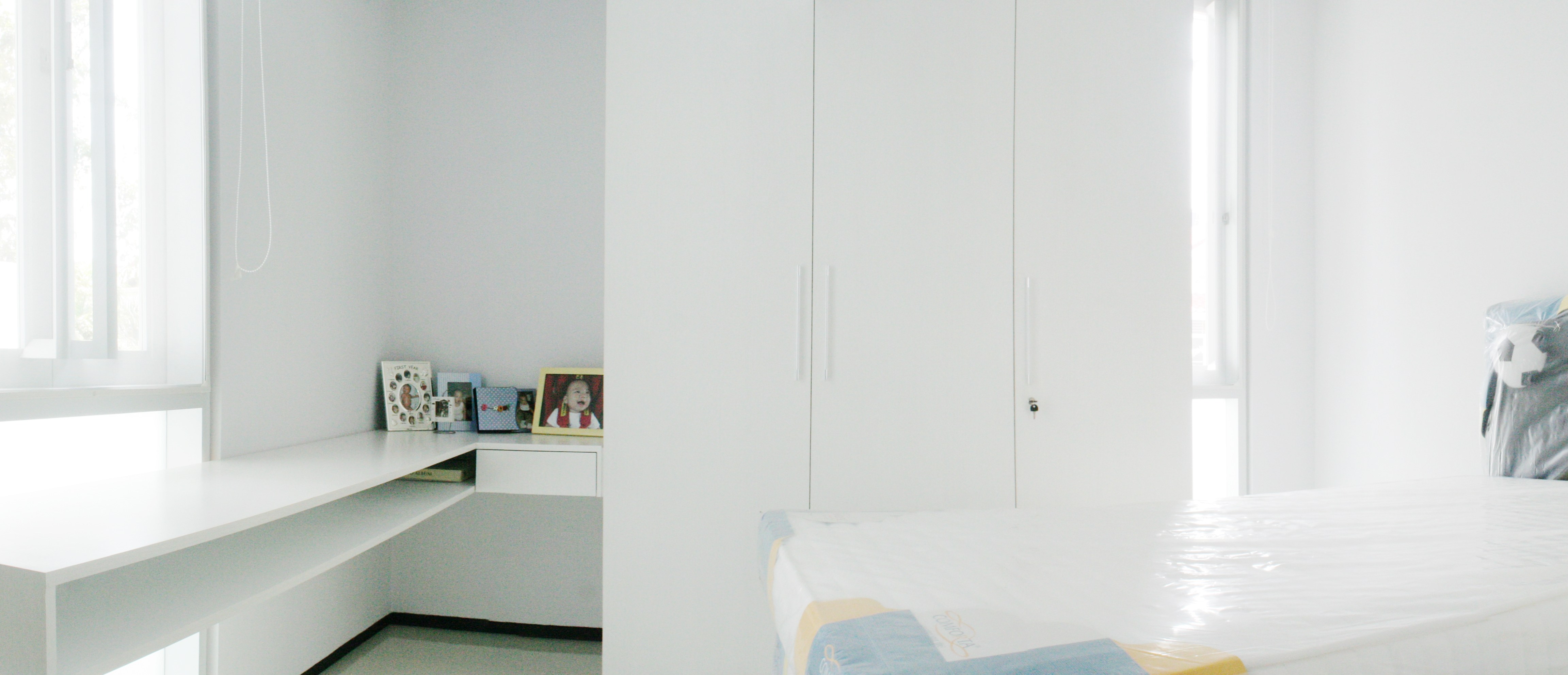
The toilet adjacent to the bedroom and master bedrooms views the gardens and lights from tapered skylights. This house reminded us of the traditional Javanese home.

Reconstruction of the concept started from Lawang Pintu, meaning vista door that greeted the visitor with open space and continued the passage to Pendopo, meaning the arrival building. The Pendopo is the most prominent structure in the house consisting living room. The attached back part is the serviced area and bedrooms area organized by the tapered skylights roof.
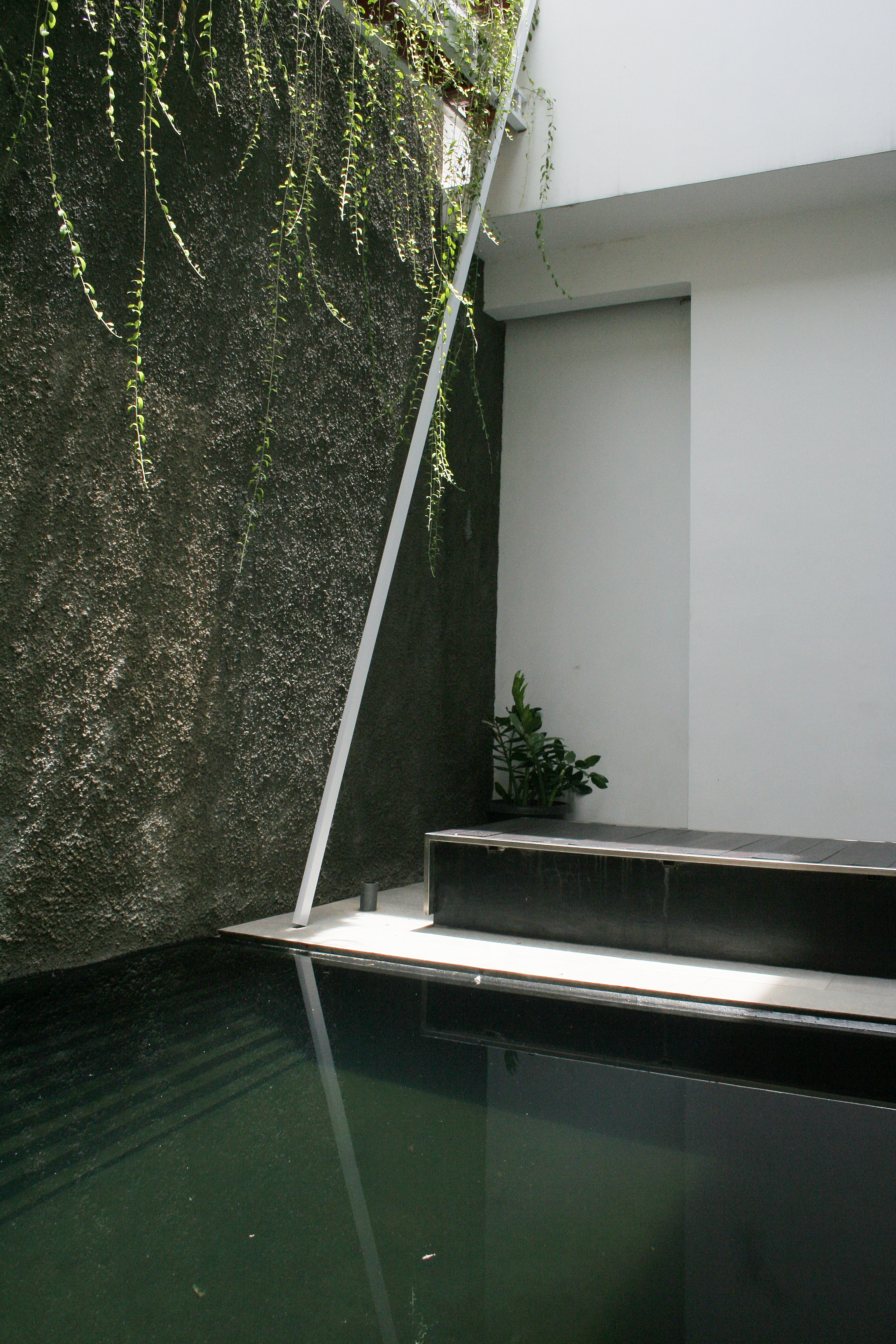
Reconstruction of the concept started from Lawang Pintu, meaning vista door that greeted the visitor with open space and continued the passage to Pendopo, meaning the arrival building. The Pendopo is the most prominent structure in the house consisting living room. The attached back part is the serviced area and bedrooms area organized by the tapered skylights roof.

The clients are simple people, the discussion in the project combined the grey plastered cement as a basis craftmanship to surface the house. As simple as the house color, it shows the character of the project, the clients, and the approach of the architecture, which is a simple and understated beauty.

Video for Stupa : The clients are simple people, the discussion in the project combined the grey plastered cement as a basis craftmanship to surface the house. As simple as the house color, it shows the character of the project, the clients, and the approach of the architecture, which is a simple and understated beauty.

Client’s Brief

Memories

by Obed Iskandar.

Home is a place to build memories. A place where I can introduce lots of things to kids. Most important aspect of home to me is light, light, and lights. The best feeling in the world is waking up from afternoon nap basked in golden sunset rays. I’m not much of a design/artsy person so interior wise, I’d left it to my wife. I’m easily satisfied in this sector. I’m more concerned on the quality and materials of the build. I will be happy if the house is uncluttered/tidy and the house is just running smoothly without any “tetek bengek” to deal with.

Rumah adalah tempat istirahat dan beraktifitas

by Della Wangsa.

Rumah adalah tempat istirahat dan beraktifitas. Hal ini terjadi karena aktifitas saya sehari2 ada di rumah, dari sibuk di dapur (baking & cooking), melakukan hobi saya (arts & crafts), mengurus anak ke depannya. Rumah dengan good natural lighting dan aliran udara sangat penting bagi saya. Growing up di Bandung yang udaranya sejuk membuat saya mendambakan rumah yang setidaknya ada aliran udara supaya tidak menambah pengap dan tidak perlu selalu menyalakan AC. Dari semua aktifitas sehari2, saya ingin dapat bersantai juga di rumah. Rumah yang tertata rapi dan semua barang ada tempatnya adalah keinginan saya. Rumah yang memberikan homey feel dan nyaman. Kalau bisa rumah yang gampang di tidy up, kadang mungkin saya tidak bisa tiap hari membereskan rumah tapi saya tidak ingin terlihat terlalu berantakan.Saya juga ingin rumah yang timeless karena kami baru mulai berkeluarga dan perjalanan ke depannya masih panjang, tidak perlu yang terlalu modern atau minimalis. Efisien dan praktis dalam hal maintenance tapi masih terlihat bagus adalah yang utama dirumah yang saya ingin. Good planning tentang placement of everything is important to me too.

Ruang yang dibutuhkan

  • 4 Kamar Tidur yang terdiri dari 1 Master Bedroom – Lantai 2 dengan walk-in closet & bathroom
  • 2 Kamar Tidur Anak – Lantai 2 dengan 1 shared but separate bathroom
  • 1 Kamar Tamu – Lantai 1 dengan 1 shared bathroom with bathroom Lantai 1 (if possible ada 2 bathroom, 1 inside the guestroom and 1 for the guests)
  • Kitchen + Pantry + Dining Room – Lantai 1
  • Ruang Keluarga – Lantai 1
  • Library/Office/Playroom/Arts & Crafts area
  • Gudang besar untuk barang2/dus tidak terpakai
  • 2x Kamar pembantu dengan 1 shared but separate bathroom
  • Dapur Kotor
  • Gudang kecil untuk tools & alat2 bersih di setiap lantai
  • Future dog room/area
  • Area Laundry room/ruang cuci.
  • Apakah memiliki koleksi khusus yang ingin dipajang, misalkan lukisan/barang antik/koleksi lain?
  • Tidak ada, tapi ingin ada satu space tembok yang bisa dipenuhin untuk gantung foto2 keluarga.

Kriteria Kamar Tidur Utama

Decent size, not to overly big but feel spacious. With walk-in closet & bathroom

Kriteria Kitchen

Baking is a big part of my life. Jadi kitchen area is really important. Good workflow and storage is a need. Ada satu solusi dimana saya bisa bikin berantakan satu sisi di kitchen yang tidak terlihat dari bagian rumah lain. Connected to wet kitchen & pantry.

Kriteria Kamar Pembantu

Dua kamar with AC

Kriteria Garasi Mobil

Garasi tidak perlu, kalau tidak ada garasi, yang penting covered car port dan access ke rumah yang tidak kena hujan.

Kriteria Ruang Cuci

Cukup untuk mesin cuci dan ada space untuk cuci baju manual. Akses ke tempat jempur: tempat jemur preferably di dek atas.

Kriteria Dek Atas

Keran air dan clean station (if we need to clean dusty stuff).

Kriteria Taman

Provide a good shade, Easy maintenance, Not attracting scary bugs, Provide a good area for a child to grow up (play yard)

Project Credit :

Completion Year: 2022
Gross Built Area (m2/ ft2): 400 sqm
Project Location: Alam Sutera Tangerang Banten Indonesia

Lead Architect : Realrich Sjarief

Design Team : Agustin, Erick Fei, Singgih Suryanto,Yudi Atang, Mohammad Enoh, Bonari, Eddy Bachtiar, Alifian Kharisma S, Miftahuddin Nurdayat, Rifandi Septiawan Nugroho, Alhamdamar Mudafiq

.

Photographer | Photo Credits: Ernest Theofilus
Videographer : Muhammad Farhan Nashrullah
RAW Visual Arts Team : Angel Gabriela Kusuma, Andriyansyah Muhammad Ramadhan, Lu’Luin Ma’nun, Alim Hanafi

.
Structure Design :John Djuhaedi Associates
Team of Local Builders :Singgih Suryanto, Yudi Atang, Mohammad Enoh, Bonari, Eddy Bachtiar

.
Part of Interior Designer : Dinardi Then Studio

Kategori
Project Bioclimatic House

Bioclimatic Home 20 – Walet Indah

Renovasi rumah Ini 100% menggunakan struktur lama, project ini baik untuk menjadi referensi dalam peningkatan kualitas hidup. Kita tambahkan ekstention canopy to provide the bio climatic. Ruang-ruang dibuang sekatnya untuk relayout. Memperbaiki kebocoran, membuat fasade menjadi lebih terang.

Intimate, spacenya seperti void yang di keep, lantai 2 nya dibuat blong untuk ruang anak-anak bisa berkumpul bersama. Kedua kamarnya dibuat functional untuk anak-anak. Sebelumnya kamarnya gelap-gelap dan kecil-kecil, kemudian di extend ke arah jemuran belakang jadi di equepat dibelakang. Diatas menjadi 2 kamar besar.

Dibawahnya di blong-blongin supaya ketika pintu dibuka ada sebuah lorong yang beputar, jadi ruangannya terasa lega. Dikiri bawah ada seperti ruangan bathroom yang bisa dipakai untuk kerja. Jadi bedroom nyambung sama lauge, nyambung sama tempat kerja bu Winny yang akuntan. Jadi client beliau didepan, begitu masuk didepan itu ada laugenya, jadi bisa memutar sekaligus bisa diakses dari service.

Diatasnya juga sama, begitu di blong-blong, jemurannya ditaro dibagian belakang, di equepat ruangannya tengahnya yang tadinya gelap, dibuka menjadi skylight untuk ruang jemuran.

Kategori
projects

Project 19 – Otten Coffee Experience Bandung

Located at Kaliki, Bandung, Otten Coffee Experience is a renovation project of two storeys building with a total of 600 sqm building area where the old structure is preserved. Spaces are redefined and optimized to give a better experience for guests.

The exterior wall facade is layered with a combination of timber slats and brick walls. Timber slats buffer the sun, create shades and texture on the plain concrete wall yet also keep the rain splash coming inside the building. Covered by a new cantilevered canopy, three arches framing the interior – draw people’s attention to inside the space – while a small slit at the side allows direct access to storage. Tilted wall of the lobby makes a spacious double volume entry in an unexpected triangle shape and guides curiosity further to the main area.

Entering the space, guests are passing a 36 sqm digital theme lobby with visibility and access to the tavern which is located side-by-side. The 24 sqm tavern takes a smaller portion of the space Natural light penetrates through the transparent roofing. Behind it is a 24 sqm linear display hall which previously functioned as a foyer. This area separates the entry space and the main area. On one side, a U shape existing stair is modified to the L shape considering efficiency, it leads to an office and coffee shop at the mezzanine area above the lobby. On the other side, access to direct storage is subtly hidden.

Moving to the main area, a traditional gedek bamboo or bamboo weave on the ceiling blends into the space, making a strong and bold identity. The 144 sqm open plan space exhibit products which are displayed along the wall side in sequences. Two customized tables are set up for tasting. Furnitures are made concealed using drywall considering construction time and budget efficiency. A 36 sqm bar in the center is elevated with timber parquet flooring creating hierarchy and dynamic inside the space. Playing with two tones, white and natural timber finish, the bar subtly stands out among the grey tone on the wall & floor. Timber finish in a herringbone pattern on display cabinets balance and keep the material continuity within the space. Behind the bar is a display of coffee machines which are lined up on pedestals. Further at the end, a 15 sqm dedicated robotic room serving performative visual – enclosed by the glass as its own space, framed with an arch brick wall, and elevated also with timber parquet flooring.

Further Credit:
Clients: Robin Boe, Jhoni Kusno (Otten Coffee)
Lead Architects: Realrich Sjarief
Design and Project Team: Andriyansyah Muhammad Ramadhan, Alifian Kharisma, Pandu Nazarrusadi, Avinsa Haykal, Timbul Arianto Simanjorang, Thomas Andrean S.
General Contractor: PT. Bangun Cipta Interindo
Plan, Illustration Team: Manuel Hendru, Adhika Annisa, Lu’luil Ma’nun, Aryo Phramudhito
Photo Credits: Ernest Theofilus
Video Production Team: Muhammad Farhan Nashrullah, Lu’luil Ma’nun
Maria Angela Rowa, Hanifah Sausan Nurfinaputri

Kategori
Project Bioclimatic House

Bioclimatic Home 21 – Botanical House

Kali ini saya berbagi tentang desain dari project yang sedang kami kerjakan di pinggiran jakarta, lokasinya di hook, program ruang dari rumah ini adalah rumah 3 kamar 2 kamar diletakkan di lantai 1 dan kamar master diletakkan di lantai teratas. 

.

Konsepnya adalah arsitektur yang bioklimatik yaitu  membuat rumah yang fungsional,  tropis, memiliki teknologi pengairan juga dan memiliki desain micro climate yang baik. Menariknya ada 3 pohon besar bertajuk 8 meter yang ada di perimeter lahan. Jadi sebenernya desain mencoba untuk bagaimana memberikan bingkai untuk rumah, sekaligus memberikan ruang terbuka yang mendapatkan bayang – bayang dari pepohonan. Rumahnya ada di hook, kiri – kanan potensial untuk memberikan pengalaman inside juga outside.

.

Setelah dikutik – kutik ternyata ruang di bawah bisa dibuat ruangan yang blong dengan beberapa kolom di perimeter. Daerah atas melengkung menyesuaikan bentuk profil lahan dan lantai atas memberikan kanopi untuk daerah bawahnya. Rumah ini menghadap utara dan timur, jadi solusi menggunakan kanopi dan kaca terbuka akan sangat tepat. Menurut saya ruangan yang tidak terlalu tipis dan tidak terlalu tebal itu penting supaya bisa fleksibel apabila ada lebih banyak orang datang dan ngumpul – ngumpul.

.

Rumah ini pas untuk keluarga kecil dengan mimpi yang menantinya. Kebetulan mereka senang dengan rumah ini dan semoga cepat dibangun ya.

Kategori
projects

Project 20 – Sarang Nest House

Located in a residential area, Taman Buana Permata house complex, West Jakarta. With an area of 250 sqm, Sarang Nest House consists of 2 generations of families living together, this underlies a centralized circulation and creates a micro-environment through a spatial arrangement with different angles. This angle creates distance between the perimeter of the house and the neighbors thereby allowing air to flow freely around the building while maintaining privacy between spaces. Each room has its own outdoor space. Light enters the room through perforated walls, crevices, windows, and skylights. The shape of this house is tilted to make it more efficient as well as a response from the corner of the building.
.


Text description provided by the architects. Located in a residential area, Taman Buana Permata house complex, Sarang Nest House design redefines house stereotypes and grew organically from the base to becoming, as a reaction to its environmental constraints. Sitting at the hook of the street, the building is facing west and south. The storeys are stacked in angles with protruded spaces enclosed by perforated wall to buffer the heat, either with traditional red bricks or metal screen that gives industrial look in contrast.
.

Imaginr-Bacteria
Imaginr-Bacteria

The house has four storeys. 250sqm of the ground floor is for the parking area and service quarter where the floor area is partially occupied. One-third of the area is filled with soil to provide setback for the building and serves as a garden for the area on the first floor. Perforated service stair at the corner accessing whole floors and still allowing light to get into the space. While the main staircase with an active fan circulates the air through the skylight. Living dining in 80sqm open plan space and guest area on the first floor are spoiled by a garden and the roof deck which turns into outdoor space.

.

Imaginr-Bacteria
Imaginr-Bacteria
Imaginr-Bacteria

Strategi kedua adalah memanfaatkan lengkungan bata yang artistik dan fungsional sehingga terbentuklah vista pertama memasuki ruang lobby dimana klien bisa menempatkan, mengkurasi pameran dalam bentuk desain yang ergonomis. Display pameran ini menarik karena bisa direpetisi di dalam sistem dry panel dengan motif semen yang terintegrasi.A 3sqm indoor garden in the center keeps the core connecting the upper storeys and serves as a void for light and air. On perimeter walls, a hint of views from across the house is still visible to see through the gaps between bricks. Going up to the second floor, the space is dedicated mainly to a 40 sqm master bedroom, 21 sqm bedrooms, and a playroom. The perimeter is mostly enclosed by a combination of solid walls and perforated metal screens to keep it private. Yet the most enclosed area like a bathroom is washed by light through skylights.

Imaginr-Bacteria
Imaginr-Bacteria
Imaginr-Bacteria

The third floor is the top floor. Dominated by open space, 48sqm of a barbeque area, and an enclosed meditation room sit-like pavilion where a 20sqm laundry area is separated by the main stairs. Within the dense residential area, Sarang finds its way to creating a micro-environment by setting up the space in angles. These angles create distance between the house’s outer wall and the neighbors’ which allows air circulation to move freely around the house perimeter, yet it also maintains privacy between rooms. Every room gets its own private outdoor space. Light penetrates the space through perforated walls, gaps, windows, and skylights. Playing out from the grid, the architecture captures the organic and dynamic flow of basic reactions toward nature and the site constraints.
.

Further Credit:
.
Clients: Henry Kusuma Family
Lead Architects: Realrich Sjarief
Design and Project Team: Realrich Sjarief, Agustin, Erick Fei, Riswanda Setyo, Tirta Budiman, Septrio Effendi, Miftahuddin Nurdayat, Regi Kusnadi
Supervisor In Charge: Singgih Suryanto, Sudjatmiko, Muhammad Enoh, Eddy Bahtiar, Endang Syamsudin
Construction Manager: Singgih Suryanto, Agustin
Structure Engineer: John Djuhaedi, Singgih Suryanto
Mechanical And Electrical Engineer: Hamin MEP
Master Craftsmen: Tata Pirmansyah, Aep, Aep Syapuloh, Nari , Solehudin Grandong, Syaipuddin, Dicky, Bonari, Tohirin, Nur Hidayat, Rudi Setiawan
Interior + stylist: Cindy Sumawan
Management: Laurensia Yudith, Reffi Nurkusuma, Nurul
Plan, Illustration Team: Lu’luil Ma’nun, Andriyansyah Muhammad Ramadhan, Satria A. Permana, Agustin, Riswanda Setyo Addino
Curatorial and Writing team: Andhika Annisa, Lu’luil Ma’nun, Aryo Phramudhito, Maylani Tiosari
Photo Credits: Eric Dinardi
Videographer: Muhammad Farhan Nashrullah
.

#rawarchitecturepublication

#Sarangnesthouse #ArchDaily #realrichsjarief #realricharchitectureworkshop #arsitekturindonesia #house #residential

.

Kategori
Project Bioclimatic House

Bioclimatic Home 22 – Tabung

One of the RAW Architecture #RAW99%finished. It’s a 3-story house with a compact, technological design with solar panel integration and a north-south opening.

The layout is separated by 3 simple grids. The shape is like a tube with a bridge in the middle – the result of efforts to incorporate air and light into the bedroom and living room.

Kategori
projects

Project 21 – Java Bioclimatic Home

A house or in the Java language called Omah is considired by the Javanese as a cosmos miniature. Where the whole house components are arranged systimatically and harmoniously. The Javanese believe that what they build is the result of an adaptation of struggling with the nature. Those things are combinations of micro and macrocosm of the house that they expect to always keep the balance of life and the positive aura.

The owner is Nina Subiyanto, she was born in the middle of viscous Java culture where closeness and warmth be the main of character its culture. The kinship at Java culture has a social bond that strong, unique and ascriptive.

Sumarah
The architecture of this Java House applies Sumarah principle which means ‘surrender’. The philosophy of Sumarah originally is about the acceptance through the body relaxation, feelings and thoughts. This is the first step to process the personal self-transformation and to connect with the subconscious.

“Sumarah, like the old Chinese peasant, teaches the wisdom that respects change and the practice of looking beyond what appears to be good or bad.” – Laura Romano

In the context of architecture, Sumarah means the willingness to blend with the nature and culture, about how to integrate all of those elements into the building, as if make it the spirit of the building. The sequence is designed through intimate passage from the public area, entrance to the private area which is the bedroom and the living room. The sequence is arranged by poisition in the wall providing sense of privacy and intimacy it’s like a journey to the heart of the family.

Interaction between old building and new building
Java house that located at Pangakalan Jati street, Pondok Labu, South Jakarta, house with total area of 1940 sqm was a house dominated by a teak. The owner wants to redesign her house also with teak as the dominant material. But, considering the use of teak are 7 times more costly than other materials, so the architect suggests other options to avoid cost overruns.

This house is divided by a tropical corridor with 2,5 m width and 7,2 height as the axis of the building: north axis and south axis. The east side building is the new building and the west side building is the old building. The east façade made layered and enclosed to minimize noise and light. While on the west side the house made more open to maximize the light and also to reduce the heat from the outside.

Ground Floor
The main entrance is located at the north, facing the front yard. To reach the entrance, visitors must walk through a 10,2 x 4,8 m terrace with 4 stairways which have 60 cm width of antrade. It’s like, visitors should enjoy the front yard before entering the house.

The entrance made by free standing 2.6 m pervorated wall with kerawang shape, enabling cross air ventilation in the house with small open pattern on the entrance wall. The gap between pervorated wall and ceiling give the impression of warmth greetings and openness of the owner to their visitors.

The first thing that visitors met after walk through the entrance door is two garden at the left and right side. It’s giving an ambiguity, as if we entered the house but then we go out again. Here,visitors are shown at once about one of owner’s favourite thing: plants and owner’s job as a florist. The inside gardens with 10 m2 of each total area are full of pot plants. This area is a transition from public area to semi-public area.

At the first layer, there is a 4 x 3 m foyer which is a transition to connect prayer room, living room and a corridor. Prayer room and living room are facing directly toward the garden A skylight on the foyer ceiling made by merbau wood adapts tumpang sari shape. This tumpang sari serves to drain the air pressure that occurs within the building (air stacking effect). In Joglo house design principle, the existence of tumpang sari is a necessity because it describes a connection between human and God.

Then, the foyer will bring the guest to a corridor and the corridor will bring the guest to the core of the house that divides semi private area and service area.

Corridor to the west directs visitor to the first child bedroom and guest bed room. Between those rooms there is a fish pond which is its existence will bring relaxation effect by gurgling sound of its water. Total area of child bedroom is 30,75 sqm with dress room inside. Besides the fish pond, first child bedroom is facing directly to the back yard area at north side and dry garden at the south side. Between both bedrooms there is abathroom with a size of 3 x 3,15 m that separate the bedrooms and side door.

Corridor to the south directs visitor to the dining room that connected to the family room. Dining room floor made 15 cm higher than any other rooms. It’s like, it wants to tell the visitor about how important its existence as a place where the family can sit together and share their stories while they’re eating.

Corridor to the east directs to service area and semi private area such as master bedroom and family room. The master bedroom of 46 sqm total area that can accessed directly from backyard through the corridor. The master bedroom is faced directly to the south area where besides the backyard, there is also a working area where the plants and flowers are arranged for sale.

The family room which is the core of the building is the widest area with total area 60 sqm. Its wall is full of giant window with size of 3 x 1,25 m every sills, give the visitors an transparent impression to this room and ensuring the guests that they won’t lack of light and air if they are here. The vista from the family room frames backyard and swimming pool at the center of backyard. The interaction concept between the family room, backyard and swimming pool is based on the owner wish who wants to revive childhood memories where at that time, their father sat in the living room while watching his children playing and swimming on the backyard.

First floor
Vertical sirculation begin from the family room and connect to an intimate corridor with size of 1,2 x 8 m. It’s like, in this area visitor can learn more about this family. Memory images of Subiyanto family from children to adult, lined up neatly on the shelf that has a length along the corridor.

Vertical sirculation begin from the family room connecting to an intimate corridor with size of 1,2 x 8 m. It’s like, in this area we can learn more about this family. Memory images of Subiyanto family from children to adult, lined up neatly on the shelf that has a length along the corridor. The corridor connects service area, library, study room and two bedrooms: second child bedroom and third child bedroom. The library is at the end of the corridor, storing childhood books and parents favourite books.

Javanese tropical house
One of effort to minimize energy use in the house is by using local material optimally. Materials such as concrete, wood, bricks and glass were selected to considering the thermal conductivity that may blocking the sun radiation heat and carbon foot print to the house.

The interaction between building and tropical climate is very visible inside and outside the house. The inside of the building shouldn’t always introverted from the outside. A lot of organic elements are created inside the building, shaping voids, and make the inside building as if it’s on the outside house. Besides for sun light and air system, these voids also for social function that can build an intimate relationship between family members.

The meaning of Java house in ‘Java House’

Joglo house is Java house
‘Java House’ is Java house

Although both of them physically different, but they still imply the real meaning of Java house, that show us friendliness and openness of the owner, that try to adapt with its surroundings, that try to stay connect with God.


Location : Pangkalan Jati, Jakarta Selatan
Owner : Ati Subiyanto Family
Principal Architect : Realrich Sjarief
Project Team : Bambang Priyono, Rudianto, Andhang Trihamdhani, Randy Abimanyu, Emmy Ulfah
Interior Designer : Nina Subiyanto
Civil Engineer : Ir. Herwin Siregar
Contractor : PT. Bimal
Construction Manager : Ir. Bambang P.V. Adi

Kategori
Project Bioclimatic House

Bioclimatic Home 23 – Morahai

Rumah ini memiliki dua sisi, ia privat juga ada sisi publik. Sisi kamar tidur berisi permainan bentuk lengkung-lengkung yang menerus seperti terasering. Massa bangunannya seakan-akan diangkat untuk mengakomodasi daerah komunal-perpustakaan-dan daerah tempat tinggal. Ada tangga disisi ujungnya yang dikelilingi oleh bukaan kotak-kotak. Kebetulan suami dari sahabat saya, suka berkomunitas. Rumah ini adalah cerminan dua sisi komunitas dan keluarga yang saling bertolak belakang. Explorasi kombinasi bentuk lengkungan dan kotak pada bentuk dan fasad bangunan didesain untuk memberikan aliran udara yang sehat dan menghadirkan cahaya udara alami kedalam ruang.

Istri dari klien kami adalah sahabat lama saya dari SD. Dulu Saya bertemu dia lagi kira-kira 12 tahun yang lalu dan baru 3 tahun yang lalu bertemu kembali dan menjadi klien kami. Kali ini Pekerjaan kayu-kayu, kisi-kisi depan dan kayu ulin yang sudah terpasang.

Layouting didalam rumah rumah ini menyediakan dua jenis zona privasi, publik dan privat karena klien kami menginginkan setiap kerabat yang berkunjung bisa merasa seperti rumah mereka sendiri.

Kategori
projects

Project 22 – Wood Box

Located in Puri Indah, West Jakarta region, the tropical open house creates intimate space from entrance through void in the garden, in living room, library, and the roof top garden.

“I want a house. A house to retreat, to relax with my family,” explains homeowner Mr. Wirawan to Realrich Sjarief. Situated in the increasingly crowded West Jakarta area, the 500 sqm house occupies a 450 sqm plot of land. Reflected by the owner’s name, Wirawan House forest wood, Size-wise it is inconspicuous, but its exposed brassed wood facade gives it a humble look. The concept is elaborated from Bare Minimalist, Akanaka, and Istakagrha to provide tropical open houses.

The architecture of Tropical Open House separated the service on the ground floor, lifted the building floats with living room, and master bedroom on the first floor and bedroom for three children on the second floor. The composition is designed by designing multiple small landscapes based on the view from each intimate space, this way the heat is reduced by facing the opening to the north-south side while opening the skylight and the window to let air and light in. The house has one receiving area then no more separation wall on the first floor which is the living room. In the living room, the kitchen also takes some importance its final layout is the result of a few adjustments based on the owner’s domestic habits. The only enclosed space in the second level is Wirawan’s study, which doubles as a library and his space to remember memory for his family. A simple foyer and a light well integrated with stair, and artwork is placed after the receiving area. The second story houses private spaces. At the end of the corridor is 2 bedrooms of his daughter’s equipped with a suite bathroom and a walk-in closet. An outdoor feel showering area is attached to the bathroom, while the surface connecting its indoor and outdoor area is made of clear glass. The material used in this building is chosen based on the best craftsmanship available in Jakarta.

5 types of local Wood was picked based on each unique character. First is, dried pine wood 180 mm x 30 mm x 3000 mm, for the facade, and 85 mm x 10 mm x 3000 mm for the ceiling. Pinewood was chosen because of the durability and lightness. Second, reused Ironwood which is the most durable material used for the Phinisi boat, combined with Bengkirai wood which is more economical for the less walkable space is used for indoor-outdoor decking because of the texture, durability, and economic. Teakwood is used for main area bedroom, library, and foyer area, and Merbau wood 300mm x 480 mm x 2800 mm combined in the single door is used for door because of its tolerance on expansion, the most available material in Jakarta.

An additional bedroom, bathroom, and a multi-function room linked by a corridor leading to an open space beside the void leading to the stairwell and staircase, a pretty bow to knot the horizontal and vertical circulations together. The project installed stormwater harvesting and reuses it in water landscaping. While stormwater harvesting is increasingly common in some countries, it is still a rare, exceptional facility in Indonesia, one that this project was determined to have in this home. The attention of the play of light and shadow, created through a combination of materials and artificial and natural light is fundamental to the design of the house and evokes the quietude of such a retreat house which stated by its architecture.

Kategori
Project Bioclimatic House

Bioclimatic Home 24 – Sutera

Rumah ini merupakan renovation project yang ada di lahan yang sudah ada stuktur eksisting. 100% Struktur dipertahankan, renovasi ini hanya perlu diganti atap dan ditambah sedikit. Rumah ini mimiking rumah bu Winny di Pantai Indah Kapuk.

Ekspresinya rumahnya tropis, untuk kanopi yang teduh. Didepannya untuk mobil, dan mobil difokuskan untuk diluar. Jadi begitu masuk seakan-akan ada semacam intimate prominat lagi, sebelum masuk ada kisi-kisi kayu.

Rumah ini ditambahkan fasad untuk mereduksi biaya sebesar mungkin dan resources sebesar mungkin dengan kombinasi relayouting ruang. Membuat ruang menjadi tanpa barrier atau dinding.

Kategori
projects

Project 23 – Parabolic Plywood

Located in Alam Sutera, Tangerang, as it completed in 2016, Puncak Keemasan Group Office occupies 2.450 sqm of built area. The building is intended as an office for several companies, which is a noticeable challenge in programming schemes. As part of a given solution, the design proposes a permeable transition to create unifying ambiance with the structural parabolic shape made by plywood while maintaining separation inside each chamber. The material used as the main language is plywood that covered almost all interior offices. The result is a jungle-like hall that connects every room with a tree bookshelf and library as its main hub.

 The primary concern of the design is to restrain any unnecessary cost while maintaining a sense of playfulness and creativity. The scheme is elaborated from Omah Library Summer pavilion modular concept.

Form of design was expressed in two main sequences. The first sequence is to convey the flow by continuous circle form of tree structured bookshelves along the path of the office. The Second sequence is the type of flow expressed through plywood ceiling placement, which creating sense of wave, thus also resulted in dynamic interior lighting. Another use of plywood is manifested in giant curvature bookshelf that also works as room partition. This bookshelf formed double curvature for a reason. The curve reversed each other vertically, like a section of double helix. This way, it has stable load point in the middle of double arch as self-supporting barrier.

The design also aims for material efficiency. By using 600 x 600 waffle module of bare plywood to cover the ceiling, gave results to its cost efficiency up to 50% to compare with a normal cost. Not only as a transitional element, but plywood also became the main form for its ceiling structure. Giant waffle is also functioned for mantling cables and pipes by the least usage of material.

The entire interior element is consistent with the same porous detail; from square module bookshelf to various high for the ceiling, while some part of supporting areas is using modular rectangle layout form. The detail is enhanced by low hanging Edison lamp along with the office, and synthetic grass carpet to heighten the jungle mood.

Kategori
Project Bioclimatic House

Bioclimatic Home 25 – Banjar

Rumah ini sangat simpel, seperti melayang. Programing rumah ini memiliki 3 bathroom dengan luas bangunan yang cukup kecil karena budget yang terbatas. Semua ruang-ruang dirumah ini menghadap ke open space dan memiliki anatomi koridoor panjang dengan massa yang panjang dan melayang. Rumah hasil dari mimicking Rumah Betang, rumah khas Kalimantan.

Rumah ini memiliki master bedroom yang besar dan integrated dengan ruang anak. Sirkulasi spacenya sangat kecil, tatapi yang berada di living room dan menghadap ketaman lebih besar. Spacenya integrated, sehingga ketika masuk ke pintu masuk, tidak dapat melihat living room secara langsung. Perlu memutar terlebih dahulu dulu, baru masuk. Hal ini untuk membagi privasi ruang. Terdapat foyer terlebih dahulu yang menghadap keluar, baru kedalam. Ini adalah sebuah teknik yang intimate prominent.

Saya bermimpi bahwa di Indonesia itu like prominary the architectural itu tidak bisa terlalu besar. Menurut saya karena space kita terbatas maka intimate prominat prominent itu menjadi penting didalam trapikal climate yang agak adem. Jadi ruang-ruang kecil yang intimate itu menjadi identitas arsitektur di Indonesia.

Kategori
projects

Project 24 – Sumarah

Sumarah is inspired by an Indonesian form of meditation centered on the philosophy of life. Sumarah is defined as a “total surrender,” allowing the partial ego to give way to the universal self.The practice is based on developing sensitivity and acceptance through deep relaxation of body, feelings and mind. Its aim is to create inside ourself the inner space and the silence necessary for the true self to manifest and to speak to us said the architects. Realrich Sjarief explained that a total surrender to life allows one to see the real beauty in the world. They added that this cycle between mind and soul is a continuous loop, which was the inspiration behind their plan for the structure.

Created with polycarbonate, the project is connected with steel elbow and screw bolt. By creating space within space, the architects have, in essence, created life within life by filling each box with plants or fish. Looking at the elevation of the structure resonates with the Indonesian mountains that possess sacred meanings of human achievement. Moreover, the box-like composition was influenced by the stacking system in Indonesian temples. Ancient temples, like Borobudur and Prambanan, were formed by stacking many blocks of stone. The best part of the structure is translucency and transparency. people can see through the boxes and into other forms of its life systems.

Kategori
Project Bioclimatic House

Bioclimatic Home 26 – Condet

Rumah ini ada di daerah Condet yang hijau dengan selokan dan dinding pagar yang membatasi di sisi depan. Untuk masuk ke rumah   terdapat jembatan yang melintasi selokan besar selebar 1.5 m.

Orientasi bangunan menghadap utara selatan untuk mereduksi panas matahari dan didesain untuk memudahkan sirkulasi udara silang dengan bukaan jendela dan pintu. Lorong udara vertikal diletakkan di daerah kamar tidur, tangga  dan ruang serba guna yang diperhitungkan dengan kompromi terhadap ketebalan massa bangunan.Ruang – ruang servis dan Kamar mandi didesain dengan bukaan yang langsung terhubung dengan sisi luar bangunan.

Rumah ini didesain dengan orientasi ke taman melihat ke daerah kolam renang di belakang dimana ada pembagian akses privasi sehingga dinding bata yang disusun – susun didesain untuk membagi sisi dalam dan luar.

Sisi depan tampak bangunan didesain dengan menggunakan bata yang diekspose dengan lubang – lubang untuk  menangkal cahaya matahari sekaligus memberikan provasi, dan sisi belakang didesain dengan suasanya yang transaparan, yang pintunya didesain dengan fleksibel sehinga setiap hari penghuni merasa terhubung dengan pepohonan, tanah, dan air di  luar bangunan.

Kategori
projects

Project 25 – Istakagrha

Located in Taman Meruya Ilir, West Jakarta region, Istakagrha meaning brick house, Situated in the increasingly crowded West Jakarta area, the 150 sqm house occupies a 150 sqm plot of land, 10m x 15m. Istakagrha is reflected by its name, brick House, it is a small and compact house with a orange painted color on the light weight brick, black colour , and rough concrete texture finishes.The expression creates humble and distinctive look.

“We have a dream to have a house which like a villa in Bali. A house more than a functional but a place to live and grow with feel of nature, we really love staying in tranquil house” explains homeowner Mr. Ferdian Septiono and Ms. Joice Verawati to Realrich Sjarief. The couple are graphic designer who are willing to have a compact Ecological house which is resortlike.

The architecture of Istakagrha separated inside and outside with the landscape of a barrier wall made by light weight brick. The combination is stacked with pattern of solid void, which provide sense of privacy and security, meanwhile allowing sunlight and air circulation to flow inside the living room. The Ecological Approach of this house elaborated from Realrich Architecture Workshop’s project such as Bare Minimalist project and the privacy design elaborated by Bris Soleil (sun breaker) elaborated from akanaka.

The house faces east side allowing morning sunlight come to the space at 9 am. The stair is placed at the west side, the west side is walled with brick to provide thermal insulation. The air ventilator is placed at the west side of the house above the stair from ground to 1st floor providing fresh air circulation through air stacking effect. The house has one open air receiving area as anteroom then no more separation wall between living, dining, and cooking which In the living room, the kitchen also takes some importance its final layout is the result of few adjustments based on the owner’s domestic habits. The only enclosed space in the second storey is guest room, which doubles as a working space and guest bed room. A simple foyer and a light well integrated with stair, and art work is placed after the receiving area at the west side of the building. The second story houses private spaces. At the end of the corridor is 1 bedroom with shared bathroom and a walk-in closet. An simple and functional feel showering area is attached to the bathroom. The material used in this building is choosed based on the best craftmenship available in Jakarta, concrete structure is used because of the cost efficiency, engineered wood is used because of the look and lightness, metal frame for facade and sunshading are used because of durability.

3 types of brick was used based on each character. First, is light weight brick, 200 x 600 x 100 mm, for the facade. Light weight brick was chosed because of the lightness, precision and can be easily molded and constructed as facade/ Second, orange brick which is most common material used in Jakarta, The third one is the ceramic brick 50 mm x 150 mm x 10 mm which is used for covering the stair wall as insulation and interior surface. An additional bedroom, bathroom and a stair way to the attic on the 1st floor is linked by a corridor leading to an open space beside the void leading to the stairwell and stair case through compact space. Istakagrha showed an example of small house in Jakarta with small plot of land with sustainable design approach and keeping privacy from out side to inside through simple form which is stacking brick.

Kategori
Project Bioclimatic House

Bioclimatic Home 27 – Tanjung Duren

Proyek ini berbasis pada renovasi rumah 2 lantai. Kebutuhannya adalah 3 buah kamar di lantai atas dan 1 kamar yang merangkap ruang kerja. Sisi barat ditutup oleh teritisan atap yang lebar dan sisi selatan dibuka dengan sisi sependek mungkin sebagai peneduh dari ruang keluarga di lantai dasar.

Balok dan kolom struktur dipertahankan dengan perbaikan atap dan pemanfaatan ruang miring yang terbentuk oleh atap. Setiap ruangan mendapatkan cahaya langsung termasuk toilet dan kamar tidur. Bahasa bentuk yang digunakan adalah bentuk lengkung hasil dari eksplorasi pengalaman ruang terhadap ruang – ruang kecil dan terbatas.

Kategori
projects

Project 26 – Akanaka

“I want a residence where is comfortable, natural, and energy efficient,” said Mr. Yuwono to Realrich Sjarief when he stated the brief of Akanaka. Akanaka is located on 800 sqm lands, consists 19 serviced bedrooms, in 2 levels building with an open-air corridor. It is in Kemang, South Jakarta, a precinct where is well known as the art district.

From the facade, Akanaka’s 4.5 meters cantilevered canopy blocks the east-west sun while giving a tropical device for heavy rainfall. The ecological approach for the building elaborated from the principle in Bare Minimalist house (the project that is been done before by Realrich Architecture Workshop as project 01). The orangish terracotta facade module 300 mm x 300 mm made by craftsmen at Pamulang gives a private, solid void, an expression which is functional and beauty. The balustrade is made from steel painted with brownish colour with gaps to allow cross air ventilation coming inside the building. The floor is concrete, one at the outdoor is grass block and the one inside the building is 1200 mm x 1200 mm cast concrete with glass grout.

The linear and communal courtyards are introduced at the centre of the building as a communal space, sculpture garden providing air stacking effect, and natural sunlight coming to the communal space. The size of the rooms varies from 16 sqm, 24 sqm, to 35 sqm which each of the room provide cross air circulations, functional interior design, and dual aspect window providing sunlight to the room.

Inside the building, there is much feeling of wood and concrete. The teak wood was engineered by cut into 3mm thin slices, glued on top of plywood to increase lightness, cost, and availability of teakwood. The engineered teak wood panel in module 200 x 1200 mm is hung by stainless steel pin, this construction technique allows the system to be prefabricated, dismantled, maintained whenever it is necessary. Akanaka is one of the examples of how the passive design executed in simple method opening side for air and sunlight to the building.

Bahasa :

Rumah kos Akanaka menempati lahan seluas 800 meter persegi, terdiri dari 18 kamar sewa di dalam bangunan dua lantai dengan koridor yang terbuka. Perancangan rumah kos akanaka memperhatikan 3 hal, pertama bangunan ini dibangun di atas struktur bangunan lama, kedua adaptasi terhadap arah hadap bangunan ke arah barat, ketiga memaksimalkan sirkulasi udara alami dan cahaya matahari yang masuk ke dalam bangunan, sehingga bangunan kos-kosan ini menjadi hunian yang sehat dan nyaman.

Pada bagian muka bangunan, atap kantilever sepanjang 4,5 meter dan dinding terakota buatan pengrajin lokal menghalau cahaya matahari langsung dari sisi barat bangunan, memberikan ekspresi soid void dari sisi muka bangunan, menjaga privasi penghuni dan memberikan celah udara masuk ke dalam bangunan.

Ruang terbuka yang melingkar dan linear diletakan di tengah bangunan sebagai ruang komunal, taman untuk meletakan sculpture, memberikan celah air stacking effect, dan memaksimalkan cahaya alami yang masuk ke dalam bangunan. Ukuran ruang kamar kos memiliki 3 variasi, dari 16 meter persegi, 24 meter persegi, hingga 35 meter persegi, dimana tiap kamar memiliki sistem sirkulasi silang, desain interior yang fungsional, dan jendela di dua sisi untuk cahaya alami.

Koridor di dalam Bangunan ini menggunakan sistem air stacking effect dan cross-ventilation yang membuat ruang-ruang di dalamnya tidak memerlukan pengkondisian udara buatan.
Di dalam bangunan, material yang ada didominasi oleh beton dan kayu. Kayu jati dipotong setebal 3mm dan ditempel pada bagian atas plywood untuk mengurangi beban, biaya, dan penggunaan kayu jati. Panel kayu jati dimodulasi dengan ukuran 200×1200 dan digantung dengan menggunakan pin stainless stel, teknik konstruksi ini memungkinkan sistem untuk fabrikasi, sehinga bisa dibongkar pasang untuk perawatan apabila dibutuhkan.

Rumah kos akanaka merupakan satu contoh bagaimana passive design dieksekusi dengan metode yang sederhana mulai dari menyediakan bukaan yang maksimal untuk cahaya dan udara ke dalam bangunan.
Sistem railing menggunakan sistem knockdown dengan kulit kayu yang dilapis di atas triplek 18mm yang di konstruksi dengan pin stainless steel yang menciptakan kesan melayang dan ringan. #rumahkosakanaka

Presentasi Realrich Sjarief untuk Nominasi IAI Jakarta Award 2015

Achievement :

  1. IAI Jakarta Award 2017 finalist
  2. Published in Archdaily http://www.archdaily.com/791281/akanaka-raw-architecture,
  3. IDEA Indonesia August 2017
  4. Archinesia vol 4.
  5. Home & Decor.
  6. Griya Asri Vol. 14 No. 07 July 2013

Project Credentials :

Architects : Realrich Architecture Workshop, Principal Architect | Architect in Charge : Realrich Sjarief, Tim Desain : Suryanaga Tantora, Maria Vania, Mukhammad Ilham., Lokasi : Jl. Kemang Timur Raya no. 2 Jakarta Selatan, Konsultan Struktur : Cipta Sukses | Anwar Susanto, Konsultan MEP : Karim Listrik, Kontraktor : Singgih Suryanto, Masa Konstruksi : 2012 – 2013, Luas Bangunan : 800 m2, Luas Area : 800 m2, Tinggi Bangunan : 2 tingkat

Kategori
Project Bioclimatic House

Bioclimatic Home 28 – Sunyoto

Pak Sunyoto merupakan salah satu teman ayah saya yang sudah lama sekali, saya bermain tennis bersama ayah saya sejak umur 1995. Mulai berhubungan baik dengan pak Sunyoto mulai dari tahun 2005’an, dari zaman beliau baru berkembang sampai sekrang. Jadi rumah itu merupakan gambaran sebuah relasi hubungan antara antara saya, keluarga besar saya, hubungan saya dengan ayah saya, dan hubungan saya dengan pak Sunyoto langsung.

Rumah ini unik karena ada dua lahan kosong, dimana suatu saat nanti pak Sunyoto punya mimpi bahwa akan ada extention to the new landscape. Rumah beliau yang sekarang agak sempit, jadi tidak punya banyak taman. Mimpinya adalah memiliki rumah yang mempunyai banyak tanaman, karena istinya juga suka tanaman.

Ini adalah rumah dimana baliau sudah mapan dan akan menjadi rumah terakhir, dimana beliau tidak akan pindah-pindah rumah lagi. Beliau memiliki tiga anak, rumah ini didesain dengan pertimbangan untuk menyambut anak-anaknya jika pulang dari luar negeri. Jadi setiap kamar beliau minta ada kamar mandi dalamnya. Oleh karena itu ruang bekumpul menjadi penting, karena beliau merupakan keluarga besar yang membutuhkan ruang berkumpul, ada void, ada skylight, ada cahaya. Arah hadap rumah ini menjadi penting, menghadap ke utara dan selatan, membuat balkoni menjadi teduh dan bisa menjadi tempat untuk menanam tanaman.

Rumah ini benar-benar dipakai untuk mewadahi hobi ibu dan bapak, ibu hobinya menanam, bapak hobinya workshop karena bapak orangnya tidak bisa diam, beliau suka nukang dan berkumpul. Jadi rflecting dibawahnya itu untuk workshop dan area tanaman, diatasnya untuk area keluarga, diatasnya lagi untuk children, dan diatasnya lagi untuk gym dan tanaman lagi. Jadi kita melihat intention utamanya rumah ini adalah rumah milik keluarga Sunyoto yang akan mendefine keluarganya dengan keempat hal tadi.

Kategori
projects

Project 27 – Kofuse

Kofuse Coffee & Dine is an F&B project made for the brand of Kofuse Retro Fit Artisan Fine Dining, located on Cikajang Street, Kebayoran Baru, South Jakarta. It is a renovation project from a previous nail art and spa building. Almost 75% of the existing structure is re-used. Some structural columns with an arch shape are added to strengthen the roof structure. The arch columns are also applied to the facade as an additional structure to support the canopy we made to shade the inner building from direct sunlight and heavy rainfall, considering its context in the tropical climate of Indonesia. The arch shape of the columns is then mirrored to the top, making the impression of minarets. The facade is illuminated by the lighting path, giving a dramatic effect once we enter the site at night and standing out the minarets as an anchor point on the face of the T-section.

The canopy grille which is refracted by light displays an artistic side that is emphasized by dynamic lighting lines and is framed by curved walls showing the beautiful side of this building.

After the pandemic of COVID-19, people get used to do activities from home. Therefore, we tend to provide a space that can stimulate the imagination and give a home vibe, with an intimate feeling and a familiarity of a poetic space. We divide the Kofuse Cafe & Dining area into 3 zones, including the main room, the private space, and the front yard. The private space results in a group of micro-rooms that imitate several adjacent islands, private enough for discussion activities but still can look outside through the vista.

In the indoor dining area, there is an existing building column in the middle, this column is then covered with a new curved structure that is in harmony with the other designs and is used as a dining area as well.

The walls are made from exposed concrete and masonry, with wood as a list to give a transition effect. The ceiling is covered by bamboo woven and layered with UV plastic behind it to keep the cool air from AC from flowing out through the ceiling. It gives the cafe the nuance of an unpretentious and aesthetic museum or gallery. All the materials used in this project can be easily found in nearby areas, even the andesite used for the front yard, promoting local craftsmanship. However, the localized approach is taken as a method to adjust the after-pandemic condition.

Finally, the era of COVID-19 really teaches us that something valuable in the future doesn’t always have to be expensive. The localized and adaptive reuse approach can always be a choice we offer to the client. Moreover, it gives us the spirit to be optimistic and always rise after the critical condition.

There seems to be a unity of the various materials that exist in this cafe bar area, wooden floors combined with hexagon tiles, bricks rubbed with white paint, and woven bamboo ceilings look harmonious with all the elements in the building.

Project Credit :

Completion Year: 2022
Gross Built Area (m2/ ft2): 255,96 sqm
Project Location: South Jakarta, Indonesia

Lead Architect : Realrich Sjarief

Design Team : Realrich Sjarief, Andriyansyah Muhammad Ramadhan, Melisa Akma Sari, Agustin
Support Team : Avinsa Haykal, Prasetyo Adi Nugroho, Sharfina Nur Dini
Supervisor : Muhammad Eno

.

Photographer | Photo Credits: Nilai Asia, Aryo Phramudhito
Plan, Curatorial, and Illustration Team : Alya Hasna Rizky Riandita, Lu’luil Ma’nun, Imega Reski

Kategori
Project Bioclimatic House

Bioclimatic Home 29 – Coil

Pagi-pagi di rumah mas Hugo suatu rumah yang ia namakan Rumah Ngumpar atau Coiling Home. Di awal perbincangan, saya bertemu mas Hugo yang menginginkan rumah yang memiliki cerita. Permintaan seperti itu bukanlah permintaan yang mudah untuk dijalankan dan dimengerti, karena sebuah cerita di dalam sebuah rumah adalah cerita tempat dimana keluarga itu akan hidup dan besar bersama. Kemudian pertemuan-pertemuan setelah itu adalah mengenal mas Hugo yang sangat pengertian dan terbuka akan begitu banyak kemungkinan di dalam membesarkan anak-anak dan memberikan pengertian pada mereka.

Rumah ini kemudian terbentuk dengan kombinasi dan keterbukaan seperti bentuk tangan yang sedang memeluk sekitar. Kumparan menurut saya adalah sebuah kediaman yang akan memberikan kesejukan bagi keluarga yang tinggal di dalamnya.

Kejujuran itu memberikan kehangatan dan energi. Energi itu akan berkumpul seperti didalam sebuah kumparan atau coil dan bentuk lingkaran yang erat antara satu dengan yang lain. Begitulah hubungan antara sebuah keluarga yang disatukan oleh ruang-ruang keluarga tanpa sekat, yang terhubung antara beberapa ruang untuk beristirahat atau ruang tidur yang dihubungkan di dalam sebuah sirkulasi kearah yang vertikal. Dimana ada cahaya masuk dengan konsep Punden Berundak.

Pundak berundak ini menerus dari lantai paling atas berupa skylight sampai ke balkoni dan teras dan kolam renang kemudian sampai ke ramp yang mengelilingi bangunan sebagai pintu utama. Komposisi ini menunjukkan sebuah kesatuan dan pemikiran yang panjang tentang sebuah arsitektur biolimatic yang memberikan kesejukan bagi pengguna, kenyamanan termal, kedekatan personal, dan hopefully sebuah tampak yang menyerupai hutan kota. Ditunggu ya kabar selanjutnya.
.
Terimakasih tim @realricharchitectureworkshop : Mei mei, Rico, Putra, Teh Al, dan Pandu yang sudah mengawal project ini. Juga mas Hugo, seluruh tim pembangun Sirin, Watno.
.

RAWongoing #RAWprogress #Kumparan #CoilBioclimaticHome #house #home #details#bioclimatic #architecture #architecturedetails #architectureproject #workingonprogress #dezeen #archdaily #arsitektur #arsitekturindonesia

Kategori
projects

Project 28 – Nizamia Andalusia School

Located in East Jakarta, Nizamia Andalusia School is one of RAW Architecture’s educational case studies exploring how existing structures can be reactivated through minimal intervention. The project reuses 99% of a former office building, complemented by carefully inserted new spaces at the front. Two main strategies shape the design: maximizing spatial comfort while minimizing construction impact.

The process began by recognizing the existing wide span structure on the third floor. This condition became the starting point of a poetic gesture, where bridges connect new and existing building phases, allowing movement, interaction, and growth to unfold organically.

1. Poetic Process: Inspired by informal settlement cross programming, the school accommodates diverse activities within a compact and layered spatial arrangement. Classrooms and communal spaces are stacked vertically and linked through bridges, creating continuity across different phases of development. Recycled and locally sourced materials are integrated into the architectural language, expressing values of reuse, adaptability, and contextual sensitivity.

2. Bioclimatic Strategies: Responding to Jakarta’s tropical climate, open circulation, porous facades, and shaded corridors enable cross ventilation and reduce heat gain. Courtyards and vertical voids allow daylight to penetrate deep into the building, creating comfortable learning environments that rely on passive cooling strategies.

As the building took shape, programs continued to grow naturally. The ground floor lobby opens into a generous prayer space that acts as a communal anchor. Like a city, the school accommodates many activities within its walls. Inspired by One Thousand and One Nights, it unfolds layered narratives, where space becomes both activity and story.

This approach resonates with the concept of cross programming discussed by Rafael Moneo, positioning the school as a living body that supports learning, maturity, and collective life.

@nizamiaandalusia

Photo by :
2, 3, 6, 7, 10, 13 @luil_mn
3, 4, 5, 8, 9, 10, 11, 12 @aryophramudhito

RAWCaseStudy32

#realricharchitectureworkshop #nizamiaandalusia #architecture #school #jakarta

Project Credit :

Completion Year: 2024
Gross Built Area (m2/ ft2): 5.800 sqm
Project Location: Jakarta, Indonesia

Client: Nizamia Andalusia School
Design: RAW Architecture
Structure Engineer: Vindi Structural Contractor
MEP: Narama MEP Consultant

Principal Architect: Realrich Sjarief

Project Coordinator: Melisa Akma Sari, Chairunnisa, Andriyansyah Muhammad Ramadhan

Design Team: Meizzhan Hady, Angel Gabriella Kusuma, Alya Hasna Rizky Riandita, Muhammad Nur Zikri Rahardian, Muhammad Irfan Al Mujaddidi, Prasetyo Adi Nugroho, Shafira Satya Nurshanti, M. Ikhsan Maulana Lubis, Joshi Noel Parlindungan Situmeang, Avinsa Haykal, Reviyana Atika Ranti

Photographer: Lu’luil Ma’nun, Aryo Phramudhito

Kategori
Project Bioclimatic House

Bioclimatic Home 30 – Vermont

Rumah ini terletak di daerah Bukit Golf, daerah ini lumayan dingin dan nyaman karena banyak tanaman dan banyak pohon-pohon besar. Rumah milik pasangan programmer, terdapat tangga diluar sebelum kepintu masuk, untuk memberikan privasi yang menutupi lantai dasar. Tangga diluar pagar seperti memposisikan bangunan ini diatas gundukan, seperti apa yang dikerjakan oleh Alvar Aalto di bangunan Saynatsalo.

Rumah ini dibawahnya difungsikan sebagai lantai service, diatasnya untuk living room yang diakses melalui tangga-tangga naik ke atas untuk melihat view. Ketika naik keatas baru ada gerbang, ketika dibuak, ruangan blong, dikanan full, baru disebelah kiri ada kolam renang.

Naik ke atas lagi ada dua bedroom, dan dibawah ada satu, jadi total ada tiga badroom. Diatas tempat buat chill out, santai-santai dimana ditengah-tengahnya ada pohon. Voidnya dirumah ini menerus dari atas turun kebawah sampai ke lantai dasar, jadi harapannya lantai dasar tidak akan gelap. Terdapat skylight juga, yang setelah diskusi, ternyata client kami menyukai bentuk lengkung dan menyuakai desain lengkung yang kami desain supaya rumahnya lebih feminim.

Kategori
Project Bioclimatic House

Bioclimatic Home 31 – Banjar Jakarta

Rumah ini didesain untuk satu keluarga besar, kalau berkumpul bisa sampai lima puluh orang, bisa sampai seperti bazar dan hire UMKM untuk datang kesana. Jadi rumah ini sebenarnya merupakan rumah keluarga besarnya dari keluarga client kami ini. Kalau mereka ke Jakarta, mereka akan menginap dirumah ini. Rumah aslih client kami di Banjar, Klaimantan. Jadi rumah ini memang dikhusukan untuk keluarga besarnya, dari keluarga ibu dan kakek-neneknya supaya bisa menginap disini.

Jadi rumah ini seperti the sanctuary of their big family. Dirumah ini kami seperti membuat komposisi tebing dan gunung di atasnya. Diatasnya ada banyak permainan bentuk lengkung-lengkung supaya bidangnya lebih bermain seperti wonders all of the things.

Begitu masuk melalui jendela bulat ada ramp keatas, terdapat ruang berkumpul dilantai dasar dan lantai atas. Jadi dua lantai blong sampai ke belakang memang diperuntukkan untuk ruang berkumpul, kemudian dihubungkan dengan kolam renang diujung yang ketinggiannya diantara lantai dasar dan lantai diatasnya. Jadi kolam renangnya sebagai mezaninnya yang bisa memberikan suasana ruang yang bisa benar-benar chill out. Dilantai atasnya terdapat lima kamar besar, master bedroom diatas dan ada mushollah, Lantai paling atasnya lagi untuk roof garden untuk bersantai.